
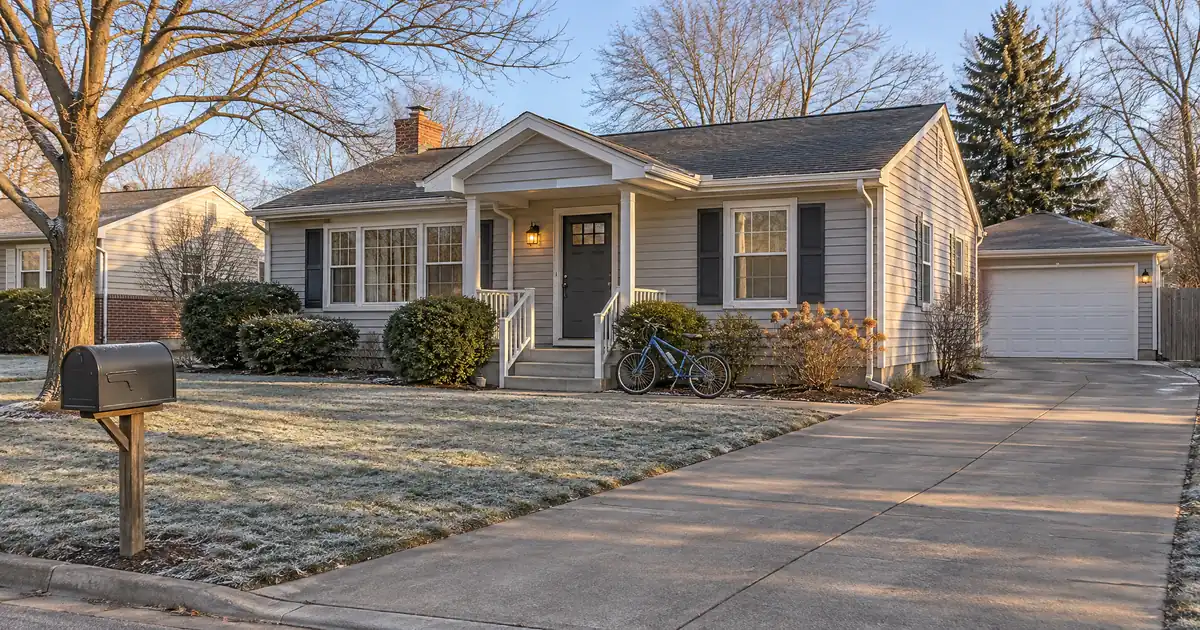
The Quick Read: Both loans can pay for a backyard cottage, garage conversion or in-law suite, and the better one depends on your credit, your equity and how long you have lived in the home. FHA requires that you have owned and lived in the home for at least 12 months, and it tends to suit borrowers with thinner credit who meet that requirement. Conventional tends to suit stronger credit files, though it sets its own limits on leverage and credit score. On a full cash-out, neither program counts the new unit’s future rent toward qualifying.
An accessory dwelling unit (ADU) is a second, smaller living space on your property with its own entrance. A cash-out refinance replaces your current mortgage with a larger one and hands you the difference as cash. That cash is generally unrestricted. The lender does not care whether it becomes a studio over the garage or a new kitchen.
Key Takeaways
- FHA cash-out tops out at 80% of the home’s appraised value and requires 12 months of owning and living in the home first.
- FHA charges an upfront mortgage insurance premium and an annual one. Conventional uses private mortgage insurance that depends on your credit and leverage.
- The ADU’s projected rent will not help you qualify on a full cash-out under either route.
- A construction or renovation loan can beat both when the project is large or the equity is thin.
- Your documented income has to carry the new loan by itself.
FHA cash-out estimate
Seeded with an example value, a balance to match, and a round cash request; change any field.
Editable benchmark: 7.18% as of November 5, 2026 · Freddie Mac 30-year average via FRED®. A conventional market reference, not an FHA cash-out refinance quote.
Illustrative starting assumptions: a $350,000 home value, a $193,000 current balance, the FHA cap on a principal residence with the upfront premium financed, a thirty-year term at the current Freddie Mac benchmark, and property taxes and insurance estimated at typical national rates. Every field is editable.
An illustration, not a Loan Estimate, an approval, a quote, or a commitment to lend. The rate shown is the weekly Freddie Mac thirty-year conventional benchmark, used as a market reference; an FHA cash-out is priced by the lender at lock, and this is not an FHA cash-out refinance quote. HUD’s cap limits the base loan; the upfront premium is financed on top of the capped base loan; the monthly premium for the first year follows the snapshot’s schedule. Cash available means the base loan the cap permits less the balances retired, before closing costs, which this calculator leaves out. The line figure applies the line program’s combined loan-to-value ceiling to the same value and balance. Taxes and insurance are estimates you can edit. Licensed in sixteen states for consumer mortgages.
Side-by-Side
| Factor | FHA Cash-Out | Conventional Cash-Out |
|---|---|---|
| Maximum leverage | 80% of appraised value | Set by lender matrix; varies |
| Credit floor | 580 decision score at programs Lendmire places | Higher; varies by lender |
| Mortgage insurance | Upfront premium plus annual premium | Private insurance; varies by credit and LTV |
| Occupancy | Principal residence only | Principal residence typical; other uses differ |
| Ownership history | Owned and occupied 12 months | Title seasoning rules apply |
| Documentation | Ratios 31/43 up to 40/50 | Automated underwriting ratios; asset review |
| ADU rent to qualify | Not allowed on cash-out | Not allowed on full cash-out |
| Home classification | One ADU keeps it one-unit | Depends on property features |
Two notes on the table. The FHA credit floor is a 580 decision score on the wholesale programs Lendmire places FHA loans with, and county loan limits apply on top. The conventional column varies more because each lender sets its own matrix, so the limits and credit minimums you see advertised may not apply to your cash-out file.
How an FHA Cash-Out Actually Works for Homeowners
Start with the numbers that matter. FHA cash-out reaches 80% loan-to-value (LTV), meaning the new loan can be no more than 80% of what the home appraises for. You also need to have owned and lived in the home for 12 months before the case number is assigned. Pay attention to that date. A home you bought last spring does not qualify yet, no matter how much equity the market handed you.
Ratios work as follows. The base pair is 31/43, meaning housing costs of 31% of gross income and total debts of 43%. Documented compensating factors can stretch that toward 40/50 at the top tier, and the automated finding governs most files. That stretch is where FHA earns its reputation for flexibility.
What matters for an ADU is the mortgage insurance. FHA charges an upfront premium of 1.75% of the base loan, usually financed into the balance. It also charges an annual premium that runs between 0.15% and 0.75% of the balance, depending on term, loan amount and LTV. On a thirty-year loan at or below 90% LTV, that annual premium ends after eleven years. Since cash-out stops at 80%, you land in that bucket. These are program mechanics, not prices, and every figure is subject to lender guidelines and full file review.
How Conventional Cash-Out Differs
Conventional loans follow the Fannie Mae and Freddie Mac rulebooks. The Fannie Mae Selling Guide’s cash-out topic says LTV limits and credit score minimums live in its Eligibility Matrix. It also says a loan-level price adjustment (LLPA) applies to certain cash-out loans, based on LTV and credit score. In plain words, riskier cash-out files cost more.
The same guide has a title-seasoning rule, so a recent buyer can hit a waiting period here as well. A delayed-financing exception exists for people who paid cash. The standard cash-out limits still apply there.
Fannie Mae also says it treats an ADU like any other improvement. Its ADU page says the unit can be financed under any Selling Guide product, with no special loan type required. The same page points to HomeStyle Renovation, a renovation product, for adding a unit to an existing one-unit home. ADUs are not eligible when a manufactured home is the primary residence. How many ADUs a parcel can carry, and which property types qualify, varies and is changing, so confirm the current rules with your loan officer.
What Counts as Income From the New Unit
Here is the trap most homeowners fall into: they plan to rent the ADU and assume the rent will pay for the loan that built it. On a full cash-out, it does not work that way.
HUD Mortgagee Letter 2023-17 updated how FHA treats ADUs. A one-unit home with a single ADU stays a one-unit property. But rental income from that unit cannot be used to qualify for an FHA cash-out refinance. Reserves and appraisal reporting also change when an ADU is present. Ask your loan officer how much cash you should show in the bank.
Conventional is a mixed picture. Fannie Mae has opened the door to ADU rental income, but only with conditions. The Appraisal Institute of North Carolina summarizes them: one-unit principal residence, one ADU, and purchase or limited cash-out loans only. A full cash-out does not qualify for the income. Plan on qualifying with your existing household income.
When FHA Cash-Out Is the Better Fit
FHA fits when the credit file is the problem and the equity is not. Consider these profiles.
- Credit that has been through something. A conventional loan sets a higher credit floor. FHA starts at a 580 decision score at the programs Lendmire places, and HUD’s own waiting periods after a bankruptcy or foreclosure (two years from a chapter 7 discharge, three years from a foreclosure) are HUD rules, not a network promise.
- Higher debt ratios. Documented compensating factors can reach 40/50 at the top tier. That matters if a car payment and student loans eat into your income.
- Moderate equity, a modest build. If your home has comfortable equity and the unit is a conversion rather than a full detached cottage, 80% leverage may cover it.
- A borrower who wants the lender to look at the whole picture. The automated finding governs most files, and FHA often treats a thin credit history more gently than conventional does.
The catch is the cost of the mortgage insurance. You pay the upfront premium on the base loan and the annual one for the first eleven years of a thirty-year loan. That is a real, mechanical cost. For a borrower with a 740-plus credit score, conventional is usually the cheaper road. It is a genuine toss-up for borrowers in the middle, and the right answer depends on the Loan Estimate you get back from each.
FHA also has a built-in alternative: the 203(k) renovation loan. HUD’s 203(k) program comparison fact sheet says ADU construction or renovation can be included, but the unit must be attached to the existing structure. It also sets completion windows for the work. Standard 203(k) requires an FHA-approved consultant, and the consumer fact sheet says all building permits must be obtained before work starts. That structure is more work than a cash-out. It is also tighter, because funds are tied to a documented scope and released in draws.
A detached cottage in the backyard is the case where cash-out comes up most, precisely because 203(k) is for attached units.
When Conventional Cash-Out Is the Better Fit
Conventional fits when your credit is strong and you want the lightest insurance bill. Borrowers with high credit scores and meaningful equity often see lower insurance costs than FHA’s two-premium structure. Private mortgage insurance, if it applies, depends on credit score and LTV. It can generally be removed once you build enough equity, while FHA’s annual premium runs for the first eleven years on a loan at or below 90% LTV.
Conventional also fits larger projects. If your build will take most of your available equity, check whether the numbers work under the matrix. Loan size matters too. When the new balance gets big, a jumbo program may enter the picture, and Lendmire’s piece Best Jumbo Cash-Out Refinance Program to Build an Accessory Dwelling Unit covers that route.
The tradeoffs are real:
- The credit floor is higher, and the LLPA pushes price up for weaker scores and higher leverage.
- Documentation tends to be stricter on assets and income, and automated underwriting sets the ratios.
- Title seasoning can delay a recent owner.
- The ADU rules shift. Count limits and property-type limits are still moving, so a file that works today may need a second look next season.
Honestly, the stronger play for many high-score borrowers is conventional, with one caution. If the project budget is close to your reachable equity, a renovation loan may be safer than a lump sum. You get a documented scope and a contingency instead of trusting yourself not to spend the cash on anything else.
Cash-Out vs. a Renovation Loan
Cash-out and renovation loans solve different problems. Cash-out gives you unrestricted money, so you control the budget and the contractor schedule. A renovation loan ties funds to a documented plan.
| Factor | Cash-Out | Renovation Loan |
|---|---|---|
| Use of funds | Any purpose | Tied to approved scope |
| Detached ADU | Possible | FHA 203(k) needs attached |
| Oversight | None from lender | Consultant, draws, permits |
| Your risk | You manage the budget | Lender manages the draws |
One thing that separates a good cash-out from a bad one is discipline. Lump-sum money does not arrive in stages. If the ADU project runs over, you cannot go back for more. If it runs under, the leftover cash sits in your account, but you still owe it all back.
A Percentages-Only Example
Say your home appraises for a certain value and you owe about 60% of it. Under FHA’s 80% cap, the new loan could reach 80%, leaving about 20% of the home’s value as gross cash. The financed upfront premium and the closing costs then come out of that gross figure. What lands in your hands is smaller than 20%. This is an illustration with modeled assumptions, not a quote or a commitment to lend.
The appraisal is generally of the home as it exists at the time. Do not count on the future ADU to push the value up and unlock more cash. Size your project to the equity you have now.
Mistakes That Cost Borrowers
- Counting the ADU’s rent as income. On a full cash-out, neither route allows it.
- Skipping the 12-month clock. FHA cash-out will not work until you meet it.
- Ignoring the permit. Get your design and permits lined up before you commit to a loan, not after.
- Forgetting contingency. Builds run over. Leave room in the cash.
- Comparing only the headline number. Compare the full Loan Estimate for each loan, including mortgage insurance.
- Assuming the ADU makes it a two-unit property. One ADU keeps an FHA home one-unit. Conventional classification depends on property features such as separate meters and the legal ability to rent.
Key Terms Defined
Loan-to-value (LTV): The new loan balance divided by the home’s appraised value.
Seasoning: The waiting period a lender wants between owning a home and borrowing against it.
Mortgage insurance: A cost added to protect the lender on higher-leverage loans. FHA charges it in two parts. Conventional uses private mortgage insurance.
Loan-level price adjustment (LLPA): A pricing add-on Fannie Mae applies to certain loans, based on credit score and LTV.
203(k): An FHA renovation loan that ties funds to an approved scope of work.
The Balanced Verdict
Neither loan is the winner. FHA is the better door when credit or ratios are the obstacle and you have owned the home for at least 12 months. Conventional is usually the better door when your score is strong, your equity is deep, and you want to shed insurance later. A renovation loan may beat both for large or attached projects.
The one thing both share is the same limit: the future ADU rent will not carry your qualifying. Plan on your existing income. If you are weighing a cash-out refinance against keeping the loan you have, Lendmire can help you compare the programs and the equity each one reaches.
Frequently Asked Questions
Do I need an existing FHA loan to use an FHA cash-out refinance?
Generally no. An FHA cash-out is a new loan that pays off whatever mortgage you have now. What matters is that the home is your principal residence, that you have owned and lived in it for 12 months, and that the new loan stays within 80% of the appraised value. Terms are subject to lender guidelines and full file review.
Can the rent from my planned ADU help me qualify?
Not on a full cash-out. FHA does not allow rental income from a one-unit home with an ADU to qualify a cash-out refinance. Conventional allows ADU rent only in limited cases, such as purchase or limited cash-out loans. Plan to qualify on your existing household income.
Will the appraisal count the ADU before it is built?
Generally, the appraisal reflects the home as it exists at the time. A planned unit that is not built yet should not be counted on to raise your value or your cash. Size the project to the equity you have today.
Does an ADU turn my home into a two-unit property?
Not under FHA when there is a single ADU. A one-unit home with one ADU stays a one-unit property. Conventional classification depends on property features such as separate meters and whether the unit can legally be rented, and the limits on count and property type are changing.
Is a cash-out the same as a HELOC for funding an ADU?
No. A cash-out replaces your first mortgage, so the whole balance is re-priced and re-amortized. A home equity loan or HELOC sits behind your existing mortgage and leaves it in place. Each has tradeoffs, and a cash-out can stretch your payoff time.
For your own numbers, request a scenario review with Lendmire.
About Lendmire
Lendmire, NMLS# 2371349, is a mortgage brokerage with consumer lending licenses in 16 states. FHA, VA, conventional and jumbo purchase and refinance loans are arranged through wholesale lending partners, and each application is reviewed individually by the lender. Scotsman Guide named Lendmire a Top Mortgage Workplace in both 2025 and 2026.
Get Started
Ready to find the right loan for you?
See your offer in seconds. No credit pull, no obligation.
Informational only. Not a Loan Estimate, approval, or commitment to lend. Program availability and eligibility are subject to lender guidelines, credit approval, property review, and underwriting.
References
1. Fannie Mae Selling Guide B2-1.3-03, Cash-Out Refinance Transactions
2. Fannie Mae Accessory Dwelling Units page
3. HUD Mortgagee Letter 2023-17
4. Appraisal Institute of North Carolina
5. HUD 203(k) Program Comparison Fact Sheet
This article is part of Lendmire’s FHA cash-out refinance program — full qualification details, guidelines, and scenarios live on the program page.
Related reading: FHA Cash-Out Refinance Requirements to Go Fixed · Best FHA Cash-Out Refinance Program Without Bringing Cash · FHA Cash-Out Refinance Rules After a Title Change
Brandon Miller
Founder & CEO, Mortgage Loan Originator, Lendmire LLC
- Mortgage Loan Originator · NMLS# 1129696 · Verify on NMLS Consumer Access
- North Carolina Real Estate Broker · License# 343312 · Verify on NCREC
- North Carolina Insurance Producer · License# 19053198 · Property, Casualty, Life, Health · Verify on NAIC SBS
- Lendmire LLC · Firm NMLS# 2371349 · Verify firm licensure
Disclosure information. Lendmire is a state-licensed mortgage brokerage under NMLS# 2371349. Lendmire is not a depository institution, direct lender, or financial advisor — all loans referenced are placed through wholesale lender partners and are subject to each lender's underwriting standards. This article is provided for general informational purposes and is not a commitment to lend, nor does it constitute financial, legal, or tax advice. Loan programs, terms, rates, and qualification standards change without notice and depend on borrower profile, property type, and the state in which the subject property is located. Equal Housing Opportunity provider. NMLS Consumer Access: nmlsconsumeraccess.org.