
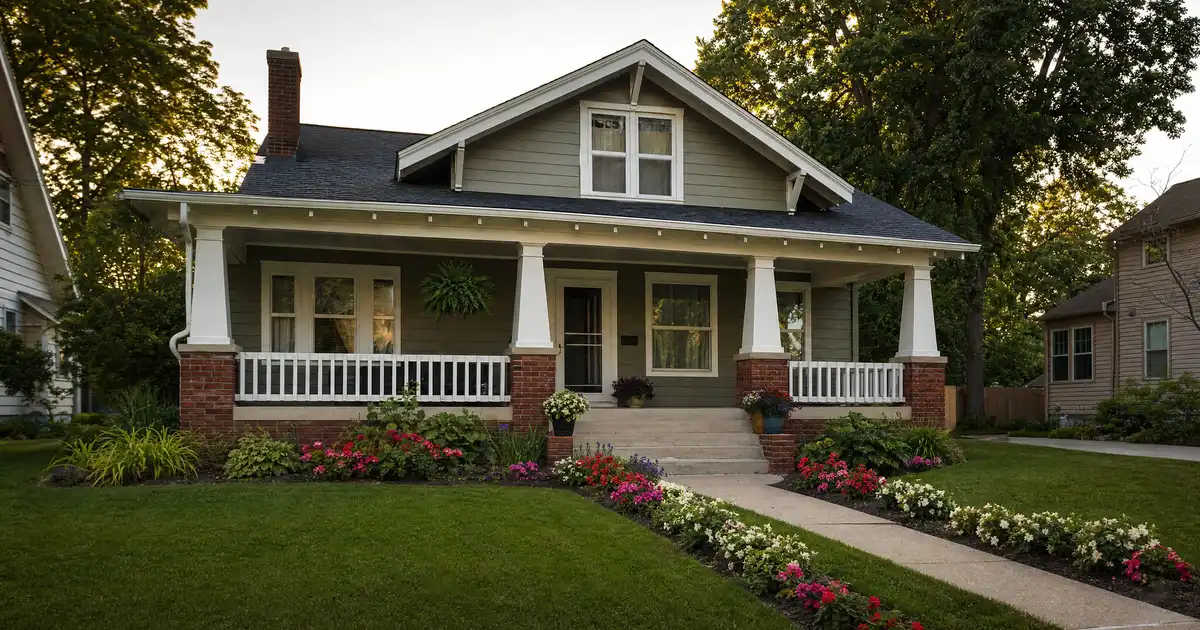
Current FHA cash-out guidelines, updated from one source.
Nothing in the cards is a rate or a payment. They are the program’s settings: the ceiling on the base loan as a share of value, the months of ownership and occupancy required, the premium financed on top and the premium paid monthly, and the credit and ratio parameters. The calculator further down applies them to a Warren home.
Of the adjusted value on a principal residence; 80% combined with any lien that stays
HUD’s cap is 80% of value on the base loan and 80% across every lien that remains after closing. The appraisal fixes the value, the cap fixes the base loan, the payoff and the costs fix the cash, and the financed upfront premium rides on top of all of it.
Owned and occupied as the principal residence before the case number is assigned
Before the case number, the home must have been the borrower’s principal residence for twelve months, documented by the deed and by records at the address. A loan seasoned less than a year must have been paid on time throughout, and a non-occupant co-borrower cannot be added to carry the ratios.
Plus an annual premium, charged monthly, for eleven years at cash-out leverage
Expect two premiums. The first is 1.75% of the base loan, added to the balance at closing; the second is 0.50% of the balance each year on a standard thirty-year loan at this leverage, divided into the monthly payment and ending after eleven years. A larger base loan pays the higher annual rate shown in the table.
Ratios of 31/43 by reference, higher with compensating factors
The decision score is the lowest of the borrowers’ middle scores: 500 is HUD’s floor, 580 the full-financing line, 580 the wholesale starting point. Reference ratios of 31/43 rise to 40/50 with compensating factors such as verified reserves or residual income.
| Base loan | Leverage | Annual premium | Duration |
|---|---|---|---|
| Standard base loan amounts | at or below 90% LTV — the cash-out band | 0.50% | 11 years |
| Standard base loan amounts | above 90% to 95% LTV — purchase and rate-and-term leverage, not cash-out | 0.50% | mortgage term |
| Standard base loan amounts | above 95% LTV — purchase and rate-and-term leverage, not cash-out | 0.55% | mortgage term |
| Larger base loan amounts | at or below 90% LTV — the cash-out band | 0.70% | 11 years |
| Larger base loan amounts | above 90% to 95% LTV — purchase and rate-and-term leverage, not cash-out | 0.70% | mortgage term |
| Larger base loan amounts | above 95% LTV — purchase and rate-and-term leverage, not cash-out | 0.75% | mortgage term |
The line-of-credit alternative: on a primary residence Lendmire’s HELOC program reaches 90% combined loan-to-value behind the existing first mortgage, with no FHA premium attached. For a stronger credit profile the conventional cash-out matches this leverage with no premium at it and one wholesale lane goes higher; eligible veterans can reach the full value, funding fee included, through VA cash-out. Every route is priced on the same numbers before anything is recommended.
FHA cash-out snapshot as of October 1, 2026 · base loan sized on the appraised value, upfront premium financed above it · FHA county mortgage limits apply, confirmed by a Lendmire loan officer and never printed here · taking cash out raises the balance and may extend the payoff · Lendmire is a broker, never the lender.
This page states program parameters only. Every figure comes from Lendmire’s guideline source, built on HUD’s published handbook and a wholesale product sheet, is current as of the date shown, and may change. Approval depends on the FHA appraisal, the automated finding, full underwriting, and the selected lender’s overlays; cash-out proceeds increase the balance secured by the home. Lendmire LLC, NMLS #2371349, licensed mortgage broker in sixteen states. Not legal, tax, or investment advice.
What an FHA cash-out refinance is — and how the file is qualified.
Below, the FHA cash-out in four parts: the loan itself and where the cash comes from; HUD’s occupancy and payment-history test; the two premiums and the years they run; and the moment a conventional cash-out or a line of credit serves a Warren homeowner better than the insured route.
For the program overview, see Lendmire’s FHA cash-out refinance program, or the statewide guide at FHA Cash-Out Refinance in Michigan; the rules are HUD’s, in Handbook 4000.1.
One new FHA loan, cash at closing
Picture the house being refinanced from scratch with HUD standing behind the lender: a base loan sized to the cap, the payoffs and costs taken from it, the upfront premium stacked on top, and the balance of the proceeds wired to you after rescission. Your old payment disappears and one new payment, monthly premium included, takes its place.
The occupancy rule and the payment history
To be eligible, at least one borrower must have owned the home and lived in it as a principal residence for the twelve months before the case number is assigned, and every mortgage payment on the property in that year must have been made within the month it was due. Inherit the home and live in it, and the twelve-month wait is waived; the payment-history rule never is.
Mortgage insurance, upfront and monthly
HUD insures the lender against loss, and the borrower funds the insurance twice: an upfront premium that is a share of the base loan, financed into the balance in nearly every file, and an annual premium charged monthly on the outstanding balance at the rate the schedule sets for the leverage band and the base loan tier. At cash-out leverage the monthly premium runs eleven years and then ends.
FHA cash-out or the alternatives
The honest comparison for a Warren owner is three columns on one page: the FHA payment with the premium, the conventional payment without it, and the current payment plus a line of credit for the same cash. The column with the lowest cost that the credit profile actually qualifies for is the recommendation, and the review produces it.
Everything hangs on two inputs, the adjusted value and the current balance. The first sets the ceiling, the second sets what is left under it, and the premiums follow whatever base loan results. The calculator renders all of it for a Warren home and prints the line-of-credit figure alongside.
Where Warren’s equity sits — and how FHA cash-out fits.
Here is Warren by the numbers the Census Bureau publishes: how many households own, what the typical home is worth, and what households earn. An FHA cash-out is written against those numbers, because they set the scale of the equity and of the payment the premium rides on.
Market context only. Citywide medians sit above some homes and below others; the appraisal and the balance on one house decide what an FHA cash-out on it can do.
Data sources: U.S. Census Bureau — ACS 5-Year (2024) housing and population estimates, including tenure, home values, gross rents, and household income.
Distinct Warren neighborhoods, distinct FHA files.
An FHA cash-out on an older house, on a condominium, on a recent purchase, and on an owner-occupied duplex are four different files in Warren, and the sections below describe each one in its own terms.
Two- to four-unit homes, owner-occupied
The older duplexes and small multi-unit buildings of Warren qualify for an FHA cash-out when the owner lives in one unit: the cap is the same as for a house, the other units’ rent counts under HUD’s rules, and the appraisal carries a rent schedule. On a Warren home at the median value, an FHA cash-out refinance at the program cap finances up to $155,000 before the financed upfront premium — the existing balance comes off the top, and the rest is the cash available before closing costs.
Condominiums in approved projects
For a Warren condominium the project is underwritten alongside the owner. Owner-occupancy share, reserves, the master policy, litigation, and commercial space all enter HUD’s review, the dues enter the ratios, and a building that cannot be approved sends the owner to a conventional lender instead. Warren counts a population near 138K within the Detroit-Warren-Dearborn, MI area.
Newer infill and recent purchases
Recent Warren infill was bought at recent prices with small down payments, so a cash-out on it meets two limits at once: the year of ownership and occupancy and a balance that leaves little room under the cap. The review tells an owner whether to proceed now or wait. The median owner-occupied home value in Warren runs near $193,400 on the latest Census estimate.
High-value homes near the limit
On a high-value Warren home the binding ceiling is often the county limit rather than the cap, and the premium tier steps up with the base loan. The limit is confirmed at the review, never printed here, and a loan that must exceed it is written elsewhere. Roughly 38,922 Warren households own their homes on the latest Census estimate — 71% of all households, the pool an FHA cash-out refinance draws on.
Homes bought with FHA years ago
Plenty of Warren owners bought with FHA at the program’s minimum investment and have built equity since. For the ones whose credit still fits HUD better than the conventional programs, the FHA cash-out is the natural next loan, with the premium continuing under the new schedule. Median household income in Warren sits near $64,016 on the latest Census estimate.
Long-held close-in homes
A close-in Warren house with years of occupancy behind it clears HUD’s twelve-month rule without effort and carries a small balance against a grown value; the one item to prepare for is the appraisal’s inspection against HUD’s minimum property requirements. About 29% of Warren’s households rent — roughly 15,822 renter households on the latest Census estimate.
The equity differs by block in Warren; the FHA rules do not. The appraisal and the old balance decide the cash on each house, and HUD decides everything else identically.
Four ways Warren homeowners put equity to work with FHA.
Warren homeowners bring four reasons to an FHA cash-out more than any others, and each one changes a different part of the review: the ratio, the appraisal, the sequence, or the comparison with a line of credit.
Fund a large expense or a reserve
Tuition, medical bills, a family event, or simply cash on hand: HUD does not restrict the use of the proceeds, and they arrive in one sum after rescission. The review asks one question first, whether a line of credit, which charges interest only on what is drawn and carries no FHA premium, would serve the Warren household for less.
Capitalize a business or an investment
Equity has started many a Warren business, and the insured cash-out is one way to draw it as a lump sum. Underwriting ignores the venture’s prospects and looks at the borrower’s own income, credit, and occupancy history; the mortgage payment is owed whatever the business does.
Renovate or repair the home
Renovation money arrives in one disbursement after rescission and is carried on the mortgage at a fixed payment. Today’s value is the one the cap applies to, not the finished value, and HUD’s minimum property requirements can put a few items ahead of the cash on an older Warren house.
Leave a loan whose structure no longer fits
Owners carrying a loan with a balloon, an adjusting rate, or an insurance product they never chose can replace it with one fixed FHA loan and a published premium schedule, taking equity in the same transaction. The Warren review prices that against a conventional refinance, which the decision score decides.
Estimate the cash, the premium, and the new payment on a Warren home before requesting a quote.
Type in a Warren value, the current balance, and the cash you want; pick a term and the escrows. The calculator answers with the base-loan ceiling, the maximum cash at the cap, the total loan once the upfront premium is financed, the cash at closing before costs, principal and interest, the first-year monthly premium, the full payment, the back-end ratio against HUD’s reference, and the line-of-credit figure on the same value.
Warren FHA cash-out estimate
Starting figures are placeholders drawn from Warren’s median value; every field is editable.
Editable benchmark: 7.28% as of October 1, 2026 · Freddie Mac 30-year average via FRED®. A conventional market reference, not an FHA cash-out refinance quote.
Illustrative starting assumptions: a $195,000 home value near Warren’s median owner-occupied value, a $107,000 current balance, the FHA cap on a principal residence with the upfront premium financed, a thirty-year term at the current Freddie Mac benchmark, property taxes and insurance estimated for Michigan (U.S. Census Bureau). Every field is editable.
An illustration, not a Loan Estimate, an approval, a quote, or a commitment to lend. The rate shown is the weekly Freddie Mac thirty-year conventional benchmark, used as a market reference; an FHA cash-out is priced by the lender at lock, and this is not an FHA cash-out refinance quote. HUD’s cap limits the base loan; the upfront premium is financed above it; the monthly premium for the first year follows the snapshot’s schedule. Cash available means the base loan the cap permits less the balances retired, before closing costs, which this calculator leaves out. The line figure applies the line program’s combined loan-to-value ceiling to the same value and balance. Taxes and insurance are estimates you can edit. Licensed in sixteen states for consumer mortgages.
Same equity, three ways to borrow it.
Three routes to equity in a Warren home, compared on what actually decides the choice: how far each reaches, what credit standard it applies, what happens to the existing first mortgage, and what each adds in insurance or fees.
FHA cash-out, conventional cash-out, or a HELOC.
This is the cash-out for the file that needs forgiveness on the score, the ratio, or a recent credit event. The premium is real and the occupancy rule is strict, but the leverage equals the conventional cap and the proceeds are unrestricted. For a Warren owner, that is the trade in one sentence.
Where the score is solid, the conventional cash-out wins on cost: nothing added to the balance for insurance, nothing added to the payment for it, and a wholesale lane above the agency cap for the strongest files. Lendmire prices it beside the FHA route on the same value, balance, and cash for every Warren review. See Lendmire’s conventional cash-out refinance program.
Keep the first mortgage, add a line. For a Warren owner with a low-cost first lien and a modest or staged need, the line usually reaches the cash for less than any refinance; for an owner whose first mortgage should go, or whose credit fits HUD better than the line program, the FHA cash-out fits. See Lendmire’s home equity line of credit.
Choose FHA when the score, a credit event, or the ratio keeps the file out of the conventional programs and the home has been the principal residence for a year; choose conventional when the file clears its floor, because the premium is avoided; choose the line when the first mortgage should stay and the need is modest or staged. Veterans: see the VA cash-out program.
What to prepare for a Warren scenario review.
The documents are the ordinary refinance set plus two that HUD’s rules add, the occupancy evidence and the year of mortgage history; here is what a Warren FHA cash-out review draws on.
A general guide to preparing, not a complete checklist: the selected lender may ask for more, depending on the transaction, the property, the automated finding, and the income picture. Nothing here is legal or tax advice.
Local details that can change the loan.
Five things to know before counting the cash on a Warren home: what the premiums add, what the occupancy and payment-history rules demand, what the appraisal can require, and what the property type and the credit record contribute.
Use these checks to keep the Warren file clean and fundable.
Occupancy, premium, value: confirm the first against the deed and the mortgage history, price the second against the conventional alternative, and plan the third conservatively for the Warren home.
- Price the premium: Compare the FHA payment with the premium against the conventional payment without it.
- Confirm the occupancy clock: Every mortgage payment in the prior year within the month due; no non-occupant co-borrower.
- Plan for the appraisal: A conservative value protects the cash; an honest look at the home’s condition protects the timeline.
The premium rides on the loan and inside the payment
Two premiums insure the loan: the upfront one is stacked on the base loan, so the total borrowed exceeds HUD’s cap by that share, and the annual one is collected with every payment for eleven years at cash-out leverage. Together they are the real cost of the insured route on a Warren home, and the calculator shows both so the conventional comparison is made on the full figure.
Twelve months owned and occupied, with a clean payment history
HUD measures the year to the case number date, which the lender controls, so the timing of the request matters: a Warren owner a month short of the year waits a month, and a payment made outside the month due inside that year stops the file until a clean year has passed. The deed, the address records, and the mortgage history are the three proofs.
The FHA appraisal values the home and checks its condition
Two findings change a file: a value under the plan, which lowers the ceiling and the cash, and a condition item, which adds repairs or a repair escrow before the loan can close. Plan the cash on a conservative value and walk the Warren home for the obvious items before the appraisal is ordered.
The decision score and the compensating factors
Compensating factors are documents, not assurances: bank statements that prove reserves, a payment history that shows the housing cost barely rising, a residual-income calculation, or a credit report with no discretionary debt. A Warren file that assembles them earns the higher ratio tiers; one that asserts them does not.
Closing costs and the premium come out of the loan
The loan estimate arrives after application and the closing disclosure before signing, and between them the costs are fixed: appraisal, title and settlement, recording, prepaid interest, escrow set-up, and the upfront premium stacked on the base loan. On a Warren file the number to plan around is the cash after all of them.
From a Warren scenario review to cash at closing.
An FHA cash-out moves in a fixed sequence: a review that sizes the loan on the value, the balance, and the cash; the application, the case number, and the automated finding; the FHA appraisal and underwriting; closing, the rescission window, and disbursement. Each step is described below for a Warren owner.
Scenario review
The review is where the Warren owner learns whether the file fits HUD, what the premiums add, and whether the conventional cash-out or a line of credit would reach the same cash for less. It ends with written terms on a conservative value, and nothing is ordered until the owner agrees the plan is worth an appraisal.
Application and case number
Once the application is filed, the disclosures go out, the credit report is pulled, the case number is assigned, and the finding tells the lender what to verify. The Warren borrower sees the condition list here: statements, occupancy evidence, payoffs, insurance, and whatever the finding raises.
FHA appraisal and underwriting
The FHA Roster appraiser reports a value and a condition for the Warren home, and underwriting verifies the rest: income, assets, the occupancy record, the clean year of payments, the payoffs, and the project if the home is a condominium. A value under the plan resizes the loan; a repair finding schedules the work.
Closing, rescission, and funding
Sign, wait, receive. The closing disclosure is reviewed and signed, the settlement agent holds the package through the rescission window, and at disbursement the old liens are paid and released and the proceeds are wired to the Warren owner, who now has one insured loan where there may have been three.
A brokerage built around equity lending.
A broker’s worth on an insured cash-out is choice and candor. The FHA route, the conventional route, the wholesale lane above it, and the line of credit are all available in one place, compared on the owner’s own figures, with the fit written up and the misfits explained.
Every route, one review
The FHA cash-out, the conventional cash-out, and the home equity line are all arranged here, so the comparison is made on arithmetic rather than on what one desk sells. A Warren owner sees the insured payment with the premium next to the conventional payment without it and the line behind the current loan, and decides with the figures in hand.
Placed across wholesale programs
HUD writes the rules; each wholesale lender adds its own overlays and its own cost. The Warren file goes where the score, the leverage, and the property fit best, and the terms the owner receives come from that placement rather than from the only desk in the building.
Terms in writing, before any fee
An appraisal fee on a plan that cannot close is money wasted, so the review is done at a realistic value with room beneath it and with the occupancy and payment history confirmed; the terms are written, and only then is the case number requested. If the value comes in low, the Warren owner already knows what the loan becomes.
Trusted by homeowners & families alike.


Warren FHA cash-out refinance FAQs
What a Warren loan officer hears about FHA cash-outs, answered plainly and without the figures that belong in the snapshot and the calculator above.
What is an FHA cash-out refinance, and who is it for?
The insured version of a cash-out: one new first mortgage, the equity returned as a lump sum, HUD’s insurance in exchange for HUD’s more forgiving review. A borrower with a strong file usually does better conventionally; a borrower with a thinner one often finds FHA is the door that opens.
How much cash can I take out with an FHA refinance?
HUD’s cap on the adjusted value sets the ceiling, and the cash is whatever remains of it after the current balance, a second lien being retired, and the closing costs are deducted; the upfront premium is then financed above the base loan. The calculator shows the Warren figures side by side with the line-of-credit alternative.
How long do I need to have lived in my home before an FHA cash-out?
Twelve months is the rule and the case number is the clock. Confirm the deed date, the occupancy evidence, and the mortgage history before the case number is requested on a Warren home; those three records settle the question.
What does FHA mortgage insurance cost on a cash-out, and how long does it last?
The upfront premium is paid once, usually by financing it on top of the capped base loan; the monthly premium runs eleven years at this leverage. A later refinance into a conventional loan can end it sooner, which a Warren owner with an improving score should keep in view.
What credit score do I need for an FHA cash-out refinance?
The program accepts scores the conventional programs refuse, which is why many Warren owners choose it. The lowest middle score is the decision score, the wholesale floor sits above HUD’s, and reserves, residual income, and payment history are weighed alongside it.
What is different about the FHA appraisal?
A value and a condition report in one. A low value lowers the ceiling and the cash; a condition finding adds repairs before the loan can close. Walk the home for the obvious items before the appraisal is ordered and plan the cash on a conservative value.
What debt-to-income ratios does an FHA cash-out allow?
Begin at the reference pair, then add what the file can prove: verified reserves, a small rise in the housing payment, residual income, or no discretionary debt. Each factor opens a higher tier, and payoffs routed through the closing drop out of the calculation.
Should I use an FHA cash-out or a conventional cash-out?
Conventional for cost, FHA for forgiveness. The conventional file is priced on the score through the agencies’ adjustments and carries no premium at the cash-out cap; the FHA file accepts a lower score and tiered ratios and adds the premiums. The written terms settle it.
Would a HELOC be better than an FHA cash-out?
A line of credit is the cheaper route for a Warren owner whose first mortgage is worth keeping and whose need is modest or staged: it borrows only the new money, carries no premium, and reaches a higher combined leverage than HUD’s cap, at the cost of a payment that can change. The FHA cash-out fits when the first mortgage should go or the sum is large.
Are there restrictions on what I can use the cash for?
No. HUD places no limit on what the proceeds pay for: consolidation, renovation, tuition, a reserve, a business, anything lawful. A payoff is documented only when the retired debt is being excluded from the ratio; otherwise the use never enters the file. What a Warren owner should remember is that the home secures the money however it is spent, and that nothing on this page is tax advice.
A Warren FHA cash-out sized to the value, the balance, and the cap.
Enter your Warren figures above, then ask for a review; the cap, the occupancy rule, the premiums, and the cost tier are checked against HUD’s handbook and the wholesale overlays, and what comes back is a written set of terms, not an estimate.
This guide covers Warren — for the statewide guidelines, markets, and scenarios, see FHA Cash-Out Refinance in Michigan, part of Lendmire’s FHA cash-out refinance program.
Nearby markets in Michigan: Sterling Heights · Detroit · Livonia · Lansing · Grand Rapids
Related programs: Cash-Out Refinance · FHA Loans · HELOC