
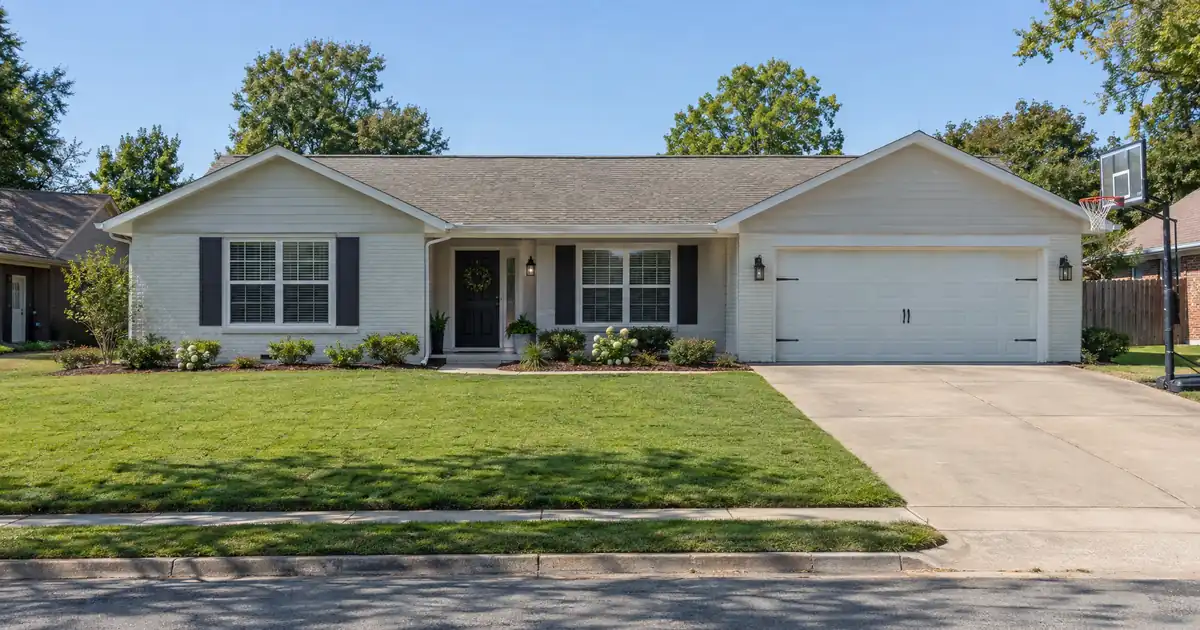
The Quick Read: An FHA cash-out refinance is built around the person who actually lives in the home. A spouse in another state cannot be the occupant, and that spouse’s income cannot help you qualify. The occupying borrower carries the loan on one income, up to 80% of the home’s value. Depending on where you live, a spouse’s monthly debts may still count against you even if the spouse never signs the note.
Key Takeaways
- The borrower must own the home and live in it as a principal residence. Across the wholesale programs Lendmire places FHA files with, the home must be owned and occupied for 12 months before the case number is assigned.
- One occupying borrower can satisfy that test alone. The out-of-state spouse does not need to meet it.
- Adding the absent spouse as a co-borrower does not help on cash-out, because a non-occupant’s income is left out.
- In community property settings, the non-borrowing spouse’s debts can still be added to your ratios.
- Cash-out tops out at 80% LTV (loan-to-value, the loan as a share of the home’s value). That leaves you real equity to keep. The exact numbers vary by lender and program and follow a full review of property, leverage, and credit.
FHA cash-out estimate
Seeded with an example value, a balance to match, and a round cash request; change any field.
Editable benchmark: 7.40% as of October 15, 2026 · Freddie Mac 30-year average via FRED®. A conventional market reference, not an FHA cash-out refinance quote.
Illustrative starting assumptions: a $350,000 home value, a $193,000 current balance, the FHA cap on a principal residence with the upfront premium financed, a thirty-year term at the current Freddie Mac benchmark, and property taxes and insurance estimated at typical national rates. Every field is editable.
An illustration, not a Loan Estimate, an approval, a quote, or a commitment to lend. The rate shown is the weekly Freddie Mac thirty-year conventional benchmark, used as a market reference; an FHA cash-out is priced by the lender at lock, and this is not an FHA cash-out refinance quote. HUD’s cap limits the base loan; the upfront premium is financed on top of the capped base loan; the monthly premium for the first year follows the snapshot’s schedule. Cash available means the base loan the cap permits less the balances retired, before closing costs, which this calculator leaves out. The line figure applies the line program’s combined loan-to-value ceiling to the same value and balance. Taxes and insurance are estimates you can edit. Licensed in sixteen states for consumer mortgages.
What an FHA Cash-Out Refinance Actually Is
You replace your current mortgage with a new, larger FHA loan. The new loan pays off the old one, and you receive the difference as cash. That is the whole mechanic.
The FHA cash-out refinance program is an owner-occupant product. It exists for people who live in the home, not for second homes or rentals. If you are weighing it against keeping your current loan, Lendmire’s FHA cash-out refinance program page lays out the program side by side with the alternatives.
Because the loan replaces your old one, the terms change. The consumer agency CFPB notes in its guide on using home equity that a cash-out can stretch your payoff time and may raise your monthly payment. Plan for that before you plan for the cash.
Why the Spouse’s Location Matters
Here is the catch. FHA cares less about who is married to whom and more about who lives in the house. Your spouse’s address matters only because it raises three separate questions:
1. Who is the occupant?
2. Whose income can be used?
3. Whose debts get counted?
Each has its own answer, and they do not always point the same way. A household split across state lines is one of the cases where people assume a single rule covers everything. It does not.
Step by Step: How the File Gets Underwritten
Step 1: Name the borrower. The borrower is the spouse who owns the home and lives in it as a principal residence. The spouse living elsewhere is not an occupant of this home.
Step 2: Check the 12-month test. The home must have been owned and occupied by at least one borrower for the 12 months before the case number. One occupying borrower is enough. The out-of-state spouse is not the one who has to pass.
Step 3: Review payment history. Lenders look at how the current mortgage has been paid, and a clean record matters. Some lenders set stricter payment-history standards than the program minimum, so ask early.
Step 4: Pull credit. Credit is pulled on each person who will sign the note. If a community property rule applies, a report on the non-borrowing spouse is also pulled. That report exists to find debts, not to score the spouse.
Step 5: Qualify on the occupant’s income alone. This is where households get surprised. The documented ratio pair starts at 31/43 (housing to total, with no compensating factors). Documented strengths can push it toward 40/50 at the top tier. The automated finding governs most files. All of it runs on the occupant’s income.
Step 6: Appraise and cap the loan. A full appraisal sets the value. The new loan, plus any other lien that stays, cannot exceed 80% of that value. County loan limits apply as well.
Step 7: Handle title and signatures. If state law requires it, the spouse may need to sign the security instrument or a document giving up certain rights, even without being a borrower. Ask the title company early, because this is a state-law question and not a program rule.
Where Your Spouse Stands: A Quick Table
| Spouse situation | Can be a borrower? | Does income count? | Likely requirement |
|---|---|---|---|
| On title, lives out of state | Possible | No, not on cash-out | Lender review of title and signing |
| On the current note only | Lender-dependent | No | Confirm whether they can remain |
| Not on title or note | No | No | Possible state-law signature |
| Lives in the home, borrower away | Occupancy test governs | Occupant only | Occupancy must be proven |
Read the table as a map, not a promise. Lenders can be stricter than the agency, and some do not allow a non-occupying co-borrower on cash-out at all. Whether your own file fits any row is subject to lender guidelines and full file review.
Income vs. Debts: The Split That Trips People Up
The rule on income is simple. Income from someone who does not live in the home cannot be used to qualify on an FHA cash-out. That differs from an FHA purchase, where a non-occupant co-borrower is allowed. The difference surprises many couples who bought together and assume refinancing works the same way.
Debts are the opposite story. HUD’s Handbook 4000.1 governs the program. Its community property rule says a non-borrowing spouse’s debts must be included in your ratios. The trigger is either of two facts: you live in a community property state, or the home is located in one. These are a specific group of states, and your loan officer can tell you whether yours is on the list. Obligations that state law excludes can be left out, with the lender noting the specific law in the file.
Put plainly, your spouse’s income cannot rescue a tight ratio, while their monthly debts may make it tighter. That is the unfair-looking part. Know it before you apply.
Two points soften it. The spouse’s credit history cannot be a reason to deny the loan. And their report is used only to identify debts, so their score does not set your terms.
Edge Cases: Where the General Rule Bends
Neither state is community property. The debt-inclusion rule does not apply on its face. Ordinary ratio math still counts any debt you are personally liable for.
One of the two states is community property. The rule checks where you live and where the home sits. Your spouse’s own state is not the trigger. Lenders sometimes interpret split-state households differently, so get the interpretation in writing from the loan officer.
A co-borrower already on your current loan. Whether a non-occupant already on the existing note can stay on the new one depends on the lender. Some lenders allow it with the income excluded. Others do not allow non-occupants on cash-out at all.
Military service. HUD guidance has treated service members who cannot live in the property because of active duty as owner-occupants in certain cases. For cash-out, the seasoning treatment is something to confirm in the current handbook before you plan around it.
Inherited property. A named exception exists. A borrower may not have to meet the usual occupancy period for cash-out if the home was inherited and never treated as an investment property. If it was rented after inheritance, expect to occupy it first. Confirm the details with your loan officer.
A different goal altogether. An FHA Streamline refinances an existing FHA loan with no appraisal and a limited credit review. It is a rate-and-term style move with a net tangible benefit, not a way to pull cash. An FHA rate-and-term with an appraisal reaches 97.75% on a principal residence occupied for the previous twelve months. Neither gives you cash.
Second homes and investment properties are not eligible for FHA cash-out. Occupancy decides the leverage, and that is the end of that question.
Three Household Pictures
The job relocation. One spouse moves out of state for work while the other stays in the home. If the staying spouse is on title and the loan, they are the occupying borrower and the file can run on their income. If the moving spouse earns most of the money, the ratios may not work on the staying spouse’s income alone.
The deployment. A service member’s spouse and children remain in the house. Handbook language on active-duty occupancy exists, but cash-out seasoning for this scenario should be verified in the current handbook. Do not assume it. Ask the loan officer to point you to the exact text.
The separation. The spouse who left is still on the old mortgage and still on title. A cash-out does not cleanly remove them, and a removal or buyout is a different transaction with different rules. Settle the legal side first, then choose the loan.
What Cash-Out Costs You, Beyond the Cash
FHA charges mortgage insurance. Across the programs Lendmire places, the upfront premium is 1.75% of the base loan, and it can be financed into the balance. The annual premium runs between 0.15% and 0.75% of the balance, depending on term, loan amount and LTV. Because cash-out stops at 80% LTV, the annual premium on a thirty-year loan falls in the bracket that ends after eleven years, subject to lender guidelines.
The 80% cap itself is a HUD change. HUD’s Mortgagee Letter 2019-11 set the maximum at 80% of adjusted value. Its press release explains that the cap had been 85% and that the change aligned FHA with the cash-out maximum used by the government-sponsored mortgage companies. Older pages still show 85% or even 95%. Those figures are outdated.
Then comes the part that has nothing to do with paperwork. CFPB research on cash-out refinances and non-mortgage debt notes that rolling other debt into a mortgage puts the home at risk if payments become unsustainable. With one income carrying the loan, that is not a small point. Tax treatment can depend on your situation; borrowers should speak with a qualified tax professional before relying on any deduction or credit.
What Decides the Outcome
Five tests settle most of these files:
- Does the borrower truly live in the home?
- Has the 12-month ownership and occupancy period been met?
- Does the 80% cap leave enough equity for the cash you want?
- Do the ratios work on the occupant’s income alone, with a spouse’s debts added if community property applies?
- Is the payment history clean?
If the answer to any is no, the fix is usually a different structure rather than a different argument. Wait out the seasoning. Pay down a debt. Reduce the cash requested. Or look at a different loan type.
Common Mistakes to Avoid
- Assuming a co-signer spouse helps. On cash-out, non-occupant income is excluded.
- Assuming a spouse off the loan means no debts counted. In community property settings, their debts come in.
- Listing the wrong occupancy. Misstating who lives in the home is a serious problem, not a technicality.
- Waiting on signatures. Notaries and title requirements across state lines can add steps, so start the conversation early.
- Using old numbers. Cash-out caps of 85% or 95% appear on dated pages. The current figure is 80%.
Key Terms Defined
Principal residence: The home you live in as your main address, as opposed to a second home or rental.
LTV (loan-to-value): The loan balance as a percentage of the home’s appraised value.
Seasoning: The waiting period of ownership and occupancy before a loan type becomes available.
Non-occupant co-borrower: A person on the loan who does not live in the home.
Community property state: A state where marital property and debts are generally treated as shared, which can bring a non-borrowing spouse’s debts into your ratios.
DTI (debt-to-income ratio): Your monthly debts as a share of your monthly income, shown as a housing ratio and a total ratio.
Frequently Asked Questions
Can my out-of-state spouse co-sign to help us qualify?
Not in a way that helps. A non-occupant’s income is excluded on an FHA cash-out. Some lenders also bar non-occupying co-borrowers from cash-out entirely, so a co-signer may be turned away outright.
If my spouse is not on the loan, do their debts count?
Their debts can count. In a community property setting, a non-borrowing spouse’s debts must be included in your ratios, except those state law excludes. The trigger is where you live or where the home sits.
Will my spouse’s bad credit hurt my approval?
Their credit history cannot be a reason to deny the loan. The report is pulled to find debts only, and it is not scored as part of your file. The debts it reveals still count in the right circumstances.
Does my spouse have to sign anything?
Possibly. If state law requires it, a non-borrowing spouse may need to sign the security instrument or a document giving up certain rights. Your title company can tell you early, and signing can often be arranged by mail or remotely.
How much can I take out?
The new loan, plus any other lien that stays, is capped at 80% LTV on an FHA cash-out. County loan limits also apply. Whether you qualify at that level is subject to lender guidelines and full file review.
Your Next Step
Start with the facts that decide the file: who lives in the home, who is on title, and which state each of you lives in. If you are weighing a cash-out refinance against keeping the loan you have, Lendmire can help you compare the programs and the equity each one reaches. Nothing here is a commitment to lend, and every figure is subject to lender guidelines.
For your own numbers, request a scenario review with Lendmire.
About Lendmire
Lendmire — NMLS# 2371349 — is a mortgage broker that arranges FHA, VA, conventional and jumbo home purchase and refinance financing in 16 states through wholesale lenders. Every option is subject to the lender’s guidelines and full underwriting. Scotsman Guide named Lendmire a Top Mortgage Workplace in both 2025 and 2026.
Get Started
Ready to find the right loan for you?
In about 30 seconds you can review financing options available for your home or investment property. No commitment required.
Informational only. Not a Loan Estimate, approval, or commitment to lend. Program availability and eligibility are subject to lender guidelines, credit approval, property review, and underwriting.
References
1. CFPB guide on using home equity
2. HUD Handbook 4000.1 (archive copy)
3. HUD Mortgagee Letter 2019-11
5. CFPB research on cash-out refinances and non-mortgage debt
This article is part of Lendmire’s FHA Loan series — every loan program’s qualification details, guidelines, and scenarios live on the loan options page.
Related reading: FHA Cash-Out Rules for a First Mortgage With a Prepayment Penalty · FHA Cash-Out Rules for a Texas Second Home That Isn’t a Homestead · Does FHA Treat a Spouse Buyout as a Cash-Out Refinance?
Brandon Miller
Founder & CEO, Mortgage Loan Originator, Lendmire LLC
- Mortgage Loan Originator · NMLS# 1129696 · Verify on NMLS Consumer Access
- North Carolina Real Estate Broker · License# 343312 · Verify on NCREC
- North Carolina Insurance Producer · License# 19053198 · Property, Casualty, Life, Health · Verify on NAIC SBS
- Lendmire LLC · Firm NMLS# 2371349 · Verify firm licensure
Compliance and disclosures. Lendmire (NMLS# 2371349) is a licensed mortgage broker and is not a direct lender, depository institution, financial advisor, or tax professional. Content in this article is general market analysis and educational information — not financial, legal, or tax advice for any specific situation. Lendmire does not guarantee loan approval; every transaction is subject to underwriting by the funding lender. Mortgage pricing and loan program guidelines are subject to change at any time without notice and vary by borrower characteristics, property type, and state regulations. Lendmire complies with Equal Housing Opportunity. Licensure verification: NMLS Consumer Access.