
The Quick Read: FHA is usually the better fit when the debt-to-income ratio is the problem, and conventional is usually the better fit when the ratio is clean and the borrower wants to avoid FHA mortgage insurance. FHA allows a higher total ratio when compensating factors are documented. FHA also keeps the same 80% leverage cap on a two-unit home as on a one-unit home. Conventional cash-out on a duplex generally sits under a tighter cap and a tighter ratio. Everything here is subject to lender guidelines and full file review.
Who Each Option Is Really For
FHA cash-out is built for the owner-occupant whose equity is fine but whose ratios are stretched. Conventional cash-out is built for the owner-occupant with stronger credit, lower debt and some reserves.
FHA cash-out estimate
Seeded with an example value, a balance to match, and a round cash request; change any field.
Editable benchmark: 7.18% as of November 5, 2026 · Freddie Mac 30-year average via FRED®. A conventional market reference, not an FHA cash-out refinance quote.
Illustrative starting assumptions: a $350,000 home value, a $193,000 current balance, the FHA cap on a principal residence with the upfront premium financed, a thirty-year term at the current Freddie Mac benchmark, and property taxes and insurance estimated at typical national rates. Every field is editable.
An illustration, not a Loan Estimate, an approval, a quote, or a commitment to lend. The rate shown is the weekly Freddie Mac thirty-year conventional benchmark, used as a market reference; an FHA cash-out is priced by the lender at lock, and this is not an FHA cash-out refinance quote. HUD’s cap limits the base loan; the upfront premium is financed on top of the capped base loan; the monthly premium for the first year follows the snapshot’s schedule. Cash available means the base loan the cap permits less the balances retired, before closing costs, which this calculator leaves out. The line figure applies the line program’s combined loan-to-value ceiling to the same value and balance. Taxes and insurance are estimates you can edit. Licensed in sixteen states for consumer mortgages.
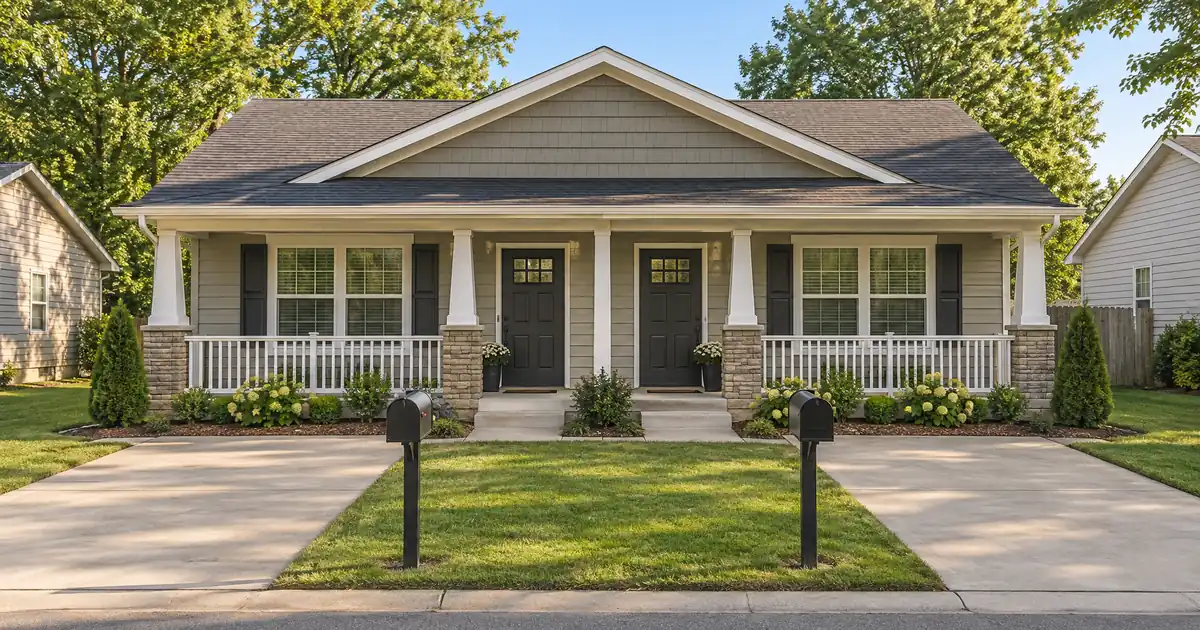
A duplex owner lives in one unit and rents the other. That mix creates two questions. First, how much of the home’s value can be borrowed? Second, how does the lender count the rent from the other side, and what does that do to the DTI?
DTI is the percentage of gross monthly income that goes to the new housing payment plus other monthly debts. On a high-DTI file, the DTI is the whole story. The program that tolerates the ratio wins. Equity and credit matter, but the ratio usually decides it.
Lendmire is a mortgage broker, not a lender. It arranges FHA loans through wholesale lenders.
Side-by-Side
| Factor | FHA Cash-Out | Conventional Cash-Out |
|---|---|---|
| Max leverage | 80% LTV, same for 1–2 units | Often lower on a 2-unit home |
| Occupancy | Owner-occupied only | Owner-occupied for this lane |
| Prior ownership | Owned and lived in 12 months | Varies by lender |
| DTI flexibility | Up to 40/50 with factors | 36–45% manual, 50% automated |
| Mortgage insurance | Upfront plus annual premium | None of the FHA type |
| Credit floor | Wholesale programs start at 580 | Typically higher |
| Rent from other unit | Counted at a reduced share | Counted if documented |
Two notes on the table. The FHA figures come from the verified program parameters for the wholesale programs Lendmire places files with. Conventional figures are described in general terms because lender overlays vary, and the agency matrix is the place to confirm the cap for each unit count.
When FHA Cash-Out Is the Better Fit
FHA tends to win when the ratio is the obstacle. Across the wholesale programs Lendmire places files with, the base FHA ratio pair is 31/43 (housing and total). Documented compensating factors can push that to 40/50 at the top tier, and the automated finding governs most files. A total ratio in the mid-40s therefore sits inside the range FHA can reach with compensating factors.
Conventional is tighter on this point. Fannie Mae’s Selling Guide sets a 36% total DTI for manual underwriting, rising to 45% when credit score and reserve requirements are met. Desktop Underwriter, the automated system, allows up to 50%. The same section notes that the ceiling can be lower for cash-out refinances on DU files. A borrower at a high ratio can clear FHA and miss conventional.
The duplex adds a second FHA advantage. FHA’s cash-out cap is 80% of value, and it does not step down for a two-unit home. HUD lowered the cap to 80% in 2019, so older articles quoting a higher number are out of date. Conventional cash-out on a duplex generally carries a lower cap than on a single-family home, per lender copies of the agency matrix. Confirm the exact number on Fannie Mae’s own matrix. On a duplex, that gap can mean more usable cash from FHA.
Rent from the second unit also helps on the FHA side. HUD Mortgagee Letter 2023-17 allows subject-property rental income to count for a two- to four-unit dwelling. Where there is no rental history, the lender uses a reduced share of the lesser of the appraiser’s market rent or the lease rent, net of the property’s payment. Check the current handbook for the exact calculation.
FHA also suits borrowers with thinner credit. The wholesale programs Lendmire works with start at a 580 decision score for a 3.5% minimum investment on a purchase. Cash-out sits on top of that floor, and individual lenders set their own overlays.
The cost of choosing FHA
FHA charges an upfront mortgage insurance premium of 1.75% of the base loan, which can be financed. It also charges an annual premium, between 0.15% and 0.75% of the balance depending on term, loan amount and LTV. A cash-out capped at 80% falls at or below the 90% line, so the annual premium ends after eleven years. On a thirty-year loan with a higher LTV, it lasts for the term.
That cost is real. A borrower with a clean ratio should compare it against conventional before choosing FHA by default.
When Conventional Cash-Out Is the Better Fit
Conventional wins when the ratio is already comfortable. If total DTI sits well under the manual benchmark and the credit profile is strong, the borrower skips FHA’s upfront and annual premiums. A conventional cash-out at a moderate LTV, within the program’s limits, does not carry private mortgage insurance, so the FHA-style premiums have no counterpart there. Pricing adjustments exist, and they vary by loan purpose, occupancy and unit count. Those adjustments are laid out in Fannie Mae’s pricing matrix. Lenders also layer their own overlays on top.
Conventional also makes sense when the borrower needs less cash than the cap allows. A smaller draw on a duplex may fit under the conventional cap with room to spare. In that case the lower leverage does not cost anything.
Rent works differently here. Fannie Mae generally does not let a borrower count rent from the unit they live in. For a two- to four-unit principal residence, rent from the other units can count when documented with an appraisal rent schedule. The details sit in the Selling Guide’s rental income section, so confirm them there.
Reserves matter more on conventional. At higher ratios, lenders expect documented reserves, meaning liquid funds left after closing. A borrower with savings and a stretched DTI may still land on conventional. One with a stretched DTI and little savings will find reserves a harder hurdle.
How a High-DTI Duplex File Actually Runs
Here is a scenario, described in percentages and ratios, with no dollar figures. Picture an owner who has lived in one side of a duplex for several years. The home carries moderate equity. Total DTI lands in the mid-40s once the new payment is counted. The borrower wants cash to pay off cards and an auto loan.
Run it through conventional first. A mid-40s ratio is at or past the manual ceiling. The automated system may still approve, but a cash-out on a two-unit home can draw a lower ceiling than the headline 50%. If the file falls short, a smaller cash-out or pay-offs at closing may help.
Run it through FHA second. A mid-40s ratio is above the base 43% but inside the range the compensating factors open up. Documented reserves, steady employment and a strong payment history are the typical factors. The automated finding then decides.
Paying off debts at closing can change the picture on either side. Retiring a monthly obligation removes it from the DTI. That can turn a file that does not work into one that does. Lenders review which debts are paid and how the payoff is documented.
The Document Checklist
Clean documentation is where these files either hold together or stall. For a duplex cash-out, expect to gather:
- Proof of ownership and owner-occupancy for the past 12 months (FHA looks back to the case number date).
- Pay stubs, W-2s and tax returns for qualifying income.
- A current lease for the rented unit, plus proof of rent received if the lender asks.
- Statements for every debt, including any debts to be paid at closing.
- Bank statements for reserves.
- The mortgage statement for the existing loan, to confirm payment history.
The appraisal comes with a rent schedule for the second unit. The appraiser’s market rent and the lease rent are both in play, and a lease well under market rent can hold the coverage figure down.
A recent purchase can make FHA cash-out unavailable. A home owned for less than 12 months does not meet the seasoning rule. Check the dates before the file goes in, and expect the lender to review the payment history on the existing loan.
Pitfalls to Avoid
- Assuming all rent counts. FHA counts a reduced share. Conventional generally excludes rent from the borrower’s own unit.
- Assuming FHA has no DTI limit. It has a ratio ladder, and automated approval still weighs compensating factors.
- Assuming a duplex is capped like a single-family home. Conventional caps can differ by unit count. FHA’s does not.
- Quoting old numbers. FHA’s cash-out cap used to be higher. That changed in 2019.
- Treating cash-out as a more affordable way to get cash. It is not always cheaper: the CFPB’s mortgage market report says cash-out refinances can carry higher payments and balances than other refinances, and that HELOCs tend to have lower payments and foreclosure risk. It also notes that rolling credit card debt into a mortgage turns unsecured debt into debt secured by the home.
County loan limits apply to FHA and change every year. Check the current limit for the property’s county before assuming the loan fits.
Tax treatment can depend on your situation; borrowers should speak with a qualified tax professional before relying on any deduction or credit.
Key Terms Defined
DTI (debt-to-income ratio): The share of gross monthly income that goes to housing and other monthly debts.
Compensating factors: Documented strengths, such as reserves or a strong payment history, that let a lender approve a higher ratio.
LTV (loan-to-value): The new loan balance divided by the home’s appraised value.
Mortgage insurance premium (MIP): FHA’s insurance charge, paid upfront and monthly.
Seasoning: The time a borrower has owned and lived in the home before cash-out is allowed.
A Balanced Verdict
Neither program is better in the abstract. FHA fits the borrower whose DTI is the issue and who can live with the insurance premium. Conventional fits the borrower with a comfortable ratio, solid reserves and a smaller cash need.
For a high-DTI duplex owner, FHA is often the first path to test. The ratio flexibility and the flat 80% cap carry weight. But a borrower who clears conventional should compare the two on total cost, because the FHA premiums add up over eleven years.
Other options deserve a look too: a smaller draw, paying off debt at closing, a HELOC, or waiting to build reserves. The right answer depends on the numbers in the file.
If you are weighing a cash-out refinance against keeping the loan you have, Lendmire can help you compare the programs and the equity each one reaches.
Frequently Asked Questions
Can I use rent from the other unit to qualify?
Usually yes, in part. FHA allows subject-property rental income on a two- to four-unit home, counted at a reduced share and net of the property’s payment. Conventional generally lets the other units’ rent count when it is documented with an appraisal rent schedule, but not rent from the unit you live in.
What is the maximum cash-out on a duplex?
FHA caps cash-out at 80% of value, the same for a one-unit or two-unit home. Conventional caps on a two-unit home are generally lower than on a single-family home, so confirm the figure on Fannie Mae’s matrix.
What DTI can I have?
FHA’s base pair is 31/43, and documented compensating factors can reach 40/50 at the top tier. The automated finding governs most files. Conventional manual underwriting runs 36% to 45% with credit and reserve support, and the automated ceiling is 50%.
Do I have to live in the duplex?
Yes. FHA cash-out is for a principal residence, and the borrower must have owned and lived in the home for 12 months before the case number. If the property is not your residence, occupancy changes the leverage and the program.
How long does FHA mortgage insurance last?
The length of the annual premium depends on the loan’s LTV at origination. Loans with lower leverage see the premium end after eleven years, while higher-leverage loans on a thirty-year term carry it for the life of the loan. A cash-out capped at 80% falls on the eleven-year side. Premium amounts vary by term, loan amount and LTV. These specifics are subject to lender guidelines and a full review of property, leverage, and credit.
For your own numbers, request a scenario review with Lendmire.
About Lendmire
As a mortgage broker (NMLS# 2371349), Lendmire helps homeowners and home buyers in 16 states with FHA, VA, conventional and jumbo purchase and refinance loans arranged through wholesale lenders. Lendmire is never the lender; program terms are set by the lender and the agency guidelines. Scotsman Guide named Lendmire a Top Mortgage Workplace in both 2025 and 2026.
Get Started
Ready to find the right loan for you?
See your offer in seconds. No credit pull, no obligation.
Informational only. Not a Loan Estimate, approval, or commitment to lend. Program availability and eligibility are subject to lender guidelines, credit approval, property review, and underwriting.
References
1. Fannie Mae Selling Guide B3-6-02, Debt-to-Income Ratios
2. HUD Mortgagee Letter 2023-17
3. Fannie Mae Loan-Level Price Adjustment Matrix
This article is part of Lendmire’s FHA cash-out refinance program — full qualification details, guidelines, and scenarios live on the program page.
Related reading: How to Get an FHA Cash-Out When Conventional Costs Too Much · How to Compare FHA and Conventional Cash-Out Refinance Limits · How an FHA Cash-Out Lender Reads a High DTI After a Decline
Brandon Miller
Founder & CEO, Mortgage Loan Originator, Lendmire LLC
- Mortgage Loan Originator · NMLS# 1129696 · Verify on NMLS Consumer Access
- North Carolina Real Estate Broker · License# 343312 · Verify on NCREC
- North Carolina Insurance Producer · License# 19053198 · Property, Casualty, Life, Health · Verify on NAIC SBS
- Lendmire LLC · Firm NMLS# 2371349 · Verify firm licensure
Important disclosures. Lendmire (NMLS# 2371349) is a licensed mortgage brokerage. Lendmire is not a direct lender, depository institution, or financial advisor. All loan inquiries are subject to lender underwriting; this article does not constitute a commitment to lend. Rates, terms, and program guidelines are subject to change without notice and vary by borrower profile, property type, and state. Information in this article is general in nature and is not financial, legal, or tax advice. Equal Housing Opportunity. NMLS Consumer Access: nmlsconsumeraccess.org.