
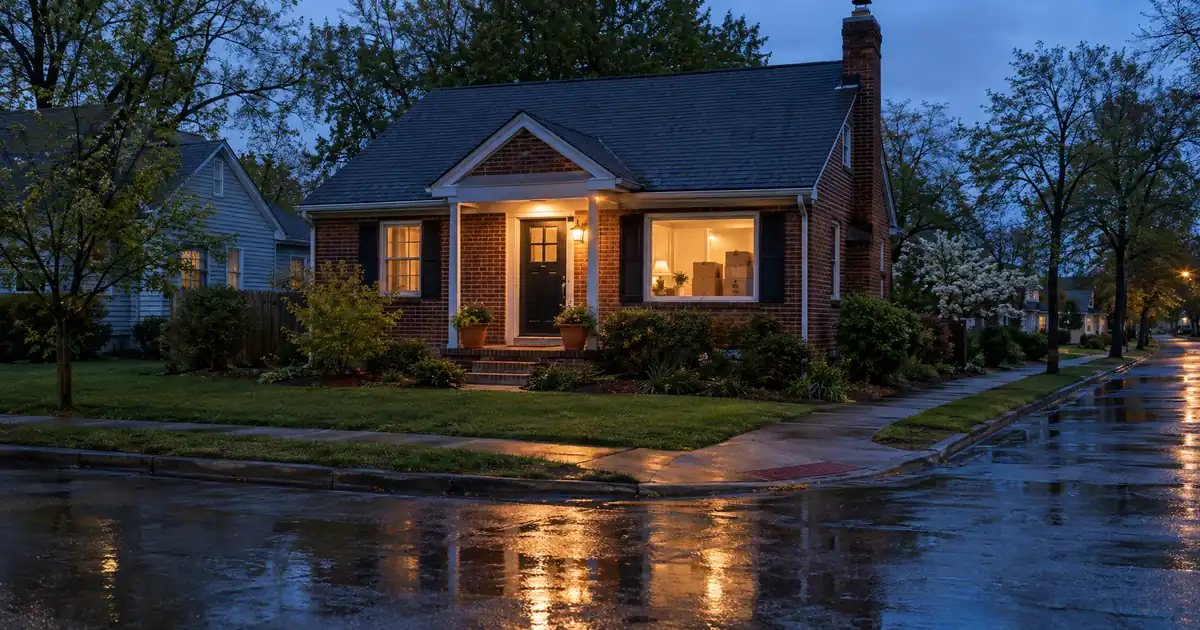
The Quick Read: The FHA appraiser checks that the home is safe, sound and secure, and reports the value. Flagged items must be resolved before the loan can be insured, but cosmetic wear usually is not a required repair. The appraisal is not a home inspection, and FHA does not guarantee the home’s condition. Every figure here is subject to lender guidelines and full file review, and nothing is a commitment to lend.
What Does the FHA Appraiser Actually Evaluate?
The appraiser does two jobs on one report: an opinion of value and a condition review. HUD calls the condition standard Minimum Property Requirements, or MPR. HUD’s Handbook 4000.1 glossary defines MPR as the general requirement that every FHA-insured home be safe, sound and secure.
FHA payment estimate
Starting assumptions reflect an example price and the FHA minimum investment. Replace them with your own figures.
Editable benchmark: 7.32% as of October 22, 2026 · Freddie Mac 30-year average via FRED®. A conventional market reference, not an FHA loan quote.
Illustrative starting assumptions: a $350,000 price, the FHA minimum investment as the down payment, a thirty-year term at the current Freddie Mac benchmark, and property taxes and insurance estimated at typical national rates. Every field is editable.
Illustrative estimate only — not a Loan Estimate, approval, quote, or commitment to lend. The rate field carries the weekly Freddie Mac thirty-year conventional benchmark, a market reference and not an FHA loan quote; your rate is set by the lender at lock. FHA mortgage insurance follows HUD’s published schedule for the term, leverage and loan size entered; taxes, insurance and dues are editable estimates; closing costs are not included; county loan limits are not checked here. Licensed in sixteen states for consumer mortgages. Lendmire is not affiliated with or acting on behalf of FHA, HUD, or the federal government.
The appraiser is an FHA Roster Appraiser. That appraiser observes the property, notes its conditions, analyzes how they affect value and marketability, and reports both. HUD’s own wording limits the scope: the appraiser reports readily observable conditions. That is less than a licensed home inspector does.
Across the wholesale programs Lendmire places FHA files with, this is where buyers get surprised. They assume the appraiser will find everything wrong with the house. Not so. The appraiser reports what is visible and what bears on the standard. Nothing more.
If you are comparing programs, Lendmire’s FHA loan programs page covers how the loan itself is structured.
Key Terms Defined
Minimum Property Requirements (MPR): HUD’s standard that an existing home be safe, sound and secure to be FHA-insured.
Minimum Property Standards (MPS): The regulatory requirements that apply to new construction in place of MPR.
FHA Roster Appraiser: An appraiser approved to value homes for FHA-insured loans.
Mitigated finding: A deficiency the lender has adequately addressed, per HUD’s glossary.
Required repair: A condition the lender must see cured, or documented as cured, before the loan is endorsed.
203(k): An FHA program that insures one mortgage covering a purchase or refinance plus repair costs.
Safe, Sound, Secure: What Each Word Means on the File
Safe means no hazard to the people living there. Sound means the structure and major systems hold up. Secure means the home protects the occupants and the property from the elements and from unwanted entry.
The standard is not cosmetic. Worn carpet, dated cabinets and a tired kitchen do not fail it. But some items that look cosmetic can trigger a repair. Chipping or peeling paint in an older home is the usual example, because of lead-paint rules for homes built before 1978. Because the exact paint rule is set out in HUD Handbook 4000.1 and the details vary by situation, confirm the specifics with the lender.
What Gets Looked At, and the Usual Fix
HUD’s handbook sets the framework. Within it, the items that most often draw a condition are consistent across files. Treat the fixes below as typical, not guaranteed, because the lender and underwriter decide how each finding is resolved.
| Area | What the appraiser reviews | Typical fix |
|---|---|---|
| Roof | Leaks, worn surface, remaining life | Repair, or a roofer’s report |
| Foundation and crawl space | Cracks, settling, moisture | Structural engineer report |
| Heating, plumbing, electrical | Working, safe, no exposed hazards | Licensed trade repair |
| Water and sewage | Safe supply, working septic | Specialist test or repair |
| Paint | Peeling or chipping, mainly pre-1978 | Scrape and repaint safely |
| Stairs and handrails | Missing or unsafe rails | Install rail |
| Attic and wood-destroying insects | Visible damage or activity | Pest report and treatment |
Roof remaining life, the paint cutoff year, the handrail step count and pest-inspection triggers all show up in lender checklists. The exact thresholds live in Handbook 4000.1, sections II.A and II.D. Confirm them there rather than trusting a summary, including this one.
Required Repair, Advisory Note or Cosmetic?
The appraiser reports. The lender decides. That split is the part most buyers never hear.
HUD’s guidance also requires the appraiser to say so plainly when no deficiencies were observed. A clean report is stated, not implied. When the appraiser does see a deficiency, it appears as a condition or required repair.
Three questions decide what happens next:
- Does the observed condition meet MPR?
- Does it affect value or marketability?
- Can the lender document a cure, either a completed repair or a specialist report?
A lender can also add its own conditions beyond the FHA minimum. So two files with the same finding can be handled a little differently depending on the lender’s overlays.
What Happens After the Appraiser Flags a Problem
Here is the sequence on a typical file.
1. The lender orders the appraisal from an FHA Roster Appraiser. The borrower does not pick the appraiser.
2. The appraiser inspects what is readily observable, including a look at the attic and the foundation or crawl space where access allows.
3. The report states the value and lists any conditions or required repairs, or states that none were observed.
4. The lender and underwriter decide how to resolve each finding. A finding counts as mitigated once the lender has adequately addressed it.
5. Repairs get completed, and the lender verifies completion, usually through a re-inspection or completion report, before the loan is endorsed.
6. The borrower receives a copy of the appraisal.
Picture a buyer under contract on an older house with peeling exterior paint and a roof the appraiser thinks is near the end of its life. The report lists both. The lender asks for the paint to be properly addressed and for a roofer’s report on remaining life. The seller does the paint. The roofer’s report comes back acceptable. The lender documents both, and the findings are mitigated. If the roofer had said the roof needed replacing, the conversation would shift to who pays, or to a different house.
The friction on these files is almost never the finding. It is the documentation of the cure. A repair done without a contractor invoice or completion report leaves the lender with nothing to clear the condition against. Keep paperwork for every repair.
If the Home Does Not Pass
If a property cannot be brought up to MPR, the loan cannot be insured. That is the hard edge. The buyer has five realistic paths.
| Option | How it works | Who carries the cost |
|---|---|---|
| Seller repairs | Seller cures before closing | Seller |
| Renegotiate | Price or credit adjusts | Shared by agreement |
| Buyer pays repairs | Buyer funds the cure | Buyer, in cash |
| Repair-financing loan | 203(k) rolls repairs into the mortgage | Added to the loan |
| Walk away | Switch loans or pick another house | None |
A repair condition means someone funds it: the seller, the buyer or a third party. Which one depends on your purchase contract and how hard each side is willing to push.
The 203(k) Route for Homes That Need Work
HUD’s 203(k) program insures a single mortgage covering the purchase or refinance plus the repairs. HUD lists eliminating health and safety hazards that would violate MPR as an eligible improvement. So a house that fails on condition can sometimes be financed with the fix built in.
There are two types. Limited 203(k) covers minor, non-structural repairs and does not require a 203(k) Consultant. Standard 203(k) allows structural repairs and does require one. Per HUD’s 203(k) FAQ, the Limited cap is reviewed annually, so confirm the current figure with your lender before planning around it. The Standard type has a minimum repair cost of $5,000. HUD’s program page says Limited funds can pay for repairs identified by a home inspector or an FHA appraiser. Permits are required before work starts.
Rolling repairs into the mortgage changes the loan amount and the budget. Weigh that before choosing it over a seller repair.
Where the General Rule Breaks
New construction. MPS applies instead of MPR.
Existing manufactured homes. HUD’s glossary defines an existing manufactured home as one bought more than 18 months after manufacture, and it must be appraised to set the maximum loan amount. Lenders commonly ask for a foundation certification too. Have that checked with the lender.
Wells and septic. A January 2023 Handbook transmittal removed the well-water test requirement where the well-to-septic distance is under 100 feet, to align with MPR. Older advice online may still say otherwise.
Condominiums. The Handbook treats condo projects in a separate section, so the project’s status matters alongside the unit’s condition.
Two- to four-unit homes. FHA requires owner occupancy. The condition standard applies to the whole building, and the buyer lives in one unit.
Refinances. The condition standard applies to refinances too. On the streamline of an existing FHA loan, no appraisal is required at all, so no condition review happens there. The FHA rate-and-term with an appraisal and the FHA cash-out both do bring an appraiser back in.
Appraisal vs. Home Inspection
| Factor | FHA appraisal | Home inspection |
|---|---|---|
| Who orders it | Lender | Buyer |
| Purpose | Value and minimum condition | Full condition picture |
| Depth | Readily observable items | Systems and components |
| Required by FHA | Yes | No |
| Protects | Lender and marketability | Buyer |
HUD’s consumer notice, the “For Your Protection: Get a Home Inspection” form, says the appraisal is not a home inspection and does not replace one. It also says FHA does not guarantee the home’s value or condition, and that if problems turn up after closing, FHA cannot lend money for repairs or buy the home back. That is the hidden-cost risk. A passed appraisal means the house met a minimum standard. Not that it is free of problems.
Buyers can skip an inspection. Skip it and you carry what the appraiser could not see.
What the Borrower Gets to See
Under the ECOA Valuations Rule, the lender must tell you in writing about your right to a copy of the appraisal. The CFPB’s transaction coverage factsheet covers that notice for first-lien dwelling applications. The copy must arrive promptly after the appraisal is completed, and the exact timing varies by file and lender. You can waive the early timing, but the copy still has to be delivered at or before closing. The copy is free, though the lender may charge a reasonable fee for the appraisal itself, and you get the copy even if the loan does not close.
Read the condition findings when the report arrives. Appraisal fees vary by property and region.
Prep Checklist for Buyers and Sellers
- Walk the exterior for peeling paint, missing handrails and roof wear before the appraiser does.
- Confirm that heat, water and electricity are on and working at the property.
- Clear access to the attic and crawl space.
- Keep invoices and permits for any recent repairs.
- Hire your own inspector. The appraisal will not do it.
Seller prep matters as much as buyer prep. A seller who fixes a handrail and repaints a peeling porch before the appraisal removes two common conditions.
What the Borrower’s Decision Looks Like
Buyers on a 96.5% maximum financing file, with the 3.5% minimum investment from a 580 decision score, have little cash cushion. That makes a surprise repair condition more painful. Subject to lender guidelines and full file review, the practical decision comes down to this: can the seller cure it, can you absorb it, or is a repair-financing loan a better fit than this house on this contract?
If you are buying a home and want to see whether an FHA loan fits your file, Lendmire can help you compare the options and what each one asks of the file.
Frequently Asked Questions
Can an FHA appraiser fail a house?
The appraiser does not pass or fail it. The report lists conditions, and the lender decides which must be cured. If a home cannot be made to meet MPR, the loan cannot be insured, so the effect is similar.
Does peeling paint matter?
It can, mainly in homes built before 1978 because of lead-paint rules. In newer homes it matters mostly when it exposes the surface to moisture or deterioration. Confirm the specifics in HUD Handbook 4000.1 and with the lender.
Do I need a home inspection with an FHA loan?
FHA does not require one and does not perform one. HUD’s notice gives you the choice. An inspection is still the only way to learn about conditions the appraiser would not report.
Who pays for required repairs?
It depends on the contract and negotiation. The seller, the buyer or a third party funds the cure. A 203(k) can fold repair costs into the mortgage instead.
Can I get a copy of the appraisal?
Yes. The lender must provide it, and the copy is free. You get it even if the loan does not close.
For your own numbers, request a scenario review with Lendmire.
About Lendmire
Lendmire (NMLS# 2371349) is a mortgage broker licensed for consumer lending in 16 states. Lendmire arranges FHA, VA, conventional and jumbo purchase and refinance loans through wholesale lenders; every file is underwritten by the lender under the applicable program guidelines. Scotsman Guide named Lendmire a Top Mortgage Workplace in both 2025 and 2026.
Get Started
Ready to find the right loan for you?
In about two minutes you can review financing options available for your home or investment property. No commitment required.
Informational only. Not a Loan Estimate, approval, or commitment to lend. Program availability and eligibility are subject to lender guidelines, credit approval, property review, and underwriting.
References
1. HUD Handbook 4000.1 Glossary (Update 15)
3. HUD, For Your Protection: Get a Home Inspection (HUD-92564-CN)
4. CFPB ECOA Valuations Rule transaction coverage factsheet
This article is part of Lendmire’s FHA loan program — full qualification details, guidelines, and scenarios live on the program page.
Related reading: Can an FHA Loan Finance a Second Home or Investment Property? · Refinance Requirements for Switching Into VA or Out of FHA · FHA vs VA Cash-Out Refinance Requirements for Veterans
Brandon Miller
Founder & CEO, Mortgage Loan Originator, Lendmire LLC
- Mortgage Loan Originator · NMLS# 1129696 · Verify on NMLS Consumer Access
- North Carolina Real Estate Broker · License# 343312 · Verify on NCREC
- North Carolina Insurance Producer · License# 19053198 · Property, Casualty, Life, Health · Verify on NAIC SBS
- Lendmire LLC · Firm NMLS# 2371349 · Verify firm licensure
Disclosure information. Lendmire is a state-licensed mortgage brokerage under NMLS# 2371349. Lendmire is not a depository institution, direct lender, or financial advisor — all loans referenced are placed through wholesale lender partners and are subject to each lender's underwriting standards. This article is provided for general informational purposes and is not a commitment to lend, nor does it constitute financial, legal, or tax advice. Loan programs, terms, rates, and qualification standards change without notice and depend on borrower profile, property type, and the state in which the subject property is located. Equal Housing Opportunity provider. NMLS Consumer Access: nmlsconsumeraccess.org.