
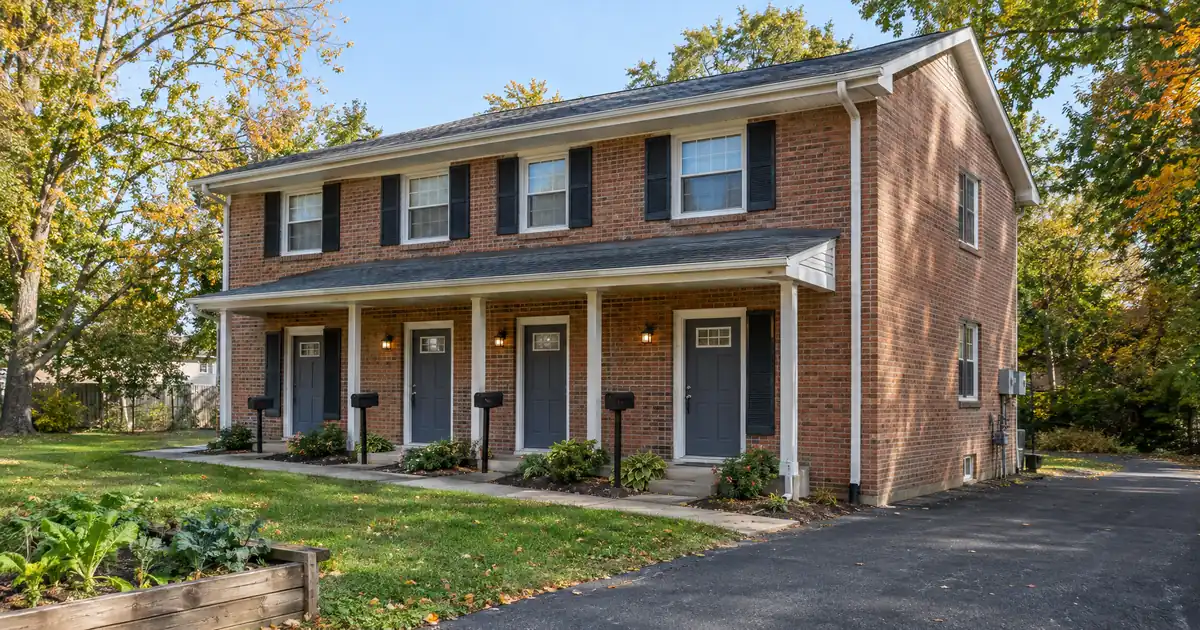
The Quick Read: Usually not, but in a defined set of situations, yes. For a veteran with full entitlement who is exempt from the funding fee, VA tends to win on a 2-4 unit. FHA can come out ahead when the funding fee is steep, when entitlement is partly used, when the VA reserve and rent-documentation requirements get in the way, or when the buyer has no VA eligibility at all. The call depends on your entitlement, your down payment, the rents, and the building.
Who Is Actually Choosing Between These Two?
A buyer with VA eligibility who is looking at a duplex, triplex, or fourplex is the only person who truly faces a “versus.” Everyone else is simply asking whether FHA fits.
FHA payment estimate
Starting assumptions reflect an example price and the FHA minimum investment. Replace them with your own figures.
Editable benchmark: 7.32% as of October 22, 2026 · Freddie Mac 30-year average via FRED®. A conventional market reference, not an FHA loan quote.
Illustrative starting assumptions: a $350,000 price, the FHA minimum investment as the down payment, a thirty-year term at the current Freddie Mac benchmark, and property taxes and insurance estimated at typical national rates. Every field is editable.
Illustrative estimate only — not a Loan Estimate, approval, quote, or commitment to lend. The rate field carries the weekly Freddie Mac thirty-year conventional benchmark, a market reference and not an FHA loan quote; your rate is set by the lender at lock. FHA mortgage insurance follows HUD’s published schedule for the term, leverage and loan size entered; taxes, insurance and dues are editable estimates; closing costs are not included; county loan limits are not checked here. Licensed in sixteen states for consumer mortgages. Lendmire is not affiliated with or acting on behalf of FHA, HUD, or the federal government.
Both programs require you to live in one of the units. Both stop at four units. Neither is meant for a pure rental purchase. If you will not occupy the building, neither of these programs applies.
Here is how the two compare on a 2-4 unit purchase.
| Factor | FHA | VA |
|---|---|---|
| Down payment | 3.5% minimum at a 580 score | No down payment for eligible borrowers |
| Upfront cost | 1.75% premium, financed | One-time funding fee unless exempt |
| Monthly insurance | Annual premium for the loan | None |
| Unit count | 1 to 4, owner-occupied | Up to 4, owner-occupied |
| Who can use it | Most buyers who meet guidelines | Eligible veterans and service members |
Every figure above is subject to lender guidelines and full file review. Lendmire’s FHA loan programs are arranged through wholesale lenders in 16 states, and the numbers here reflect the programs those lenders work with.
Why Does VA Usually Win on a 2-4 Unit?
VA wins on structure. VA states that its loans need no down payment and carry no monthly mortgage insurance. FHA, by contrast, asks for at least 3.5% down at a 580 score and layers on two premiums. These specifics are subject to lender guidelines and a full review of property, leverage, and credit.
On FHA, there is an upfront premium of 1.75% of the base loan, which is financed into the balance. There is also an annual premium that runs between 0.15% and 0.75% of the balance, depending on term, loan amount, and LTV. On a thirty-year loan above 90% LTV, that annual premium lasts for the full term. At or below 90%, it ends after eleven years. Terms depend on the lender’s guidelines, the property type, the leverage, and a full review of the credit profile.
A VA buyer skips all of that. The trade-off is the funding fee, which is a one-time charge. That fee is where the comparison gets interesting.
When Does the VA Funding Fee Tilt Toward FHA?
The funding fee can narrow VA’s lead when the borrower is not exempt, has used the benefit before, and is putting little down. VA charges the fee as a percentage of the loan amount, not the purchase price. A veteran who receives VA compensation for a service-connected disability is generally exempt, and for that borrower the fee argument for FHA largely disappears.
For a non-exempt repeat-use buyer with a small down payment, the funding fee sits at its highest tier. In that case it is worth putting the two programs side by side. FHA’s upfront premium and annual premium are real costs too, so this is a comparison to run, not a foregone conclusion.
Picture a veteran who has used the benefit before, has no disability exemption, and plans to put almost nothing down on a fourplex. The funding fee on that file is at its top level. Now picture the same buyer with 3.5% down on FHA. The upfront premium is lower than that top-tier fee, but the annual premium runs for years. Which one costs less over the time you expect to hold the loan depends on how long you stay and whether you plan to refinance. A Loan Estimate from each program shows the difference on your actual file. The exact numbers vary by lender and program and follow a full review of property, leverage, and credit.
The flip point: if you are exempt from the funding fee, VA almost always wins on cost. If you are not exempt and expect to refinance within a few years, the math gets closer than most buyers expect.
Does Partial Entitlement Change the Answer?
Yes, and this is one of the less obvious reasons FHA can win. A veteran who has used part of their entitlement may lose the zero-down benefit once the loan passes a certain size. Multi-unit purchases push loan size up fast, so partial entitlement hits 2-4 unit buyers harder than single-family buyers.
When that happens, VA may ask for a down payment on the portion above the threshold. That narrows VA’s biggest advantage. FHA, with its 3.5% minimum, can start to look comparable, though FHA’s insurance premiums still apply.
This is a case to model with the real loan amount. Do not assume either answer.
How Do Reserves and Rent Documentation Differ?
VA guidance for multi-unit files ties rental income and 3-4 unit purchases to six months of reserves and proof of landlord experience. Rental income on a VA file is typically counted at a portion of prior rents or the appraiser’s opinion of fair rent, not the full amount. VA training material on this point is older, so treat it as a general picture and confirm the current rules with your loan officer.
FHA handles rent differently. Across the wholesale programs Lendmire places files with, a 3-4 unit FHA purchase must also pass a property-level self-sufficiency test. In plain terms, the appraiser’s market rent on all the units is compared to the full housing payment. A 1-2 unit property is reviewed on your income alone, with no property-level test.
That difference matters for a 2-unit buyer. A duplex can often work on FHA even when VA’s reserve requirement is tight. A fourplex is harder, because the self-sufficiency test is the usual reason a 3-4 unit FHA deal falls apart.
Neither program counts all of the rent. Each applies its own haircut and its own paperwork. The same building can pass one program and fail the other.
Is FHA Simply the Answer When You Are Not a Veteran?
Yes. For a buyer with no VA eligibility, FHA is a primary 2-4 unit option, not a runner-up. The CFPB describes FHA loans as generally more flexible than conventional loans on credit and down payment. Pricing and available terms vary by lender, borrower profile, property type, and full underwriting review.
A few features make FHA useful for house-hackers who are not veterans:
- A non-occupant co-borrower is allowed, which can help a buyer whose income alone falls short.
- Seller or interested-party contributions are allowed up to 6% of the price.
- The base ratio pair is 31/43 (housing to total debt) with no compensating factors. Documented compensating factors can reach 40/50 at the top tier, and the automated finding governs most files.
HUD’s credit-event waiting periods also apply. Two years from a chapter 7 discharge and three years from a foreclosure are HUD rules, not a promise from any one lender.
What About the Credit Score?
FHA’s minimum investment is 3.5% at a decision score of 580 or higher. HUD has a lower tier for scores of 500-579 that asks for 10% down, but the wholesale programs Lendmire works with start at 580, so that lower tier is not reachable through this network. Final terms depend on the lender’s guidelines, the property type, and the borrower’s complete credit picture.
Some lenders set a higher floor than the program minimum. That is a lender choice, not an FHA rule, and it is one reason the same borrower can get different answers from different lenders. VA does not set a single credit minimum the way FHA does, but individual lenders apply their own standards on VA files too.
How Do Loan Limits Factor In?
FHA loan limits are set by county and change every year. HUD sets them through a mortgagee letter, announced on HUD’s FHA INFO page, and HUD’s lender page lists the one-unit floor and ceiling for the year. A 2-4 unit property has a higher limit than a one-unit home, and high-cost counties sit well above low-cost ones.
County loan limits apply to your property, so check the figure for the county you are buying in. For a higher-priced multi-unit building, the limit can matter. If the loan would exceed it, FHA may not work and a different structure is needed.
VA has no loan limit for fully entitled borrowers, but the limit ties into the zero-down benefit for partially entitled ones, as covered above.
A Side-by-Side Scenario
Run this through in percentages. A veteran with full entitlement and a disability exemption buys a duplex with no money down on VA. There is no monthly mortgage insurance and no funding fee. FHA cannot beat that on cost.
Now change three things. The same buyer is not exempt, has used the benefit before, and has partial entitlement left. VA now charges its highest funding-fee tier and may require some cash down because of the loan size. FHA asks for 3.5% down, an upfront premium of 1.75%, and an annual premium. The gap has narrowed. On some files, with a short expected hold, it reverses.
One more variation: the same buyer wants a fourplex. VA’s six-month reserve requirement and landlord-experience documentation apply. FHA’s self-sufficiency test applies. Now the question is which program’s paperwork your building and your savings can satisfy. Neither answer is automatic. Leverage, reserves, and pricing vary by lender and program; the final terms follow the full file review.
What Changes Later?
If you move out, both programs expect the property to have been your primary residence for a period. Renting out every unit later is a different situation, and refinancing from FHA into VA is one way some veterans drop the monthly insurance down the road.
On the FHA side, the FHA Streamline refinances an existing FHA loan with no appraisal, a limited credit review, and a net tangible benefit. The premium continues. The FHA rate-and-term with an appraisal reaches 97.75% on a principal residence occupied for the previous twelve months. These are mechanics worth knowing before you choose FHA as a stepping stone.
Key Terms Defined
Entitlement: the amount of VA backing a veteran has available, which can be full or partly used.
Funding fee: the one-time VA charge, based on the loan amount, that exempt borrowers do not pay.
Self-sufficiency test: the FHA check on 3-4 unit properties that compares the appraiser’s market rent to the housing payment.
Annual premium: FHA’s ongoing mortgage insurance, charged as a percentage of the balance.
Reserves: liquid funds left after closing, measured in months of the housing payment.
Non-occupant co-borrower: a person on the loan who will not live in the home, allowed on FHA.
Quick Decision Checklist
- Are you VA-eligible with full entitlement? VA likely leads.
- Are you exempt from the funding fee? VA leads by more.
- Is entitlement partly used and the loan large? Model both programs.
- Is it a 3-4 unit with thin reserves? Compare VA reserves against FHA’s self-sufficiency test.
- Do you need a non-occupant co-borrower? FHA allows it.
- No VA eligibility? FHA is your main 2-4 unit path.
Frequently Asked Questions
Can I use FHA even if I qualify for VA?
Yes. Eligibility for one program does not block the other. Many veterans compare both and pick the one that fits the file. The right choice depends on funding-fee status, entitlement, down payment, and how the building’s rents are counted under each program.
Does a fourplex work better on VA or FHA?
It depends on the file. VA asks for six months of reserves and landlord-experience documentation on larger multi-unit purchases, while FHA requires the self-sufficiency test on 3-4 units. A borrower with strong reserves but modest rents may prefer VA. A borrower with thin reserves and strong market rents may find FHA easier.
Does FHA mortgage insurance ever go away?
Sometimes. On a thirty-year loan above 90% LTV, the annual premium lasts for the loan term. At or below 90% LTV, it ends after eleven years. Refinancing into another program is another way some borrowers remove it, subject to lender guidelines.
Can a non-veteran co-borrower help on a VA loan?
Mixed-borrower files are treated differently on each program, and VA’s rules on a non-veteran co-borrower are more limited. FHA allows a non-occupant co-borrower directly. If you are pairing a veteran with a family member, ask a loan officer to walk through whose income and occupancy count.
Do both programs count all the rent?
No. Each counts only a portion of the market rent and applies its own documentation requirements. Because the percentages and paperwork differ, one building can pass under one program and fall short under the other.
If you are buying a home and want to see whether an FHA loan fits your file, Lendmire can help you compare the options and what each one asks of the file. For related reading, Lendmire’s piece VA Loan vs. FHA Loan for a Veteran House Hacking a 2-4 Unit goes deeper on the same decision.
For your own numbers, request a scenario review with Lendmire.
About Lendmire
Lendmire is a mortgage brokerage (NMLS# 2371349) licensed for consumer mortgage lending in 16 states, arranging FHA, VA, conventional and jumbo purchase and refinance loans through a wholesale lending network. Eligibility is determined by the lender on each file. Scotsman Guide named Lendmire a Top Mortgage Workplace in both 2025 and 2026.
Get Started
Ready to find the right loan for you?
In about two minutes you can review financing options available for your home or investment property. No commitment required.
Informational only. Not a Loan Estimate, approval, or commitment to lend. Program availability and eligibility are subject to lender guidelines, credit approval, property review, and underwriting.
References
1. VA – Funding fee and closing costs
4. HUD – FHA Lenders Single Family
This article is part of Lendmire’s FHA loan program — full qualification details, guidelines, and scenarios live on the program page.
Related reading: How to Qualify for an FHA Loan as a House Hacker Buying a 2–4 Unit · Can You Get an FHA Loan and What Decides Approval? · Can You Choose a 15-Year Term on an FHA Loan?
Brandon Miller
Founder & CEO, Mortgage Loan Originator, Lendmire LLC
- Mortgage Loan Originator · NMLS# 1129696 · Verify on NMLS Consumer Access
- North Carolina Real Estate Broker · License# 343312 · Verify on NCREC
- North Carolina Insurance Producer · License# 19053198 · Property, Casualty, Life, Health · Verify on NAIC SBS
- Lendmire LLC · Firm NMLS# 2371349 · Verify firm licensure
Required disclosures. Lendmire (NMLS# 2371349) operates as a licensed mortgage broker, not a direct lender or depository. The discussion in this article is general in nature and should not be relied upon as financial, legal, or tax advice — every investment scenario is unique and should be reviewed by a qualified professional. Any loan inquiry is subject to lender underwriting, and this article is not a commitment to lend or a guarantee of approval. Mortgage rates, loan terms, and program guidelines vary by borrower, property, and state, and may change without notice. Equal Housing Opportunity. Verify licensure at NMLS Consumer Access.