
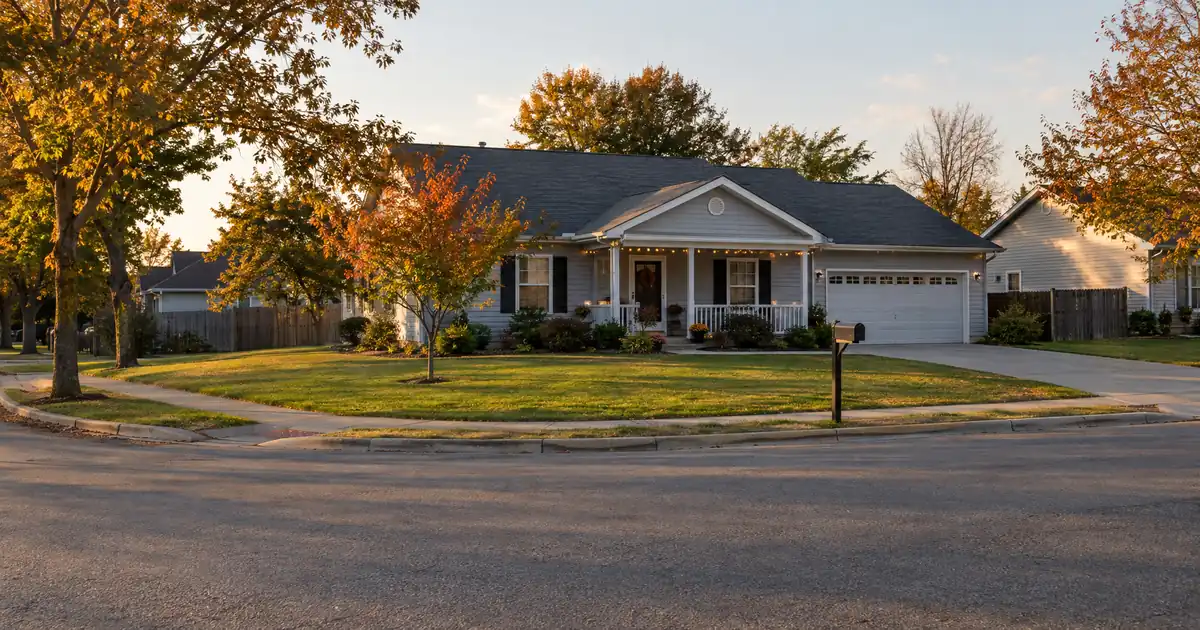
The Quick Read: FHA financing on a recently renovated home is allowed, but the seller’s ownership timeline decides whether the file works. The FHA flipping rule compares the date the seller acquired the home with the date your purchase contract was signed, not your closing date. A home resold very soon after the seller acquired it is not eligible unless an exemption applies. Once that initial window has passed, the home is generally eligible, with extra value support when the price jumped sharply.
Key Takeaways
- The clock runs from the seller’s settlement date to the date your contract is signed.
- A contract signed on or before day 90 can make the home ineligible for FHA insurance.
- Days 91 to 180 may bring a second appraisal if the price rose steeply.
- Several seller types are exempt, including HUD itself.
- Passing the flip rule does not mean the renovation was done well. Condition is a separate question.
What Counts as a Flip, and Why Does FHA Care?
HUD’s 2003 final rule defines flipping as reselling a recently acquired property for a considerable profit at an artificially inflated value. HUD wrote the rule to protect FHA buyers from becoming victims of that practice. The rule’s history also notes that flips can involve minor cosmetic work meant to appeal to an unwary buyer.
FHA payment estimate
Starting assumptions reflect an example price and the FHA minimum investment. Replace them with your own figures.
Editable benchmark: 7.32% as of October 22, 2026 · Freddie Mac 30-year average via FRED®. A conventional market reference, not an FHA loan quote.
Illustrative starting assumptions: a $350,000 price, the FHA minimum investment as the down payment, a thirty-year term at the current Freddie Mac benchmark, and property taxes and insurance estimated at typical national rates. Every field is editable.
Illustrative estimate only — not a Loan Estimate, approval, quote, or commitment to lend. The rate field carries the weekly Freddie Mac thirty-year conventional benchmark, a market reference and not an FHA loan quote; your rate is set by the lender at lock. FHA mortgage insurance follows HUD’s published schedule for the term, leverage and loan size entered; taxes, insurance and dues are editable estimates; closing costs are not included; county loan limits are not checked here. Licensed in sixteen states for consumer mortgages. Lendmire is not affiliated with or acting on behalf of FHA, HUD, or the federal government.
So the rule is not anti-renovation. A fully rehabbed house is fine. The rule targets quick resales where the price climbs without real value behind it.
On an FHA file, the funding lender carries this rule as a documentation requirement. That lender gathers the papers and submits them to HUD. Lendmire, as the broker, arranges the loan but does not hold or certify that paperwork, and you do not prove compliance yourself. Your job is mostly the timing of your contract. You can read more on Lendmire’s FHA loan programs page.
How Is the Clock Counted?
The clock starts on the date the seller acquired the property, based on settlement. It stops on the date the sales contract that produces your FHA loan was signed. The regulation, 24 CFR 203.37a, calls that the re-sale date.
That detail catches people. The 90-day period is measured to the contract date, not to closing.
Picture a seller who settled on a purchase in early spring. A buyer signs a contract on day 60. Closing is set for day 100. The home still fails the test, because the contract date counts. If that same buyer waited and signed on day 91, the home would pass the basic timing test.
The tiers look like this:
| Seller ownership at contract | FHA eligible? | What changes |
|---|---|---|
| 90 days or less | No, unless exempt | Contract date is too early |
| Days 91 to 180 | Generally yes | Extra value support if price rose steeply |
| Day 181 to 12 months | Generally yes | HUD may ask for more value support past a set price threshold |
| Beyond 12 months | Yes | Standard appraisal and property rules |
The regulation has a separate paragraph for resales between 91 days and 12 months, and another for resales after 12 months. In the longer window, HUD has authority to require more value documentation if the price crosses a threshold set by notice. Past 12 months, lenders generally treat the flip rule as no longer a factor, though normal appraisal and property standards still apply.
What Happens in the Middle Window?
If the resale price is more than 100 percent above what the seller paid, the lender must document the higher value. That documentation must include an appraisal from a different appraiser. HUD’s FHA Connection guidance describes the same 91 to 180 day trigger, and notes that the threshold can be tied to the property’s ZIP code in designated areas.
A second appraisal is not automatic for every home in this window. It depends on how far the price rose. And there is an alternative: the lender can instead document that the increase came from rehabilitation of the property.
What happens if the two values differ? HUD’s handbook controls which value the lender uses. The lender does not simply pick the one it likes. Some lender websites claim the lower value wins past a set gap, but that is not something to rely on. Ask your loan officer how the current handbook treats it.
How does this affect you as the buyer?
- Loan size. The value used can change the loan amount. A lower value may mean you bring more cash.
- Timing. Another appraiser means more steps before the file reaches a decision.
- Cost. The regulation does not say who pays. Ask before you sign.
- Your contract. An appraisal contingency protects you if value comes in short. Keep it in place.
For a 203(k) renovation loan, the first appraisal is “subject to” completed work and a required second appraisal is “as-is.”
Which Sellers and Sales Are Exempt?
Exemptions are real, and they surprise many buyers. Under the regulation, the time limits do not apply to:
- Sales by HUD of its own REO properties.
- Sales of homes bought by an employer or relocation agency for an employee’s move.
- Sales by state and local government agencies.
A 2006 final rule added government-sponsored enterprises, chartered financial institutions, and approved nonprofits that bought HUD homes at a discount with resale limits. A 2004 interim rule extended the REO exception to other federal agencies. HUD’s system help also lists partial or multiple title transfers and an initial builder sale as reasons the rules may not apply.
If an exemption applies, the lender must put proof in the case binder. Here’s the catch: you can’t assume it. Ask the lender to confirm the exemption in writing before you rely on it. Some lender sites mention inheritance and disaster-area exceptions. Confirm those in the current handbook before counting on them.
How Do You Verify the Seller’s Acquisition Date?
Do not take a listing’s word for it. The lender must collect proof of the seller’s acquisition date. Acceptable documents include:
1. A property sales history report.
2. The recorded deed.
3. A property tax bill.
4. A title commitment.
Ask your agent to pull the sales history early, before you write an offer. It tells you which tier you are in. If the seller is an investor entity, check the entity that actually holds title. An assignment of the sales contract is a separate problem. The regulation says the home must be bought from the owner of record, so a deal built on assigning a contract does not fit.
Once your lender logs the appraisal in HUD’s system, the case shows a flag if a flipping rule applies. That is a lender-side step, but it is useful to know what the flag means if you see it.
Is a Renovated Home Actually FHA-Ready?
Passing the flip test says nothing about workmanship. HUD’s handbook glossary notes that an appraiser’s inspection covers readily observable conditions and is not as comprehensive as a licensed home inspector’s.
So hire an independent inspector. Ask about permits for major work. Look for fresh paint over stains, new flooring over soft spots, and updated kitchens paired with older systems. FHA property standards still apply, and a cosmetic flip can fail them.
What If Your Contract Is Too Early?
You have a few paths:
| Option | What it means | Tradeoff |
|---|---|---|
| Wait and re-sign | Sign a new contract after day 90 | Risk another buyer steps in |
| Ask for a later start | Seller holds the home until the window passes | Needs seller agreement |
| Different loan type | Conventional or VA may avoid this rule | Different leverage and credit rules |
| Buy unrenovated | Look at homes not recently flipped | Fewer finished options |
Switching loan types changes the whole file. Leverage differs. FHA allows up to 96.5% financing with 3.5% minimum investment at a 580 decision score, subject to lender guidelines. A different program may ask for more or less. Weigh that before you drop FHA over a few days of timing. Waiting for day 91 is often the cheaper fix.
If you also hold a VA entitlement, Lendmire’s piece VA Loan Rules for Combining With an FHA Loan on Two Homes explains how those rules interact.
Questions to Ask Before You Write the Offer
- When did the seller settle on the home?
- Is the seller an exempt type, such as HUD, a relocation company, or a government agency?
- Was the price increase tied to documented renovation?
- Were permits pulled for the work?
- Who pays if a second appraisal is needed?
- How does the lender treat two different values?
Bring the answers to your loan officer. Underwriting also looks at your own file: FHA programs start with ratios of 31/43 and reach up to 40/50 with documented compensating factors, and the automated finding governs most files. Program figures are subject to lender guidelines and full file review.
A Note for Sellers and Flippers
If you are selling a recent flip, your acquisition date drives your buyer’s options. Pricing a home within the first 90 days to an FHA buyer is a non-starter. You can list and negotiate early, but an FHA contract cannot be signed on or before day 90. Keep renovation records, permits, and receipts. If the price rose steeply, those records can support the rehabilitation alternative.
Key Terms Defined
Property flipping: buying a home and reselling it within a short period, often at a higher price.
Re-sale date: the date the contract that produces the FHA loan was signed.
Owner of record: the person or entity shown as titleholder in public records.
Second appraisal: a valuation from a different appraiser, required in some middle-window cases.
REO: real estate owned by a lender or HUD after a foreclosure.
203(k): an FHA loan that finances both a purchase and renovation.
Exemption: a seller or sale type the flipping rule does not cover.
Frequently Asked Questions
Can I buy a flipped house with an FHA loan?
Yes, in most cases. The home must pass the timing test, and the price increase may need extra support. A home resold too soon after the seller’s purchase is generally not eligible. After the required waiting period, it can work, subject to lender guidelines and full file review.
Does the contract date or closing date count?
The contract date counts. The rule measures from the seller’s settlement date to the date your purchase contract was signed. A later closing date does not fix a contract signed too early.
When is a second appraisal required?
It can apply between day 91 and day 180 when the resale price is more than 100 percent above the seller’s purchase price. The lender may instead document that the higher value came from rehabilitation. The threshold can differ by ZIP code in designated areas.
What if I signed too early?
The home may be ineligible for FHA insurance. Your options are to re-sign after day 90, ask the seller to wait, or switch loan types. Talk to your loan officer and agent before the contract’s deadlines pass.
Has the flip rule been repealed?
No. The flip rule has not been repealed. HUD suspended the 90-day rule from February 2010 to December 2014, and the rule has applied since. Check HUD’s current guidance before relying on any article, including this one.
If you are buying a home and want to see whether an FHA loan fits your file, Lendmire can help you compare the options and what each one asks of the file.
For your own numbers, request a scenario review with Lendmire.
About Lendmire
Lendmire — NMLS# 2371349 — is a mortgage broker that arranges FHA, VA, conventional and jumbo home purchase and refinance financing in 16 states through wholesale lenders. Every option is subject to the lender’s guidelines and full underwriting. Scotsman Guide named Lendmire a Top Mortgage Workplace in both 2025 and 2026.
Get Started
Ready to find the right loan for you?
In about two minutes you can review financing options available for your home or investment property. No commitment required.
Informational only. Not a Loan Estimate, approval, or commitment to lend. Program availability and eligibility are subject to lender guidelines, credit approval, property review, and underwriting.
References
1. Federal Register 2003 final rule on property flipping
2. eCFR 24 CFR 203.37a Sale of property
3. HUD FHA Connection: Logging an Appraisal
4. Federal Register 2006 final rule on exemptions
This article is part of Lendmire’s FHA loan program — full qualification details, guidelines, and scenarios live on the program page.
Related reading: FHA Loans for Buyers Who Need a Cosigner: When Family Can Help · FHA Loans for Buyers in High-Cost Counties Near the Limit · FHA Gift of Equity Rules for a Home Bought From a Parent
Brandon Miller
Founder & CEO, Mortgage Loan Originator, Lendmire LLC
- Mortgage Loan Originator · NMLS# 1129696 · Verify on NMLS Consumer Access
- North Carolina Real Estate Broker · License# 343312 · Verify on NCREC
- North Carolina Insurance Producer · License# 19053198 · Property, Casualty, Life, Health · Verify on NAIC SBS
- Lendmire LLC · Firm NMLS# 2371349 · Verify firm licensure
Disclosures. The information presented in this article is general market commentary, not financial, legal, or tax advice. Lendmire is a mortgage brokerage (NMLS# 2371349) — not a direct lender or depository institution — and loan placement is subject to lender underwriting. Nothing in this content represents a commitment to lend. Loan terms, pricing, and program availability vary based on borrower qualifications, property characteristics, and state of subject property, and are subject to change at any time. Lendmire complies with Equal Housing Opportunity requirements. Consumer access: nmlsconsumeraccess.org.