
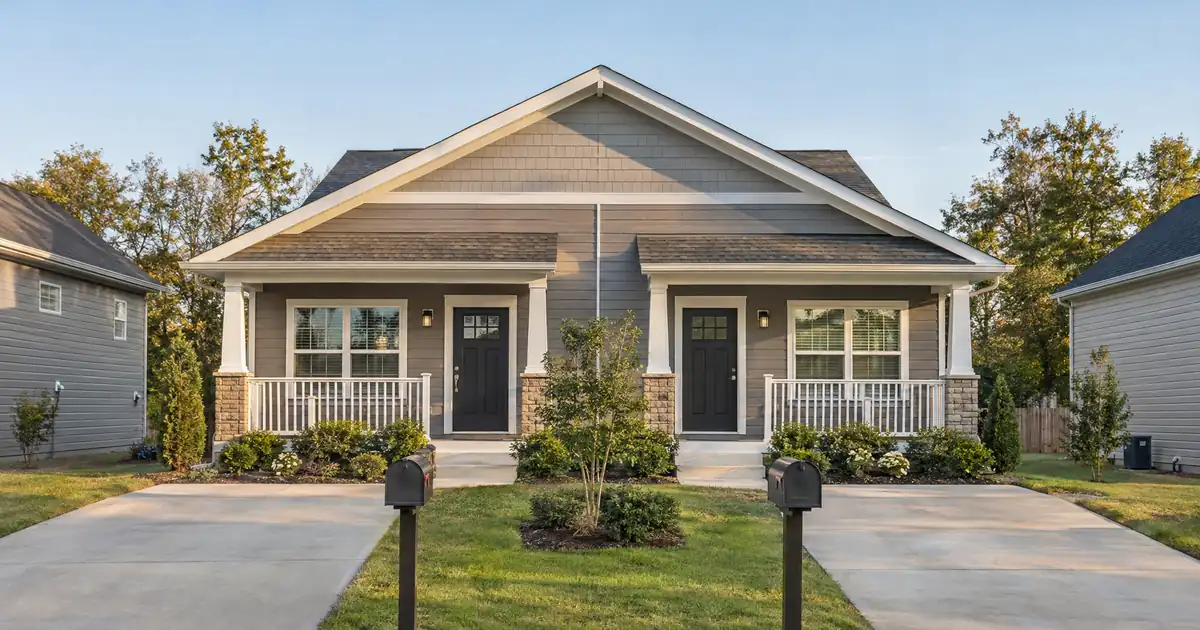
The Quick Read: A duplex is the simplest property type for a buyer who wants to live in one unit and rent the other with a low down payment. You live in one side, and the lender gives you partial credit for the other side’s rent when it counts your income. The loan is built around the home you live in, so the 3.5% minimum investment applies. Credit for rent is deliberately conservative, and it is not the same thing as monthly cash flow.
Key Takeaways
- You must live in one unit as your principal residence. FHA is an owner-occupant program, not an investor program.
- On a purchase, financing reaches 96.5% of value with a 3.5% minimum investment, starting at a 580 decision score, subject to lender guidelines.
- Only a portion of the appraiser’s market rent on the unit you don’t occupy counts toward qualifying. The unit you live in earns no credit.
- Qualifying and cash flow are two separate tests. You can pass the first and still feel the second.
- Mortgage insurance is part of the deal for most buyers at this leverage, and it lasts the life of the loan when you put down the minimum.
Why a Duplex Is the Easy FHA Case
A duplex is the cleanest version of house hacking under FHA. House hacking means living in one unit of a multi-unit home and letting a tenant help carry the cost. FHA treats one to four units as a single-family loan. So a duplex sits squarely inside the program, with the same low minimum investment a one-unit buyer gets.
FHA payment estimate
Starting assumptions reflect an example price and the FHA minimum investment. Replace them with your own figures.
Editable benchmark: 7.32% as of October 22, 2026 · Freddie Mac 30-year average via FRED®. A conventional market reference, not an FHA loan quote.
Illustrative starting assumptions: a $350,000 price, the FHA minimum investment as the down payment, a thirty-year term at the current Freddie Mac benchmark, and property taxes and insurance estimated at typical national rates. Every field is editable.
Illustrative estimate only — not a Loan Estimate, approval, quote, or commitment to lend. The rate field carries the weekly Freddie Mac thirty-year conventional benchmark, a market reference and not an FHA loan quote; your rate is set by the lender at lock. FHA mortgage insurance follows HUD’s published schedule for the term, leverage and loan size entered; taxes, insurance and dues are editable estimates; closing costs are not included; county loan limits are not checked here. Licensed in sixteen states for consumer mortgages. Lendmire is not affiliated with or acting on behalf of FHA, HUD, or the federal government.
Across the wholesale lenders Lendmire places FHA files with, the duplex is the one multi-unit purchase that rarely needs extra explanation. Three- and four-unit buildings draw an extra rent test. A duplex generally doesn’t. Confirm that point against the current FHA policy handbook, which is the final word.
You can read the broader program rules on Lendmire’s FHA loan programs page.
The Rules at a Glance
Here is the whole structure in one place. Every figure is subject to lender guidelines and a full file review. None of it is a commitment to lend.
| Topic | The rule | What it means for you |
|---|---|---|
| Occupancy | Live in one unit as your home | You can’t buy a duplex as a pure rental |
| Unit count | One to four units | A duplex is fully eligible |
| Investment | 3.5% minimum at a 580+ score | Far less cash than a typical investor loan |
| Maximum financing | Up to 96.5% of value | Leverage is high, so the payment carries more |
| Rent credit | A portion of market rent, other unit only | Rent helps, but not dollar-for-dollar |
| Mortgage insurance | Upfront plus annual premium | Both are part of your housing cost |
How the Lender Counts Your Rent
Here is the sequence on a purchase.
1. The appraiser sets market rent. A two- to four-unit appraisal uses the small-income-property report. It shows what the other unit should rent for in the open market. HUD’s rental income guidance in Mortgagee Letter 2023-17 says the lender documents proposed rent with that appraisal, plus leases if they exist.
2. The lender applies a haircut. Only a portion of that fair market rent counts. The lender uses the percentage in the handbook’s current policy, so check it with your loan officer rather than trusting a number from a blog.
3. The credited rent joins your income. It is added to your qualifying income. It is not subtracted from your payment.
4. The ratios get checked. The base pair is 31/43. That is housing cost as a share of income, then total debts as a share of income. With documented compensating factors, such as strong reserves or a long job history, the ceiling can reach 40/50 at the top credit tier. The automated underwriting finding governs most files.
5. The credit score matters. The wholesale programs Lendmire works with start at a 580 decision score for the 3.5% minimum.
Say you’re buying a duplex and the appraiser puts the other side at a healthy market rent. The lender credits a slice of it. Your own unit earns zero, since you can’t pay rent to yourself. That slice raises your qualifying income and may help your ratios clear.
The sneaky part is that the rent the lender credits is smaller than the rent you will actually collect. Good news for your budget, bad news if you expected the loan to treat rent as a full offset.
Qualifying Rent vs. Budget Rent
Rent used for lender review is what the lender credits to approve the file. Budget rent is what you actually expect to collect, minus vacancy and repairs. They answer different questions.
- Qualifying asks: do your ratios clear with the credited slice of rent added to income?
- Budgeting asks: after the mortgage payment, mortgage insurance, taxes and insurance, what does the tenant’s check really cover?
To build a break-even picture, take your full monthly housing cost and subtract the rent you can reasonably expect from a tenant. Then subtract nothing for the unit you live in. What’s left is your net out-of-pocket cost. Add a buffer for months the unit sits empty.
A property can pass the lender’s test and still leave you stretched. Treat the approval as permission to try, not proof the numbers are comfortable.
What Counts as a Legal Unit?
Only legal dwelling units count as units, and extra dwellings can change a duplex’s category. This is where the quiet surprises live.
- Basement or garage apartments. On a one-unit home, a single accessory dwelling stays a one-unit property. On a property with two or more units, each extra dwelling counts as another unit. So a duplex with a rented basement apartment can become a three-unit property, per the same HUD rental income guidance. That pulls in the extra tests that duplexes usually skip.
- Commercial space. Rent from commercial space is excluded from the rental income the lender counts. A storefront under the apartment helps your cash flow, not your approval.
- Boarders. A boarder rents a room inside your own unit. That follows its own handbook rules, separate from renting the second unit. A tenant in a separate unit is not a boarder.
- Condo duplexes. Condo projects have their own approval rules, so a condo-style duplex is a different file.
Before you make an offer, ask how many legal units the property has on record. An informal conversion can turn a clean file into a messy one. (It happens more than sellers admit.)
The Money: Cash, Premiums and Limits
The minimum investment is 3.5% of the lesser of the price or appraised value, and your closing costs and any reserves come on top. Seller or interested-party contributions can reach 6% of the price, which helps with closing costs in some deals. A non-occupant co-borrower is allowed, such as a parent who signs on to help the file. Everyone on the loan takes title and signs the note, so be clear on that before you invite anyone.
Mortgage insurance comes in two parts. The upfront premium is 1.75% of the base loan, and it is commonly financed into the balance. That raises the loan amount a little. The annual premium runs between 0.15% and 0.75% of the balance, depending on term, loan amount and LTV (loan-to-value, the loan as a share of the home’s value). HUD lowered the annual premium for most new borrowers in a past policy change, but the exact figure on your file depends on those three inputs. Your Loan Estimate shows it.
How long it lasts matters. On a 30-year loan above 90% LTV, the annual premium lasts the full term. At or below 90% LTV, it ends after eleven years. Because the minimum investment puts you above 90%, many house hackers plan to refinance later. Leverage, reserves, and pricing vary by lender and program; the final terms follow the full file review.
Loan limits are set by county, and they change every year. HUD publishes a floor for low-cost areas and a ceiling for high-cost areas, with limits for two-unit homes higher than for one-unit homes. Your county sits somewhere in between, so ask your loan officer for the limit that applies to the county where the duplex sits before you write an offer. In expensive metros, the limit can cap the price you can finance.
Duplex, Triplex or Fourplex?
A duplex keeps the file simple. Three and four units add the self-sufficiency test, which asks whether the building’s rent can support its own payment. They can also bring a reserve requirement. Treat those as pre-offer checks, not post-appraisal surprises. Terms vary by lender guidelines, property type, leverage, credit profile, and full file review.
The bigger buildings do offer more rent per purchase. If you’re weighing that step up, Lendmire’s piece Can a House Hacker Use an FHA Loan to Live in One Unit of a Fourplex? walks through it.
This one’s close to a toss-up for many buyers. A duplex has one tenant to manage and a lighter test. A fourplex spreads vacancy risk across three tenants. Neither is wrong. Your budget and your tolerance for being a landlord should drive it.
FHA, Conventional or VA?
Occupancy decides leverage across all of them. This table keeps it to what helps you choose, with no program figures beyond FHA’s.
| Choose… | When… |
|---|---|
| FHA | Your credit is mid-range or your cash is limited, and you accept mortgage insurance |
| Conventional | Your credit and savings are strong and you want mortgage insurance that can drop off |
| VA | You’re an eligible veteran or service member, and VA terms fit the property |
Conventional can win on the long-run cost of insurance for buyers with more cash and stronger scores. FHA tends to win when the down payment is the barrier. A loan officer can price both against your file.
From Offer to First Lease
The order of events matters more than the calendar, so this sequence avoids day counts.
| Stage | What happens |
|---|---|
| Offer | Confirm legal unit count and ask about current tenants and leases |
| Contract | Order the appraisal with the multi-unit rent schedule |
| Underwriting | The lender applies the rent percentage and reviews ratios |
| Closing | Everyone on the loan takes title and signs the note |
| Move-in | You occupy your unit as your principal residence |
| First lease | You sign or keep a lease on the other unit |
The occupancy commitment is the part to read carefully. Secondary summaries of the handbook describe a short window after closing to move in and an intent to stay at least a year. Confirm the exact terms in HUD Handbook 4000.1, the active FHA policy source, and in your loan documents.
A tenant already in the other unit at closing can help, since a lease documents the rent. A vacant unit still works. The lender falls back on the appraiser’s market rent.
After the First Year
Life changes. A job moves you, a baby arrives, or the duplex simply gets small. A genuine change in circumstances after closing is different from misrepresenting your plans at the start. Legal commentary on occupancy fraud draws that line clearly. The risk is lying on the application, which carries serious legal consequences under federal false-statement law. Buy the duplex only if you truly plan to live in it.
Secondary sources say you can move out after the intent period and rent every unit. Confirm that in the handbook, then talk it through before you sign.
Buying again is its own question. Lendmire’s article Second FHA Loan Requirements for Borrowers Who Already Have One covers when a second FHA loan is possible.
Refinancing is the other exit. After a stretch of on-time payments and some equity, many owners refinance to shed mortgage insurance. That is an option, not a plan to bank on. Values can fall and rules can shift.
What New Landlords Should Plan For
Living beside your tenant is a job. Screening applicants, handling repairs and keeping a vacancy buffer all land on you. Fair-housing rules apply to who you rent to, and shared walls make noise a real issue. Budget for months with no rent. Keep a repair reserve.
Key Terms Defined
House hacking: living in one unit of a multi-unit home and renting the others to offset your housing cost.
Principal residence: the home where you actually live for most of the year. FHA requires it.
LTV (loan-to-value): the loan amount as a percentage of the home’s value or price.
Upfront mortgage insurance premium: a one-time FHA charge, 1.75% of the base loan, commonly financed into the loan.
Annual mortgage insurance premium: a yearly FHA charge paid monthly, set by term, loan amount and LTV.
Fair market rent: the rent the appraiser estimates the other unit would earn on the open market.
Self-sufficiency test: an extra rent test for three- and four-unit buildings, which a duplex generally skips.
Compensating factors: documented strengths, such as reserves, that can support higher debt ratios.
Frequently Asked Questions
Can I use all the rent from the other unit to qualify?
No. Only a portion of the appraiser’s market rent for the unit you don’t live in counts. The lender applies the percentage in current handbook policy. Your own unit earns no credit. Plan your budget on the rent you actually expect to collect, not the credited amount.
Does a duplex need the self-sufficiency test that fourplexes face?
Generally no. That test applies to three- and four-unit buildings. A duplex usually skips it, though an extra legal dwelling, like a rented basement apartment, can change the unit count. Confirm the exemption in the FHA policy handbook and with your loan officer before you write an offer.
How much do I need to put down on a duplex with FHA?
The minimum investment is 3.5% of the lesser of the price or appraised value, starting at a 580 decision score, subject to lender guidelines. Financing reaches 96.5%. Closing costs and any reserves are separate. Seller or interested-party contributions up to 6% of the price may help with those costs.
Do I pay mortgage insurance forever?
It depends on your down payment. On a 30-year loan above 90% LTV, the annual premium lasts for the full term. The upfront premium is 1.75% of the base loan and is commonly financed. Many buyers refinance later.
Can I move out and rent both units after a year?
Often, yes, if you truly intended to live there when you signed. A real change in circumstances is different from misstating your plans on the application. Confirm the handbook’s occupancy terms and your loan documents first.
Next Step
If you are buying a home and want to see whether an FHA loan fits your file, Lendmire can help you compare the options and what each one asks of the file. Bring the duplex you’re eyeing and your questions about the rent credit. A broker can walk through what the lender will likely count.
For your own numbers, request a scenario review with Lendmire.
About Lendmire
Lendmire — NMLS# 2371349 — is a mortgage broker that arranges FHA, VA, conventional and jumbo home purchase and refinance financing in 16 states through wholesale lenders. Every option is subject to the lender’s guidelines and full underwriting. Scotsman Guide named Lendmire a Top Mortgage Workplace in both 2025 and 2026.
Get Started
Ready to find the right loan for you?
In about two minutes you can review financing options available for your home or investment property. No commitment required.
Informational only. Not a Loan Estimate, approval, or commitment to lend. Program availability and eligibility are subject to lender guidelines, credit approval, property review, and underwriting.
References
1. HUD Mortgagee Letter 2023-17: Rental Income Policies
2. NCSHA on the FHA annual premium reduction
3. HUD News: FHA Announces Loan Limits
4. HUD Housing Handbooks (Handbook 4000.1)
5. Nolo on mortgage occupancy fraud
This article is part of Lendmire’s FHA loan program — full qualification details, guidelines, and scenarios live on the program page.
Related reading: How an FHA Loan Counts Rent From the Other Duplex Unit · FHA Loans for Buyers in High-Cost Counties Near the Limit · How an FHA Loan Verifies That You Live in the Home
Brandon Miller
Founder & CEO, Mortgage Loan Originator, Lendmire LLC
- Mortgage Loan Originator · NMLS# 1129696 · Verify on NMLS Consumer Access
- North Carolina Real Estate Broker · License# 343312 · Verify on NCREC
- North Carolina Insurance Producer · License# 19053198 · Property, Casualty, Life, Health · Verify on NAIC SBS
- Lendmire LLC · Firm NMLS# 2371349 · Verify firm licensure
Compliance and disclosures. Lendmire (NMLS# 2371349) is a licensed mortgage broker and is not a direct lender, depository institution, financial advisor, or tax professional. Content in this article is general market analysis and educational information — not financial, legal, or tax advice for any specific situation. Lendmire does not guarantee loan approval; every transaction is subject to underwriting by the funding lender. Mortgage pricing and loan program guidelines are subject to change at any time without notice and vary by borrower characteristics, property type, and state regulations. Lendmire complies with Equal Housing Opportunity. Licensure verification: NMLS Consumer Access.