
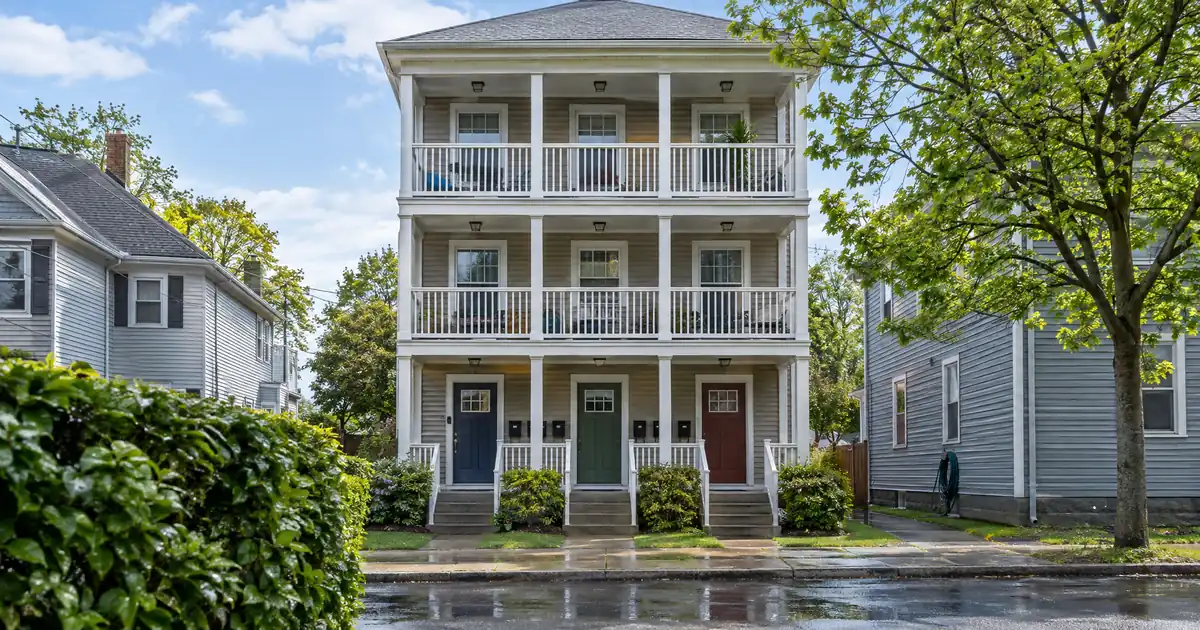
The Quick Read: A parent or relative who will not live in the home cannot help you reach the low-down-payment FHA loan on a duplex, triplex, or fourplex. On a 2-4 unit home with a non-occupying co-borrower, FHA caps financing at roughly three-quarters of the home’s value. That means a down payment or equity near a quarter of the price. The 96.5% maximum financing most people have heard about applies to the one-unit family-helper structure, not to this one. If you want the 3.5% minimum investment on a multi-unit home, the person on the loan generally has to live there.
Key Takeaways
- A non-occupant co-borrower goes on the title, the note, and the mortgage. This is not a reference or a courtesy signature.
- On a 2-4 unit home, adding a non-occupant lowers the leverage ceiling to about three-quarters of value.
- The family-helper route to 96.5% financing is for one-unit homes only.
- On three- and four-unit homes, extra tests apply: the rent from the units has to carry weight, and the buyer needs cash left after closing.
- The helper takes on the full debt. It shows on their credit and can shrink their own borrowing room.
- Several workable paths exist. The best one depends on whether the helper will really live in the building.
What Is a Non-Occupant Co-Borrower?
A non-occupant co-borrower is a person who signs the loan and owns part of the home but does not live in it. FHA’s rules treat any loan with two or more borrowers, where at least one will not occupy the property as a primary residence, as a non-occupying borrower transaction.
FHA payment estimate
Starting assumptions reflect an example price and the FHA minimum investment. Replace them with your own figures.
Editable benchmark: 7.32% as of October 22, 2026 · Freddie Mac 30-year average via FRED®. A conventional market reference, not an FHA loan quote.
Illustrative starting assumptions: a $350,000 price, the FHA minimum investment as the down payment, a thirty-year term at the current Freddie Mac benchmark, and property taxes and insurance estimated at typical national rates. Every field is editable.
Illustrative estimate only — not a Loan Estimate, approval, quote, or commitment to lend. The rate field carries the weekly Freddie Mac thirty-year conventional benchmark, a market reference and not an FHA loan quote; your rate is set by the lender at lock. FHA mortgage insurance follows HUD’s published schedule for the term, leverage and loan size entered; taxes, insurance and dues are editable estimates; closing costs are not included; county loan limits are not checked here. Licensed in sixteen states for consumer mortgages. Lendmire is not affiliated with or acting on behalf of FHA, HUD, or the federal government.
The usual picture is a parent helping an adult child. The child lives in the home. The parent adds income and credit strength to the application. Both are on the deed, both are on the loan, and both are fully responsible.
Here is the catch. FHA is built around owner-occupants. The program exists so people can buy a home to live in with a small down payment. The non-occupant structure bends that purpose, so the program narrows it, and 2-4 unit homes are where it narrows the most.
If you are still sizing up the program itself, Lendmire’s FHA loan programs page covers the basics.
How the 2-4 Unit Rule Actually Works
The answer: FHA ties leverage to the property type and to the helper’s occupancy. One-unit homes get the most room. Multi-unit homes with a non-occupant get the least.
Look at it as a ladder:
1. Occupant buys alone. The program’s top leverage is available: 96.5% financing with a 3.5% minimum investment, at a decision score of 580 or higher. Owner-occupied homes of one to four units qualify, subject to lender guidelines and full file review.
2. Family helper on a one-unit home. A non-occupant who qualifies as a family member can keep the higher leverage.
3. Non-family helper on a one-unit home. Leverage drops to about three-quarters of value.
4. Any helper on a 2-4 unit home who will not occupy. Leverage is capped at about three-quarters of value, even for a close family member.
HUD’s archived Handbook 4155.1 states the base rule. When one borrower will not occupy, the maximum mortgage is limited to 75% of value. It also says that above that level, the arrangement is limited to a one-unit property. The same section says the structure may not be used to build a rental portfolio.
The current handbook, Handbook 4000.1, replaced that older text. In current guidance the higher limit for family-member borrowers does not extend to two- to four-unit properties. Before you rely on any specific wording, ask your loan officer to confirm it against the version of Handbook 4000.1 on hud.gov. The glossary, HUD’s Handbook 4000.1 glossary, carries the official definitions of non-occupying borrower and family member.
One more rule applies on top. When more than one limit applies, the lowest one governs. If your decision score would allow high leverage, the non-occupant cap still sits below it.
Co-Borrower vs. Co-Signer: Why the Label Matters
Many families use “co-signer” loosely. FHA does not. The two roles carry different legal weight.
| Factor | Non-Occupant Co-Borrower | Co-Signer |
|---|---|---|
| Takes title to the home | Yes | No |
| Signs the note | Yes | Yes |
| Signs the mortgage or deed of trust | Yes | No |
| Lives in the home | No | No |
| Responsible for repayment | Fully | Fully |
HUD’s FHA Answers page on co-borrowers and co-signers spells out the difference. Every borrower must be obligated on the note and sign the security instrument. Borrowers take title in their own names or in a living trust. A non-occupying co-borrower must be a U.S. citizen or have a principal residence in the U.S.
Notice what this means for the helper. They are not a “guarantor in the background.” If the loan goes bad, their name is on it, their credit reflects it, and they have an ownership claim to the home. All borrowers also sign all closing documents, whether they live there or not, per HUD’s archived reference guide.
Who Can Be the Helper?
Family members are the clean case. HUD’s glossary defines family broadly: children, parents, and grandparents (including step and foster relationships), spouses and domestic partners, siblings and stepsiblings, and further relatives named in the handbook. An unrelated person can sometimes qualify if they document a longstanding, substantial, family-type relationship that did not arise from the loan itself.
Some people cannot serve as a co-borrower at all. A party with a financial interest in the sale, such as the seller, builder, or real estate agent, generally cannot be a co-borrower or co-signer. HUD allows exceptions when that party is a family member.
There is one family trap worth knowing. When a parent sells the home to a child and also wants to act as the non-occupying co-borrower, the family exception does not rescue the leverage. A parent selling to a child cannot be the co-borrower unless the loan is at the lower, three-quarters ceiling.
Because a 2-4 unit home is capped anyway, the family question matters less here than on a one-unit home. Whether the helper is a parent or a friend, the ceiling is about the same. The family test matters if you later decide to buy a single-unit home instead.
What “Occupy” Means in a Building With Several Units
You must live in one of the units. That is the point of an owner-occupied multi-unit loan. The other units are rental units, and their rent can help the file.
The harder question is whether your helper can move into a different unit and count as an occupant. In plain terms: a borrower who truly makes the home a primary residence is an occupying borrower. If both of you will live in the building, no one is a non-occupant, and the three-quarters cap would not apply.
That sounds like a clever workaround. It is a real structure, but the lender will test it. Each person has to genuinely intend to use the unit as a primary residence, not as a paper address. The helper cannot be keeping another primary home. Anyone holding a current FHA loan on another home faces separate limits on a second one. Lenders review these files closely, and the exact outcome depends on lender guidelines and the full file.
The archived HUD guide also says the non-occupant structure is not meant to get around the ban on private investors. Treat any plan that looks like a way to buy rental property with a family cosigner as a plan the lender will question.
Active-duty service members have a special rule. A service member who cannot live in the home because of orders can still count as an owner-occupant if a family member will occupy it, or if the service member plans to occupy it after leaving active duty. Your lender will want the orders to document it.
Why Three- and Four-Unit Homes Add Another Layer
Duplexes are the simplest. Three- and four-unit homes add two more hurdles that have nothing to do with the co-borrower, but both can decide the outcome.
The self-sufficiency test. On three- and four-unit homes, FHA looks at whether the property can carry itself. The appraiser estimates net rent from all the units, including yours. That rent has to cover the full housing payment by a margin FHA sets. The test is about the building, not about your paycheck. A buyer with strong income can still fail it if the appraiser’s rent estimate comes in low.
Cash left after closing. Three- and four-unit purchases typically also require reserves, meaning cash you still hold after closing. Reserves for these homes generally cannot come from gift funds. Ask your loan officer for the current reserve requirement before you plan your savings.
Neither test goes away because you added a co-borrower. And the cap on leverage still applies. A family with a three- or four-unit target is therefore juggling a larger down payment, a rent test, and reserves, all at once.
Rental income does not simply wipe out the payment either. Borrowers must still qualify on income, credit, and cash to close. The appraiser’s rent estimate feeds the test and the qualifying math. It does not guarantee anything.
Your Helper Won’t Live There. Now What?
Here is a practical decision path.
1. Is a larger down payment realistic? If the family can fund a down payment near a quarter of the price, with equity or gift funds where allowed, the non-occupant structure on a 2-4 unit home can work. The cap is based on the lesser of price or appraised value. A low appraisal raises the cash you must bring, while an appraisal above the price does not lower it.
2. If not, can the occupant qualify alone? A solo buyer keeps the low-down-payment structure. That means passing the program’s ratio limits on your own. The base ratio pair is 31/43 (housing and total debt against income), and documented compensating factors can stretch it as high as 40/50 at the top tier. The automated underwriting finding governs most files.
3. Can the helper truly live in the building? If so, you may have two occupying borrowers, and the cap question changes. This is a real-life commitment, not a paperwork move.
4. Would a one-unit home do? A family helper on a one-unit home can keep the higher leverage, as covered above. A one-unit home with a rentable room is a different deal than a duplex, but it keeps more options open.
5. Is conventional financing worth a look? Some conventional programs treat multi-unit owner-occupied homes and rental income differently, and some limit non-occupying borrowers to one-unit homes. Programs differ, so compare them on the same file.
| Your Situation | Likely Direction |
|---|---|
| Helper will not live there, family has a large down payment | Non-occupant structure, leverage near the cap |
| Helper will not live there, small savings | Occupant alone, or a one-unit home |
| Helper will move into another unit | Two occupying borrowers, with a closer lender review |
| Targeting a three- or four-unit home | Add the rent test and reserves to the plan |
How Qualification Works With Two Borrowers
The lender pulls credit on both people and underwrites one combined file. Income, debts, and credit all enter the picture. That cuts both ways.
Picture a young buyer with steady income and a thin credit history, and a parent with a high income and a clean record. Adding the parent can lift the income side of the file. But the parent’s own debts come along too: car loans, cards, and their own mortgage. If those debts are heavy, adding the parent can make the combined ratios worse, not better. CFPB’s general guidance on co-signers, written for student loans but sound as a principle, says to ask whether you would be approved on your own before adding someone else.
Whether the non-occupant’s income counts can depend on the underwriting path. On certain manual-underwriting files, for example borrowers with no credit score, only the occupying borrowers’ income may count. Ask the loan officer which path the file will take.
On the FHA files Lendmire arranges through wholesale lenders, the decision score is where many co-borrower files turn. The wholesale programs start at a decision score of 580. HUD itself has a lower tier, but that is not a tier these programs reach. If the helper’s credit is strong and the buyer’s is thin, the lender will explain how the scores are weighed, and the answer can affect eligibility.
For a deeper look at a related case, Lendmire’s piece FHA Cash-Out Non-Occupant Co-Borrower Rules for Lower Credit walks through how credit scores shape a two-borrower file.
What Mortgage Insurance and Seller Help Add
The program’s costs are mechanical, not optional. FHA carries an upfront premium of 1.75% of the base loan, which can be financed into the balance. It also carries an annual premium between 0.15% and 0.75% of the balance, depending on term, loan amount, and LTV. On a thirty-year loan above 90% LTV, the annual premium lasts for the term. At or below 90%, it ends after eleven years.
That matters here because the non-occupant cap pushes leverage down. A lower LTV can change how long the annual premium lasts. Your loan officer can show you which side of the line your file lands on. Seller or interested-party contributions are allowed up to 6% of the price, subject to lender guidelines. County loan limits also apply, and they change every year.
Risks and Exit Planning for the Helper
Adding a helper is not a favor with no cost. It is shared debt.
- Full liability. The helper is equally responsible for repayment. Late or missed payments affect both people’s credit, as CFPB notes in its co-signer guidance.
- Reduced borrowing room. The mortgage shows on the helper’s credit report. That can limit their own future borrowing, including for a home of their own.
- Title complications. Because the helper owns part of the home, a sale or refinance generally needs their signature.
- Life changes. Divorce, a death, or a falling-out can complicate things fast. Removing someone from the loan usually means a refinance, and the person left on the loan has to qualify alone.
A written family agreement is a prudent step. It should cover who pays what, who handles repairs and insurance, and how the family will exit the arrangement. That is common-sense advice, not an FHA requirement.
Myths vs. Facts
| Myth | Fact |
|---|---|
| A parent can co-sign my duplex at 3.5% down | A non-occupant on a 2-4 unit home is capped near three-quarters of value |
| Family always gets the highest leverage | Only on one-unit homes |
| Co-signer and co-borrower are the same | A co-borrower takes title and signs the mortgage |
| The helper is only a reference | The helper is fully liable for the debt |
| Rent from the other units pays the mortgage | Rent feeds the tests, but you must still qualify |
| Any friend or relative counts as family | FHA uses a defined list, plus documented family-type ties |
Key Terms Defined
Non-occupying co-borrower: A person who signs the note, takes title, and is fully responsible for the loan but does not live in the home.
Co-signer: A person who signs the note and is responsible for repayment but does not take title or sign the mortgage.
LTV (loan-to-value): The loan amount divided by the lesser of the price or the appraised value, shown as a percentage.
Self-sufficiency test: An FHA check on three- and four-unit homes that asks whether the appraiser’s estimate of net rent can carry the housing payment.
Reserves: Cash you still hold after closing, which a lender may require on certain loans.
Family member (FHA): A person on HUD’s defined list of relatives, which also allows an unrelated person with a documented family-type relationship.
Frequently Asked Questions
Can a parent co-sign a duplex with me at the lowest down payment?
No, not under the non-occupant structure. When the parent will not live in the home, leverage on a 2-4 unit property is capped near three-quarters of value. If the parent instead truly moves in, the file is reviewed as two occupying borrowers, which is a different structure with its own lender review.
Does my helper have to be a family member?
Not always, but it matters more on one-unit homes. A family member can keep the higher leverage there. On a 2-4 unit home with a non-occupant, the cap applies either way. Certain parties tied to the sale, such as the seller or builder, generally cannot serve as a co-borrower, with exceptions for family.
Will the other units’ rent help me qualify?
It can help, but it is not a free pass. On three- and four-unit homes, the appraiser’s net rent estimate drives the self-sufficiency test. You still need to qualify on income, credit, and cash to close, and the rules for how rent counts depend on the underwriting path.
What happens to the helper’s credit?
The full mortgage appears on their credit report. Late payments affect both borrowers. It can also reduce how much the helper can borrow for their own purchases, so they should look at that before signing.
Can the helper be removed from the loan later?
Usually only by refinancing or selling. The remaining borrower must qualify on their own at that point. Because the helper holds title, they must also sign off on a sale or refinance.
For your own numbers, request a scenario review with Lendmire.
About Lendmire
Lendmire (NMLS# 2371349) is a mortgage brokerage serving homeowners and home buyers in 16 states. FHA, VA, conventional and jumbo purchase and refinance loans are arranged through wholesale lending channels; Lendmire brokers the financing and the lender underwrites each application. Scotsman Guide named Lendmire a Top Mortgage Workplace in both 2025 and 2026.
Get Started
Ready to find the right loan for you?
In about 30 seconds you can review financing options available for your home or investment property. No commitment required.
Informational only. Not a Loan Estimate, approval, or commitment to lend. Program availability and eligibility are subject to lender guidelines, credit approval, property review, and underwriting.
References
1. HUD Handbook 4155.1, Chapter 2, Section B (archived)
2. HUD Handbook 4000.1 Glossary
3. HUD FHA Answers: Co-Borrowers and Co-Signers
4. HUD Archives, Single Family Reference Guide, p. 2-03
5. CFPB: What is a co-signer for a student loan?
This article is part of Lendmire’s FHA loan program — full qualification details, guidelines, and scenarios live on the program page.
Related reading: FHA vs Conventional Loan on a 2-4 Unit Property · Can an FHA Loan Close on a Newly Built Home? · Can a 2-4 Unit Primary Home Get an FHA Streamline Without an Appraisal?
Brandon Miller
Founder & CEO, Mortgage Loan Originator, Lendmire LLC
- Mortgage Loan Originator · NMLS# 1129696 · Verify on NMLS Consumer Access
- North Carolina Real Estate Broker · License# 343312 · Verify on NCREC
- North Carolina Insurance Producer · License# 19053198 · Property, Casualty, Life, Health · Verify on NAIC SBS
- Lendmire LLC · Firm NMLS# 2371349 · Verify firm licensure
Compliance and disclosures. Lendmire (NMLS# 2371349) is a licensed mortgage broker and is not a direct lender, depository institution, financial advisor, or tax professional. Content in this article is general market analysis and educational information — not financial, legal, or tax advice for any specific situation. Lendmire does not guarantee loan approval; every transaction is subject to underwriting by the funding lender. Mortgage pricing and loan program guidelines are subject to change at any time without notice and vary by borrower characteristics, property type, and state regulations. Lendmire complies with Equal Housing Opportunity. Licensure verification: NMLS Consumer Access.