
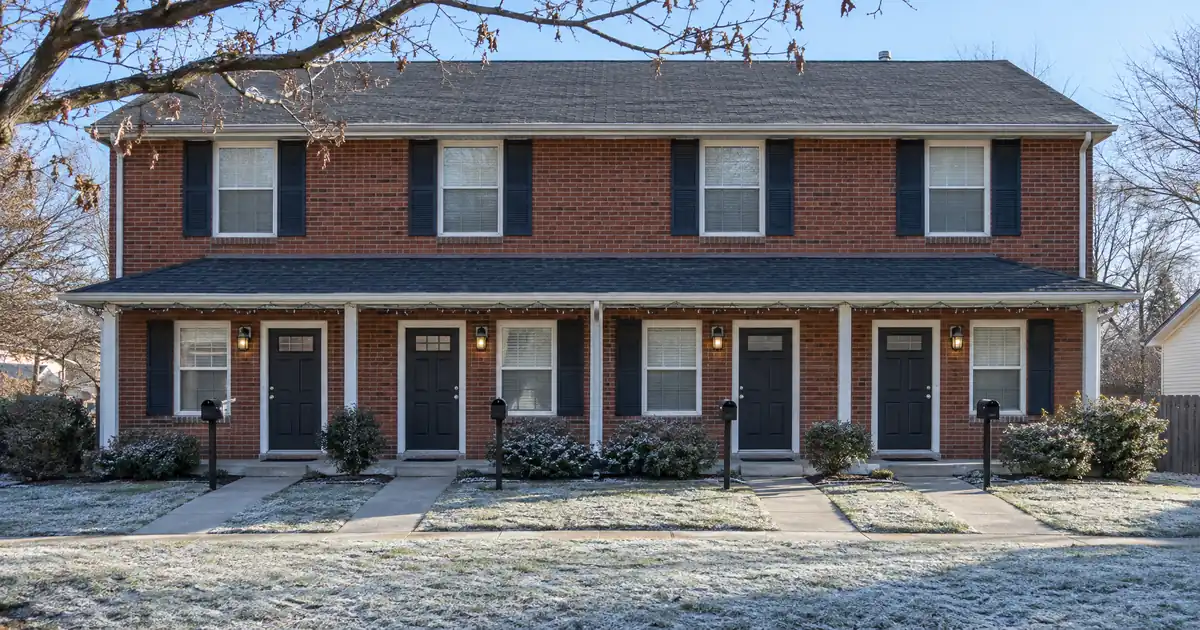
The Quick Read: A duplex, triplex or fourplex you live in can be streamlined if your current mortgage is already FHA-insured. The unit count does not create a separate product. The same program applies, and the requirements are the same ones a single-family owner faces. Your loan must be seasoned. You must prove you live in the building. The new loan must leave you measurably better off. And you cannot take cash out.
Key Takeaways
- Only an existing FHA loan can be streamlined. A conventional, VA or USDA loan cannot.
- There are two tracks: non-credit-qualifying and credit-qualifying. Which one you land in changes your paperwork, not the basic program.
- Occupancy is the step that matters most on a 2-4 unit. You must show you live in one of the units.
- No appraisal is required, so your old FHA value carries forward. That also means no equity pull.
- Lender rules vary. Two lenders can treat the same fourplex differently.
What Is an FHA Streamline on a 2-4 Unit Home?
A streamline is a refinance of an FHA loan you already have, with less paperwork than a normal refinance. It replaces your current FHA mortgage with a new FHA mortgage. The point is a better loan, not new money.
Refinance savings and break-even estimate
The starting figures are an example value with a balance in proportion and a placeholder for costs. Replace them with yours, and enter the current rate from your statement.
Editable benchmark: 7.32% as of October 22, 2026 · Freddie Mac 30-year average via FRED®. A conventional market reference, not a refinance quote.
Illustrative starting assumptions: a $350,000 home value, a $245,000 current balance, a current rate you enter and a remaining term seeded at twenty-five years, closing costs seeded at $5,000 as an editable placeholder (not a fee quote) and rolled into the new loan, a thirty-year term at the current Freddie Mac benchmark, and property taxes and insurance estimated at typical national rates. Every field is editable.
Illustrative estimate only — not a Loan Estimate, approval, quote, or commitment to lend. The new rate field carries the weekly Freddie Mac thirty-year conventional benchmark, a market reference and not a refinance quote; a refinance is priced by the lender at lock, and the current rate, the remaining term and the closing costs are figures you enter. The current payment is estimated from the balance, the current rate and the remaining term; the break-even divides the closing costs by the monthly saving and ignores the interest effect of a longer term. On the VA IRRRL the funding fee is added to the loan unless the veteran is exempt. Taxes and insurance are editable estimates. Licensed in sixteen states for consumer mortgages; Lendmire is a broker, never the lender.
FHA treats one-to-four-unit homes as residential property. If you live in one unit and rent the others, the program still sees an owner-occupied home. That is why a duplex owner and a single-family owner follow the same streamline rules.
Across the wholesale programs Lendmire places files with, a common mistake is assuming a multi-unit building needs a special streamline. It does not. What changes is how you prove occupancy and, on one track, how rental income gets treated.
If you want the bigger picture of how these loans fit together, Lendmire's overview of FHA loan programs covers purchase, streamline, rate-and-term and cash-out.
The Two Tracks: Which One Will You Land In?
The streamline has two versions. The difference is how much the lender checks about you.
| Factor | Non-credit-qualifying | Credit-qualifying |
|---|---|---|
| Credit review | Limited | Full credit and capacity analysis |
| Application | Abbreviated | Fully completed |
| Appraisal | Not required | Not required |
| Income ratios | Not the driver | Ratios apply |
| Rental income | Does not drive approval | May help the file |
The non-credit-qualifying track is the lighter one. The lender looks at your payment history and the benefit test, not at your income or debts. It is the usual route when your payment stays flat or drops and nobody is leaving the loan.
The credit-qualifying track asks for more. The lender runs your credit and measures your ability to repay. Plenty of files end up here for ordinary reasons. Lenders commonly steer a file this way when a borrower comes off the loan, or when the new payment would rise.
Here is a quick sorting list:
- Same borrowers, payment goes down or stays about the same: often the lighter track.
- Someone is being removed from the loan: often credit-qualifying.
- Payment goes up, such as moving to a shorter term: expect closer review.
- Late payments on the current loan: expect more questions, and possibly a decline.
The sorting rules differ by lender. Treat the list as a starting point, not a verdict.
What Does the Existing Loan Have to Look Like?
Your current loan must be FHA-insured, seasoned and in good standing. All three matter.
Seasoning is the waiting period before you can refinance. The existing loan needs a minimum number of payments made and a minimum stretch of time since closing. The FDIC's summary of the streamline program spells out those counts. Your lender checks them against your note and your payment records. If you assumed the loan from someone else, the clock runs from the assumption.
Payment history is the other half. Lenders look closely at the most recent payments. A recent late payment can stall a file that otherwise fits.
None of this changes because you have extra units. A fourplex loan is judged on the same history as a one-unit loan.
Proving You Live There
Occupancy is the step that trips up multi-unit owners. The building may have tenants in three units and you in the fourth. The lender needs paper that says you are the one in the fourth.
The usual proof is simple. A recent utility bill in your name at the property address works. So does employment documentation showing that address. Lenders may ask for one or both.
If the lender cannot document that you live there, the file gets processed as non-owner-occupied. That is a different and narrower path, and it changes what is available. Some lenders restrict it to certain loan types.
A few practical points for 2-4 unit owners:
- One unit is vacant: usually fine, as long as you still live in the building.
- You moved out of your unit: the occupancy test fails. Say so up front.
- Leases and rent rolls: these do not prove occupancy. They show tenants, not you.
- Utilities are in a tenant's name: get a bill or statement that shows yours.
If you moved out last year and kept the building as a rental, a primary-home streamline is not the right tool. The program's occupancy rule exists to keep this loan for homes people live in.
The Net Tangible Benefit Test
A net tangible benefit is proof that the new loan improves your position. The lender must document it. Without it, the file does not move.
The test looks at what you pay on the loan itself: the principal and interest, plus the annual mortgage insurance. It does not count property taxes and homeowner's insurance, because you owe those whether you refinance or not. HUD's guidance on the net tangible benefit test explains this reasoning.
The exact thresholds have changed over time and depend on the type of loan you are moving into and out of. Moving from an adjustable rate to a fixed rate is treated differently from fixed-to-fixed, and a shorter term is treated differently again. Your lender runs the current test. Do not rely on a number you read online.
Here is the part borrowers miss. Passing the test does not mean the refinance pays off for you. It means the loan clears the program's minimum. Your own break-even is a separate question, and we get to it below.
How the Loan Is Underwritten, Step by Step
Here is the sequence, from first call to final file.
1. Lender confirms your current loan is FHA-insured. This comes first because it decides everything else.
2. Seasoning and payment history are checked. The lender reviews the note date and your payment record.
3. Occupancy is documented. You supply a utility bill or employment paperwork showing the building's address.
4. The net tangible benefit is calculated. The lender compares the old and new principal, interest and mortgage insurance.
5. The track is set. Credit-qualifying files get a full application, credit review and ratio check. The lighter track uses an abbreviated application. HUD's archived refinance guide describes the application difference.
6. The maximum loan amount is calculated. More on that next. These specifics are subject to lender guidelines and a full review of property, leverage, and credit.
7. You receive a Loan Estimate and, later, a Closing Disclosure. A streamline is still a consumer mortgage. You review the costs on both documents before you sign.
On the credit-qualifying track, the ratios compare your housing cost and total debts to your income. The base pair in the program is 31/43. With documented compensating factors, ratios can stretch up to 40/50 at the top tier, and the automated finding governs most files. Subject to lender guidelines and full file review, a 2-4 unit owner may also see rental income from the other units considered in the capacity analysis. Ask your lender how they treat it, because treatment varies.
How the Maximum Loan Amount Works
Final terms depend on the lender's guidelines, the property type, and the borrower's complete credit picture.
Terms depend on the lender's guidelines, the property type, the leverage, and a full review of the credit profile.
Final terms depend on lender guidelines, property type, leverage, and the borrower's complete credit picture.
The loan amount is tied to your old balance, not to your home's value. That is the part most homeowners do not expect.
The FDIC summary says streamlines are not subject to the usual FHA county loan limits. Instead, the cap rests on the outstanding balance of the loan you are replacing. The no-appraisal maximum works this way: the unpaid principal balance, plus interest charged by the servicer, less the refund of the old upfront premium, plus the new upfront premium. It leaves out delinquent interest, late charges and escrow shortages.
There is no loan-to-value limit on a no-appraisal streamline. There is also no new appraisal, so the program uses the value from your previous FHA loan.
One practical result: closing costs generally have to be paid at closing rather than added to the new balance. That is how most files work in practice, though lenders set their own rules. Confirm yours before you count on rolling anything in.
Mortgage Insurance on the New Loan
The mortgage insurance does not go away. A streamlined loan is a new FHA loan, and it carries its own upfront and annual premiums.
The upfront premium is 1.75% of the base loan, and it is usually financed into the balance. The annual premium falls between 0.15% and 0.75% of the balance, depending on the term, the loan amount and the loan-to-value ratio. On a thirty-year loan above ninety percent loan-to-value, the annual premium lasts for the full term. At or below ninety percent, it ends after eleven years. These are program facts, not a price quote. Your lender confirms what applies to your file.
HUD Mortgagee Letter 2023-05 sets the premium framework. It also carves out an exception. Streamlines of FHA loans endorsed on or before May 31, 2009 get special reduced-premium treatment. If your loan is that old, ask your lender about it.
When you refinance from one FHA loan to another within the first few years, FHA refunds part of the old upfront premium. It is built into the maximum loan math above. Your lender can tell you the exact amount for your file.
Duplex, Triplex or Fourplex: What Actually Changes?
The program rules do not change by unit count. The FDIC lists one-to-four-unit owner-occupied homes as eligible without a separate test for larger buildings. What shifts is the practical work around the file.
| Item | Duplex | Triplex | Fourplex |
|---|---|---|---|
| Streamline program rules | Same | Same | Same |
| Occupancy proof | One unit | One unit | One unit |
| Rental income in credit-qualifying file | Lender decides | Lender decides | Lender decides |
| Likely lender overlays | Fewer | More | Most |
| Appraisal | Not required | Not required | Not required |
Here is where purchase and refinance differ. On a purchase, 3-4 unit homes face extra tests, and the rental income tests carry weight. On a streamline, the program does not add a unit-count test, as far as the FDIC summary and the HUD materials show. Some lenders add their own conditions on 3-4 unit buildings anyway. This is a lender overlay, not an FHA rule. If a lender asks for more on your triplex or fourplex, ask whether it is an FHA requirement or their own.
A related rule trips people up. The self-sufficiency test is a cash-out and purchase concept for larger buildings. Lendmire's piece FHA Cash-Out Self-Sufficiency Requirements on a 2-4 Unit Primary Home explains how it works there. Do not assume it follows you into a streamline.
Where the General Rule Breaks
The basics above fit most files. These are the edge cases where they stop fitting.
You cannot document occupancy. That narrows your options. Some lenders limit it to fixed-rate loans.
You are removing a borrower. This often pushes the file onto the credit-qualifying track. The remaining borrower has to carry the loan on their own credit and income.
You want to pull cash out. A streamline does not allow it. The FDIC says no cash may be taken out on mortgages refinanced under the program. A small amount of incidental cash can come back at closing in narrow situations, but it is not a cash-out. Equity needs a different refinance.
Your existing loan has a rehab escrow. If your current loan is a rehab loan with work still unfinished, a lender may be unable to move forward until the escrow is complete. Verify this with your lender.
Your loan is not FHA. Then you are not eligible. A streamline only replaces an FHA loan.
You want the shorter term. A shorter term can raise your payment. That changes the benefit test and may move your file onto the credit-qualifying track.
When a Streamline Is Not the Right Fit
Sometimes the streamline is the wrong tool even when you qualify. Here are the common alternatives for a 2-4 unit owner who lives in the building.
| Goal | Better fit | Key difference |
|---|---|---|
| Lower the loan cost, same balance | FHA streamline | No appraisal, limited review |
| Remove mortgage insurance | A different loan type | Needs an appraisal and equity |
| Pull equity out | FHA cash-out | Appraisal, full credit review |
| Refinance with an appraisal at higher leverage | FHA rate-and-term | Reaches 97.75% on a primary residence |
| Switch out of FHA | Another program | Appraisal and full review |
The FHA rate-and-term refinance uses an appraisal and can reach 97.75% on a principal residence you have occupied for the previous twelve months. The FHA cash-out reaches 80% loan-to-value on a home you have owned and occupied for twelve months before the case number. These are program figures, subject to lender guidelines and full file review.
If cash-out is your goal and your debts are heavy, Lendmire's article Can a 2-4 Unit Primary Home With a High DTI Get an FHA Cash-Out? walks through the ratio side.
What the Borrower's Decision Looks Like
Picture an owner of a fourplex who lives in one unit. The loan is FHA and has been paid on time for a good stretch. A new loan would lower the combined principal, interest and mortgage insurance cost. Nobody is leaving the loan. That owner is a strong streamline candidate, probably on the lighter track.
Now picture a duplex owner who wants to remove an ex-spouse from the loan. The loan is still FHA, but the deal works toward credit-qualifying. The owner needs income and credit that stand on their own. Rent from the second unit may help the capacity picture. Whether it counts depends on the lender.
Last, picture a triplex owner who moved out and now rents all three units. A primary-home streamline fails on occupancy. The file would be processed as non-owner-occupied, if the lender offers that at all.
For any of these, the real question is not just "do I qualify?" It is "does this pay off?" That means three checks:
- Costs against savings. A streamline has closing costs. You earn them back through a lower monthly cost over time. How long that takes is your break-even.
- How long you will stay. If you might sell soon, a long break-even is a poor bet.
- The term you reset. Starting a new thirty-year clock can lower the payment but raise the total interest paid over the life of the loan.
Be careful with "no-cost" refinance offers. The CFPB's Loan Estimate explainer notes that a lender credit means the lender is covering your closing costs, and you may be paying a higher interest rate in exchange. The costs are built into the rate or the balance. They do not disappear.
When you compare offers, compare the total monthly payment, including mortgage insurance and the escrow for taxes and homeowner's insurance, not just one line.
What to Ask Your Lender
Lender overlays are where most 2-4 unit streamlines get complicated. HUD sets the floor. Lenders can add to it. Ask these questions up front:
- Which track will my file land in, and why?
- What exact proof of occupancy do you want?
- Do you add conditions on 3-4 unit buildings?
- Is there a credit score minimum on the credit-qualifying track?
- Can closing costs be added to the new balance, or paid at closing?
- How is rental income from my other units treated, if at all?
Credit score floors, payment-history conditions and ratio limits vary from one lender to the next. Some lenders set a higher floor than others. A file turned down by one may fit at another.
Key Terms Defined
Streamline refinance: A refinance of an existing FHA-insured mortgage with limited credit documentation and underwriting.
Net tangible benefit: Proof the new loan improves your position, measured on principal, interest and annual mortgage insurance.
Credit-qualifying: The track where the lender runs a full credit and capacity analysis before approving the refinance.
Non-credit-qualifying: The track where the lender does not run a credit and capacity analysis or require an appraisal.
Seasoning: The waiting period of payments made and time passed on your existing loan before you can refinance.
Upfront mortgage insurance premium: A one-time FHA charge, 1.75% of the base loan, usually financed into the balance.
Your Next Step
A streamline works best when you know your numbers before you apply. Start with your current loan type, your note date, your occupancy proof and your payment history. Then compare what a new loan would cost against what it would save.
If you are weighing a refinance and want the break-even run on your own numbers, Lendmire can help you compare the programs on the same home. Lendmire is a mortgage broker arranging FHA, VA, conventional and jumbo loans through wholesale lenders in 16 states. Reach the team at 828-256-2183. Every program detail here is subject to lender guidelines and full file review, and nothing here is a commitment to lend.
Frequently Asked Questions
Can I use a streamline on a fourplex if I rent out the other three units?
Yes, as long as you live in one of the units and the loan being replaced is FHA-insured. The program treats it as an owner-occupied home. Your tenants do not disqualify the file. They only matter if the file lands on the credit-qualifying track, where rental income may be considered.
Is there a different streamline for a duplex than for a triplex?
No. The program is the same for one to four units. The differences come from lender overlays and the amount of paperwork. A triplex or fourplex may draw more lender conditions, so ask whether each request is an FHA rule or the lender's own.
Do I need an appraisal on a 2-4 unit streamline?
Not under the program. FHA does not require one, and the FDIC notes there are no loan-to-value limits. The program uses the value from your previous FHA loan. A lender may still choose to order one, though that is the exception.
Can I take cash out of my duplex through a streamline?
No. The streamline is not a cash-out product. If you want to tap equity, you need a different FHA refinance, with an appraisal and a full credit review.
What happens if I cannot prove I live in the building?
The file is processed as non-owner-occupied. That path is narrower, and some lenders restrict it. If you do live there, a recent utility bill in your name or employment documents showing the address are the usual proof.
For your own numbers, request a scenario review with Lendmire.
About Lendmire
Lendmire — NMLS# 2371349 — is a mortgage broker that arranges FHA, VA, conventional and jumbo home purchase and refinance financing in 16 states through wholesale lenders. Every option is subject to the lender's guidelines and full underwriting. Scotsman Guide named Lendmire a Top Mortgage Workplace in both 2025 and 2026.
Get Started
Ready to find the right loan for you?
In about two minutes you can review financing options available for your home or investment property. No commitment required.
Informational only. Not a Loan Estimate, approval, or commitment to lend. Program availability and eligibility are subject to lender guidelines, credit approval, property review, and underwriting.
References
1. FDIC – FHA Streamline Refinance program summary
3. HUD archives HOC Reference Guide – Refinances
4. HUD Mortgagee Letter 2023-05
5. CFPB – Loan Estimate explainer
This article is part of Lendmire’s FHA loan program — full qualification details, guidelines, and scenarios live on the program page.
Related reading: FHA Loan Requirements for the Borrower and the Property · How to Close an FHA Cash-Out Refinance on a Primary Home · How an FHA Lender Sizes a Cash-Out Refinance on a Primary Home
Brandon Miller
Founder & CEO, Mortgage Loan Originator, Lendmire LLC
- Mortgage Loan Originator · NMLS# 1129696 · Verify on NMLS Consumer Access
- North Carolina Real Estate Broker · License# 343312 · Verify on NCREC
- North Carolina Insurance Producer · License# 19053198 · Property, Casualty, Life, Health · Verify on NAIC SBS
- Lendmire LLC · Firm NMLS# 2371349 · Verify firm licensure
Legal disclosures. Lendmire (NMLS# 2371349) is a state-licensed mortgage brokerage that arranges financing through wholesale lender relationships. Lendmire is not a direct lender, depository institution, or registered financial advisor. The discussion above is general informational content about real estate financing — it is not financial, legal, or tax advice, and readers should consult licensed professionals for guidance on their individual circumstances. Loan inquiries are subject to lender underwriting; this article does not represent a commitment to lend. Loan terms, rates, and qualification standards vary by borrower, property, and state, and are subject to change at any time. Equal Housing Opportunity. NMLS Consumer Access: nmlsconsumeraccess.org.