
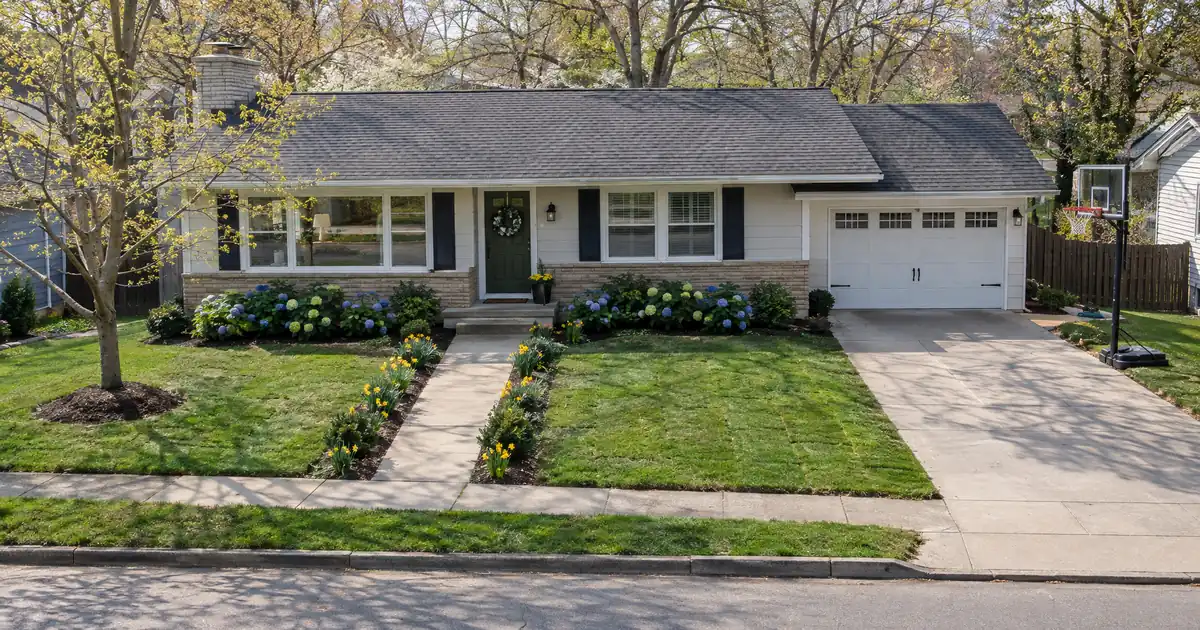
The Quick Read: Sometimes. It depends on what is wrong with the house. Minor wear items can stay unrepaired if the appraisal is done “as-is.” Safety, soundness and structural problems must be fixed before the loan is sold to Fannie Mae or Freddie Mac. Larger work usually calls for a purchase-plus-renovation loan, which lets the buyer close first and finish the work afterward.
That is the short version. The rest of this page explains where the line falls, who decides, and what a first-time buyer should do when the appraisal comes back with conditions. Program details below are subject to lender guidelines and full file review, and nothing here is a commitment to lend.
Conventional payment estimate
The starting figures are an example price at the first-time buyer’s minimum down payment. Replace them with yours.
Editable benchmark: 7.32% as of October 22, 2026 · Freddie Mac 30-year average via FRED®. A conventional market reference, not a conventional loan quote.
Estimate seeded at the low end of Fannie Mae’s published range (0.58%–1.86% a year); the insurer prices the actual premium on the score and the leverage. Applies only above 80% loan-to-value.
Illustrative starting assumptions: a $350,000 price, the first-time buyer’s minimum down payment, a thirty-year term at the current Freddie Mac benchmark, mortgage insurance at the low end of Fannie Mae’s published range, and property taxes and insurance estimated at typical national rates. Every field is editable.
Illustrative estimate only — not a Loan Estimate, approval, quote, or commitment to lend. The rate field carries the weekly Freddie Mac thirty-year conventional benchmark, a market reference and not a conventional loan quote; your rate is set by the lender at lock. The mortgage insurance figure is an editable estimate seeded from Fannie Mae’s published typical range, not a premium quote; the insurer prices the actual premium, and the cancellation month assumes scheduled payments with no extra principal and no change in value. Taxes, insurance and dues are editable estimates; closing costs are not included. Conforming loan limits apply by county. Licensed in sixteen states for consumer mortgages.
What Does “Repairs Pending” Actually Mean on a Conventional Loan?
“Repairs pending” can mean three different things, and each one is treated differently. The first is a minor item the appraiser noted but the lender does not require fixed. The second is a required repair that must be finished and documented before the loan is sold. The third is a larger renovation the buyer plans to finance as part of the purchase.
Most confusion comes from mixing these up. A buyer hears “the appraiser flagged repairs” and assumes the deal is dead. Or a buyer hears “the lender can hold money back” and assumes any repair can wait until after closing. Neither is right.
Across the wholesale programs Lendmire places conventional files with, the same pattern shows up. The appraisal wording drives everything.
Which Repairs Can Stay Unrepaired at Closing?
Minor wear items can stay. These are cosmetic or deferred-maintenance items that do not affect safety, soundness or structural integrity. Fannie Mae’s Selling Guide gives examples such as worn floor finishes or carpet, minor plumbing leaks, missing handrails and cracked window glass. When the appraisal is done “as-is,” the lender does not have to make sure these are fixed before selling the loan.
The lender may also hold back funds in escrow for these items at its own discretion. It can then sell the loan before the escrow is released. That is allowed only when the items do not touch safety, soundness or structure. Note the words “at its own discretion.” A holdback for minor items is a lender choice, not a buyer right.
Not every lender will offer it. Some lenders set stricter overlays than the agencies require. So the same house can get a different answer from two lenders.
Which Repairs Must Be Fixed Before the Loan Closes?
Repairs that affect safety, soundness or structural integrity must be completed. The appraisal in that case is written “subject to” completion of those items. Fannie Mae’s examples include foundation settlement, water seepage, active roof leaks, and inadequate electrical service or plumbing fixtures.
An active roof leak is the classic case. Buyers sometimes assume it can close as-is and be patched later. It cannot. It is a named example of a condition requiring “subject to” treatment.
Generally, the repairs must be complete when the loan is sold, and the lender must collect evidence of completion. Required repairs can come from the appraisal itself or from the lender’s own property data collection. Either way, the underwriter makes completion a condition of final approval.
As-Is Versus Subject-To: How the Appraisal Wording Decides It
The appraiser rates the home’s condition from C1 to C6 and reports its “as is” condition. Fannie Mae’s property condition rules allow “as is” appraisals when conditions are minor and the appraiser’s opinion of value reflects them. If the appraiser finds deficiencies that affect safety, soundness or structure, the report must be “subject to” those specific repairs.
| Appraisal outcome | What it means | Typical next step |
|---|---|---|
| As-is | Only minor items noted; value reflects them | Loan can proceed; lender may escrow minor items |
| Subject to repairs | Safety, soundness or structural items found | Repairs done and verified before the loan is sold |
| Condition too poor | Home rated at the bottom of the scale | Cure the problems, or use a renovation loan |
The agencies also treat the weakest ratings differently. Under current Fannie Mae text, C1 through C5 are eligible “as is” and C6 is not. A C6 property needs an appraisal “subject to” completion of the deficient items, with a minimum resulting rating of C5. Freddie Mac is stricter. Its Guide says a property with C5 or C6 deficiencies is not acceptable collateral unless the issues are cured. The one exception is its CHOICERenovation product, where the issues are cured as part of the renovation.
So Fannie Mae and Freddie Mac do not treat a C5 the same way. Lenders that sell to one or the other will apply different rules. That is one more reason to ask the loan officer which investor the file is headed to.
How Does the Lender Verify That Repairs Are Done?
The lender needs proof, and there are a few accepted forms. The lender picks the method that fits the loan and the type of repair.
1. Completion report. Form 1004D, the Appraisal Update and/or Completion Report, is completed by the original or a substitute appraiser who confirms the work.
2. Attestation letter. In some cases a signed attestation can replace the 1004D. Where a loan is delivered with no appraisal, the 1004D cannot be used and the lender obtains a borrower attestation letter instead.
3. Supporting paperwork. Contractor invoices, photos and any required permits or sign-offs help the lender close out the condition.
Even on a loan with no appraisal, any repair needed for eligibility must still be done before the loan is sold. Skipping the appraisal does not skip the repair.
Can a Postponed-Improvement Escrow Cover Bigger Repairs?
Not on an existing home, generally. People often stretch this rule further than it goes. The postponed-improvements allowance in Fannie Mae’s guide is written for new or proposed construction. It requires completion within 180 days of the note date, postponed items that are part of the sales contract with a valid reason such as weather or material shortages, and items that do not block an occupancy permit. Cost is capped at 10% of the “as completed” appraised value, and the completion escrow is 120% of the estimated cost. These terms should be confirmed against the current Selling Guide text before anyone relies on them.
The takeaway for a first-time buyer is the 120% figure. More than the repair cost gets held. That cash sits on top of the down payment and closing costs.
Freddie Mac has a related path. Under its Guide, it will buy a mortgage with a settlement date before improvements are complete when the seller reasonably determines the work cannot be finished, such as for weather or material shortages. That applies to newly built and certain existing homes. Its detailed requirements vary, so a loan officer has to confirm what applies.
It is not a general holdback for a leaky bathroom in a resale home. Treat it as a narrow tool.
The Renovation Loan Route (When the Repairs Are Big)
A purchase-plus-renovation loan is the buyer’s main way to close with real work still pending. Fannie Mae’s HomeStyle Renovation and Freddie Mac’s CHOICERenovation let the buyer close first and complete the work afterward.
HomeStyle is not an investor-only product. Fannie Mae’s eligibility rules allow a one- to four-unit principal residence, and HomeStyle can be combined with HomeReady. The more restrictive rules of the two apply, so a HomeReady HomeStyle loan must be a principal residence. On a purchase, the renovation cost must not exceed 75% of the lesser of the purchase price plus renovation costs, or the “as completed” appraised value.
Here is what the buyer takes on:
- A construction contract and plans prepared by a licensed professional.
- Do-it-yourself work only at lender discretion, and only on a one-unit owner-occupied home. Fannie Mae’s fact sheet caps DIY financing at 10% of the “as completed” value.
- Inspections for work items over $5,000.
- A completion step: a Form 1004D confirming all “subject to” items, plus a certificate of occupancy if local authorities require one.
The loan is sized on the “as completed” value, and the file typically involves contractor bids, plans, inspections and draws. Expect more paperwork than a standard purchase. The lender also may not sell or transfer servicing until the renovation is complete.
Lender participation varies. Not every lender offers renovation products, and some require special approval to deliver them. A buyer who wants this route should ask early whether the lender offers it at all.
How Does the Loan Itself Look for a First-Time Buyer?
The repair question sits on top of the usual conventional loan envelope. Across the wholesale programs Lendmire works with, a first-time buyer on a one-unit principal residence with a fixed rate can reach 97% LTV, which is 3% down. Other purchases on a principal residence go to 95% LTV. Mortgage insurance applies above 80% LTV. The borrower can request cancellation at 80% of the original value with a good payment history, no subordinate liens and no decline in value, and the servicer must end it automatically at 78%. Final terms depend on lender guidelines, property type, leverage, and the borrower’s complete credit picture.
On credit, the wholesale conventional programs start at a 620 decision score. The automated finding governs most files, with a total ratio ceiling of 50%. Those are guideline figures, not promises. Full file review decides.
For a “subject to” file, here is the practical effect. The appraised value is reported, repairs are required, and the buyer still needs the down payment and closing costs on top of whatever cash the repair requires. A first-time buyer at 3% down has very little cushion. That is why a surprise repair list hurts first-timers more than repeat buyers. These specifics are subject to lender guidelines and a full review of property, leverage, and credit.
What First-Time Buyers Should Plan For
The repair is the buyer’s problem even though the house is not yet theirs. That is the awkward part. Before closing, the buyer usually does not own the property. Access, liability and contractor scheduling all run through the seller and the agents.
Three things protect the buyer.
Contract timing. Repair terms belong in the purchase contract and any addendum. The buyer should know the appraisal and financing contingency dates and what happens if the seller refuses to fix a required item. The buyer can ask for seller repairs, a seller credit or a price change. The lender only cares that required repairs get done and documented.
Cash reserves. Repair shortfalls and escrow holdbacks draw on the same cash as the down payment. A buyer who plans for 3% down and nothing else has no room. Terms depend on the lender’s guidelines, the property type, the leverage, and a full review of the credit profile.
The walk-through. The CFPB advises buyers to do a final walk-through before signing and confirm that everything the seller agreed to repair has been repaired. If it has not, contact the seller immediately. The walk-through is not a formality. It is the check that agreed repairs were actually made.
Three Illustrative Scenarios
These are hypothetical and use no dollar figures.
Scenario one: worn carpet and a cracked window. A first-time buyer at 97% LTV gets an as-is appraisal. The appraiser notes worn flooring and cracked glass. These are minor wear items. The lender need not require them fixed, and may offer an escrow holdback at its discretion. The file can usually proceed on that basis, subject to lender guidelines.
Scenario two: an active roof leak. The appraisal comes back “subject to” roof repair. The seller agrees to fix it. The roofer completes the work, an appraiser files a completion report, and the lender clears the condition. Without that documentation, the loan cannot be sold, so closing waits on it.
Scenario three: a dated house needing a new kitchen and systems work. The seller will not repair anything. The buyer wants to renovate after purchase. A standard conventional loan will not cover that. A renovation loan can, if the lender offers it. The buyer gathers contractor bids, plans and a licensed professional’s scope, and the loan is sized on the “as completed” value.
What Can Go Wrong
A few failure paths show up repeatedly.
- The reinspection fails. The completion report says the work is not done or not acceptable. The condition stays open and closing stalls.
- The estimate grows. A repair that looked small turns up more damage. A bigger holdback or a different loan type may be needed.
- The seller refuses. The buyer has to choose between renegotiating, paying for the work, switching to a renovation product, or walking away under the contract’s terms.
- The lender does not offer the tool. A holdback or renovation loan only helps if the specific lender supports it.
- The wrong assumption on the investor. A property that works for one agency’s rules may not work for the other’s, as the C5 difference shows.
Questions to Ask the Loan Officer and Agent This Week
- Does the appraisal say “as-is” or “subject to,” and which items are listed?
- Does each flagged item touch safety, soundness or structure?
- Will the lender offer a holdback for minor items?
- Does the lender offer a renovation loan, and what does it need from me?
- What proof of completion will the lender require?
- How much cash should I hold beyond the down payment?
If you are buying a home and want to see whether a conventional loan fits your file, Lendmire can help you compare the options and what each one asks of the file. Details on the conventional loan programs Lendmire arranges are on its site.
Key Terms Defined
As-is appraisal: an appraisal that values the home in its current condition with only minor items noted.
Subject-to appraisal: an appraisal that depends on specific repairs being completed before the loan is sold.
Form 1004D: the appraiser’s report confirming that required repairs or improvements are finished.
Escrow holdback: money set aside at closing to pay for repairs finished afterward.
Renovation loan: a purchase loan that also finances planned work, sized on the “as completed” value.
Frequently Asked Questions
Can the appraiser require repairs on a conventional loan?
Yes, when items affect safety, soundness or structural integrity. The appraisal is then written “subject to” those repairs, and the lender makes completion a condition of final approval. Minor wear items do not trigger that requirement on an as-is appraisal.
Can I finish repairs after closing with an escrow?
Only for minor items, and only at the lender’s discretion. Required safety, soundness and structural repairs must be done before the agency buys the loan. A postponed-improvements escrow exists mainly for new or proposed construction.
Do I have to pay for the repairs myself?
Not necessarily. The buyer can negotiate seller repairs, a seller credit or a price change in the contract. The lender only requires that required repairs be completed and documented. Who pays is a contract question.
Is a renovation loan only for investors?
No. HomeStyle Renovation allows one- to four-unit principal residences and can be combined with HomeReady. Lender participation varies, so not every lender offers it.
Do Fannie Mae and Freddie Mac treat condition ratings the same way?
No. Fannie Mae allows C1 through C5 as-is and rejects C6 unless repaired. Freddie Mac says C5 or C6 deficiencies are not acceptable collateral unless cured, with a renovation-product exception. Which one the lender sells to affects the answer.
For your own numbers, request a scenario review with Lendmire.
About Lendmire
Lendmire — NMLS# 2371349 — is a mortgage broker that arranges FHA, VA, conventional and jumbo home purchase and refinance financing in 16 states through wholesale lenders. Every option is subject to the lender’s guidelines and full underwriting. Scotsman Guide named Lendmire a Top Mortgage Workplace in both 2025 and 2026.
Get Started
Ready to find the right loan for you?
In about 30 seconds you can review financing options available for your home or investment property. No commitment required.
Informational only. Not a Loan Estimate, approval, or commitment to lend. Program availability and eligibility are subject to lender guidelines, credit approval, property review, and underwriting.
References
1. Fannie Mae Selling Guide B4-1.2-05, Requirements for Verifying Completion and Postponed Improvements
2. Fannie Mae Selling Guide B4-1.3-06, Property Condition and Quality of Construction
3. Freddie Mac Seller/Servicer Guide Section 5605.5
4. Fannie Mae HomeStyle Renovation Loan and Borrower Eligibility
5. Fannie Mae HomeStyle Renovation fact sheet
This article is part of Lendmire’s conventional loan program — full qualification details, guidelines, and scenarios live on the program page.
Related reading: Can You Avoid PMI on a Conventional Loan Without a Fifth Down? · Is Now a Good Time for a Conventional Cash-Out Refinance? · Can a Repeat Buyer Get a Conventional Loan With Little Down?
Brandon Miller
Founder & CEO, Mortgage Loan Originator, Lendmire LLC
- Mortgage Loan Originator · NMLS# 1129696 · Verify on NMLS Consumer Access
- North Carolina Real Estate Broker · License# 343312 · Verify on NCREC
- North Carolina Insurance Producer · License# 19053198 · Property, Casualty, Life, Health · Verify on NAIC SBS
- Lendmire LLC · Firm NMLS# 2371349 · Verify firm licensure
Legal disclosures. Lendmire (NMLS# 2371349) is a state-licensed mortgage brokerage that arranges financing through wholesale lender relationships. Lendmire is not a direct lender, depository institution, or registered financial advisor. The discussion above is general informational content about real estate financing — it is not financial, legal, or tax advice, and readers should consult licensed professionals for guidance on their individual circumstances. Loan inquiries are subject to lender underwriting; this article does not represent a commitment to lend. Loan terms, rates, and qualification standards vary by borrower, property, and state, and are subject to change at any time. Equal Housing Opportunity. NMLS Consumer Access: nmlsconsumeraccess.org.