
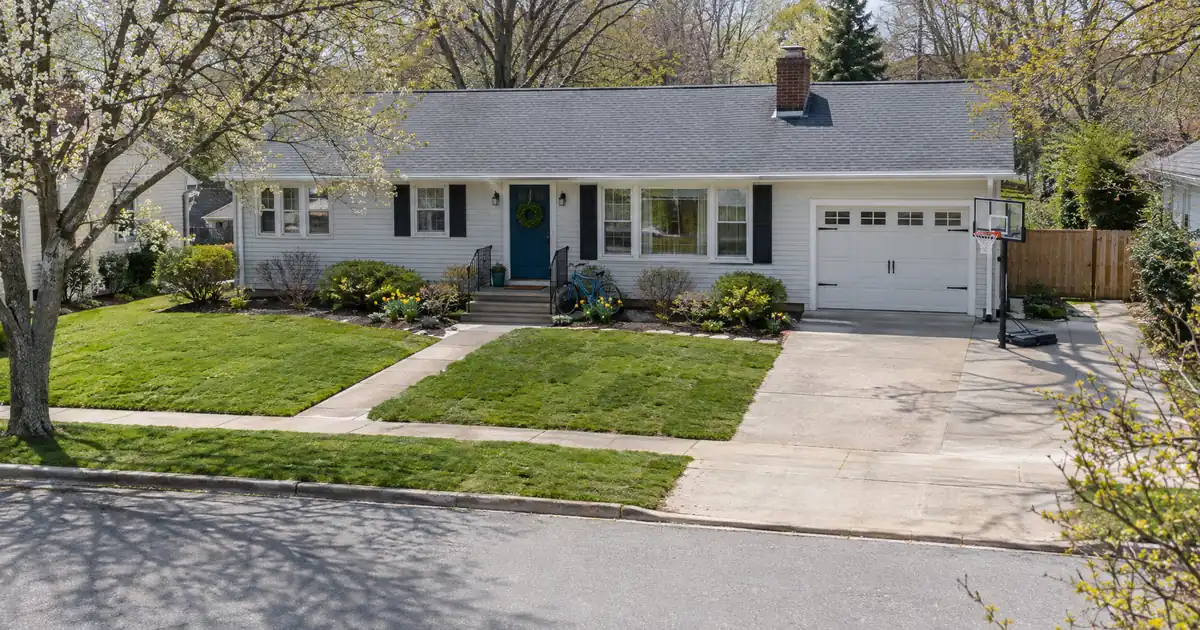
The Quick Read: Yes, if your decision credit score is 580 or higher. At that score, FHA allows financing up to 96.5% of the home’s value, so your minimum investment is 3.5%. Being a first-time buyer is not a requirement, and it does not unlock extra leverage. Your score, the appraisal, your income and debts, and the source of your cash decide the outcome, subject to lender guidelines and full file review.
How Does the 3.5% Minimum Actually Work?
The 3.5% minimum applies to the lesser of the purchase price or the appraised value. If you agree to pay more than the home appraises for, the gap is yours to cover. It does not shrink your down payment.
FHA payment estimate
Starting assumptions reflect an example price and the FHA minimum investment. Replace them with your own figures.
Editable benchmark: 7.32% as of October 22, 2026 · Freddie Mac 30-year average via FRED®. A conventional market reference, not an FHA loan quote.
Illustrative starting assumptions: a $350,000 price, the FHA minimum investment as the down payment, a thirty-year term at the current Freddie Mac benchmark, and property taxes and insurance estimated at typical national rates. Every field is editable.
Illustrative estimate only — not a Loan Estimate, approval, quote, or commitment to lend. The rate field carries the weekly Freddie Mac thirty-year conventional benchmark, a market reference and not an FHA loan quote; your rate is set by the lender at lock. FHA mortgage insurance follows HUD’s published schedule for the term, leverage and loan size entered; taxes, insurance and dues are editable estimates; closing costs are not included; county loan limits are not checked here. Licensed in sixteen states for consumer mortgages. Lendmire is not affiliated with or acting on behalf of FHA, HUD, or the federal government.
Across the wholesale programs Lendmire places FHA files with, 580 is the starting score for that 96.5% financing. Lendmire’s FHA loan programs are built around that threshold. HUD’s own rulebook is more generous on paper. HUD’s FHA guidance says scores of 500 to 579 are capped at 90% financing, which means 10% down. In practice, the lenders we work with do not reach below 580. Some lenders elsewhere set even higher floors. These specifics are subject to lender guidelines and a full review of property, leverage, and credit.
Here is the tier picture in plain form:
| Decision score | HUD rule | What we see in practice |
|---|---|---|
| 580 or higher | Maximum financing, 96.5% | 3.5% minimum investment |
| 500 to 579 | Capped at 90% financing | Not reached by our network |
| Under 500 | Ineligible | Ineligible |
“Decision score” is the single credit score the lender uses for the file. HUD’s rules set how it is determined for each borrower, and the lender pulls your credit and applies those rules to arrive at the score that governs.
Do You Have to Be a First-Time Buyer?
No. HUD defines a first-time buyer as someone with no ownership interest in any home during the three years before the case number is assigned. A case number is the identifier FHA assigns to your loan file. HUD does not require FHA borrowers to be first-timers.
So why does the label come up so much? Because some down payment assistance programs require first-time status or income caps. That is the assistance program’s rule, not FHA’s.
What Else Do You Need to Qualify?
A low down payment is only the first gate. The lender also checks four other things.
Income and debts. FHA still requires you to show you can repay. The base ratio pair is 31/43. That means housing costs at 31% of income and total debts at 43%, with no extra strengths on the file. Documented compensating factors can stretch that to 40/50 at the top tier. Compensating factors are strengths like savings or a strong payment history. The automated underwriting finding governs most files.
Occupancy. The home must be your principal residence, one to four units. HUD says at least one borrower must move in within 60 days of signing and intend to stay at least a year. FHA is not for rentals or vacation homes. If you are eyeing a second property, occupancy decides the leverage, and that is a different conversation.
Property condition. The appraisal sets value and checks that the home meets HUD’s minimum property standards. HUD’s glossary describes the goal as homes that are safe, sound and secure. An appraisal is not a home inspection. Hire an inspector anyway.
Loan limits. FHA limits are set by county and change every year. HUD publishes them with a wide spread between low-cost and high-cost areas. Check your county’s limit before you shop, because a price above it caps what FHA can finance.
A co-borrower who will not live in the home is allowed. One catch: if only the non-occupying co-borrower has a credit score, HUD’s rules send the file to manual underwriting. Manual underwriting means a person reviews the file by hand instead of leaning on the automated finding. It is stricter.
Where Can the Down Payment Come From?
Your own savings, a gift, or an assistance program can all fund the 3.5%. The lender must verify the source of every dollar.
Gift funds can cover the entire minimum investment. Acceptable donors are generally family, an employer or union, a close friend with a documented interest, a charity, or a government homeownership program. A signed gift letter states the money is not a loan. Expect the lender to trace the transfer.
Seller help works differently. Seller or interested-party contributions can reach 6% of the price, but they cover closing costs, not the minimum investment. The seller cannot pay your 3.5%. Agents, builders and anyone with a stake in the sale are in the same bucket.
Picture a buyer with decent credit and little savings. A parent gifts the full 3.5%. The seller agrees to a closing-cost contribution within the 6% limit. That file can work on paper. The lender still verifies the gift, the appraisal still has to support the price, and the buyer’s income still has to carry the payment.
One reminder: closing costs come on top of the minimum investment. Your Loan Estimate, the disclosure you receive after applying, lays out the full cash to close.
What Does Mortgage Insurance Do to the Deal?
FHA charges mortgage insurance on every loan, no matter how much you put down. The CFPB confirms there is an upfront piece paid at closing and a monthly piece built into your payment. It also says the cost does not vary with credit score, with a slight increase for down payments under 5%.
Here are the program mechanics from our network:
- The upfront premium is 1.75% of the base loan, and most borrowers finance it into the balance.
- The annual premium runs between 0.15% and 0.75% of the balance, depending on term, loan amount and LTV.
- On a thirty-year loan above 90% LTV, the annual premium lasts for the full term.
- At or below 90% LTV, it ends after eleven years.
A buyer who puts down the 3.5% minimum is above 90% LTV. That premium does not fall off on its own. The usual way out is refinancing later, once you have built equity. Those are program facts, not prices. What you would actually pay depends on the lender’s guidelines, the property type, the leverage, and a full review of the credit profile.
The tradeoff is real. Minimum down gets you into the house sooner and keeps your savings intact. It also means a larger balance and a longer insurance tail. Thinking this one through, the answer often depends on what you do with the cash you keep: a buyer who needs reserves for repairs may be better off at 3.5%, while a buyer with strong credit and more savings should price conventional too.
The CFPB has cautioned that borrowers with higher credit scores, or who can put down roughly 5% to 15%, may find FHA costs more than a conventional loan with private mortgage insurance. Compare both before you commit.
FHA or Conventional: Which Fits a First-Timer?
It depends on your score and savings. FHA tends to fit buyers with thinner credit or smaller down payments. Conventional can fit buyers with strong scores and more cash.
| Factor | FHA | Conventional |
|---|---|---|
| Minimum investment | 3.5% at 580+ | Varies by program |
| Credit flexibility | Generally more flexible | Often tighter |
| Mortgage insurance | Required on every loan | Depends on down payment |
| Occupancy | Principal residence only | Varies by program |
Choose FHA if your score sits near the floor, your savings are modest, or your debts run high. Consider conventional if your score is strong and you can put down more. Lendmire arranges both through wholesale lenders, so the comparison is a real one.
If you are self-employed, the income documentation matters as much as the down payment.
Why Do First-Timers Get Stuck?
Most stalls trace back to a handful of causes. Each has a fix.
- Score just under 580. Waiting and paying down card balances before applying can lift the decision score. Scores are per borrower, so check each applicant.
- Non-traditional credit. Borrowers with thin files can still get maximum financing, but through manual underwriting. Expect more documentation.
- Gift paperwork gaps. Missing letters or untraceable deposits stall files. Move money early and keep statements.
- Appraisal problems. If the home fails the property standards or appraises under the price, someone has to fix it or renegotiate.
- Price over the county limit. The loan cannot exceed it. Confirm the limit first.
- Past credit events. HUD sets waiting periods: two years from a chapter 7 discharge and three years from a foreclosure. Those are HUD’s rules, not a promise from any lender.
One more note on policy. HUD updates its handbook and property standards from time to time. Treat any specific property rule as something to confirm at application.
Common Myths, Corrected
“FHA is only for first-timers.” Not so. HUD does not require it.
“3.5% down works with any score.” It needs a decision score of 580 or higher. The exact numbers vary by lender and program and follow a full review of property, leverage, and credit.
“No mortgage insurance if I put 20% down.” FHA insurance applies to every FHA loan. Final terms depend on the lender’s guidelines, the property type, and the borrower’s complete credit picture.
“The seller can cover my down payment.” Sellers can help with closing costs, not the minimum investment.
“HUD’s floor is what every lender uses.” Lenders can add stricter rules, which is why some set higher score minimums.
Key Terms Defined
Decision score: the credit score the lender uses to set your eligibility. HUD calls it the Minimum Decision Credit Score.
LTV (loan-to-value): the loan amount as a percentage of the home’s value. A 96.5% LTV means 3.5% down. Each figure is subject to lender guidelines and a complete review of property type, leverage, and credit.
Minimum required investment: the cash you must put in yourself, or receive as an eligible gift.
Manual underwriting: a hand review of your file, used when the automated system cannot approve it.
Compensating factors: documented strengths, like savings, that let a lender accept higher debt ratios.
Frequently Asked Questions
Can I get an FHA loan with 3.5% down and a 560 score?
Not through the wholesale programs Lendmire places FHA files with, which start at 580. HUD’s own rules allow 500 to 579 scores, but at 10% down. Some lenders set stricter floors still. If you are close, a few months of credit cleanup may change the answer. Everything is subject to lender guidelines and full file review.
Can my parents give me the whole down payment?
Yes, gift funds can cover the full minimum investment. The donor must be an acceptable source, like a family member, and you will need a signed gift letter stating the money is not a loan. The lender will verify the transfer. Sellers and others with a stake in the sale cannot give gifts.
Do I have to live in the home?
Yes. At least one borrower must occupy it as a principal residence within 60 days of signing and intend to stay at least a year. Active-duty military borrowers who cannot physically occupy the home may still qualify as owner-occupants in some cases, with documented orders.
Does FHA mortgage insurance ever go away?
On a thirty-year loan above 90% LTV, the annual premium lasts for the full term. At or below 90% LTV, it ends after eleven years. Many borrowers who start at minimum down later refinance once they have built equity. Eligibility for any refinance depends on lender guidelines.
Is the FHA appraisal the same as a home inspection?
No. The appraisal estimates value and checks that the home meets HUD’s minimum property standards. It does not examine the home the way an inspector does. A separate inspection is still a smart move before you close.
If you are buying a home and want to see whether an FHA loan fits your file, Lendmire can help you compare the options and see what each one requires. Reach the team at 828-256-2183.
For your own numbers, request a scenario review with Lendmire.
About Lendmire
Lendmire is a mortgage brokerage (NMLS# 2371349) licensed for consumer mortgage lending in 16 states, arranging FHA, VA, conventional and jumbo purchase and refinance loans through a wholesale lending network. Eligibility is determined by the lender on each file. Scotsman Guide named Lendmire a Top Mortgage Workplace in both 2025 and 2026.
Get Started
Ready to find the right loan for you?
In about 30 seconds you can review financing options available for your home or investment property. No commitment required.
Informational only. Not a Loan Estimate, approval, or commitment to lend. Program availability and eligibility are subject to lender guidelines, credit approval, property review, and underwriting.
References
1. HUD FHA FAQ: Minimum credit score and how it is determined
2. HUD FHA FAQ: How HUD defines a first-time homebuyer
3. HUD: 2026 FHA loan limits announcement
4. CFPB: What is mortgage insurance and how does it work
This article is part of Lendmire’s FHA loan program — full qualification details, guidelines, and scenarios live on the program page.
Related reading: Should a Buyer With Thin Credit Choose an FHA Loan? · Can a First-Time Buyer Get an FHA Loan With an Unsourced Deposit? · FHA Loan New Build Requirements for a First-Time Buyer
Brandon Miller
Founder & CEO, Mortgage Loan Originator, Lendmire LLC
- Mortgage Loan Originator · NMLS# 1129696 · Verify on NMLS Consumer Access
- North Carolina Real Estate Broker · License# 343312 · Verify on NCREC
- North Carolina Insurance Producer · License# 19053198 · Property, Casualty, Life, Health · Verify on NAIC SBS
- Lendmire LLC · Firm NMLS# 2371349 · Verify firm licensure
Legal disclosures. Lendmire (NMLS# 2371349) is a state-licensed mortgage brokerage that arranges financing through wholesale lender relationships. Lendmire is not a direct lender, depository institution, or registered financial advisor. The discussion above is general informational content about real estate financing — it is not financial, legal, or tax advice, and readers should consult licensed professionals for guidance on their individual circumstances. Loan inquiries are subject to lender underwriting; this article does not represent a commitment to lend. Loan terms, rates, and qualification standards vary by borrower, property, and state, and are subject to change at any time. Equal Housing Opportunity. NMLS Consumer Access: nmlsconsumeraccess.org.