
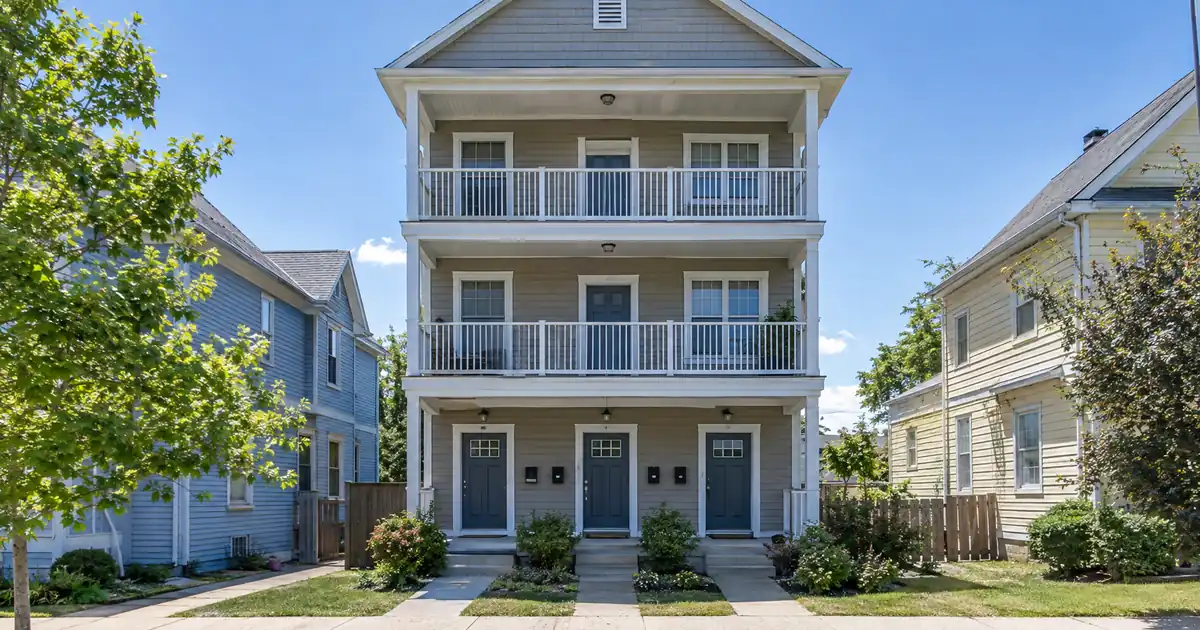
The Quick Read: Yes, when you live in one of the three units. A conventional cash-out on an owner-occupied triplex tops out at 75% of the appraised value, against 80% on a one-unit home. Two waiting clocks and a reserve check apply. Taking equity out for the first time adds no extra hurdle.
What Does “First-Time” Change? Almost Nothing.
Nothing, as far as the underwriting rules go. The conforming guidelines have no special test for a borrower pulling equity for the first time. The clocks, the caps and the credit checks are the same whether this is your first cash-out or your fourth.
The confusion comes from the phrase “first-time.” Most people have heard of first-time buyer programs. Those are purchase programs. On a purchase of a principal residence with a fixed rate, the leverage can reach 97% when at least one borrower is a first-time buyer, meaning no ownership interest in a residence in the previous three years. That leverage belongs to buying a home. It does not carry over to pulling cash out of a home you already own.
So read the question this way: you own a triplex, you live in one unit, and you want to borrow against the equity. The answer is a conventional cash-out refinance. A cash-out refinance replaces your current mortgage with a new, larger one and hands you the difference. You can read the program basics on Lendmire’s cash-out refinance programs page. The rest of this piece covers what changes because there are three units.
Why Does a Triplex Qualify for a Home Loan?
A triplex qualifies because one to four units are treated as residential. They are financed with the same family of conforming loans as a single-family house. That is why a triplex owner can use a standard cash-out refinance instead of a commercial loan.
There is one condition. The triplex must be your principal residence. That means you live in one of the three units as your main home. Freddie Mac’s cash-out refinance page lists one- to four-unit primary residences as eligible. Freddie’s primary-residence rule is that every borrower on the loan occupies the property. You cannot live elsewhere and call it your primary home.
What if you don’t live there? Then the triplex is an investment property, and occupancy changes the rest of the rules. In the wholesale conventional programs we work with, the cash-out cap on investment property is also 75%, but the reserve, pricing and documentation rules differ. This article stays with the home you live in.
How Does a Triplex Compare With a One-Unit Home?
Three differences matter. The cap is lower, the reserve requirement is heavier, and the appraisal looks at rent. Everything else, including the seasoning clocks, matches a one-unit cash-out. These specifics are subject to lender guidelines and a full review of property, leverage, and credit.
| Factor | Triplex (you live in one unit) | One-unit home |
|---|---|---|
| Cash-out LTV cap | 75% | 80% |
| Reserves | Required | No general minimum |
| Appraisal form | Small income property report | Standard home report |
| Rent from other units | Documented and reported | Not applicable |
| Seasoning clocks | Same two clocks | Same two clocks |
The 75% and 80% figures come straight from the Fannie Mae Eligibility Matrix. LTV means loan-to-value: the new loan balance divided by the appraised value. All of it is subject to lender guidelines and full file review.
Notice what the lower cap does. Five points of value is real money on a triplex. A one-unit owner can borrow up to 80% of value. You stop at 75%. If your current loan is already near that line, the extra cash may be small or zero.
What Are the Two Waiting Clocks?
Two separate clocks run before a conventional cash-out can happen. The first mortgage you are paying off must be at least 12 months old. And at least one borrower must have been on title for six months. Many borrowers know only the six-month rule and get surprised by the 12.
The first clock runs from the note date of your existing first mortgage to the note date of the new loan. The second runs from the day you took title to the day the new loan is disbursed. Both are laid out in the Fannie Mae Selling Guide section on cash-out refinances.
Exceptions exist. Delayed financing, inheritance and legal-award situations can shorten the wait. Delayed financing matters if you bought the triplex with cash. In that case you can take cash out within the first six months when the Guide’s conditions are met, including documented source of funds. Freddie Mac describes a parallel exception. The rules are specific, so read the Guide section before you plan around one.
Two smaller conditions sit in the same section. If the triplex was listed for sale, it must be taken off the market on or before the disbursement date. And a higher debt ratio can trigger extra reserves on a cash-out, which ties into the reserve discussion below.
What this means for you: wait out the clocks before you plan the project the cash is for. A contractor deposit scheduled for next month does not move a note date.
What Credit and Debt Ratios Do You Need?
Across the wholesale conventional programs we place files with, the credit floor starts at a 620 decision score. Some lenders set a higher floor. The automated underwriting finding governs most files, with a total debt-to-income ceiling of 50%. Manually underwritten loans use tighter ratios of 36% or 45%, tied to score and reserve factors in the Eligibility Matrix.
Debt-to-income, or DTI, is your total monthly debts divided by your gross monthly income. On a triplex you live in, the whole proposed payment on the new loan goes into that ratio. The rent from the other units may offset part of it, but only under the documentation rules covered next.
One piece of good news. Because a triplex cash-out stops at 75% LTV, the new loan sits under the 80% line. Mortgage insurance is required above 80% LTV, so it generally does not apply to a triplex cash-out at that leverage. A borrower coming off a 95% purchase loan is used to seeing it. Here it drops away.
Credit events carry waiting periods set by the agencies: four years from a chapter 7 discharge, seven from a foreclosure, and four from a short sale or deed-in-lieu. Documented extenuating circumstances can shorten them. Subject to lender guidelines, as always.
How Does Rent From the Other Two Units Count?
Rent can help you qualify, but it does not count automatically. It must be documented, and the amount that counts can be limited. This is the part of a triplex file that surprises first-timers most.
Here is how it works in practice. The Fannie Mae rental income rules allow rent from a two- to four-unit owner-occupied property. You document it with traditional personal-income documentation, or with a lease supported by the appraisal’s rent schedule. Fannie also provides Form 1037, a worksheet built for two- to four-unit primary residences.
Two more points shape the outcome:
- Reporting is required even if you don’t use the rent. The lender reports the monthly rent on the subject property in the delivery data for these loans.
- The full rent may not count. Whether it does can depend on your current housing payment and your property-management experience. A first-time landlord’s rental income can be limited.
So a borrower with no landlord history should not assume all the rent offsets the payment. Plan the DTI both ways: once with the rent credit, and once without it. If the file works without the credit, you have nothing to worry about.
How Much Cash Could You Actually Walk Away With?
Cash in hand equals the new loan, minus the payoff of your current mortgage, minus closing costs. The 75% cap sets the size of the new loan. Everything else comes out of it.
Run the logic in percentages, without dollar figures. Say your triplex appraises at 100% of its value, and your current mortgage balance equals 50% of that value. The new loan can be up to 75%. That leaves about 25 points of value before costs. Closing costs are then deducted, and the remainder is your cash.
Now compare a one-unit home with the same 50% balance. The cap is 80%, so the gap before costs is 30 points. Same owner, same equity, five points less cash. That is the triplex difference in plain numbers.
Two cautions. The appraised value sets the LTV, not what you paid. A property bought years ago may appraise well above its purchase price, or the reverse. And the Loan Estimate you receive lists closing costs and the estimated cash to close, so you can see the net before you commit. Cash-out loans are also priced higher than rate-and-term refinances because of loan-level adjustments for cash-out risk. Ask for the full terms, then weigh them against what you need the cash for.
For a deeper walk through the leverage math, see Lendmire’s explainer How Much a Conventional Cash-Out Lends a First-Time Equity Borrower.
Why Do Reserves Matter More on a Triplex?
A triplex starts with a reserve requirement that a one-unit home does not have. Reserves are liquid funds, such as checking, savings or retirement balances, that you could use to make mortgage payments if income stopped. The Selling Guide’s reserve section sets a months-of-payments requirement for a two- to four-unit principal residence on automated casefiles. One-unit principal residences have no general minimum. Terms depend on the lender’s guidelines, the property type, the leverage, and a full review of the credit profile.
Two details trip people up. First, cash you take out in the refinance reduces the balance of certain accounts counted as reserves. You cannot count the proceeds as your own cushion. Second, the automated findings can ask for more reserves based on the overall risk picture of the file.
The practical read: before you apply, look at what you hold outside the house. If your liquid savings are thin, the reserve check, not the 75% cap, may be what stops the file. Some lenders also add their own credit and reserve overlays on top of the agency rules. The agency rules are the floor, not a promise.
What Changes in the Appraisal?
The appraisal for a two- to four-unit home uses a different form from a house. Fannie Mae calls for the Small Residential Income Property Appraisal Report, known as Form 1025, on traditional appraisals of these properties. The report includes a rent schedule with comparable rentals, so the appraiser looks at what similar units rent for, as well as what similar buildings sell for.
For you, that means the appraisal can run differently from a single-family job in timing and cost. It also means the rent figures on the report support the lease documentation covered above. If your actual rents sit well below the comparables, expect questions.
Which Option Fits Your Goal?
A cash-out refinance is not the only way to use a triplex’s equity. The right choice depends on what you want to do with the money and what you want to do with your current loan.
| Option | What it does | Best fit |
|---|---|---|
| Cash-out refinance | Replaces loan, pays you the difference | One large need, worth redoing the loan |
| Limited cash-out refinance | Replaces loan, only incidental cash back | Changing the loan, not pulling equity |
| Keep loan, add a second lien | Leaves first mortgage in place | Smaller or staged cash needs |
On the limited cash-out lane, the wholesale programs allow 95% LTV on a one-unit principal residence, with mortgage insurance above 80%. The new loan pays off your first mortgage, closing costs and any purchase-money second lien, with only incidental cash back. Limited cash-out has its own caps for multi-unit homes, so confirm the figure for a triplex before relying on it. It does not put real equity in your pocket, which is why it does not answer your question. The exact numbers vary by lender and program and follow a full review of property, leverage, and credit.
Fannie Mae also has a high-LTV refinance for borrowers whose loan it already owns. It applies to three- and four-unit homes only when leverage runs above the standard limited cash-out maximum. It is a no-cash-out product. Good to know, but not an equity tool.
If you decide a second lien suits you better, you keep the existing first mortgage as it is. That choice makes sense when the loan you hold has terms you want to preserve.
What Should You Gather Before You Apply?
Collect your paperwork in the order the file will ask for it. A checklist for an owner-occupied triplex:
- Your current mortgage statement, with the original note date, to prove the 12-month clock.
- Proof of the date you took title, for the six-month clock.
- Leases for the other two units, plus any traditional personal-income documentation that shows rental history.
- Two months of recent statements on checking, savings and retirement accounts, to show reserves.
- Proof of income and recent pay documentation, plus a list of your monthly debts.
- Homeowners insurance details and, if the triplex was ever listed, confirmation it was taken off the market.
Missing pieces slow a file down far more often than the rules do.
Why Do First Triplex Files Stall?
Most stalls come from four things. They are fixable if you catch them early.
1. The 12-month clock. Owners count only the six months on title and forget the first mortgage must also be at least 12 months old. Fix: check the note date before applying.
2. Reserves. The reserve requirement is higher than a house, and the cash-out proceeds don’t count. Fix: build liquid savings first, or lower the amount you plan to borrow.
3. Rent that doesn’t document. Informal cash rent with no lease or tax-return history may count for little. Fix: get written leases in place and keep payment records.
4. Occupancy. A borrower who lives elsewhere cannot treat the triplex as a primary home. Fix: decide honestly which lane you are in before you apply. Final terms depend on the lender’s guidelines, the property type, and the borrower’s complete credit picture.
One more: a property listed for sale must come off the market on or before disbursement. Take the listing down early.
Key Terms Defined
Cash-out refinance: a new mortgage that pays off your old one and gives you the leftover equity in cash.
LTV (loan-to-value): the new loan balance divided by the home’s appraised value.
Seasoning: the waiting period a loan or ownership must age before a new loan can be made.
Reserves: liquid funds you hold after closing that could cover mortgage payments.
DTI (debt-to-income): your total monthly debts divided by your gross monthly income.
Delayed financing: an exception that lets you take cash out soon after buying a property with cash.
Where to Go From Here
If you are weighing a cash-out refinance against keeping the loan you have, Lendmire can help you compare the programs and the equity each one reaches. Lendmire is a mortgage broker, so it arranges these loans through wholesale lenders and does not lend directly. Every program figure here is subject to lender guidelines and full file review, and nothing here is a commitment to lend.
Frequently Asked Questions
Does a first-time cash-out need a special program?
No. The guidelines do not carry a separate first-time-equity-borrower program. The “first-time” programs you see advertised are for purchases and limited cash-out on one-unit homes. A first cash-out on a triplex uses the standard cash-out rules.
Can I get 80% on a triplex like I would on a house?
No. The conventional cash-out cap on a two- to four-unit principal residence is 75%. The 80% figure applies to a one-unit principal residence. The five-point gap is the main reason a triplex owner gets less cash than a house owner with the same equity.
Do I have to live in the triplex?
Yes, for the primary-residence lane. Every borrower on the loan must occupy the property. If you live elsewhere, the triplex is an investment property, and different reserve, pricing and documentation rules apply.
Will the other tenants’ rent count as my income?
It can, but not automatically. The rent must be documented with leases supported by the appraisal’s rent schedule, or with traditional personal-income documentation. For a first-time landlord, the amount that counts can be limited. Build your budget to work with and without it.
What if I bought the triplex recently?
You generally need six months on title and a first mortgage that is at least 12 months old. If you bought with cash, the delayed financing exception may let you take cash out within the first six months when the Guide’s conditions are met. A lender will check which path your file fits.
For your own numbers, request a scenario review with Lendmire.
About Lendmire
Lendmire, NMLS# 2371349, is a mortgage brokerage with consumer lending licenses in 16 states. FHA, VA, conventional and jumbo purchase and refinance loans are arranged through wholesale lending partners, and each application is reviewed individually by the lender. Scotsman Guide named Lendmire a Top Mortgage Workplace in both 2025 and 2026.
For the program’s current guidelines, see conventional loan programs.
Get Started
Ready to find the right loan for you?
In about 30 seconds you can review financing options available for your home or investment property. No commitment required.
Informational only. Not a Loan Estimate, approval, or commitment to lend. Program availability and eligibility are subject to lender guidelines, credit approval, property review, and underwriting.
References
1. Freddie Mac: Cash-Out Refinance
2. Fannie Mae Eligibility Matrix
3. Fannie Mae Selling Guide: Cash-Out Refinance Transactions
4. Fannie Mae Selling Guide: Rental Income
5. Fannie Mae Selling Guide: Minimum Reserve Requirements
This article is part of Lendmire’s Conventional Loans series — every loan program’s qualification details, guidelines, and scenarios live on the loan options page.
Related reading: Can Your First Conventional Cash-Out Close Before Probate Ends? · Conventional Cash-Out Questions for a First-Time Equity Borrower · Conventional Cash-Out for First-Time Equity Borrowers: Terms That Decide
Brandon Miller
Founder & CEO, Mortgage Loan Originator, Lendmire LLC
- Mortgage Loan Originator · NMLS# 1129696 · Verify on NMLS Consumer Access
- North Carolina Real Estate Broker · License# 343312 · Verify on NCREC
- North Carolina Insurance Producer · License# 19053198 · Property, Casualty, Life, Health · Verify on NAIC SBS
- Lendmire LLC · Firm NMLS# 2371349 · Verify firm licensure
Required disclosures. Lendmire (NMLS# 2371349) operates as a licensed mortgage broker, not a direct lender or depository. The discussion in this article is general in nature and should not be relied upon as financial, legal, or tax advice — every investment scenario is unique and should be reviewed by a qualified professional. Any loan inquiry is subject to lender underwriting, and this article is not a commitment to lend or a guarantee of approval. Mortgage rates, loan terms, and program guidelines vary by borrower, property, and state, and may change without notice. Equal Housing Opportunity. Verify licensure at NMLS Consumer Access.