
The Quick Read: Yes, if you live in one of the four units. The loan has to clear three tests: the 80% leverage cap, the owner-occupancy test, and the extra rental test FHA applies to three- and four-unit buildings. A low first mortgage helps with the first test and does nothing for the other two. Everything here is subject to lender guidelines and full file review, and nothing is a commitment to lend.
Does a Fourplex Qualify for an FHA Cash-Out?
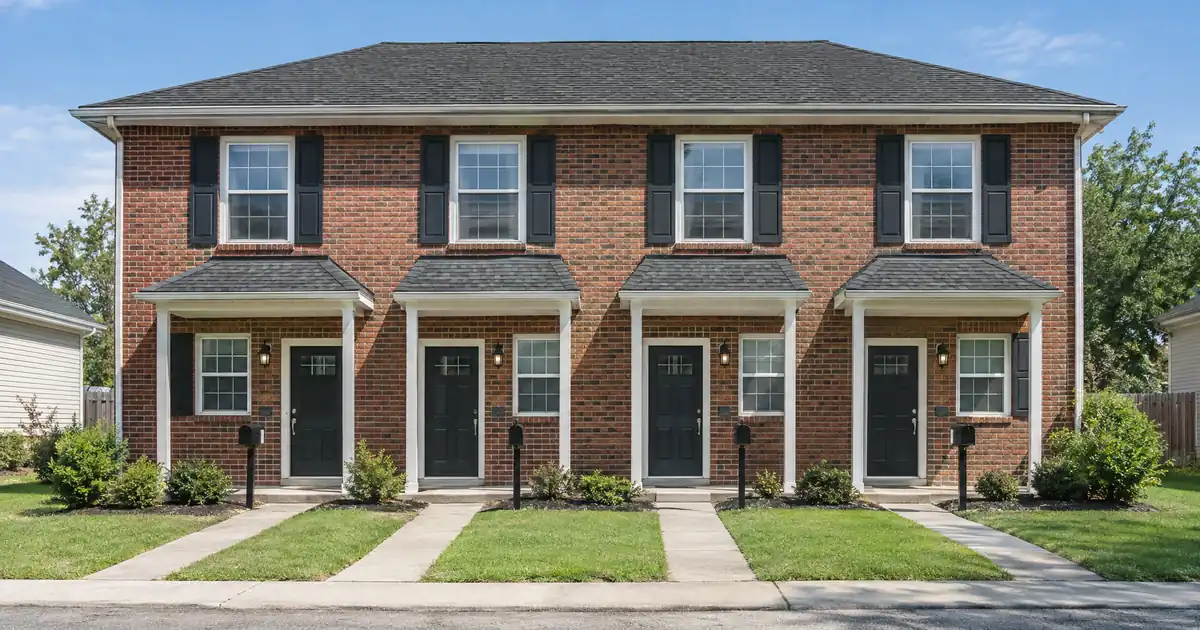
A fourplex qualifies when it is your principal residence. FHA programs cover one- to four-unit homes that the borrower occupies, so a four-unit building counts as residential, not as an investment property. If you live in one unit and rent the other three, you are in the right lane.
If you own the building but live elsewhere, the standard FHA cash-out is closed to you. Occupancy decides the leverage, and a non-occupied building is financed under different rules entirely.
Across the wholesale programs Lendmire places files with, the FHA cash-out reaches 80% loan-to-value on a home you have owned and occupied for 12 months before the case number is assigned. HUD set that cap in Mortgagee Letter 2019-11, and the cap applies to combined loan-to-value, measured against an “adjusted value.” HUD’s news release on the change confirms the cut from 85 to 80 percent. If you see an 85% figure on an older page, it is stale.
The brokerage arranges these loans in 16 states. Details on how the program works are on Lendmire’s FHA cash-out refinance program page.
What a Cash-Out Does to a Low First Mortgage
A cash-out refinance replaces your first mortgage. It does not sit on top of it. The old loan is paid off at closing, and a new, larger FHA loan takes its place at new terms.
That is the point most fourplex owners miss. A small balance on the old loan makes the 80% cap easy to meet, because you have a lot of equity. But the new loan is bigger, and the new payment is what gets tested.
| Question | FHA cash-out | Keep the first mortgage and add a second lien |
|---|---|---|
| What happens to the old loan | Paid off and replaced | Stays in place |
| Terms on the old balance | Reset to new terms | Unchanged |
| New money | Part of one larger loan | Separate loan or credit line |
| Leverage test | 80% of adjusted value | Combined with the first loan |
| Best fit | Large need, old terms not worth keeping | Smaller need, old terms worth protecting |
Run the question as two separate ones. Can you qualify? That depends on occupancy, the rental test, and the cap. Should you do it? That depends on what you give up by retiring the old loan.
The CFPB’s Office of Research notes that the added risk of a cash-out is that payments and loan terms are both likely to increase. For an owner holding a cheap first mortgage, that is the real cost, and no equity figure fixes it.
The Extra Test on Three- and Four-Unit Buildings
This is the part that sets a fourplex apart from a single-family home. For a three- or four-unit property, the lender must work out what HUD calls Net Self-Sufficiency Rental Income. The borrower signs form HUD-92561, and the lender runs the test.
The mechanics are plain:
1. The appraiser gives a fair market rent for all four units, including the one you live in. 2. The lender subtracts the greater of the appraiser’s vacancy-and-maintenance estimate or 25 percent of that fair market rent. 3. The new payment, with taxes, insurance and FHA mortgage insurance, cannot exceed 100 percent of what is left.
The new payment is the whole payment on the new loan. A low old balance does not shrink it.
Your leases do not replace the appraiser’s number for this test. Leases are useful for qualifying income, but self-sufficiency uses the appraisal’s rent schedule. A unit that is vacant or under-rented on paper still gets an appraiser’s market figure, and an owner who set rents below market may find the test is not as hard as feared. The reverse is also true. Strong actual rents do not rescue a weak appraisal.
HUD’s archived reference guide on refinances lists the self-sufficiency test and the reserve requirement for three- and four-unit refinances. HUD’s Mortgagee Letter 2023-17 restates the three-month reserve for these buildings. Final terms depend on the lender’s guidelines, the property type, and the borrower’s complete credit picture.
Rent Is Not a Direct Offset
The self-sufficiency test is separate from your qualifying income. HUD’s archive says rent from the other units can count as gross qualifying income only after a vacancy and maintenance reduction. It cannot be subtracted from the payment directly. Owners who assume “three tenants pay my mortgage” are working from a rule that does not exist.
Occupancy, Seasoning, and Reserve Checkpoints
Run this checklist before you apply:
- Occupancy history. Across the wholesale programs Lendmire places with, the cash-out requires the home to be owned and occupied for 12 months before the case number. If you moved out, the standard cash-out is off the table.
- Payment history. HUD’s COVID-era Mortgagee Letter 2020-30 set a six-month minimum of mortgage payments on properties with a mortgage, and longer waits after forbearance. Treat that letter as pandemic-era guidance and confirm current terms with your loan officer.
- Reserves. Three- and four-unit buildings need three months of full payment in reserves after closing, verified and documented.
- Reserve sources. Cash you take out at settlement does not count as reserves. Neither does equity in another property or borrowed money.
- Loan limits. County loan limits apply and change every year. HUD publishes them each year in its loan limit announcement, and the four-unit limit is the highest FHA sets. Use HUD’s county lookup for your address.
The loan has to fit under three ceilings at once: the county limit for four units, 80% of adjusted value, and the self-sufficiency math. The lowest one controls.
Rules That Are Moving
HUD’s Handbook 4000.1 is the rulebook. HUD’s transmittal for Update 18 shows the refinance section changed in a recent update, so the text on older mirrors may be out of date. The current handbook page is where a loan officer checks the live wording.
A Borrower Scenario Without the Dollars
Picture an owner who has lived in a fourplex for many years. The first mortgage is nearly paid down, so the equity is large. The owner wants cash for a roof, a unit renovation and a debt payoff.
Equity is not the problem. At 80% of adjusted value, there is plenty of room. The questions are different. What is the new payment, with FHA mortgage insurance, set against the appraiser’s rent figure after the 25 percent reduction? Can the owner document three months of reserves from savings rather than from the cash-out? Does the new payment fit the owner’s own income?
If those answers are yes, the loan can work. If the rent test fails, the owner can borrow a smaller amount, since a smaller loan means a smaller payment. A smaller cash-out is often the lever that fixes a fourplex file.
Alternatives That Keep Your First Mortgage
An FHA cash-out is not the only way to reach your equity. A home equity line, a home equity loan, and a conventional cash-out each have their own rules for owner occupancy and unit count. Those fall outside FHA’s self-sufficiency test, but they carry their own limits.
| Option | Effect on first mortgage | Payment style | Best fit |
|---|---|---|---|
| FHA cash-out | Replaced | One loan, fixed schedule | Large need, old loan not worth keeping |
| HELOC | Kept | Draw as needed | Smaller or uneven needs |
| Home equity loan | Kept | Lump sum, fixed schedule | One-time need, old terms worth protecting |
| Conventional cash-out | Replaced | One loan | Stronger credit and lower mortgage insurance cost |
A subordinate lien you leave in place counts against the 80% combined cap. It uses up room you would otherwise have.
When FHA Cash-Out Is the Wrong Tool
Skip it in these cases:
- You do not live in the building. The standard cash-out needs owner occupancy.
- You need a small amount of cash and your first mortgage terms are worth protecting. A second lien may suit you better.
- The self-sufficiency test fails at the loan size you want, and you cannot take less.
- You cannot show three months of reserves from your own funds.
- You plan to move out soon. The loan is built for a principal residence.
Adding a non-occupant co-borrower to fix weak credit is also a dead end on a cash-out. HUD’s 2009 Mortgagee Letter barred it, and that letter is old, so confirm the current handbook language with your loan officer. One related point: a three- or four-unit property can include accessory dwelling units, so a duplex with two ADUs can land in the fourplex test.
What a Cash-Out Costs You
The new loan can extend your payoff time, and the payment can rise because a larger loan replaces the old one. The CFPB says as much in its guide on using home equity. Closing costs also apply: origination, appraisal, title insurance and other fees. The CFPB also warns that turning other debts into mortgage debt secured by your home can put the home at risk if payments become unsustainable, as set out in its research on cash-out refinances and non-mortgage debt. That same research finds the benefits of paying off debt this way depend on your circumstances.
Tax treatment can depend on your situation; borrowers should speak with a qualified tax professional before relying on any deduction or credit.
Key Terms Defined
Cash-out refinance: A new, larger mortgage that pays off your current one and gives you the difference in cash.
Adjusted value: The value HUD uses to measure the 80% cap, based on the appraisal.
Net Self-Sufficiency Rental Income: The appraiser’s market rent for all units, less a vacancy and maintenance reduction, used to test a three- or four-unit building.
Combined loan-to-value (CLTV): All loans secured by the home, added together, divided by the home’s value.
Reserves: Your own verified funds left after closing, counted in months of full payment.
Mortgage insurance premium: The FHA’s insurance charge, paid upfront at 1.75% of the base loan (financed) and annually at a percentage of the balance that depends on term, loan amount and LTV.
FHA Program Facts From Lendmire’s Network
These figures are subject to lender guidelines and full file review.
- Across the wholesale programs Lendmire places with, FHA starts at a 580 decision score. HUD’s lower tier is a HUD rule the network does not reach below 580.
- The FHA cash-out reaches 80% LTV on a home owned and occupied for 12 months before the case number.
- The upfront premium is 1.75% of the base loan, financed. The annual premium runs between 0.15% and 0.75% of the balance depending on term, loan amount and LTV. On a thirty-year loan above 90% LTV it lasts for the term. At or below 90% it ends after 11 years.
- Debt ratios start at 31/43 with no compensating factors. Documented compensating factors can reach 40/50 at the top tier, and the automated finding governs most files.
- County loan limits apply and change every year.
Frequently Asked Questions
Can I keep my low rate and still get cash out of my fourplex?
Not with an FHA cash-out. The new loan replaces the old one, so the old terms go away. To keep the first mortgage, you would look at a second lien such as a HELOC or home equity loan, which has its own rules.
Does an FHA loan have to already be on my fourplex?
No. Any existing mortgage type, or none, can be refinanced. HUD says properties owned free and clear can be refinanced as cash-out, per Mortgagee Letter 2020-30.
Can I move out and keep the building as a rental?
Not under the standard FHA cash-out. It requires you to own and occupy the home as your principal residence. If you have moved out, a different financing route would be needed.
Do my leases prove the building supports the payment?
No. The self-sufficiency test uses the appraiser’s fair market rent for all units, less a vacancy and maintenance reduction. Leases help with qualifying income but do not replace the appraisal figure.
How much can I borrow?
The lowest of three limits sets it: the county loan limit for four units, 80% of adjusted value, and what the self-sufficiency math supports. A smaller loan often fixes a file that fails the rent test.
Next Step
If you are weighing a cash-out refinance against keeping the loan you have, Lendmire can help you compare the programs and the equity each one reaches.
For your own numbers, request a scenario review with Lendmire.
About Lendmire
Lendmire (NMLS# 2371349) is a mortgage broker licensed for consumer lending in 16 states. Lendmire arranges FHA, VA, conventional and jumbo purchase and refinance loans through wholesale lenders; every file is underwritten by the lender under the applicable program guidelines. Scotsman Guide named Lendmire a Top Mortgage Workplace in both 2025 and 2026.
Get Started
Ready to find the right loan for you?
In about 30 seconds you can review financing options available for your home or investment property. No commitment required.
Informational only. Not a Loan Estimate, approval, or commitment to lend. Program availability and eligibility are subject to lender guidelines, credit approval, property review, and underwriting.
References
1. HUD Mortgagee Letter 2019-11
3. CFPB Office of Research blog on cash-out refinances
4. HUD HOC Reference Guide: Refinances (archive)
5. HUD Mortgagee Letter 2023-17
7. HUD 2026 FHA loan limits announcement
8. HUD Handbook 4000.1 Update 18 transmittal
11. CFPB
12. CFPB: Cash-out refinances and paydown behavior
This article is part of Lendmire’s FHA Loan series — every loan program’s qualification details, guidelines, and scenarios live on the loan options page.
Related reading: Can a First-Time Equity Borrower Challenge a Low FHA Cash-Out Appraisal? · How to Recover From a Low Automated Valuation on an FHA Cash-Out · Can a First-Time Borrower Get an FHA Cash-Out With a Divorce Pending?
Brandon Miller
Founder & CEO, Mortgage Loan Originator, Lendmire LLC
- Mortgage Loan Originator · NMLS# 1129696 · Verify on NMLS Consumer Access
- North Carolina Real Estate Broker · License# 343312 · Verify on NCREC
- North Carolina Insurance Producer · License# 19053198 · Property, Casualty, Life, Health · Verify on NAIC SBS
- Lendmire LLC · Firm NMLS# 2371349 · Verify firm licensure
Disclosure information. Lendmire is a state-licensed mortgage brokerage under NMLS# 2371349. Lendmire is not a depository institution, direct lender, or financial advisor — all loans referenced are placed through wholesale lender partners and are subject to each lender's underwriting standards. This article is provided for general informational purposes and is not a commitment to lend, nor does it constitute financial, legal, or tax advice. Loan programs, terms, rates, and qualification standards change without notice and depend on borrower profile, property type, and the state in which the subject property is located. Equal Housing Opportunity provider. NMLS Consumer Access: nmlsconsumeraccess.org.