
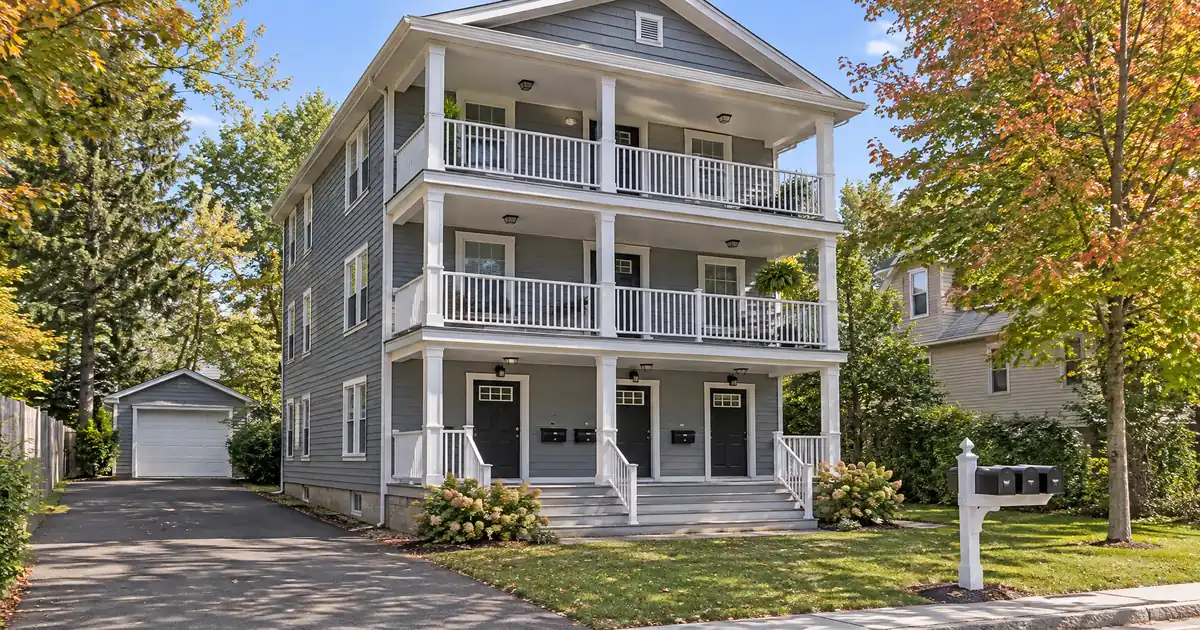
The Quick Read: A finished basement never counts as above-grade living area. That is a measurement rule, not an underwriting choice. It can still count in one of two ways: valued as below-grade finished area, or recognized as a legal separate unit when the paperwork proves it. On a 2–4 unit appraisal, a clearly labeled basement can also be included in gross building area. How the appraiser classifies the space decides what it adds to the value behind your cash-out.
Key Takeaways
- Below-grade space is reported on its own line and adjusted against comparable sales. It is not ignored.
- On 2–4 unit appraisals, gross building area is the most common comparison, and the basement can be part of it.
- A basement becomes a unit only if it is legal, permitted and independent.
- A conventional cash-out on a 2–4 unit principal residence is written to 75% LTV, lower than the 80% on a one-unit home.
- Permits, a floor plan and meter records are the documents that move the classification.
What Does “Counted” Actually Mean?
“Counted” means one of three things, and borrowers mix them up. The appraiser puts the space in a line on the form. That line sets how much value it adds. Only one of the three lines makes it a unit.
Cash-out refinance estimate
The starting figures are an example value with a balance and a cash request in proportion. Replace them with yours.
Editable benchmark: 7.18% as of November 5, 2026 · Freddie Mac 30-year average via FRED®. A conventional market reference, not a cash-out refinance quote.
Illustrative starting assumptions: a $350,000 home value, a $193,000 current balance, the agency cap on a one-unit principal residence, a thirty-year term at the current Freddie Mac benchmark, and property taxes and insurance estimated at typical national rates. Every field is editable.
Illustrative estimate only — not a Loan Estimate, approval, quote, or commitment to lend. The rate field carries the weekly Freddie Mac thirty-year conventional benchmark, a market reference and not a cash-out refinance quote; a cash-out loan is priced by the lender at lock. The cash available is the loan the program cap allows less the balances paid off, before closing costs, which are not included. The HELOC line is the program’s combined loan-to-value ceiling applied to the same value and balance. Taxes and insurance are editable estimates. Licensed in sixteen states for consumer mortgages.
The appraiser must follow the ANSI Z765 measuring standard. Under Fannie Mae’s Selling Guide, below-grade areas are reported separately and adjusted on the basement and finished rooms line of the sales comparison grid. The same section says high-quality below-grade rooms “may add substantially to the value.”
If any part of a level is below grade, the whole level is reported as below grade. Walkouts included. A walkout with big windows is still a basement on paper.
Why Gross Building Area Matters on a 2–4 Unit
Single-family articles talk about gross living area. That is not the main yardstick here. The same Selling Guide section calls gross building area the most common comparison for 2–4 unit properties. It must be developed the same way for the subject and every comparable.
That consistency is where the number gets built. If the appraiser’s comparables have finished lower levels and the sketch labels yours cleanly, the value holds up. If the comps are bare-basement buildings, the adjustment gets harder to support.
The Three Places the Appraiser Can Put Your Basement
| Classification | What qualifies | Effect on value |
|---|---|---|
| Below-grade finished area | Finished rooms, no independent unit | Adjustment line on the grid |
| Independent unit | Legal, permitted, separate | Counted in unit count and building area |
| Nonstandard or noncontinuous area | Fails finish tests | Little or no value credit |
Finished rooms go on the grid line. An independent unit goes in the unit grid. Space that fails the finish tests falls into the third bucket.
Freddie Mac’s ANSI FAQ says finished areas may be excluded from the finished-area figure because of low ceilings, inferior quality, below-grade walls, or separation from the main living area. Any of those conditions can push a basement into the third bucket.
When Does a Basement Become a Legal Unit?
Only when it is legal and independent. Fannie Mae’s guide ties unit status to separate utility meters, a unique postal address, and whether the space can be legally rented. The appraiser decides this in the highest and best use analysis.
Two rules trip people up.
First, the guide states that accessory dwelling units are not permitted with a two- to four-unit dwelling, and it lists a basement living area among the ADU descriptions. So you cannot bolt a basement apartment onto a duplex as an extra ADU. It either qualifies as a legal third unit under the 3-unit rules, or it is valued as finished rooms.
Second, zoning. A 2–4 unit property has to conform to local land use rules. An unpermitted third unit in a two-unit zone can create an eligibility problem, not just a value problem.
A legal third unit changes the file. Eligibility, appraisal form and leverage then follow the 3-unit rules. If it is not legal, expect finished-room treatment or no credit at all.
How the Loan Is Underwritten, Step by Step
1. The transaction type is set. Cash back above the small limited cash-out allowance makes it a cash-out refinance. Paying off a non-purchase second lien does the same. This is where you can compare Lendmire’s cash-out refinance programs.
2. Leverage follows occupancy and unit count. Across the wholesale programs Lendmire places files with, a conventional cash-out is 80% LTV on a one-unit principal residence and 75% on two- to four-unit principal residences. Subject to lender guidelines and full file review.
3. The appraisal is ordered. A full interior appraisal on the 2–4 unit form is the norm.
4. The appraiser measures. Finished and unfinished areas are measured to ANSI and reported in the correct field, even when the reporting changes how the grid looks.
5. The space is classified. Below-grade finished area, independent unit, or nonstandard area.
6. The value is built. Adjustments are made against comparables with similar space.
7. The underwriter reviews it. The reviewer checks the classification, the comps and the sketch. The value then sets the maximum loan.
Seasoning applies too. The first mortgage being paid off must be at least 12 months old, and the borrower must have been on title for 6 months, with exceptions for delayed financing, inheritance and legal awards.
What Documents Help
Nothing in the guides mandates these. They are practical, and they answer the questions an appraiser has to answer anyway.
- Building permits and a final inspection or certificate of occupancy for the basement work. They show the finish is legal and complete.
- Zoning or rental registration for the unit count. It shows the use is allowed.
- A floor plan and measurements. They help the appraiser measure to the standard.
- Utility meter records, postal address and lease records if the space is a separate unit.
- Comparable sales with similar finished lower levels, if you have them.
Appraisers must also report physical deficiencies that affect safety, soundness or structural integrity, and lenders must confirm they are fixed. Unpermitted or half-finished basement work can trigger that. Fix it before the appraisal, not after.
Where the General Rule Breaks
Assessor or listing square footage. A tax record can include the finished basement in its total. The appraisal may not. The appraiser measures to the standard and reports the differences.
Walkout basements. Still below grade. Don’t expect above-grade credit.
A basement unit in a two-unit building. A legal, independent third unit may turn the building into a 3-unit. Everything downstream follows 3-unit rules.
An unpermitted apartment. It is typically valued as finished rooms, or not at all. Rent from it generally does not carry the file.
Appraisal form changes. The terminology has shifted. Fannie Mae’s appraiser update retired “gross living area” and “basement” in favor of above-grade and below-grade finished area, and the transition to the new form is phased. Confirm the current effective date with your lender instead of relying on a trade-source date.
FHA Streamline and VA IRRRL Won’t Do This
Some borrowers hold an FHA or VA loan and assume a streamline can pull equity. It can’t, and it never values the basement.
An FHA Streamline refinances an existing FHA loan with limited credit review and no appraisal requirement. Archived HUD guidance says no cash back is allowed beyond minor adjustments not over $500. Verify against the current handbook.
A VA IRRRL refinances the existing VA loan only. It has no VA appraisal requirement and cannot pay off other liens. A VA cash-out refinance is the VA route when you want cash, and it involves a new appraisal. Only the cash-out versions of FHA and VA look at the basement.
What If the Appraiser Won’t Count It?
Start with the report. You are entitled to a copy. Under the CFPB’s appraisal rule summary, the lender must tell you at application that you can get a copy, and you receive it promptly after the appraisal is completed. Exact timing varies by file and lender. The lender may charge a reasonable fee for the valuation itself.
Then read how the basement was classified.
- Wrong bucket? If you have permits and meter records the appraiser never saw, send them. That is the core of a reconsideration request.
- Weak comps? Supply recent sales with similar finished lower levels, and ask that they be considered.
- Measurement gap? Send a floor plan.
- Truly unpermitted? Permit it and finish the work, then reappraise. Or restructure the loan around the value the appraiser did support.
A lower counted value lowers the maximum loan, because leverage is a percentage of appraised value. A properly documented legal unit can add more through unit count and rent. No dollar figures apply to every file, so ask your loan officer to model both outcomes.
Key Terms Defined
Above-grade finished area: Finished living space fully above ground level, reported separately from below-grade space.
Below-grade finished area: Finished space where any part of the level sits below ground. Walkouts included.
Gross building area (GBA): The total building measurement, the usual comparison on 2–4 unit appraisals.
Independent unit: A space with its own meters, address and legal right to be rented.
Limited cash-out refinance: A refinance that pays off the existing loan and costs, with only incidental cash back.
LTV: Loan amount as a percentage of appraised value.
Mistakes That Cost Value
- Assuming the listing’s square footage will carry over.
- Calling an unpermitted room a unit.
- Letting the sketch lump all finished space together.
- Skipping the appraisal copy review.
- Ordering a cash-out on a hoped-for value without checking how the basement may be classified first.
Frequently Asked Questions
Does a finished basement count as square footage on a 2–4 unit appraisal?
Not as above-grade living area. It is reported as below-grade finished area and valued on its own adjustment line. On a 2–4 unit, it may also be part of gross building area when the sketch labels it clearly.
Can a basement apartment make my duplex a triplex?
Only if it is a legal, independent unit. Separate meters, its own address and legal rentability are part of the test, and zoning has to allow it. Fannie Mae does not permit an ADU alongside a 2–4 unit dwelling.
How much cash-out leverage does a 2–4 unit get?
Across the wholesale programs Lendmire places files with, a conventional cash-out on a two- to four-unit principal residence is written to 75% LTV, versus 80% on a one-unit home.
Can I use an FHA Streamline or VA IRRRL to pull cash out?
No. Neither allows meaningful cash back, and neither is built around a new valuation of the property. An FHA Streamline carries no appraisal requirement, and a VA IRRRL carries no VA appraisal. Cash-out versions of FHA and VA loans use a new appraisal.
Do I get a copy of the appraisal if the loan doesn’t close?
Yes. The right to a copy applies whether or not the loan closes, though a reasonable fee for the valuation can be charged.
Next Step
If you are weighing a cash-out refinance against keeping the loan you have, Lendmire can help you compare the programs and the equity each one reaches.
For your own numbers, request a scenario review with Lendmire.
For current guidelines and terms, see Lendmire’s refinance programs page.
About Lendmire
Lendmire is a mortgage brokerage (NMLS# 2371349) licensed for consumer mortgage lending in 16 states, arranging FHA, VA, conventional and jumbo purchase and refinance loans through a wholesale lending network. Eligibility is determined by the lender on each file. Scotsman Guide named Lendmire a Top Mortgage Workplace in both 2025 and 2026.
Get Started
Ready to find the right loan for you?
See your offer in seconds. No credit pull, no obligation.
Informational only. Not a Loan Estimate, approval, or commitment to lend. Program availability and eligibility are subject to lender guidelines, credit approval, property review, and underwriting.
References
3. Fannie Mae Appraiser Update, June 2025
4. HUD Archives HOC Reference Guide
5. CFPB: What the ECOA appraisal rule means for consumers
This article is part of Lendmire’s cash-out refinance program — full qualification details, guidelines, and scenarios live on the program page.
Related reading: How a Cash-Out Refinance Works for a Big Expense · How a No-Cost Cash-Out Refinance Works · How the Cash-Back Line Works on a Cash-Out Refinance
Brandon Miller
Founder & CEO, Mortgage Loan Originator, Lendmire LLC
- Mortgage Loan Originator · NMLS# 1129696 · Verify on NMLS Consumer Access
- North Carolina Real Estate Broker · License# 343312 · Verify on NCREC
- North Carolina Insurance Producer · License# 19053198 · Property, Casualty, Life, Health · Verify on NAIC SBS
- Lendmire LLC · Firm NMLS# 2371349 · Verify firm licensure
Disclosure information. Lendmire is a state-licensed mortgage brokerage under NMLS# 2371349. Lendmire is not a depository institution, direct lender, or financial advisor — all loans referenced are placed through wholesale lender partners and are subject to each lender's underwriting standards. This article is provided for general informational purposes and is not a commitment to lend, nor does it constitute financial, legal, or tax advice. Loan programs, terms, rates, and qualification standards change without notice and depend on borrower profile, property type, and the state in which the subject property is located. Equal Housing Opportunity provider. NMLS Consumer Access: nmlsconsumeraccess.org.