
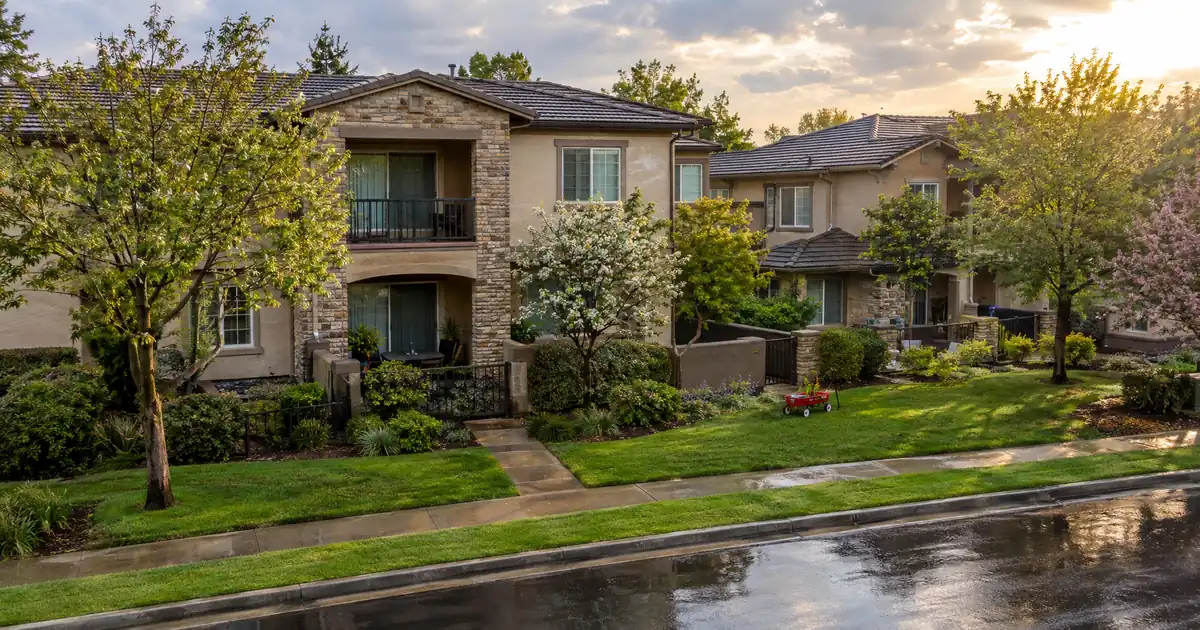
The Quick Read: Two things must be approved: you and the building. Your file is judged on credit, income, and the unit’s appraisal. The condo project is judged on its finances, insurance, owner mix, and legal status. If the building is not already on FHA’s approved list, it can still qualify through a one-unit review, subject to lender guidelines and full file review.
Plenty of buyers get stuck right here. They qualify, they love the unit, and then the building fails. That is not a credit problem. It is a project problem, and you can screen for it before you make an offer.
FHA payment estimate
Starting assumptions reflect an example price and the FHA minimum investment. Replace them with your own figures.
Editable benchmark: 7.32% as of October 22, 2026 · Freddie Mac 30-year average via FRED®. A conventional market reference, not an FHA loan quote.
Illustrative starting assumptions: a $350,000 price, the FHA minimum investment as the down payment, a thirty-year term at the current Freddie Mac benchmark, and property taxes and insurance estimated at typical national rates. Every field is editable.
Illustrative estimate only — not a Loan Estimate, approval, quote, or commitment to lend. The rate field carries the weekly Freddie Mac thirty-year conventional benchmark, a market reference and not an FHA loan quote; your rate is set by the lender at lock. FHA mortgage insurance follows HUD’s published schedule for the term, leverage and loan size entered; taxes, insurance and dues are editable estimates; closing costs are not included; county loan limits are not checked here. Licensed in sixteen states for consumer mortgages. Lendmire is not affiliated with or acting on behalf of FHA, HUD, or the federal government.
What Does “FHA-Approved Condo” Mean?
It means HUD, the agency behind FHA, has accepted the whole building as a safe place to insure a loan. FHA insures condo loans for up to 30-year terms, either in an approved project or in a project that meets the single-unit approval rules, per the HUD FHA Condominiums page.
Why does the agency care about the building? Because your loan is only as safe as the association behind it. HUD looks at insurance coverage, financial condition, the nature of title, pending legal action, physical condition, and anything else that could hurt the project’s marketability.
A strong credit score does not override that. Two buyers with identical files can get opposite answers, because only one picked a building that passes.
The Two Paths at a Glance
There are two approval paths for a condo. A building either is already approved or gets reviewed one unit at a time. A third outcome exists too: some buildings fit neither path, and FHA is off the table for them.
| Your building is… | What happens | Who does the work |
|---|---|---|
| Already FHA-approved | Loan is processed at “loan level” | Lender |
| Not approved, but eligible | Single-unit approval (SUA) review | Lender, with the HOA |
| Not approved, not eligible | FHA is off the table for that unit | You pick another path |
Single-unit approval means FHA reviews your one unit instead of approving the entire building. It is the route for buildings that never went through full project approval.
How Is the Loan Underwritten, Step by Step?
Start with the building, not the borrower. Here is the sequence that most files follow.
1. Check the approved list. This is the easy route. If the building is approved, the lender still completes HUD’s project questionnaire, Form HUD-9991, but the heavy lifting is done.
2. If it is not listed, test for single-unit approval. The unit must sit in a completed project, ready for occupancy, with at least five dwelling units. Manufactured-home condominiums are excluded.
3. The lender builds the project file. The questionnaire must use information from the last 90 days, drawn from verifiable sources such as the association, its management company, or public records, per HUD’s Form 9991 instructions.
4. The lender requests a case number. Here is the trap. HUD states that a case number issued for single-unit processing is not an approval of the unit or the project, per HUD’s FHA INFO messages.
5. Your individual loan is underwritten. That follows ordinary FHA borrower and appraisal rules. The condo review is layered on top.
You never apply to FHA directly. The lender does the submission, and the association supplies the paperwork.
What Does Your Own File Need?
Across the wholesale programs Lendmire places FHA files with, the purchase envelope looks like this, subject to lender guidelines:
- Leverage: up to 96.5% financing, which means a 3.5% minimum investment from a 580 or higher decision score. The network does not reach below 580, even though HUD itself has a lower tier.
- Occupancy: the condo must be your principal residence. It can be a one- to four-unit property, and a non-occupant co-borrower is allowed.
- Seller help: seller or interested-party contributions are allowed up to 6% of the price.
- Ratios: the base pair is 31/43 (housing payment and total debts as a share of income) with no compensating factors. Documented factors can stretch that to 40/50 at the top tier, and the automated finding governs most files.
- Mortgage insurance: an upfront premium of 1.75% of the base loan, which is financed, plus an annual premium between 0.15% and 0.75% of the balance. On a 30-year loan above 90% LTV, the annual premium lasts the full term. At or below 90%, it ends after eleven years.
LTV means loan-to-value, the loan as a share of the price or appraised value. County loan limits apply and change every year, so check HUD’s lookup rather than trusting a number from an article.
One more thing for your budget. HOA dues count in the housing-payment calculation, and so can any special assessment. A building with heavy dues can squeeze your ratios even when your income looks fine.
Where Does the Building Pass or Fail?
This is the part most buyers never see coming. The project is judged on factors like these.
Owner-occupancy. HUD’s 2019 release says approved projects generally need at least 50 percent of units owner-occupied, per the HUD press release on the condo rule. “Owner-occupied” is broader than you might guess. HUD Mortgagee Letter 2016-15 counts principal residences, secondary residences, and units sold to buyers who intend to live there.
FHA concentration. This is how many units already carry FHA loans. For single-unit approval, the same HUD release says projects with 10 or more units can have no more than 10 percent FHA-insured, and smaller projects no more than two units.
Reserves. The association needs a healthy reserve fund. The 2019 rulemaking proposed a baseline tied to monthly assessments, with room for a lower figure backed by a recent reserve study, per the Federal Register. The handbook controls the exact final figure.
Delinquent dues, ownership concentration, insurance, and litigation. Too many unpaid assessments, one owner holding too many units, thin insurance, or a pending lawsuit can sink the project. The exact percentage tests live in HUD Handbook 4000.1. Your lender reads the current version, so ask about them directly.
Rules shift over time. HUD updates the handbook regularly, so treat any article’s numbers, this one included, as a starting point.
Screen the Building Before You Make an Offer
A good agent can run this check in an afternoon. Ask for:
- The HOA’s most recent budget and reserve information
- Whether any units are in arrears on dues, and roughly how many
- Any pending or threatened litigation
- Whether the master insurance policy is current
- Whether any special assessment is planned
- How many units are rented rather than owner-occupied
Red flags in any of these do not guarantee a denial. They do tell you to line up a backup plan before you are under contract.
A Worked Example
Say a buyer finds a unit in a 40-unit building and plans to use 3.5% down. Her score clears the 580 floor, and her ratios sit inside the base pair. Leverage, reserves, and pricing vary by lender and program; the final terms follow the full file review.
Her agent checks the HUD list. The building is not there. The building has more than five units, is complete, and is not a manufactured-home project, so it is eligible to be tested for single-unit approval.
The lender sends the questionnaire to the management company. The answers come back showing owner-occupancy above half and no litigation. But a fair number of units are behind on dues. The lender flags it. The buyer now has a choice: negotiate contract language that lets her walk away, or pick a different building.
Notice what happened. Her credit never changed. The building decided the outcome.
What If the Building Fails?
You have real options, and none of them is a disaster.
- Ask whether the association could address the issue. Sometimes a missing document or a stale questionnaire is the whole problem.
- Switch to a different unit in an approved building.
- Compare other loan types. Lendmire’s piece FHA Loan vs. Conventional Requirements for a Condo Purchase walks through the contrast, since a conventional loan reviews the project under its own rules.
If you are still shopping, read about Lendmire’s FHA loan programs before you choose a building. Starting with the loan type saves wasted offers.
Edge Cases Worth Knowing
- Small buildings: single-unit approval is not available below five units.
- New projects: HUD has historically allowed lower owner-occupancy numbers for brand-new or proposed projects, with a step-up after the first year. Ask your lender what applies now.
- Refinances: the same two approval paths apply to condo refinances.
- Disaster-replacement program: HUD’s current mortgagee letter limits replacement property to a single-family home or a unit in an FHA-approved condo project. Single-unit approval is not available there.
- Residency: HUD removed eligibility for non-permanent resident borrowers on cases assigned from May 25, 2025 forward, per HUD Mortgagee Letter 2025-09.
Common Mistakes
- Assuming a case number means the condo is approved. It does not.
- Trusting a listing that says “FHA approved.” Verify it yourself against HUD’s list.
- Waiting until after the offer to ask about the building. Screen first.
- Thinking credit alone wins. The project has to pass too.
- Thinking FHA only works on the approved list. Single-unit approval exists for a reason.
Key Terms Defined
FHA-approved condo project: a building HUD has accepted for insured loans on its units.
Form HUD-9991: the questionnaire the lender completes about the building’s finances, ownership, and legal status.
Owner-occupancy ratio: the share of units lived in by their owners rather than rented out.
FHA concentration: the share of units in a building already carrying FHA-insured loans.
LTV: loan-to-value, meaning the loan as a share of the price or appraised value.
Frequently Asked Questions
Can I apply for the condo approval myself?
No. The approval work runs through your lender, with documents supplied by the HOA or management company. Your role is to start the conversation early, ask the association to respond, and keep your agent in the loop.
How do I know a building’s approval is current?
Check HUD’s list and read the status, not just the name. Listings sometimes claim approval that has lapsed or never existed, so confirm it with your lender before you rely on it.
What if the HOA will not cooperate?
That can stall a single-unit review, because the lender needs current information from the association. Ask your agent to escalate to the management company, and build contract protection so you are not trapped waiting.
Does my credit score approve the building?
No. Your score helps your file, but the project is reviewed separately on its finances, insurance, owner mix, and legal status.
Are the numbers here final?
They are a guide. HUD updates its handbook, and every program figure here is subject to lender guidelines and full file review. Nothing here is a commitment to lend.
If you are buying a home and want to see whether an FHA loan fits your file, Lendmire can help you compare the options and what each one asks of the file.
For your own numbers, request a scenario review with Lendmire.
About Lendmire
Lendmire — NMLS# 2371349 — is a mortgage broker that arranges FHA, VA, conventional and jumbo home purchase and refinance financing in 16 states through wholesale lenders. Every option is subject to the lender’s guidelines and full underwriting. Scotsman Guide named Lendmire a Top Mortgage Workplace in both 2025 and 2026.
Get Started
Ready to find the right loan for you?
In about two minutes you can review financing options available for your home or investment property. No commitment required.
Informational only. Not a Loan Estimate, approval, or commitment to lend. Program availability and eligibility are subject to lender guidelines, credit approval, property review, and underwriting.
References
4. HUD press release on the 2019 condo rule
5. HUD Mortgagee Letter 2016-15
6. Federal Register 2019 final rule
7. HUD Mortgagee Letter 2025-09
This article is part of Lendmire’s FHA loan program — full qualification details, guidelines, and scenarios live on the program page.
Related reading: Can You Get Another FHA Loan After Selling Your Home? · How to Qualify for an FHA Loan Under FHA Mortgage Requirements · How to Confirm a Condo Building Is Approved for an FHA Loan
Brandon Miller
Founder & CEO, Mortgage Loan Originator, Lendmire LLC
- Mortgage Loan Originator · NMLS# 1129696 · Verify on NMLS Consumer Access
- North Carolina Real Estate Broker · License# 343312 · Verify on NCREC
- North Carolina Insurance Producer · License# 19053198 · Property, Casualty, Life, Health · Verify on NAIC SBS
- Lendmire LLC · Firm NMLS# 2371349 · Verify firm licensure
Compliance and disclosures. Lendmire (NMLS# 2371349) is a licensed mortgage broker and is not a direct lender, depository institution, financial advisor, or tax professional. Content in this article is general market analysis and educational information — not financial, legal, or tax advice for any specific situation. Lendmire does not guarantee loan approval; every transaction is subject to underwriting by the funding lender. Mortgage pricing and loan program guidelines are subject to change at any time without notice and vary by borrower characteristics, property type, and state regulations. Lendmire complies with Equal Housing Opportunity. Licensure verification: NMLS Consumer Access.