
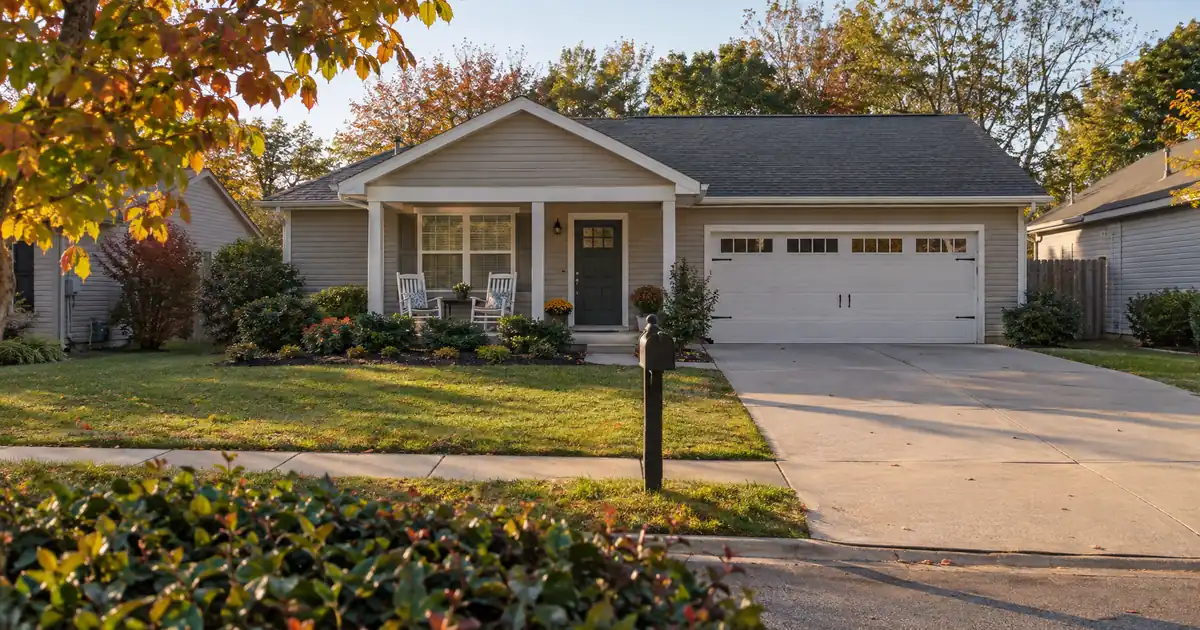
The Quick Read: A pre-approval is a lender’s written estimate of how much it may lend you, based on your credit, income, debts and cash. Do it before you tour homes so you know your range and can fix problems while there is still time. The sequence has four beats: gather documents, apply and allow a credit check, let the lender review the file, then receive a conditional letter. That letter is useful, but it is not a loan commitment.
The Short Version
- FHA loans are built for buyers with modest down payments and imperfect credit. Maximum financing is 96.5%, with a 3.5% minimum investment, at a decision score of 580 or higher.
- The lender weighs five things: credit, debt ratios, income stability, cash for the purchase, and the property you plan to live in.
- The letter is conditional. The home, appraisal, title and your updated file still have to pass.
- Two letters with the same label can rest on very different checking. Ask what was actually verified.
- Big deposits, new debt and job changes after the letter can undo it.
What Is an FHA Pre-Approval?
A pre-approval is a lender’s tentative statement that it is willing to lend up to a certain amount. It rests on documents you hand over and a credit check. It is not a loan offer, and it does not tie you to that lender.
FHA payment estimate
Starting assumptions reflect an example price and the FHA minimum investment. Replace them with your own figures.
Editable benchmark: 7.32% as of October 22, 2026 · Freddie Mac 30-year average via FRED®. A conventional market reference, not an FHA loan quote.
Illustrative starting assumptions: a $350,000 price, the FHA minimum investment as the down payment, a thirty-year term at the current Freddie Mac benchmark, and property taxes and insurance estimated at typical national rates. Every field is editable.
Illustrative estimate only — not a Loan Estimate, approval, quote, or commitment to lend. The rate field carries the weekly Freddie Mac thirty-year conventional benchmark, a market reference and not an FHA loan quote; your rate is set by the lender at lock. FHA mortgage insurance follows HUD’s published schedule for the term, leverage and loan size entered; taxes, insurance and dues are editable estimates; closing costs are not included; county loan limits are not checked here. Licensed in sixteen states for consumer mortgages. Lendmire is not affiliated with or acting on behalf of FHA, HUD, or the federal government.
An FHA loan is a mortgage backed by federal mortgage insurance. A private lender funds it. The insurance protects the lender if the loan goes bad, which is why the credit rules are looser than on many other loans. Lendmire’s FHA loan programs are arranged through wholesale lenders, so one file can be matched to the lender whose guidelines fit it best.
Here is the envelope the programs work in. Across the wholesale programs Lendmire places FHA files with, a purchase can reach 96.5% financing with a 3.5% minimum investment. That requires a decision score of 580 or higher. The home must be your principal residence, with one to four units. A co-borrower who will not live there is allowed. Seller or interested-party contributions are allowed up to 6% of the price. All of this is subject to lender guidelines and full file review.
The word “pre-approval” gets used loosely, so a side-by-side helps:
| Stage | What was checked | What it tells you |
|---|---|---|
| Prequalification | Often just what you stated | A rough range |
| Pre-approval | Credit plus documents, usually | A tentative amount |
| Final approval | Appraisal, title, full underwriting | A loan you can close |
Prequalification is the quick sketch. Pre-approval is the pencil drawing. Final approval is the signed blueprint.
Why Get Pre-Approved Before You Tour Homes?
Because it turns “what can I afford?” into a documented range, and it exposes problems early. A thin credit file, a stray collection, or a down payment that sits in the wrong account is much easier to fix before you love a house.
Sellers and agents also read the letter. An offer with a pre-approval attached tells the seller you have already been looked at by a lender. Without one, many agents will not schedule showings.
There is a third payoff. Once a seller accepts your offer, the window to line up financing is short. A pre-approval front-loads most of that work. You are not hunting for pay stubs while the clock runs.
One honest caution: the letter can expire, and lenders pull your credit to issue it. So start when you are serious, not when you are idly browsing. Serious means within a few months of making offers.
What Does the Lender Look At?
Five things drive an FHA file: credit, debt ratios, income and employment, cash for the purchase, and the property. Each one has a program number behind it, and each can be strengthened before you apply.
Credit. The programs Lendmire places with start at a 580 decision score for the 3.5% minimum investment. The federal program has a lower tier with a bigger down payment. The wholesale lenders in the network do not reach below 580, so plan around that floor. Some lenders set a higher floor of their own, called an overlay. Meeting the program minimum does not mean every lender will say yes.
Debt ratios. The lender compares your monthly obligations to your gross monthly income, using two ratios. The housing ratio counts the new payment, including taxes, insurance and mortgage insurance. The total ratio adds your other debts, such as car loans, student loans and card minimums. The base pair is 31/43, meaning 31% housing and 43% total, with no compensating factors. Documented factors can push the pair as high as 40/50 at the top tier. Those factors are things like solid cash reserves or a strong payment history. On most files, the automated underwriting finding governs, not a fixed cap.
Income and employment. The lender wants income that looks stable and likely to continue. Two years of steady work in the same field is the comfortable picture. Changes are not fatal, but they require explanation.
Cash. You need the 3.5% minimum investment plus closing costs and a cushion. The lender also wants to know where the money came from. Savings that have sat in your account are easy. A recent large deposit needs a paper trail. Gift funds are common on FHA loans and need a donor letter and proof of transfer.
The property. FHA is for a home you will live in, with one to four units. Loan limits are set by county and change every year, so county loan limits apply to your price range. HUD publishes them by county. Check yours before you set a budget. The appraisal later tests the home against FHA’s minimum property standards, which ask that it be safe, sound and secure.
Mortgage insurance deserves a plain explanation, because it affects your monthly budget. There are two parts. The upfront premium is 1.75% of the base loan, and it can be financed into the loan. The annual premium runs between 0.15% and 0.75% of the balance, depending on term, loan amount and LTV. LTV, or loan-to-value, is the loan balance as a percentage of the home’s value. On a thirty-year loan above 90% LTV, the annual premium lasts for the full term. At or below 90%, it ends after eleven years. HUD’s overview of the 203(b) program describes the same structure: a reviewable upfront premium plus an annual premium, on one-to-four unit homes.
Which Documents Should You Gather First?
Collect them before you contact a lender. Lenders vary in how much they check at the pre-approval stage, but all of them ask for documents eventually. Having them ready is an easy advantage you can give yourself.
| Document | What it proves | Who needs it |
|---|---|---|
| Recent pay stubs | Current income | Salaried and hourly workers |
| W-2s | Income history | Employees |
| Traditional personal-income documentation | Earnings and deductions | Self-employed; sometimes others |
| Bank statements | Cash and its source | Every borrower |
| Photo ID, Social Security number | Identity, credit pull | Every borrower |
| Gift letter, transfer proof | Gift funds are real gifts | Anyone using gifts |
| Debt statements | Obligations to count | Every borrower |
| Divorce decree, if relevant | Support obligations | Divorced borrowers |
Don’t rearrange money while you collect. Moving cash between accounts creates deposits an underwriter will ask you to explain. (Underwriters are patient people who love paperwork. Feed them.)
How Does the Process Work, Step by Step?
It runs in six steps. Each one has a job.
1. Check your own credit. Pull your reports and look for errors and balances. Fix what you can first.
2. Gather the documents from the table above.
3. Pick two or three lenders or a broker. Ask each whether it verifies documents up front or only takes your word. Ask whether it works with a score at your level.
4. Apply and allow the credit check. The lender runs your file through automated underwriting, which returns a finding. A strong finding generally lets the lender proceed without a full manual review.
5. Answer follow-up questions. Expect requests for explanation letters or extra statements.
6. Receive the letter. It states a tentative amount, the loan type, conditions and an expiration.
A broker like Lendmire can shop one file across several wholesale lenders. That helps when your score or income sits near a lender’s overlay. You compare the full terms of what comes back, including the Loan Estimate you receive once you actually apply for a loan.
What Does the Letter Actually Promise?
Less than people hope. The Consumer Financial Protection Bureau describes a pre-approval letter as a lender’s statement that it is tentatively willing to lend up to a certain amount. It is based on assumptions and is not a guaranteed loan offer. It also says a letter can carry an expiration date, typically 30 to 60 days. Getting one does not commit you to that lender.
The CFPB also notes that lenders differ in how much they check. Some base the letter only on what you tell them. Others dig into documents early to prevent surprises. Its loan-choices guidance places the letter before the home search and warns that the window to arrange financing after an accepted offer is short.
So read your letter like a contract, not a trophy. Check these items:
- The maximum amount, and whether it assumes a certain down payment.
- The loan type. It should say FHA.
- The conditions that must still be met.
- The expiration.
- Whether documents were reviewed or only stated.
Not ideal if the answer to the last one is “stated only.” That letter is a rough range. It is not a verified approval.
Approved Amount vs. Comfortable Budget
The amount on the letter is a ceiling, not a target. Lenders measure what you qualify for. You measure what lets you sleep.
Say a buyer’s file fits the base 31/43 pair. Housing can use up to 31% of gross monthly income, and all debts together up to 43%. That buyer might be approved for a number that leaves little room for childcare, a car repair, or a roof leak. Another buyer with documented compensating factors could be approved at the higher 40/50 pair. That is permission, not advice.
Here is a better method. Work backward from your own monthly budget. Decide what total housing cost feels safe, including mortgage insurance, taxes, insurance and upkeep. Then compare it with the letter. If the letter is higher, shop below it. This is a genuine toss-up for some buyers: a higher ceiling gives more choices, but it also invites a purchase that strains you.
Where the Rules Bend
Most buyers fit the standard path. These cases don’t, and each has its own wrinkle.
Self-employed or variable income. Lenders usually look at traditional personal-income documentation and average income over time. If write-offs shrink your taxable income, an FHA file can get tight. Some buyers in that position look at other documentation methods. Lendmire’s piece Can You Get a Bank Statement Loan Pre-Approval Before House Hunting? explains that route.
Lower credit scores. At 580 and above, the 3.5% minimum investment applies. Overlays still matter. A lender may want more than the program floor, so ask early rather than assuming.
Past credit events. HUD sets waiting periods after major credit events. HUD’s rules call for two years from a Chapter 7 discharge and three years from a foreclosure. Those are HUD’s rules, not a promise from any lender, and each file is reviewed on its facts.
Non-occupant co-borrowers. A co-borrower who will not live in the home is allowed. Their income and debts enter the file, and their credit is reviewed too.
Higher-priced areas. County loan limits can cap an FHA loan. If your target price sits above the limit, a different product may fit better.
Residency. Non-citizen buyers should ask the loan officer about FHA’s residency requirements at the start, since the rules have changed in recent years.
The underlying rulebook is HUD Handbook 4000.1, the master guide for FHA single-family lending. Lenders may add stricter overlays, but they cannot go below HUD’s minimums on an FHA-insured loan.
What Can Undo Your Pre-Approval?
Plenty. The letter reflects your file on the day it was issued. Change the file and the letter can change with it.
| Do | Don’t |
|---|---|
| Keep paying every bill on time | Open new cards or loans |
| Keep your job and hours steady | Change employers without telling your lender |
| Document every large deposit | Move cash between accounts without records |
| Tell your lender about changes | Finance furniture before closing |
A new car loan is the classic mistake. It raises your total ratio and can push a file past its limit. Wait to buy the couch.
What If You’re Denied or Conditioned?
A denial is information. A conditional answer is a to-do list.
The common causes are low scores, high total debt, thin or unexplained deposits, and unstable income. Ask the lender for the specific reasons, in writing if possible. Then pick the repair. Pay down card balances, correct errors on your report, build a paper trail for your cash, or add a co-borrower. Another wholesale lender may also view the same file differently, since overlays vary.
Reapply when the specific problem is fixed. Applying again without changing anything just repeats the credit check.
What Happens After the Letter?
You shop, make an offer, and go under contract. The lender then orders an appraisal from an HUD-roster appraiser. Title work, updated credit, employment checks and full underwriting follow. If everything holds, final approval comes after that.
The pre-approval did its job if nothing in that stage surprises you.
Key Terms Defined
Pre-approval: A lender’s conditional, written estimate of how much it may lend you, based on documents and a credit check.
Prequalification: A rougher estimate, often based on information you state without proof.
LTV (loan-to-value): The loan balance as a percentage of the home’s value or price.
Mortgage insurance premium: The cost of FHA’s insurance, paid partly upfront and partly through the monthly payment.
Overlay: A lender’s own rule that is stricter than the program minimum.
Debt-to-income ratio: Your monthly debts as a percentage of your gross monthly income.
Compensating factor: A documented strength, such as cash reserves, that can support a higher ratio.
Next Steps
If you are buying a home and want to see whether an FHA loan fits your file, Lendmire can help you compare the options and what each one asks of the file. You can reach the team at 828-256-2183. Bring your documents, your questions and your budget. Nothing here is a commitment to lend, and every program figure is subject to lender guidelines and full file review.
Frequently Asked Questions
Does getting pre-approved hurt my credit?
Usually there is a credit inquiry, and it shows on your report like any other. The effect is typically small. Ask each lender whether it pulls credit at the pre-approval stage, and keep your comparison shopping focused so you are not applying everywhere.
How long does an FHA pre-approval letter last?
Your letter will list its own date. If it lapses before you find a home, the lender can usually refresh it with updated documents and another look at your file.
Is a pre-approval the same as prequalification?
No, though lenders use the terms differently. Prequalification often relies on information you state. Pre-approval usually involves a credit check and documents. Ask what was reviewed, because the label alone does not tell you how strong the letter is.
Can I switch lenders after I get pre-approved?
Yes. A pre-approval does not commit you to that lender. You can compare lenders or a broker before you apply for the loan itself. Keep in mind that a new lender will run its own review.
Can I use gift money for the down payment?
Often yes, on FHA loans. The lender will want a gift letter that says the money is a gift and not a loan, plus proof the funds moved from the donor to you. Give the lender these documents early.
For your own numbers, request a scenario review with Lendmire.
About Lendmire
Lendmire (NMLS# 2371349) is a mortgage broker licensed for consumer lending in 16 states. Lendmire arranges FHA, VA, conventional and jumbo purchase and refinance loans through wholesale lenders; every file is underwritten by the lender under the applicable program guidelines. Scotsman Guide named Lendmire a Top Mortgage Workplace in both 2025 and 2026.
Get Started
Ready to find the right loan for you?
In about 30 seconds you can review financing options available for your home or investment property. No commitment required.
Informational only. Not a Loan Estimate, approval, or commitment to lend. Program availability and eligibility are subject to lender guidelines, credit approval, property review, and underwriting.
References
1. HUD – 203(b) Basic Home Mortgage Insurance
2. CFPB – Get a preapproval letter
3. CFPB – Exploring your loan choices
4. HUD – Handbook 4000.1, FHA Single Family Housing Policy Handbook
This article is part of Lendmire’s FHA loan program — full qualification details, guidelines, and scenarios live on the program page.
Related reading: VA Loan vs FHA Loan for a Veteran House Hacking a 2-4 Unit · Can You Use an FHA Loan for New Construction? · Conventional Loan vs FHA When Credit Is Strong
Brandon Miller
Founder & CEO, Mortgage Loan Originator, Lendmire LLC
- Mortgage Loan Originator · NMLS# 1129696 · Verify on NMLS Consumer Access
- North Carolina Real Estate Broker · License# 343312 · Verify on NCREC
- North Carolina Insurance Producer · License# 19053198 · Property, Casualty, Life, Health · Verify on NAIC SBS
- Lendmire LLC · Firm NMLS# 2371349 · Verify firm licensure
Disclosures. The information presented in this article is general market commentary, not financial, legal, or tax advice. Lendmire is a mortgage brokerage (NMLS# 2371349) — not a direct lender or depository institution — and loan placement is subject to lender underwriting. Nothing in this content represents a commitment to lend. Loan terms, pricing, and program availability vary based on borrower qualifications, property characteristics, and state of subject property, and are subject to change at any time. Lendmire complies with Equal Housing Opportunity requirements. Consumer access: nmlsconsumeraccess.org.