
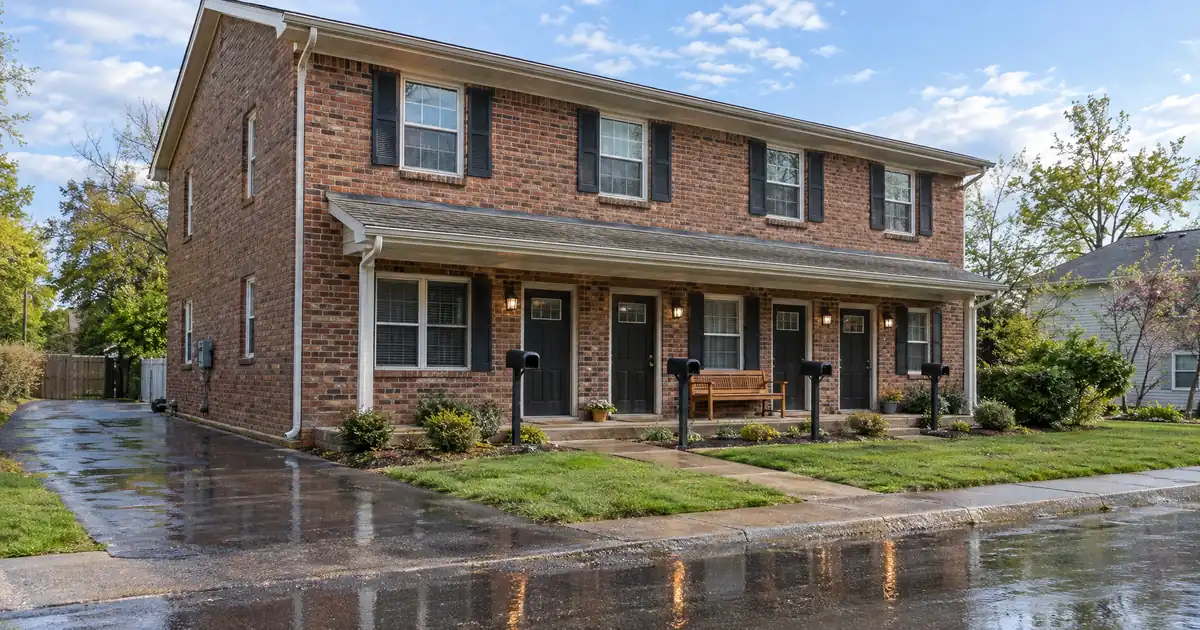
The Quick Read: Sometimes. When the loan-to-value ratio (LTV) is 80% or less, a gift can cover all the funds needed on an owner-occupied 2-4 unit. Above 80% LTV, Fannie Mae requires a 5% minimum from the borrower’s own funds, and gifts can only supplement that. The property must be your home, because gifts are not allowed on an investment property. All of this is subject to lender guidelines and full file review.
What Is the Rule by LTV?
The LTV line decides everything. At 80% or less, Fannie Mae’s Selling Guide on personal gifts sets no minimum contribution from your own funds on a one- to four-unit principal residence. A gift can fund the down payment, closing costs and reserves.
Conventional payment estimate
The starting figures are an example price at the first-time buyer’s minimum down payment. Replace them with yours.
Editable benchmark: 7.32% as of October 22, 2026 · Freddie Mac 30-year average via FRED®. A conventional market reference, not a conventional loan quote.
Estimate seeded at the low end of Fannie Mae’s published range (0.58%–1.86% a year); the insurer prices the actual premium on the score and the leverage. Applies only above 80% loan-to-value.
Illustrative starting assumptions: a $350,000 price, the first-time buyer’s minimum down payment, a thirty-year term at the current Freddie Mac benchmark, mortgage insurance at the low end of Fannie Mae’s published range, and property taxes and insurance estimated at typical national rates. Every field is editable.
Illustrative estimate only — not a Loan Estimate, approval, quote, or commitment to lend. The rate field carries the weekly Freddie Mac thirty-year conventional benchmark, a market reference and not a conventional loan quote; your rate is set by the lender at lock. The mortgage insurance figure is an editable estimate seeded from Fannie Mae’s published typical range, not a premium quote; the insurer prices the actual premium, and the cancellation month assumes scheduled payments with no extra principal and no change in value. Taxes, insurance and dues are editable estimates; closing costs are not included. Conforming loan limits apply by county. Licensed in sixteen states for consumer mortgages.
Above 80% LTV, a two- to four-unit home needs 5% of the price from your own money. After that is met, a gift can fill the rest of the down payment, closing costs and reserves. The exact numbers vary by lender and program and follow a full review of property, leverage, and credit.
Here is where files go wrong. A one-unit primary residence has no own-funds minimum, even above 80% LTV. Buyers and some agents carry that rule over to a duplex. It does not carry over. A fourplex bought with 5% down needs the 5% to come from the borrower, not the donor. Final terms depend on the lender’s guidelines, the property type, and the borrower’s complete credit picture.
Why Does the Unit Count Change the Answer?
Two to four units is a different risk class to the agencies. Fannie Mae’s purchase ceiling on a two- to four-unit principal residence is 95% LTV, per the Fannie Mae Eligibility Matrix. The matrix carries separate notes for high-balance loans and manual underwriting, so your ceiling may be lower than 95%.
Across the wholesale programs placed through the network, the standard purchase envelope on a principal residence is 95% LTV, or 97% on a one-unit fixed-rate loan when a borrower is a first-time buyer. Two- to four-unit principal residences go to 95%. Any figure you see is subject to the lender’s guidelines and your file. Each figure is subject to lender guidelines and a complete review of property type, leverage, and credit.
Freddie Mac is not the same. Its own-funds rule ties to second homes, not to unit count. That text comes from a reproduction of Freddie Mac Guide Chapter 5501, which covers gifts under “Other sources of funds.” Confirm it against the live Guide before relying on it. In practice, the lender decides which investor takes your loan, so ask which rule applies to your file before you plan the gift.
Quick Comparison by Property Type
| Property | Gift allowed? | Own-funds condition |
|---|---|---|
| Live-in 2-4 unit, 80% LTV or less | Yes | None required |
| Live-in 2-4 unit, above 80% LTV | Yes, supplements | 5% from your own funds |
| One-unit primary residence | Yes | None, even above 80% LTV |
| Investment property | No | Not applicable |
Walking Through the Numbers
Picture a buyer purchasing a triplex at 95% LTV, living in one unit. The own-funds rule means the first 5% of the price has to come from the buyer’s savings. The remaining down payment, which in this case is zero, would be nothing to gift. Now say the buyer wants to put 10% down. The 5% still has to be the buyer’s. The donor can cover the other 5%, the closing costs and reserves. Leverage, reserves, and pricing vary by lender and program; the final terms follow the full file review.
Now take a buyer whose family gifts enough to reach 80% LTV, a 20% down payment. The own-funds minimum drops away, and the gift can cover all of it. That is also the point where mortgage insurance stops being required. Conventional mortgage insurance applies above 80% LTV. You can ask for cancellation at 80% of the original value with good payment history, no subordinate liens and no decline in value, and the servicer must end it automatically at 78%. So a bigger gift can lower the monthly cost two ways: a smaller loan, and no mortgage insurance. Terms vary by lender guidelines, property type, leverage, credit profile, and full file review.
A shortfall case works the other way. If the buyer has 3% saved and the gift covers the rest of a 5% down payment, the file fails the own-funds test on a 2-4 unit. The fix is more savings, a smaller loan request, or enough gift money to reach 80% LTV. Any shift in the numbers is a conversation to have with the loan officer before you make an offer. Exact terms depend on the lender’s guidelines, property type, leverage, and a full review of the borrower’s file.
Who Can Give the Gift?
The donor cannot be, or be affiliated with, the builder, the developer, the real estate agent or any other interested party. That is the part buyers miss most when a relative happens to work in the deal.
Fannie Mae defines acceptable donors as relatives and similar close relationships. For the exact donor list, read the live Selling Guide page. Freddie Mac has widened its “Related Person” definition, per Bulletin 2022-25, to include unrelated individuals with close, family-like ties to the borrower. A friend with no family-like tie generally does not qualify.
What Counts as Your Own Funds?
Your own funds are money that is yours: savings, sale proceeds, or other assets in your name. A gift does not count, with one narrow exception. Under the current Fannie Mae text, a gift from an acceptable donor who has lived with you for the last 12 months can be treated as your own funds and may satisfy the minimum contribution. Treat that as a narrow case, document residency, and confirm it with the lender against the live Selling Guide.
Cash-in-hand does not help much. Lenders want a documented trail.
What Documents Does the Lender Need?
Three pieces keep a gift file clean.
1. The gift letter. It is signed by the donor, states the dollar amount (actual or maximum), and states that no repayment is expected. Lenders typically also ask for the donor’s contact information and relationship to you.
2. Verification of the donor’s funds. The lender has to verify that enough money sits in the donor’s account or has already moved to yours, per Fannie Mae’s guide.
3. A transfer trail. Freddie Mac’s rules describe gift funds going directly from the donor’s financial institution account to the borrower’s account or to the closing agent. Cash handed over at a kitchen table is the common failure point.
Earnest money is a smaller exception. A donor may give gift funds directly to the builder or real estate agent for the deposit.
If the gift you actually receive differs from the amount used to underwrite the file, the lender may need to resubmit it in Desktop Underwriter, as Fannie Mae’s selling FAQ notes. Tell the loan officer early if the amount changes.
A “gift” that is really a loan is a problem. If anyone expects repayment, it is not a gift.
What About Reserves?
The gift question and the reserve question are separate. For files run through Desktop Underwriter, Fannie Mae calls for six months of reserves on a two- to four-unit principal residence, per its minimum reserve requirements. A one-unit principal residence has none. That page was dated 08/07/2024, so confirm it is still current. Every figure here varies by lender and program — guidelines, property type, leverage, and credit profile all apply.
Reserves are a second cash requirement on top of the down payment and closing costs. Gifts can generally count toward reserves. A gift of equity cannot.
Gift of Equity: A Different Animal
A gift of equity happens when the seller is a relative and sells below market value. The gap between appraised value and sale price is the gift. A seller who is an acceptable donor and not affiliated with another interested party can give it, and the donor of a gift of equity is not treated as an interested party.
The limits matter. A gift of equity cannot fund reserves or come back to you as cash. Freddie Mac also requires it to show on the Settlement or Closing Disclosure statement. The appraisal sets the market value, so a low appraisal changes the gift.
Whether a gift of equity satisfies the 5% own-funds minimum on a 2-4 unit above 80% LTV depends on how the lender applies the Fannie Mae gift sections to your file, so do not assume either way. Final terms depend on lender guidelines, property type, leverage, and the borrower’s complete credit picture.
Where This Gets Tricky
- Using the one-unit rule on a duplex. It is a common error. Above 80% LTV the 2-4 unit needs own funds.
- Choosing a donor with a stake in the deal. An agent, builder or developer is out.
- Skipping the paper trail. A letter without traceable funds does not clear.
- Depositing large sums with no explanation. Unexplained deposits slow a file down. Move the gift in a clean transfer and keep the statements.
- Assuming occupancy can change later. The loan is for your home. You must live in one of the units, and gifts are not allowed on an investment property.
- Expecting a refinance to work the same way. A refinance has no down payment, so gift funds do not normally enter the picture.
Government loans have their own gift rules. FHA, VA and USDA are separate programs, so do not carry any of this over.
Key Terms Defined
LTV (loan-to-value): the loan amount divided by the lower of the purchase price or appraised value.
Own funds: money that belongs to you, such as savings or sale proceeds, as opposed to a gift.
Gift letter: a signed statement from the donor giving the amount and confirming no repayment is expected.
Gift of equity: a discount from a seller who is an acceptable donor, where the gap between value and price counts as the gift.
Reserves: liquid funds left after closing to cover mortgage payments, measured in months.
Tax Note
Donors should confirm the tax treatment on their side with their own tax professional.
Next Step
If you are buying a home and want to see whether a conventional loan fits your file, Lendmire can help you compare the options and what each one asks of the file. The team arranges conventional loan programs through wholesale lenders, subject to lender guidelines and full file review. This is not a commitment to lend.
Frequently Asked Questions
Can my parents give me the whole down payment on a duplex?
Only if the loan is 80% LTV or less. In that case Fannie Mae sets no minimum from your own funds. Above 80% LTV on a 2-4 unit, 5% has to come from you, and your parents can cover the rest. These specifics are subject to lender guidelines and a full review of property, leverage, and credit.
Can I use gift money for closing costs and reserves too?
Generally yes, once any own-funds requirement is met. Gifts can supplement the down payment, closing costs and reserves. A gift of equity is the exception, because it cannot be used for reserves.
Does a friend count as an acceptable donor?
Usually not. Fannie Mae limits donors to relatives and similar close relationships, and Freddie Mac includes unrelated people with close, family-like ties. Anyone connected to the deal, such as the agent or builder, is excluded.
Can I rent out all the units and still use a gift?
No. Gifts are not allowed on an investment property. The conventional gift rules here assume you live in one of the units as your principal residence.
Do I need a gift letter if the money is already in my account?
Yes. The lender needs the signed letter and a trail showing where the money came from. Without that, the deposit looks like an unsourced large deposit, which has to be explained.
For your own numbers, request a scenario review with Lendmire.
About Lendmire
Lendmire, NMLS# 2371349, is a mortgage brokerage with consumer lending licenses in 16 states. FHA, VA, conventional and jumbo purchase and refinance loans are arranged through wholesale lending partners, and each application is reviewed individually by the lender. Scotsman Guide named Lendmire a Top Mortgage Workplace in both 2025 and 2026.
Get Started
Ready to find the right loan for you?
In about 30 seconds you can review financing options available for your home or investment property. No commitment required.
Informational only. Not a Loan Estimate, approval, or commitment to lend. Program availability and eligibility are subject to lender guidelines, credit approval, property review, and underwriting.
References
1. Fannie Mae Selling Guide B3-4.3-04, Personal Gifts
2. Fannie Mae Eligibility Matrix
3. Freddie Mac Guide Chapter 5501
4. Freddie Mac Bulletin 2022-25
5. Fannie Mae FAQ: Top Trending Selling FAQs
6. Fannie Mae Selling Guide B3-4.1-01, Minimum Reserve Requirements
This article is part of Lendmire’s conventional loan program — full qualification details, guidelines, and scenarios live on the program page.
Related reading: How to Get a Conventional Cash-Out After a Quitclaim Deed · How to Replace Your Mortgage With a Conventional Cash-Out Refinance · Can a Repeat Buyer Get a Conventional Loan With Little Down?
Brandon Miller
Founder & CEO, Mortgage Loan Originator, Lendmire LLC
- Mortgage Loan Originator · NMLS# 1129696 · Verify on NMLS Consumer Access
- North Carolina Real Estate Broker · License# 343312 · Verify on NCREC
- North Carolina Insurance Producer · License# 19053198 · Property, Casualty, Life, Health · Verify on NAIC SBS
- Lendmire LLC · Firm NMLS# 2371349 · Verify firm licensure
Legal disclosures. Lendmire (NMLS# 2371349) is a state-licensed mortgage brokerage that arranges financing through wholesale lender relationships. Lendmire is not a direct lender, depository institution, or registered financial advisor. The discussion above is general informational content about real estate financing — it is not financial, legal, or tax advice, and readers should consult licensed professionals for guidance on their individual circumstances. Loan inquiries are subject to lender underwriting; this article does not represent a commitment to lend. Loan terms, rates, and qualification standards vary by borrower, property, and state, and are subject to change at any time. Equal Housing Opportunity. NMLS Consumer Access: nmlsconsumeraccess.org.