
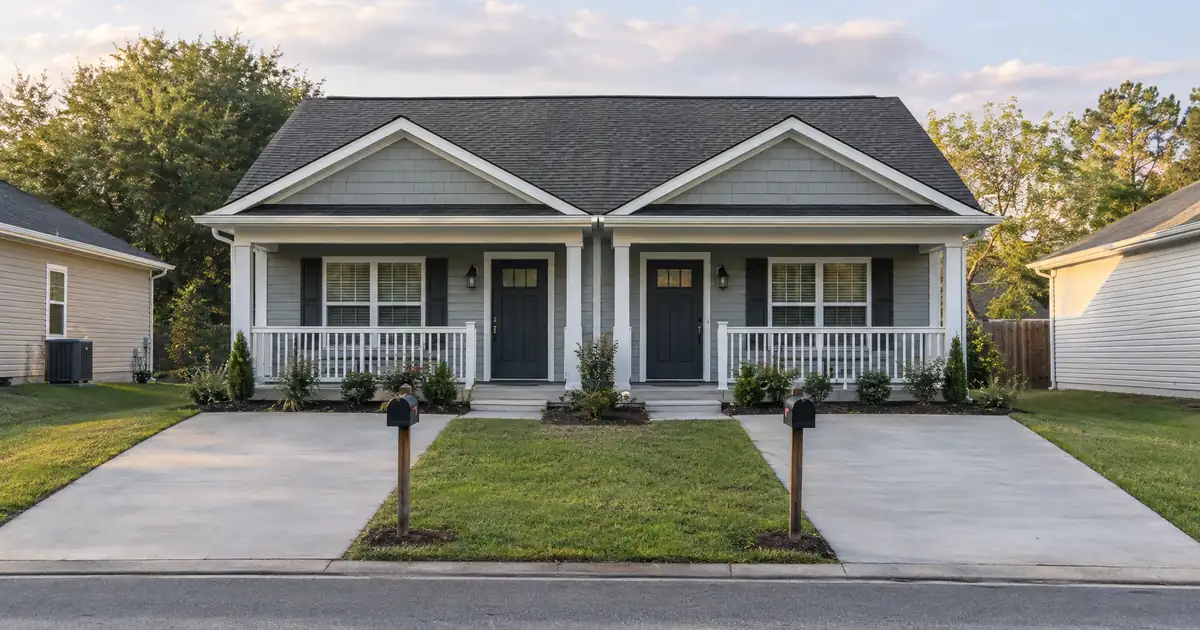
The Quick Read: Yes, a 2-4 unit home you live in can carry a second lien alongside an FHA cash-out refinance, but the second lien does not add borrowing room. It uses room up. FHA tests the new first mortgage plus every remaining lien against a single 80% combined cap, so a second mortgage or HELOC competes with your cash-out for the same equity. Subject to lender guidelines and full file review.
What Does “Second Lien With FHA Cash-Out” Actually Mean?
A second lien is any loan recorded behind your first mortgage. On a home you live in, that is usually a home equity loan or a HELOC (a revolving line secured by the home). “Lien position” decides who gets paid first if the home is sold or foreclosed.
When you refinance with FHA cash-out, the new loan becomes the first mortgage. Any second lien that stays on the property sits behind it. That leaves three possible paths:
1. The existing second is paid off from the new first mortgage.
2. The existing second stays and is re-subordinated (moved behind the new first).
3. A new second is added alongside the new first.
Each path changes your cash, your monthly budget and your odds of approval differently. The rest of this article sorts them out for a 2-4 unit home.
The 80% Combined Cap: The Rule Behind Everything
FHA cash-out is capped at 80% of the home’s appraised, adjusted value, and the cap covers combined debt. HUD set that limit in Mortgagee Letter 2019-11, lowering the earlier 85% figure. HUD’s stated reason was to reduce risk to the FHA Insurance Fund from growing insured balances on cash-out loans.
Two points matter here:
- The cap is on the whole debt, not the cash you take. First mortgage plus any second lien must fit under 80%.
- Unit count does not change the percentage. A duplex, triplex or fourplex you occupy follows the same 80% limit as a single-family home.
Across the wholesale programs Lendmire places FHA files with, this is the number that decides most second-lien questions. If the combined total runs too high, the fix is a smaller first mortgage, not a bigger second lien.
Why Doesn’t a Second Lien Add Borrowing Room?
Because every dollar of second lien left on the home reduces the dollars available in the new first mortgage. The cap does not care which lender holds which piece.
Picture a homeowner with a fourplex they live in, a first mortgage and a sizable HELOC. Say the HELOC already uses up a big slice of the 80% limit. The new FHA first mortgage can only be as large as what remains under the cap. If the existing debt is already close to 80% of value, there may be little or no cash-out available at all.
The FHA Streamline refinance is a different FHA product, and people sometimes confuse it with a cash-out refinance. The Streamline is not a cash-out loan, and its looser treatment of combined leverage does not carry over to cash-out.
For the program mechanics, see Lendmire’s FHA cash-out refinance program page.
Pay It Off, Keep It, or Add One: How the Three Paths Compare
| Path | What happens | Main friction |
|---|---|---|
| Pay off the second | Payoff comes out of the new first mortgage | Larger FHA loan, premium applies to more |
| Keep the second | Re-subordination agreement signed | Second lienholder can say no |
| Add a new second | Counts toward the combined cap | Lender overlays may not allow it |
Paying it off
If the second lien is paid from the new first mortgage, the deal is a cash-out transaction under HUD’s definition: a refinance that produces cash proceeds or retires other debt. You end up with one payment instead of two. The tradeoff is that FHA mortgage insurance then applies to a larger balance. The upfront premium is 1.75% of the base loan and is typically financed, and the annual premium runs between 0.15% and 0.75% of the balance depending on term, loan amount and LTV. On a thirty-year loan above 90% LTV, the annual premium lasts for the loan term. At or below 90%, it ends after eleven years.
This path works best when the second lien carries a balance you would rather fold into one loan. It works less well if the second lien has terms you like and the combined total would otherwise still fit.
Keeping it in place
Leaving the second lien means its holder must sign a re-subordination agreement, agreeing to stay behind the new FHA first. HUD guidance on older cash-out rules, Mortgagee Letter 09-08, describes this concept, and it is worth knowing the 85% figures in that letter are superseded. The concept still matters: the borrower must also be able to afford the payments on all liens.
Here’s the catch. Re-subordination is a request, not a right. The second lienholder decides, and a refusal can end this path. If the holder is a bank that services your HELOC, expect its own processing steps. Some will freeze or reduce the line before agreeing.
Adding a new second
A new second lien at closing counts toward the combined cap just like an existing one. Some lenders set overlays, meaning rules stricter than the agency’s. One common overlay keeps the combined total within county loan limits, and some lenders do not allow cash-out on a home currently listed for sale. Those are lender choices, not HUD rules, which is why two lenders can give the same borrower different answers.
What Changes for a 2-4 Unit Home Specifically?
The leverage cap stays the same. What changes is how the property qualifies.
Occupancy. FHA cash-out is for a principal residence. At least one borrower must have owned and occupied the home for the 12 months before the case number is assigned. On a 2-4 unit, that means you live in one of the units. Rented units around you are fine. An investment property with no owner living there is not eligible.
The self-sufficiency test on 3-4 units. HUD’s Mortgagee Letter 09-08 says the self-sufficiency test for three- and four-unit properties remains in effect for cash-out refinances. In plain terms, the building’s net rental income has to carry the new mortgage payment. Duplexes are exempt. A larger first mortgage raises the payment, so a 3-4 unit owner can find this test, not the 80% cap, is the binding limit. The details sit in HUD’s rulebook, Handbook 4000.1, and the wording should be confirmed against the current published version there. Earlier versions are kept in the HUD handbook archive.
Income from the other units. A non-occupant co-borrower’s income cannot be used to qualify on cash-out, and a co-borrower must be an occupant. Rental treatment on a 2-4 unit differs from the way an accessory dwelling unit is treated on a one-unit home, so the two should not be blurred together.
Say you own a triplex and occupy one unit. Your equity might clear the 80% cap with room to spare, yet a bigger first mortgage that absorbs a paid-off HELOC could push the payment past what the building’s net rents support. That is a scenario worth testing before anyone orders an appraisal.
Qualifying When Two Liens Are in Play
The borrower must be able to carry the scheduled payments on every lien, not just the FHA loan. Across files like these, the lender looks at the combined monthly picture.
On the FHA purchase and refinance side, the base debt ratio pair is 31/43 (housing and total) with no compensating factors. Documented compensating factors can stretch ratios up to 40/50 at the top tier, and the automated finding governs most files. A second lien payment goes into the total-debt side of that ratio.
Other standard hurdles apply:
- Decision score. The wholesale programs Lendmire places FHA loans with start at a 580 decision score. HUD itself has a lower tier, but the network does not reach below 580.
- Payment history. Mortgage payments are expected to be current and on time over the past year. Delinquent borrowers are not eligible for cash-out.
- Full appraisal. Adjusted Value from the appraisal sets the cap. A softer valuation shrinks everything.
- County loan limits apply. FHA limits are set by county and change every year, so check the current number for your county.
The Decision: Which Route Fits Which Borrower?
For a homeowner with a small second lien on a high-equity home, paying it off through the cash-out usually keeps things simple: one loan, one payment, and the combined cap still leaves room. For a borrower with a HELOC on terms they like and a modest cash need, keeping it may be better, provided the holder will re-subordinate.
The flip points are worth naming. If the second lien is large relative to the home’s value, neither path may leave real cash-out room, and a different tool could make more sense. If the home is a 3-4 unit and the rents are thin, the self-sufficiency test may rule out a bigger first mortgage regardless of equity.
Two other Lendmire pieces cover adjacent decisions. One explains whether a 2-4 unit primary home with a high DTI can still get an FHA cash-out, and the other walks through the qualifying ratios on a 2-4 unit primary home.
How does this compare with conventional financing? Fannie Mae’s rule is that paying off a non-purchase-money second makes the transaction a cash-out refinance, and a second left in place needs a re-subordination agreement, per the Fannie Mae Selling Guide. The cap on a conventional cash-out for a 2-4 unit primary home can differ from FHA’s, so compare both before choosing.
Common Myths
- “A second lien lets me borrow past 80%.” No. The cap applies to combined debt.
- “FHA cash-out is still 85%.” That was the earlier limit. It is now 80%.
- “A Streamline lets me take cash out.” It does not.
- “The second lienholder has to subordinate.” It can decline.
- “Duplexes face the self-sufficiency test too.” Only 3-4 unit homes do.
Key Terms Defined
Second lien: A loan recorded behind your first mortgage, such as a home equity loan or HELOC.
Combined loan-to-value (CLTV): The first mortgage plus all other liens, divided by the home’s value.
Re-subordination: A written agreement where a second lienholder agrees to stay behind a new first mortgage.
Adjusted Value: The appraised value figure FHA uses as the basis for its leverage cap.
Self-sufficiency test: A rule for 3-4 unit homes requiring the building’s net rental income to support the mortgage payment.
Checklist Before You Apply
1. List every lien on the home, including any HELOC and its limit. 2. Confirm you have lived in the home for the past 12 months. 3. Ask each second lienholder whether it will re-subordinate. 4. Gather payoff statements, title work and income and occupancy documents. 5. On a 3-4 unit, estimate whether net rents can carry the new payment. 6. Compare the FHA route with a conventional cash-out and with keeping what you have.
Tax treatment can depend on your situation; borrowers should speak with a qualified tax professional before relying on any deduction or credit.
Frequently Asked Questions
Can I keep my HELOC when I do an FHA cash-out on a duplex I live in?
Possibly, if the HELOC holder agrees to re-subordinate and the combined total stays within the 80% cap. The holder is free to decline, and some lenders also require the line to be frozen or reduced. Every lien payment must fit in your ratios.
Does a HELOC count at its balance or its limit?
It depends on the lender and the transaction. HUD’s text for some refinance types counts an open line at its maximum available credit, but that treatment should be confirmed for cash-out before you assume a drawn balance is all that counts. Ask the loan officer how your file will be tested.
Is the 80% cap different for a fourplex than for a single-family home?
No. The cap is the same for owner-occupied one-to-four unit homes. What differs on three and four units is the self-sufficiency test, which can limit the loan size even when equity is plentiful.
Can I add a new second lien at closing to get more cash?
Not beyond the cap. A new second counts toward combined leverage, so it only reshuffles the same 80%. Some lenders also restrict new subordinate financing on cash-out as a matter of their own policy.
Is FHA cash-out the same as an FHA Streamline?
No. The Streamline refinances an existing FHA loan without an appraisal and does not give you cash. FHA cash-out requires an appraisal, 12 months of ownership and occupancy, and the 80% combined cap.
If you are weighing a cash-out refinance against keeping the loan you have, Lendmire can help you compare the programs and the equity each one reaches.
About Lendmire
Lendmire, NMLS# 2371349, is a mortgage brokerage with consumer lending licenses in 16 states. FHA, VA, conventional and jumbo purchase and refinance loans are arranged through wholesale lending partners, and each application is reviewed individually by the lender. Scotsman Guide named Lendmire a Top Mortgage Workplace in both 2025 and 2026.
For your own numbers, request a scenario review with Lendmire.
Get Started
Ready to find the right loan for you?
In about 30 seconds you can review financing options available for your home or investment property. No commitment required.
Informational only. Not a Loan Estimate, approval, or commitment to lend. Program availability and eligibility are subject to lender guidelines, credit approval, property review, and underwriting.
References
1. HUD Mortgagee Letter 2019-11
4. HUD Archives: Handbook 4000.1
5. Fannie Mae Selling Guide B2-1.2-04
This article is part of Lendmire’s FHA Loan series — every loan program’s qualification details, guidelines, and scenarios live on the loan options page.
Related reading: Can a 2-4 Unit Primary Home With a High DTI Get an FHA Cash-Out? · FHA Cash-Out MIP Duration on a 2-4 Unit Primary Home · Should a Paid-Off Home Get an FHA Cash-Out Instead of a Second Lien?
Brandon Miller
Founder & CEO, Mortgage Loan Originator, Lendmire LLC
- Mortgage Loan Originator · NMLS# 1129696 · Verify on NMLS Consumer Access
- North Carolina Real Estate Broker · License# 343312 · Verify on NCREC
- North Carolina Insurance Producer · License# 19053198 · Property, Casualty, Life, Health · Verify on NAIC SBS
- Lendmire LLC · Firm NMLS# 2371349 · Verify firm licensure
Disclosures. The information presented in this article is general market commentary, not financial, legal, or tax advice. Lendmire is a mortgage brokerage (NMLS# 2371349) — not a direct lender or depository institution — and loan placement is subject to lender underwriting. Nothing in this content represents a commitment to lend. Loan terms, pricing, and program availability vary based on borrower qualifications, property characteristics, and state of subject property, and are subject to change at any time. Lendmire complies with Equal Housing Opportunity requirements. Consumer access: nmlsconsumeraccess.org.