
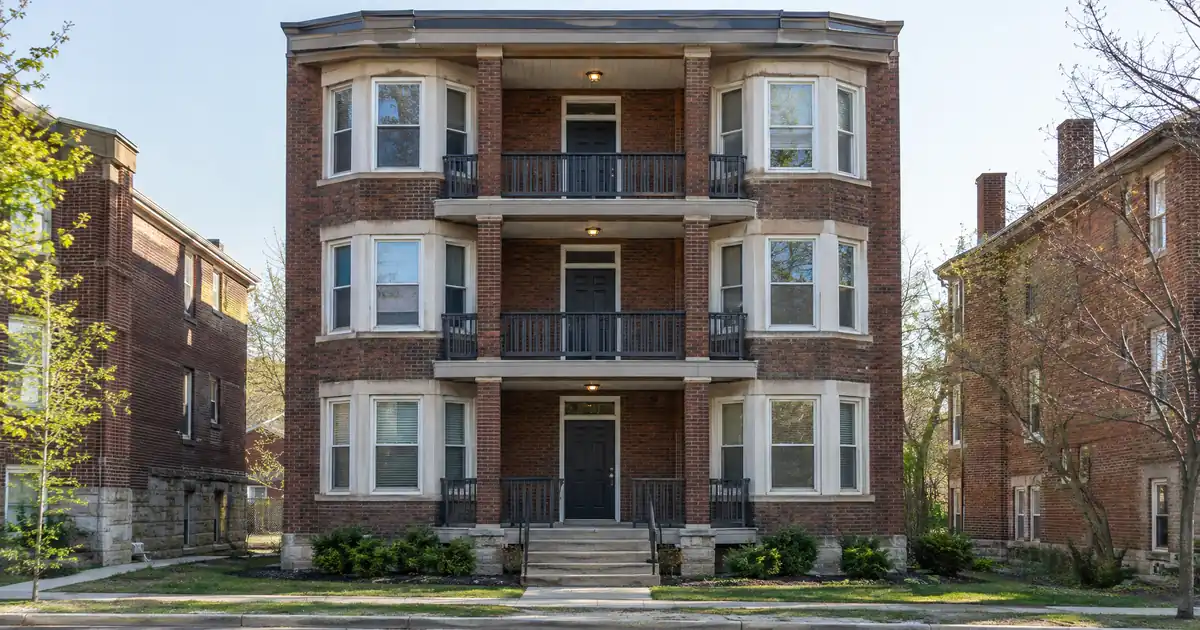
The Quick Read: FHA counts reserves as your own verified liquid money left over after you pay everything due at closing. On a three- or four-unit purchase, the lender must document three months of your full monthly mortgage payment in reserves. A manually underwritten one- or two-unit loan needs one month, and a manual three- or four-unit loan needs three. Gift money, borrowed money, and equity in another property do not count.
What Does FHA Mean by “Reserves”?
Reserves are cash you still have after the deal is done. FHA’s definition, shown in HUD Mortgagee Letter 2023-17, is verified, documented liquid assets minus the total funds required to pay at closing.
FHA payment estimate
Starting assumptions reflect an example price and the FHA minimum investment. Replace them with your own figures.
Editable benchmark: 7.32% as of October 22, 2026 · Freddie Mac 30-year average via FRED®. A conventional market reference, not an FHA loan quote.
Illustrative starting assumptions: a $350,000 price, the FHA minimum investment as the down payment, a thirty-year term at the current Freddie Mac benchmark, and property taxes and insurance estimated at typical national rates. Every field is editable.
Illustrative estimate only — not a Loan Estimate, approval, quote, or commitment to lend. The rate field carries the weekly Freddie Mac thirty-year conventional benchmark, a market reference and not an FHA loan quote; your rate is set by the lender at lock. FHA mortgage insurance follows HUD’s published schedule for the term, leverage and loan size entered; taxes, insurance and dues are editable estimates; closing costs are not included; county loan limits are not checked here. Licensed in sixteen states for consumer mortgages. Lendmire is not affiliated with or acting on behalf of FHA, HUD, or the federal government.
That subtraction matters. Your down payment, closing costs, and prepaid items come out of your bank balance first. Only what remains is reserves. A buyer with a large account but a large down payment can still come up short.
A quick disambiguation: this is not a condo association’s reserve fund, and it is not the home equity you build over time. These reserves are your personal liquid cash cushion.
The agency rules referenced here are drawn from HUD guidance. Everything is subject to lender guidelines and full file review.
When Does FHA Require Reserves at All?
Not every FHA loan needs them. A standard one- or two-unit loan approved by the automated system has no universal reserve requirement. Reserves attach to specific situations. Final terms depend on lender guidelines, property type, leverage, and the borrower’s complete credit picture.
| Situation | Reserves required after closing |
|---|---|
| Automated approval, 3-4 units | 3 months of payment |
| Manual underwrite, 1-2 units | 1 month of payment |
| Manual underwrite, 3-4 units | 3 months of payment |
| One unit with an ADU, rent used to qualify | 2 months of payment |
The three-month rule for three- and four-unit homes appears in HUD Mortgagee Letter 2023-17. The same letter also adds the one-month figure for manually underwritten one- and two-unit loans. The ADU figure also comes from the mortgagee letter. Confirm current wording in HUD Handbook 4000.1 on hud.gov, since the handbook is revised from time to time.
Notice what stacks and what doesn’t. A manual underwrite on a fourplex is not “three months plus one month.” It is three months. The unit count sets the higher number.
What Triggers a Manual Underwrite?
A manual underwrite happens when the automated system returns a “Refer” finding, or when a file is downgraded from an approval. An underwriter then reviews the file by hand. Manual files get more scrutiny on credit, debts, and cash.
Across the wholesale programs I place FHA loans with, the base ratios are 31/43 (housing payment over income, then total debts over income) with no compensating factors. Documented compensating factors can stretch that to 40/50 at the top tier. Most files are governed by the automated finding. Reserves are one of the factors an underwriter may weigh. Details are subject to lender guidelines.
Which Monthly Payment Do You Multiply By?
The unit of measure is your total monthly mortgage payment, often shortened to PITI. That stands for principal, interest, taxes, and hazard insurance. Flood insurance is added where it applies.
The lender divides your post-closing reserves by that monthly figure to get months of coverage. Mortgage insurance is part of the total mortgage payment in the handbook’s general language. The exact reserve-specific wording can vary, so ask the loan officer how the lender counts it on your file. Lenders can also add HOA dues where they apply.
On a three- or four-unit building, the payment is for the whole property. Rent from the other units does not shrink the reserve requirement. Rent helps you qualify, which is a separate question. Terms depend on the lender’s guidelines, the property type, the leverage, and a full review of the credit profile.
How the Counting Works, Step by Step
Here is the walkthrough, using percentages and plain words instead of dollars.
1. Add up verified liquid assets. Checking, savings, money market, CDs, stocks, and mutual funds count. Each needs documentation.
2. Subtract everything due at closing. That includes the down payment, closing costs, prepaids, and required payoffs. Earnest money you already paid is part of that total.
3. Divide what’s left by the monthly payment. The result is your months of reserves.
4. Compare it to the minimum. Three months on a 3-4 unit, one month on a manual 1-2 unit.
Picture a buyer purchasing a fourplex with the 3.5% minimum investment, which is available at a 580 or higher decision score on the wholesale programs I use. The buyer has plenty in the bank, but the down payment, closing costs, and prepaids absorb most of it. What remains covers two months of payment. That file is short. The fix is more of the buyer’s own savings, a smaller purchase, or a different unit count. Gift funds cannot patch it.
The headline down payment is the smallest part of the cash story on these loans. Plan for down payment, closing costs, and reserves together.
What Counts and What Doesn’t
Eligible assets are non-retirement liquid funds you can withdraw or liquidate. Ineligible funds are anything that isn’t truly yours and liquid.
| Asset | Counts as reserves? |
|---|---|
| Checking and savings | Yes, documented |
| Money market, CDs | Yes |
| Stocks, mutual funds | Yes, with statements |
| Retirement account | Partly, see below |
| Gift funds | No |
| Borrowed funds | No |
| Equity in another property | No |
| Cash-out proceeds at settlement | No |
The exclusions for cash-out proceeds, incidental settlement cash, other-property equity, and borrowed funds appear in HUD Mortgagee Letter 2023-17. On gifts, HUD’s rental income reference guide says three- and four-unit reserves cannot come from a gift. Gift funds can often help with the cash to close in other parts of the file, but they don’t build reserves.
Retirement Accounts
A 401(k) or IRA is discounted. Under HUD Mortgagee Letter 2014-02, only 60% of the vested amount, less any outstanding loans, may be counted. The plan must also allow withdrawals outside of termination, retirement, or death. If it doesn’t, the account doesn’t count. That letter is older, so confirm how the current handbook treats it.
Cash on Hand
Cash under a mattress is hard to use. HUD’s glossary defines cash on hand as money held outside a financial institution. In practice, the cash generally needs to be deposited and documented before it can be counted.
Reserves as a Compensating Factor Is a Higher Bar
The minimum and the compensating-factor threshold are two different numbers. On a manual underwrite, the 2014 letter says reserves can be cited as a compensating factor only if they equal or exceed three total monthly payments for one- and two-unit homes, or six for three- and four-unit homes.
So the one-month manual minimum gets your file through the door on a duplex. It does not offset a weak debt ratio. A stretched file benefits from more cash than the bare minimum. Whether the threshold applies the same way today depends on the current handbook and the lender.
How Underwriters Verify Reserves
The lender must verify and document the assets. Expect these requests:
- Recent bank and brokerage statements.
- Written explanations for large deposits that don’t match your pay.
- For retirement accounts, the latest statement plus proof of withdrawal terms.
- Rent support, if you want the other units’ income to count.
That last item connects to the house-hacking question. For proposed rent on a 2-4 unit with no rental history, the lender obtains an appraisal showing fair market rent, along with leases where available. On three- and four-unit homes, FHA guidance has also described a “self-sufficiency” test, where net rent must at least equal the projected payment. Because that test comes from archival guidance, verify it against the current HUD handbook.
For a deeper look at documentation on a multi-unit home, Lendmire’s piece How to Document a Manual FHA Cash-Out on a 2-4 Unit Primary Home covers how manual files are built.
Lender Overlays: When the Lender Asks for More
HUD sets a floor. A lender can ask for more. Some lenders set higher reserve expectations for weaker credit or higher debt ratios. These are called overlays, and they vary by lender. That is one reason a broker who can compare wholesale options helps: the same file can look different at two lenders. The FHA loan programs Lendmire arranges are subject to each lender’s guidelines.
Common Mistakes
- Counting your whole 401(k). Only 60% of the vested amount counts, if withdrawals are allowed.
- Measuring reserves before closing. They are measured after.
- Using gift money. It can’t count.
- Counting equity or cash-out proceeds. Neither qualifies.
- Confusing the minimum with the compensating-factor level. They are separate numbers.
How to Strengthen Your Reserves
Start early. Keep large savings in one documented account. Avoid new borrowing, which can disqualify funds and hurt your ratios. Consider a lower-priced property or fewer units if the cash doesn’t stretch. Move retirement money only after you understand what it does to the count.
Key Terms Defined
Reserves: Your verified liquid money left after paying everything due at closing.
PITI: Principal, interest, taxes, and hazard insurance, the monthly payment unit reserves are measured in.
Manual underwrite: A hands-on review by an underwriter, triggered when the automated system returns “Refer” or a downgrade.
Compensating factor: A strength in the file, such as extra cash, that offsets a weakness like a high debt ratio.
Overlay: A lender’s own rule that is stricter than HUD’s minimum.
ADU: An accessory dwelling unit, a second small living unit on the same property.
Frequently Asked Questions
Do all FHA loans require reserves?
No. A standard one- or two-unit loan with an automated approval has no universal reserve rule. Reserves are required on three- and four-unit homes, a one-unit home where ADU rent is used to qualify, and manually underwritten files. A lender may also add its own requirement.
Can I use gift money for reserves?
No. Reserves must be your own funds. HUD guidance says gifts can’t be used for three- and four-unit reserves, and gift funds beyond what’s needed for the cash investment and expenses are excluded. Gift money may help elsewhere in your cash to close, subject to lender guidelines.
Does my 401(k) count?
Partly. Only 60% of the vested amount, less any outstanding loans, counts. The plan must also permit withdrawals while you are still employed. If it only allows withdrawals on termination, retirement, or death, it doesn’t count.
Does rent from the other units reduce the reserves I need?
Not on the reserve requirement itself. The unit count sets the months you need. Documented rent helps you qualify through an appraisal and leases, and three- and four-unit homes face a self-sufficiency test on top of that. Final terms depend on the lender’s guidelines, the property type, and the borrower’s complete credit picture.
Does equity in another property count?
No. Equity in another property, cash-out proceeds, and borrowed funds are excluded. Reserves must be liquid assets you hold and can document.
Next Step
If you are buying a home and want to see whether an FHA loan fits your file, Lendmire can help you compare the options and what each one asks of the file. All program details are subject to lender guidelines and full file review, and nothing here is a commitment to lend.
For your own numbers, request a scenario review with Lendmire.
About Lendmire
Lendmire, NMLS# 2371349, is a mortgage brokerage with consumer lending licenses in 16 states. FHA, VA, conventional and jumbo purchase and refinance loans are arranged through wholesale lending partners, and each application is reviewed individually by the lender. Scotsman Guide named Lendmire a Top Mortgage Workplace in both 2025 and 2026.
Get Started
Ready to find the right loan for you?
In about 30 seconds you can review financing options available for your home or investment property. No commitment required.
Informational only. Not a Loan Estimate, approval, or commitment to lend. Program availability and eligibility are subject to lender guidelines, credit approval, property review, and underwriting.
References
1. HUD Mortgagee Letter 2023-17
2. HUD HOC Reference Guide, Rental Income p. 2-10
3. HUD Mortgagee Letter 2014-02
This article is part of Lendmire’s FHA loan program — full qualification details, guidelines, and scenarios live on the program page.
Related reading: 15-Year vs. 30-Year FHA Loan for a 2-4 Unit: Annual MIP · Can You Do Two FHA Streamline Refinances in One Year? · VA Loan vs FHA Loan for a Veteran House Hacking a 2-4 Unit
Brandon Miller
Founder & CEO, Mortgage Loan Originator, Lendmire LLC
- Mortgage Loan Originator · NMLS# 1129696 · Verify on NMLS Consumer Access
- North Carolina Real Estate Broker · License# 343312 · Verify on NCREC
- North Carolina Insurance Producer · License# 19053198 · Property, Casualty, Life, Health · Verify on NAIC SBS
- Lendmire LLC · Firm NMLS# 2371349 · Verify firm licensure
Legal disclosures. Lendmire (NMLS# 2371349) is a state-licensed mortgage brokerage that arranges financing through wholesale lender relationships. Lendmire is not a direct lender, depository institution, or registered financial advisor. The discussion above is general informational content about real estate financing — it is not financial, legal, or tax advice, and readers should consult licensed professionals for guidance on their individual circumstances. Loan inquiries are subject to lender underwriting; this article does not represent a commitment to lend. Loan terms, rates, and qualification standards vary by borrower, property, and state, and are subject to change at any time. Equal Housing Opportunity. NMLS Consumer Access: nmlsconsumeraccess.org.