
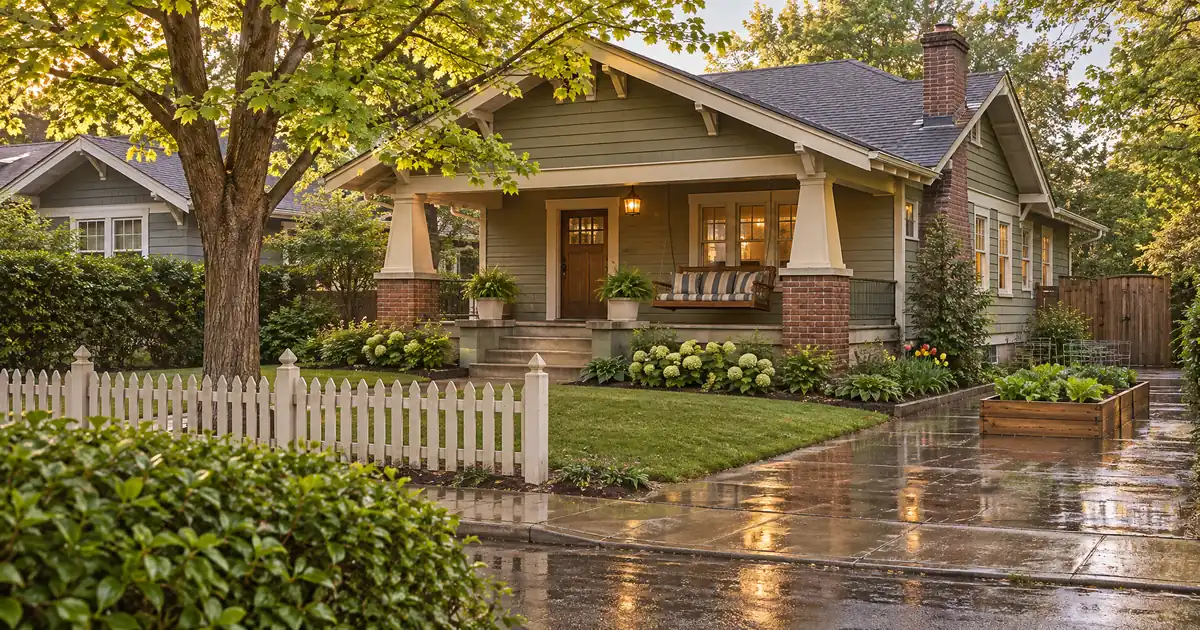
The Quick Read: An FHA cash-out refinance replaces your current mortgage with a larger FHA loan and hands you the difference in cash. The new loan can reach 80% of your home’s appraised value, and that limit covers the payoff, financed costs, and the cash you take. Plan the cash as a fixed budget with a job for every dollar: paying off debt, funding repairs, or splitting between the two.
Key Takeaways
- The cash-out limit is 80% of adjusted value, and it applies to the whole new loan, not just the cash you receive.
- You generally need to have owned and lived in the home for 12 months before the case number is assigned, with a clean payment history.
- Debt consolidation moves debt onto your house. It does not erase it.
- For big renovations, an FHA rehabilitation loan can fit better than cash-out.
What Is an FHA Cash-Out Refinance?
A cash-out refinance pays off your existing mortgage with a new, larger one. You keep the difference. Federal consumer guidance describes the difference between this and a home equity loan or HELOC: those leave your first mortgage in place, while a cash-out refinance replaces it (CFPB guide to using home equity).
FHA cash-out estimate
Seeded with an example value, a balance to match, and a round cash request; change any field.
Editable benchmark: 7.18% as of November 5, 2026 · Freddie Mac 30-year average via FRED®. A conventional market reference, not an FHA cash-out refinance quote.
Illustrative starting assumptions: a $350,000 home value, a $193,000 current balance, the FHA cap on a principal residence with the upfront premium financed, a thirty-year term at the current Freddie Mac benchmark, and property taxes and insurance estimated at typical national rates. Every field is editable.
An illustration, not a Loan Estimate, an approval, a quote, or a commitment to lend. The rate shown is the weekly Freddie Mac thirty-year conventional benchmark, used as a market reference; an FHA cash-out is priced by the lender at lock, and this is not an FHA cash-out refinance quote. HUD’s cap limits the base loan; the upfront premium is financed on top of the capped base loan; the monthly premium for the first year follows the snapshot’s schedule. Cash available means the base loan the cap permits less the balances retired, before closing costs, which this calculator leaves out. The line figure applies the line program’s combined loan-to-value ceiling to the same value and balance. Taxes and insurance are estimates you can edit. Licensed in sixteen states for consumer mortgages.
The FHA version is insured by the Federal Housing Administration and is for homes you live in.
Two points trip people up. First, your current loan does not have to be an FHA loan. Second, a Streamline refinance, which only works on an existing FHA loan, does not pay out cash. Cash-out is a different product.
How Is the Loan Underwritten, Step by Step?
Here is the sequence, in the order a file moves through it.
1. Eligibility check. The home must be your principal residence. Across the wholesale programs we place FHA files with, the home needs to be owned and occupied for 12 months before the FHA case number is assigned. The clock runs back from the case number, not from closing. Your mortgage payments also need to be on time for the previous 12 months. HUD’s handbook rules on payment history, including cases involving forbearance or modification, appear in HUD Mortgagee Letter 2020-30.
2. Case number and appraisal. The appraisal sets the ceiling. A low value shrinks the cash, sometimes to zero. Appreciation in your neighborhood does not shorten the 12-month ownership clock, but it does raise the value the appraiser may support.
3. Sizing the loan. The new base loan has to cover three things: the payoff of your current mortgage, any costs you finance, and the cash you take. All of it must fit under 80% of adjusted value. Any other lien that stays on the home counts toward the cap too.
4. Credit, income, and ratios. The lender reviews your credit and your debt-to-income ratios (what share of your monthly income goes to housing, and to all debts combined). The base pair is 31/43 with no compensating factors. With documented compensating factors, such as reserves or a strong payment record, ratios can stretch as far as 40/50 at the top tier. The automated underwriting finding governs most files. The wholesale programs we use generally start at a 580 decision score, and each lender sets its own overlays.
5. Mortgage insurance. FHA loans carry two premiums. The upfront premium is 1.75% of the base loan and is typically financed into the balance. The annual premium runs between 0.15% and 0.75% depending on term, loan amount, and LTV. On a thirty-year loan above 90% LTV, it lasts the life of the loan. At or below 90%, it ends after eleven years, and a cash-out capped at 80% sits under that line. Premium details are program facts, subject to lender guidelines and full file review.
6. Disclosures and closing. You receive a Loan Estimate, then a Closing Disclosure before signing. Read the final cash figure on that document, not the maximum, because it is what actually lands in your account.
7. Use of funds. Debt payoffs can be made directly at closing. Any cash you keep for repairs comes to you as a lump sum, with no escrow holdback, which makes discipline your job.
How Much Cash Can You Actually Get?
Start with the appraised value and take 80% of it. That is your ceiling for the entire new loan. Subtract your current mortgage payoff and the costs you plan to finance. What remains is the most cash you can take.
Run it in percentages. Say your home appraises at 100 units of value and you owe 55% of that. The 80% cap leaves 25% of value as the gross room. Closing costs and the financed upfront premium come out of that, and the rest is your cash. The tighter your current balance, the thinner the slice.
HUD lowered the cap on these loans from 85% to 80% of adjusted value for case numbers assigned on or after September 1, 2019. The stated goal was to strengthen the equity left in the home and reduce losses if a loan defaults (HUD Mortgagee Letter 2019-11). The cap had earlier been cut from 95% to 85% in 2009 (HUD press release). So if you read an older page that says 85%, it is out of date.
One more misconception: the 80% is not “the cash you take.” It is the size of the whole loan relative to value.
Should the Money Go to Debt, Repairs, or Both?
Decide this before you apply. A cash-out is a one-time event with real costs, so the plan matters more than the ceiling.
| Your goal | What fits | What to watch |
|---|---|---|
| Pay off credit cards or loans | Cash-out with payoffs at closing | Debt moves onto your home |
| Small to mid repairs | Cash-out lump sum | You manage the budget yourself |
| Large renovation | FHA 203(k) rehabilitation loan | More paperwork, funds held in escrow |
| Both | Cash-out sized for each purpose | Set the split before applying |
Write down two numbers before you talk to anyone: the total you want to pay off and the total you need for the work. Add a cushion for the work. If the sum is larger than the ceiling, you need to cut the plan, not stretch the loan.
How to Think Through Debt Consolidation
Consolidation works best when the debt is a one-time problem and your spending has already changed. It works worst when the cards were the symptom.
The CFPB studied borrowers who used a cash-out refinance and found that their credit scores rose afterward. Those scores then slipped gradually over time, but they stayed above where they stood before the refinance (CFPB report on cash-out borrowers). Paying off the cards is easy. Keeping them at zero is the test.
Here is a guardrail checklist worth running before you commit:
- Compare total cost, not just the monthly payment. A longer term lowers the monthly outflow but can raise the total you pay over time.
- Remember what you replace. The whole first mortgage is replaced under today’s terms. If your current loan has favorable terms, you give those up on the entire balance, not only on the cash.
- Count the insurance. The financed upfront premium and the annual premium add to the carrying cost of the new loan.
- Plan the cards. Decide now whether to close accounts, lower limits, or automate payments.
- Respect the risk. Unsecured debt cannot take your home. Mortgage debt can. The CFPB’s HELOC brochure makes the same point about home-secured borrowing generally.
The Federal Reserve’s consumer guide also notes that many financial advisers caution against using cash-out refinancing to pay down unsecured or short-term secured debt such as car loans. That caution is fair, because spreading a short-term debt across a long mortgage term can cost more in total. A cash-out is easier to justify when the debt is large and has been carried for a long time.
How to Plan Home Improvements
Treat the cash like a project budget. A few habits make a difference.
Rank the work. Put safety and structure first: roof, electrical, plumbing, drainage. Systems that fail cost more later. Cosmetic upgrades come last.
Get written bids. Ask for itemized quotes, not one number on a napkin. Compare two or three.
Build a contingency. Older homes surprise people. Hold back a reserve for what the contractor finds once the walls are open.
Keep the split honest. If you also want to pay off debt, subtract that from the cash first. Whatever is left is your renovation budget. If it is not enough, the plan changes.
When a 203(k) Beats Cash-Out
HUD’s FHA 203(k) is a rehabilitation program for purchases and refinances. The repair cost goes into the loan amount, and the funds are held in escrow and released as work is completed (HUD 203(k) program page). HUD’s program types page describes a Limited version for homeowners financing up to $75,000 of repairs and a Standard version requiring at least $5,000 of rehabilitation cost. HUD later revised the program and extended rehabilitation periods (HUD Mortgagee Letter 2024-13). Confirm the current limits with your loan officer, because these numbers change.
The tradeoff is simple. Cash-out gives you freedom and speed of access to the funds. A 203(k) gives you structure, a lump of value tied to the finished work, and more paperwork. If the project is large and permit-heavy, the structure usually helps. If it is a handful of repairs you can manage yourself, cash-out is simpler.
How Does FHA Cash-Out Compare With the Alternatives?
| Option | Keeps your first mortgage? | Pays cash? | Best for |
|---|---|---|---|
| FHA cash-out refinance | No, replaces it | Yes | Debt payoff or repairs when you want one loan |
| Conventional cash-out | No, replaces it | Yes | Borrowers with stronger credit profiles |
| HELOC or home equity loan | Yes | Yes | Keeping a favorable existing first mortgage |
| FHA Streamline | No, replaces it | No | Existing FHA loans needing a net tangible benefit |
| FHA 203(k) | No (refinance version) | No, funds go to work | Larger renovations |
The CFPB notes that a HELOC can carry lower up-front costs (CFPB guide). If you love your current first mortgage, that alone can settle the question.
Where the Rules Break: Edge Cases
Recently purchased homes. The 12-month clock does not bend. Appreciation does not shorten it.
Inherited property. If you inherit a home and rent it out, you generally cannot do a cash-out until you have lived in it as your principal residence for 12 months. Exceptions are narrow. Ask your loan officer to check the current handbook language.
Late payments. One late mortgage payment in the past 12 months can block cash-out eligibility even when you have plenty of equity. After a forbearance plan, HUD’s rules can require 12 consecutive on-time payments.
Second homes and rentals. Standard FHA cash-out is for a principal residence. Occupancy decides the leverage.
Free-and-clear homes. If you own the home outright, it can still be refinanced as a cash-out.
Credit events. HUD sets waiting periods after major events, such as two years from a chapter 7 discharge and three years from a foreclosure. Those are HUD’s rules, not a promise from any one lender.
What Does It Cost, and When Does It Pay Off?
Costs come from three places: lender and third-party closing costs, the 1.75% upfront premium (usually financed), and the annual premium that runs inside your payment. Closing costs reduce the cash you net, so a smaller cash-out can disappoint once costs are subtracted. Your Loan Estimate shows the actual numbers for your file.
To find your break-even, ask one question: what does this loan save or cost me each month compared to what I do now, and how long do I plan to keep the home? If you pay off high-balance debts, the monthly relief may arrive immediately. If the loan mostly adds cost for a modest repair, break-even may never come.
Also note the CFPB’s caution that a cash-out can extend the time it takes to pay off your mortgage, and the payment can rise because a larger loan replaces the current one. And keep an equity cushion: the CFPB notes lenders typically want you to keep 10% to 20% of your home’s value as equity, and the FHA cap leaves at least 20%.
When Is It Not a Good Fit?
Skip it, or pause, in these cases:
- Your current first mortgage has terms you would hate to lose, or a HELOC could cover the need.
- The debt keeps returning, and spending, not interest, is the root problem.
- The cash you net after costs would be too small to matter.
- You plan to sell soon, before the costs could pay back.
- A late mortgage payment in the last 12 months puts the file at risk.
- The project is large enough that an escrowed rehabilitation loan would protect you better.
Key Terms Defined
Cash-out refinance: A new, larger mortgage that pays off your old one and gives you the difference in cash.
Adjusted value: The value HUD uses to apply its loan-to-value cap, based on the appraisal.
LTV (loan-to-value): The loan amount as a percentage of your home’s value.
Upfront mortgage insurance premium: A one-time FHA charge, 1.75% of the base loan, usually financed into the balance.
Annual mortgage insurance premium: An ongoing FHA charge built into your monthly payment, based on term, loan amount, and LTV.
203(k) loan: An FHA rehabilitation loan where repair funds are held in escrow and released as work is finished.
Frequently Asked Questions
Do I need an existing FHA loan to do an FHA cash-out refinance?
No. Your current mortgage can be a different type of loan, or you can own the home free and clear. The FHA Streamline is the product that requires an existing FHA loan, and it pays no cash.
How much of my home’s value can I borrow?
Up to 80% of adjusted value on the entire new loan, per HUD’s current cap. That figure includes your payoff and financed costs. Other liens that remain on the home count toward the limit.
Can I use the money for both debt and renovations?
Yes. Cash arrives as an unrestricted lump sum, so you decide the split. Set the split before you apply, then size the loan to match. If the work is large, ask about a 203(k) as an alternative.
Will a late payment stop me?
A late mortgage payment in the previous 12 months can block cash-out eligibility, even with ample equity. Forbearance or modification adds its own waiting rules. Each file is reviewed under lender guidelines.
Does consolidating debt hurt or help my credit?
Both can happen. Running balances back up is what undoes the benefit.
If you are weighing a cash-out refinance against keeping the loan you have, Lendmire can help you compare the programs and the equity each one reaches. Program figures are subject to lender guidelines and full file review, and nothing here is a commitment to lend.
For your own numbers, request a scenario review with Lendmire.
About Lendmire
Lendmire — NMLS# 2371349 — is a mortgage broker that arranges FHA, VA, conventional and jumbo home purchase and refinance financing in 16 states through wholesale lenders. Every option is subject to the lender’s guidelines and full underwriting. Scotsman Guide named Lendmire a Top Mortgage Workplace in both 2025 and 2026.
Get Started
Ready to find the right loan for you?
See your offer in seconds. No credit pull, no obligation.
Informational only. Not a Loan Estimate, approval, or commitment to lend. Program availability and eligibility are subject to lender guidelines, credit approval, property review, and underwriting.
References
1. CFPB, Using home equity to meet financial needs
2. HUD Mortgagee Letter 2020-30
3. HUD Mortgagee Letter 2019-11
5. CFPB newsroom: cash-out borrowers’ outcomes
7. Federal Reserve’s consumer guide
10. HUD Mortgagee Letter 2024-13
This article is part of Lendmire’s FHA cash-out refinance program — full qualification details, guidelines, and scenarios live on the program page.
Related reading: FHA Cash-Out vs Waiting for Probate on an Inherited Home · How to Qualify and Apply for an FHA Cash-Out Refinance on a Home With No Mortgage · How to Get an FHA Cash-Out on a Home Owned Before Marriage
Brandon Miller
Founder & CEO, Mortgage Loan Originator, Lendmire LLC
- Mortgage Loan Originator · NMLS# 1129696 · Verify on NMLS Consumer Access
- North Carolina Real Estate Broker · License# 343312 · Verify on NCREC
- North Carolina Insurance Producer · License# 19053198 · Property, Casualty, Life, Health · Verify on NAIC SBS
- Lendmire LLC · Firm NMLS# 2371349 · Verify firm licensure
Legal disclosures. Lendmire (NMLS# 2371349) is a state-licensed mortgage brokerage that arranges financing through wholesale lender relationships. Lendmire is not a direct lender, depository institution, or registered financial advisor. The discussion above is general informational content about real estate financing — it is not financial, legal, or tax advice, and readers should consult licensed professionals for guidance on their individual circumstances. Loan inquiries are subject to lender underwriting; this article does not represent a commitment to lend. Loan terms, rates, and qualification standards vary by borrower, property, and state, and are subject to change at any time. Equal Housing Opportunity. NMLS Consumer Access: nmlsconsumeraccess.org.