
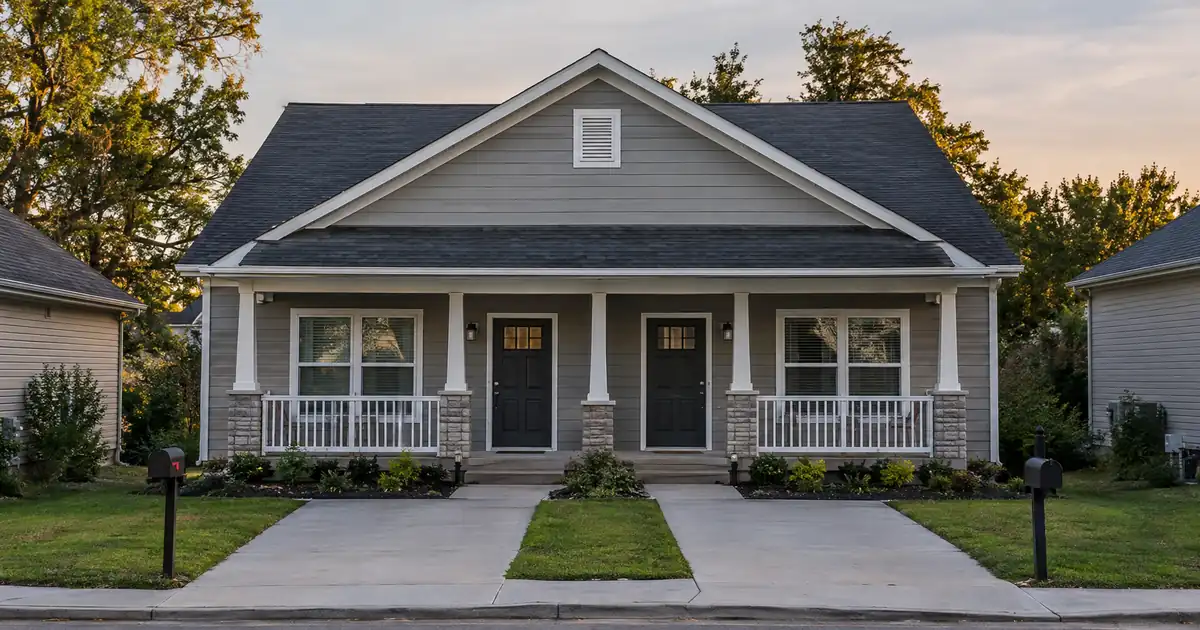
The Quick Read: To cash-out refinance an inherited duplex, triplex or fourplex that you live in, you generally move through a short sequence: document title, confirm occupancy, work within the leverage cap for 2-4 units, and show your own credit, income and reserves. Inheriting the property typically removes the ownership waiting period. The cap on a 2-4 unit primary home is 75% loan-to-value on a conventional cash-out. That is lower than the 80% a one-unit home gets. All of it is subject to lender guidelines and full file review.
Key Takeaways
- Inheritance usually waives the six-month “on title” wait for a conventional cash-out refinance, but the lender has to document it.
- You must be on title. The date of death alone does not do it.
- You must live in one of the units. If you don’t, the loan becomes a different occupancy class with its own rules.
- Conventional cash-out on a 2-4 unit primary home tops out at 75% LTV.
- Rent from the other units may help you qualify. Rent from the unit you live in generally cannot.
- The FHA Streamline and VA streamline refinance are not cash-out tools, so they are not the route for this goal.
What Does “Cash-Out Refinance” Mean When You Inherit the Home?
A cash-out refinance replaces the loan on a property with a new, larger loan and hands you the difference in cash. If the inherited building is free and clear, the new loan is the first mortgage on it. If there is an existing mortgage, the new loan pays it off first.
Heirs usually want the cash for one of a few reasons: buying out siblings, repairing an older building, or paying down other debt. The mechanics are the same for each. For a broader look at how these loans work, see Lendmire’s cash-out refinance programs.
One distinction matters here. A limited cash-out (rate-and-term) refinance pays off the old loan and costs, with only incidental cash back. Across the wholesale programs we place files with, heirs who only want to retire an inherited loan often fit that lane better.
Key Terms Defined
Cash-out refinance: A new, larger mortgage that pays off the old one and gives you the extra amount as cash.
Limited cash-out (rate-and-term) refinance: A refinance that pays off the existing loan and closing costs, with only small amounts of cash back.
LTV (loan-to-value): The loan amount divided by the appraised value of the property.
Seasoning: The waiting period a lender wants, such as how long you’ve been on title or how old the existing loan is.
Probate: The court process that settles an estate and transfers a deceased person’s property to heirs.
Primary residence: The home you live in as your main address. In a 2-4 unit building, that means living in one unit.
Title: The legal record of who owns the property.
Does Inheriting Remove the Waiting Period?
Yes, for a conventional loan, and this is the single most helpful rule for heirs. The Fannie Mae Selling Guide says at least one borrower must normally be on title for six months before a cash-out loan is disbursed. It adds that there is no waiting period if the lender documents that you acquired the property by inheritance.
Three limits are easy to miss.
The clock runs from title, not death. If the estate is still in probate and the deed isn’t in your name, you aren’t on title. The lender can’t close the loan until you are.
A gift is not an inheritance. If a parent deeds you the building while alive, that generally isn’t the inheritance exception. Fannie Mae names inheritance, a legal award in a divorce or similar proceeding, and delayed financing as its exceptions. A parent-to-child deed isn’t on that list, so the six-month clock for you would likely start at the deed. Treat that as an interpretation and confirm it with your lender.
A living trust can count toward the clock. Say a parent placed the building in a revocable living trust. Fannie Mae lets the time the trust held the property count toward the six months, as long as you are the trust’s primary beneficiary. Ask your lender how it wants that documented.
Where You Are in the Process
| Your situation | Can you cash out? | What’s usually missing |
|---|---|---|
| Estate still open | Not yet | Deed in your name |
| Deed recorded, you live in a unit | Yes, with documentation | Inheritance paperwork |
| Deed recorded, you live elsewhere | Different occupancy lane | Owner-occupancy |
| Parent deeded it to you while alive | Likely a six-month wait | Inheritance status |
Why Do 2-4 Units Get Different Treatment Than a One-Unit Inheritance?
Lenders see more risk in a building with several rental units. The result is a lower leverage cap. Fannie Mae’s eligibility matrix shows 75% LTV for a cash-out refinance on a 2-4 unit principal residence and 80% on a one-unit home. Across the wholesale conventional programs we place files with, that same 75% applies to second homes and investment property too. These specifics are subject to lender guidelines and a full review of property, leverage, and credit.
In plain terms, a 2-4 unit primary home leaves you less equity to pull out than the same value in a single-family house. If the building appraises at a given value, the lender will lend up to 75% of it, and that number includes any existing loan being paid off. The balance of the equity stays in the property.
Attached condo units and co-op units are generally not eligible for 2-4 unit treatment, so this path is for true multi-unit buildings.
There is also a wholesale lane that reaches 89.99% LTV with no mortgage insurance. It requires a 680 score, a 50% ratio, a thirty-year fixed rate, a primary residence and a conforming balance, plus its own six months of seasoning. We have not seen it apply to 2-4 unit cash-out, so don’t plan around it for this building. In Texas, the state constitution caps a cash-out on the homestead, and the wholesale lane is not written there. Terms depend on the lender’s guidelines, the property type, the leverage, and a full review of the credit profile.
How Do You Establish Occupancy in a Building You Inherited?
You live in one of the units and say so on the application. Lenders treat a primary-residence cash-out as owner-occupied only when you actually occupy it.
Practical proof is ordinary: your ID and mail at the address, utility bills, and a lease or rent roll that shows you in one unit and tenants in the others. If you already lived in a unit before the owner passed, that makes the story clean. If you plan to move in, expect the lender to ask when.
If you don’t live there, the loan is no longer a primary-residence loan. The 75% conventional cash-out cap on a 2-4 unit building stays the same, but the occupancy class changes which program, pricing and documentation rules apply. That is a different lane, and it falls outside this article. The exact terms vary by lender and program and follow a full review of property, leverage, and credit.
How the Loan Is Underwritten, Step by Step
1. Confirm title
You need to be on title. Gather the death certificate, the estate or probate papers, and the recorded deed. The lender must document the inheritance, so incomplete paperwork is the most common stall.
2. Check for an existing mortgage
If an old first mortgage is being paid off, it generally must be at least 12 months old, measured note date to note date. That test doesn’t apply to subordinate liens being paid off or to buying out a co-owner under a legal agreement. A free-and-clear inherited building skips it entirely.
3. Get the appraisal
A 2-4 unit property is valued on an income-property appraisal form. The appraiser looks at the building’s condition, the units, and comparable sales. An appraisal that doesn’t support the unit count, such as an unpermitted unit, can sink the file.
4. Treat the rent correctly
You qualify personally. The inheritance itself does not count as income. Fannie Mae’s rental income guidance (an older version, so confirm the current text) says rent from the unit you occupy generally can’t be used to qualify. Income from the other units can be considered, usually documented with leases or traditional personal-income documentation. The full payment on the home counts as one of your monthly obligations.
5. Qualify on credit, ratios and reserves
Across the wholesale conventional programs, the floor is a 620 decision score, with the automated finding governing most files and a 50% total ratio ceiling. Manually underwritten loans use 36% or 45% with reserve and score factors. On automated files with a ratio above 45%, Fannie Mae requires six months of reserves.
6. Disclosures and closing
You’ll get a Loan Estimate early and a Closing Disclosure before signing. Compare the two. The “Estimated Cash to Close” line shows what you owe, and a cash-out loan can net the proceeds against costs.
7. Pricing
Cash-out loans carry a pricing add-on tied to credit score and LTV. It is built into the loan terms, so ask your broker to show it to you on the Loan Estimate.
Two more rules to know: a property that was listed for sale must be off the market by disbursement, and jumbo or non-agency loans may set their own seasoning rules.
What Happens With Tenants Already in Place?
Existing leases help. They document the rent from the other units, and the appraiser uses them. Vacant units are fine, but they give the lender less rent to count. If the unit the deceased owner lived in is now empty, it’s the one you’ll probably occupy, which is the cleanest path to owner-occupancy.
Rent from the units you don’t occupy may help the file, subject to lender guidelines. The unit you live in contributes nothing to qualifying. Fannie Mae also requires gross monthly rent on 2-4 unit principal residences to be reported at delivery, whether or not it’s used to qualify.
Buying Out Co-Heirs
Many heirs refinance to pay siblings their shares. Fannie Mae exempts a co-owner buy-out from the existing-mortgage 12-month test. One catch applies to limited cash-out files: the borrower who takes sole ownership may not receive refinance proceeds. The remaining borrower must also qualify alone, on one income.
Here is how that looks in percentages. Say the building’s appraised value is 100% and the heirs have no mortgage. At the 75% cap, the new loan can reach at most 75% of value. If the buyout share is more than that cap leaves available, there’s a funding gap. Heirs sometimes solve it with savings or another source. Run this math before you promise your siblings a number.
Where the Rule Breaks
| Situation | What changes |
|---|---|
| Rented out after inheriting (FHA) | 12 months of occupancy first |
| Heir doesn’t live there | Occupancy class changes; different program rules |
| Deed from a living parent | Likely not the inheritance exception |
| Heir holds via trust | Trust time may count, if you’re primary beneficiary |
| Condo or co-op unit | Not eligible for 2-4 unit treatment |
| Listed for sale | Must be off market by disbursement |
On FHA, HUD’s handbook says no occupancy period is needed if you haven’t treated the inherited home as an investment since inheriting. Rent it out first and you generally owe 12 months of occupancy. Confirm this in HUD Handbook 4000.1 with a lender before relying on it.
Why the FHA Streamline and VA IRRRL Don’t Fit
Both are streamlines for existing government loans, built to lower costs without much paperwork. Neither pays out equity. The VA states that the borrower may not receive any cash from the loan proceeds on an IRRRL. An IRRRL also only applies to an existing VA loan, so an heir with a non-VA mortgage can’t use it. The FHA Streamline is likewise limited to existing FHA loans. If you inherited a government-backed loan and want to keep it, a streamline may reduce costs. For cash, you need a cash-out loan.
What This Means for Your Budget
A cash-out loan is a bigger loan, so the monthly payment generally rises. The home is also the collateral, so missed payments can lead to foreclosure. Think about what the cash will do for you. Paying for a roof that protects a rental income stream is different from covering everyday spending.
Closing costs are real. They can be paid at closing or financed into the loan, which adds to the balance. The Loan Estimate and Closing Disclosure both show them. The CFPB’s Closing Disclosure explainer suggests comparing the final costs and cash to close against your Loan Estimate and asking the lender about significant changes.
Tax treatment can depend on your situation; borrowers should speak with a qualified tax professional before relying on any deduction or credit.
Documents to Gather
- Death certificate
- Letters of administration, probate papers, or trust documents
- Recorded deed in your name
- Current leases or rent roll for the other units
- Proof you live in your unit
- Homeowners insurance, tax bills and any existing mortgage statement
- Your usual income, asset and credit documents
Common File-Killers
- A deed that isn’t recorded yet. No title, no loan.
- A unit that is really an investment. If you live elsewhere, it’s not a primary-residence loan.
- An unpermitted unit. The appraisal may not support the unit count.
- Counting the inheritance as income. It doesn’t count.
- A building listed for sale. It must be delisted before disbursement.
Frequently Asked Questions
Can I cash-out refinance an inherited duplex right after probate closes?
Usually yes, once the deed is recorded in your name and you live in one unit. Conventional rules waive the six-month title wait when the lender documents the inheritance. You still need to qualify on credit, ratios and reserves, subject to lender guidelines.
Does the rent from my tenants count as my income?
Rent from the other units may count, usually documented with leases or traditional personal-income documentation. Rent from the unit you live in generally can’t be used. Fannie Mae’s guidance also requires reporting the gross rent on 2-4 unit primary homes even when it isn’t used to qualify.
How much equity can I take out of an inherited fourplex?
A conventional cash-out on a 2-4 unit primary home is capped at 75% LTV, versus 80% on a one-unit home. The new loan includes any mortgage being paid off, so the cash you receive is what’s left under that cap after payoffs and costs. Final terms depend on the lender’s guidelines, the property type, and the borrower’s complete credit picture.
What if I don’t live in the building?
Then it isn’t a primary-residence loan. Occupancy decides which program and rules apply, even though the conventional 2-4 unit cash-out cap is the same 75%. If you plan to move into a unit, tell your broker up front so the file is built for the right occupancy.
Is a streamline refinance a way to get cash out?
No. The VA IRRRL does not allow cash from proceeds, and the FHA Streamline is designed for no or minimal cash. Both apply only to existing government loans.
Your Next Step
If you are weighing a cash-out refinance against keeping the loan you have, Lendmire can help you compare the programs and the equity each one reaches. Program details are subject to lender guidelines and full file review, and nothing here is a commitment to lend.
For your own numbers, request a scenario review with Lendmire.
For current guidelines and terms, see Lendmire’s refinance programs page.
About Lendmire
Lendmire (NMLS# 2371349) is a mortgage brokerage serving homeowners and home buyers in 16 states. FHA, VA, conventional and jumbo purchase and refinance loans are arranged through wholesale lending channels; Lendmire brokers the financing and the lender underwrites each application. Scotsman Guide named Lendmire a Top Mortgage Workplace in both 2025 and 2026.
Get Started
Ready to find the right loan for you?
In about 30 seconds you can review financing options available for your home or investment property. No commitment required.
Informational only. Not a Loan Estimate, approval, or commitment to lend. Program availability and eligibility are subject to lender guidelines, credit approval, property review, and underwriting.
References
1. Fannie Mae Selling Guide B2-1.3-03, Cash-Out Refinance Transactions
2. Fannie Mae Eligibility Matrix
3. VA Interest Rate Reduction Refinance Loan
4. CFPB Closing Disclosure Explainer
This article is part of Lendmire’s Refinance series — every loan program’s qualification details, guidelines, and scenarios live on the loan options page.
Related reading: Condo Second Home Cash-Out Refinance vs Primary Home for the Same Cash · Cash-Out Refinance Rules for a Free-and-Clear Inherited Home · How to Raise Credit Tier on a 2-4 Unit Primary Home Cash-Out Refinance
Brandon Miller
Founder & CEO, Mortgage Loan Originator, Lendmire LLC
- Mortgage Loan Originator · NMLS# 1129696 · Verify on NMLS Consumer Access
- North Carolina Real Estate Broker · License# 343312 · Verify on NCREC
- North Carolina Insurance Producer · License# 19053198 · Property, Casualty, Life, Health · Verify on NAIC SBS
- Lendmire LLC · Firm NMLS# 2371349 · Verify firm licensure
Legal disclosures. Lendmire (NMLS# 2371349) is a state-licensed mortgage brokerage that arranges financing through wholesale lender relationships. Lendmire is not a direct lender, depository institution, or registered financial advisor. The discussion above is general informational content about real estate financing — it is not financial, legal, or tax advice, and readers should consult licensed professionals for guidance on their individual circumstances. Loan inquiries are subject to lender underwriting; this article does not represent a commitment to lend. Loan terms, rates, and qualification standards vary by borrower, property, and state, and are subject to change at any time. Equal Housing Opportunity. NMLS Consumer Access: nmlsconsumeraccess.org.