
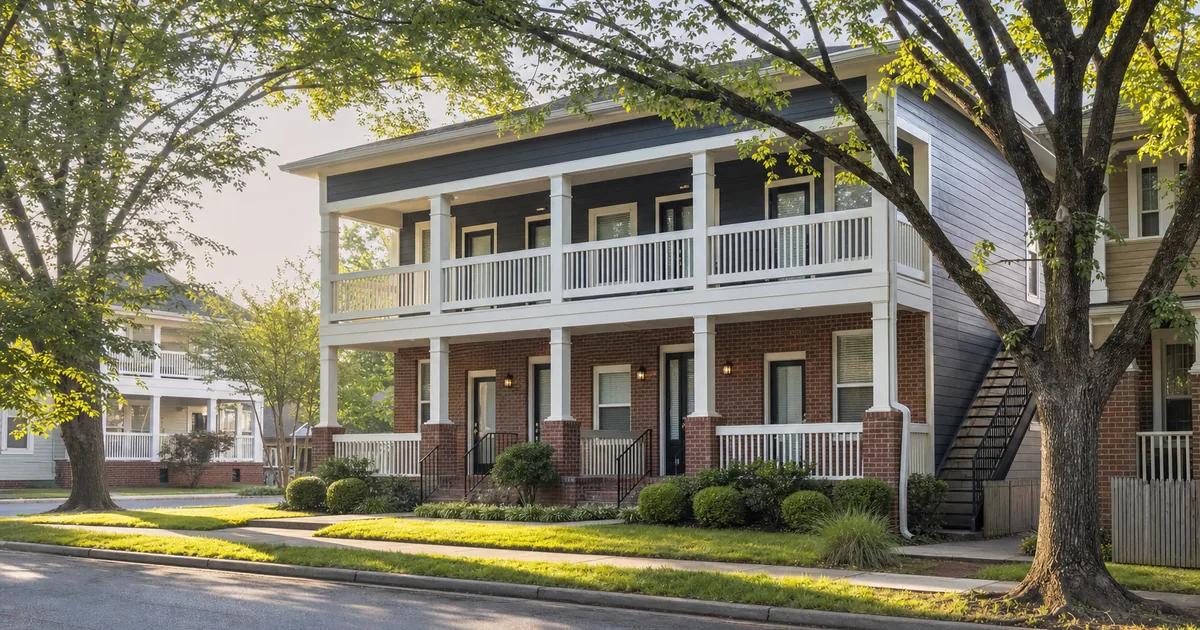
Investment Property Cash-Out Refinance in Arkansas
Use this guide to understand how an investment property cash-out refinance in Arkansas is underwritten: the equity the current value supports, the cash-out ceiling on the new loan, how the new payment qualifies on rent rather than tax returns, and what arrives at closing after the payoff and costs.
Current Arkansas DSCR cash-out guidelines, updated from one source.
Lendmire’s centralized DSCR standards source feeds every figure below, so they update automatically as program guidance changes. The final answer is still specific to the borrower, the property, and the selected wholesale lender.
Maximum purchase LTV
Maximum leverage is subject to credit, DSCR, loan size, property type, reserves, experience, and current wholesale-lender overlays.
Maximum refinance LTV
Rate-and-term refinances use the current value, existing payoff, qualifying rent, credit profile, seasoning, and selected program.
Maximum cash-out LTV
Cash-out proceeds depend on the proposed new loan, payoff, value, DSCR, ownership seasoning, costs, and complete underwriting.
Minimum FICO
The published floor does not guarantee maximum leverage. Lower scores generally receive reduced LTV and less exception flexibility.
Rent is 25% higher than estimated monthly PITIA.
Rent equals estimated monthly PITIA.
May be available with stronger credit and lower LTV.
Current standard-program snapshot · updated October 19, 2026. Purchase and rate-and-term LTV above 80% is by exception and subject to the full scenario.
DSCR financing available in 41 markets, including Washington, D.C. In Arkansas, eligible rentals are reviewed on the appraised value, the accepted rent, the payoff, and the time in title, with the cash-out ceiling shown in the snapshot above.
What an Arkansas rental cash-out refinance is — and how the approval works.
In a cash-out refinance, a larger new loan replaces the one on a rental you already own and the difference is paid to you at closing. On a DSCR loan the new payment is measured against the property’s rent, so an Arkansas investor is not qualified on tax returns or personal debt-to-income.
Equity and the cash-out ceiling
The cap on the new loan is the snapshot’s cash-out leverage applied to the current appraised value. The existing payoff is paid from that loan before anything reaches you, so the drawable equity is the space between the ceiling and the payoff.
The new payment qualifies on rent
The qualifying test is the accepted monthly rent against the new monthly payment, including taxes, insurance, and dues. The more cash drawn, the larger the new payment, and the rent has to cover it at the coverage tier the program requires.
Seasoning decides which value counts
How long you have owned the property matters. Ownership seasoning determines whether the appraised value or the original purchase price sets the ceiling, and a recent purchase may follow delayed-financing rules instead. The payoff, any liens, and title all come into the file.
Proceeds after payoff, costs, and reserves
Proceeds are what is left after the new loan retires the existing payoff and pays closing costs, prepaid items, and any required reserves. Reserves on a cash-out may be satisfied from the proceeds themselves under some programs, and the exact figure lands on the closing statement.
New loan minus payoff is the gross figure; minus closing costs, prepaids, and any reserves is the net. Current cash-out leverage and coverage tiers sit in the cards above, and the calculator below lets you run a property you own. The lender’s numbers come from the appraisal, the payoff statement, and the accepted rent.
A statewide market with equity in more than one shape.
The Arkansas rental market is not one market. Metro single-family holds, small multifamily, seasonal rentals, and newer stock each carry equity built in a different way, and a cash-out refinance reads the same three figures in every case: today’s value, the rent the property earns, and the balance that has to be paid off.
Statewide figures provide market context, not an appraisal. The lender still values the subject property, verifies its rent, and reviews the payoff, title, and program eligibility.
Data source: U.S. Census Bureau QuickFacts — Arkansas, including the 2025 population estimate and population change from the April 1, 2020 estimates base, 2020–2024 median value of owner-occupied housing units, and 2020–2024 median gross rent.
Distinct Arkansas markets, distinct equity positions.
Depending on the market, an investment property cash-out refinance in Arkansas is decided by different things: the equity built in older single-family rentals, the rent growth in small multifamily, the seasonal income of vacation markets, or the seasoning clock on newer stock. The cards below frame the state’s major investor markets.
Little Rock
In Little Rock, small multifamily rentals commonly hold equity built through rent growth and stabilization. A cash-out refinance turns that equity into proceeds, qualified on the units’ accepted rent against the new payment. By Census estimate, Little Rock has roughly 203K residents, a median owner-occupied value of about $236.4K, median gross rent around $1,106, and renter households near 46%.
Fayetteville
Renters make up a large share of Fayetteville households, which supports the small multifamily cash-out: a two-to-four-unit building whose rents have grown since purchase can support a larger loan, and the equity comes out for the next acquisition. Population is roughly 99K by Census estimate, median owner-occupied value about $349.6K, median gross rent close to $1,065, and about 58% of Fayetteville households are renters.
Fort Smith
Cash-out files in Fort Smith often begin with a discounted purchase and a renovation. The lender reviews the seasoning, the appraisal on the improved property, and the rent evidence before applying the cash-out ceiling. The Census puts Fort Smith at about 90K people; owner-occupied homes carry a median value near $178.1K, gross rent runs around $884, and roughly 47% of households rent.
Springdale
As a growing principal city, Springdale has built equity in rentals through appreciation and rising rents. A cash-out refinance measures that equity against the current appraised value and the payoff, and the new payment qualifies on rent. Census estimates put the Springdale population near 88K, with a median owner-occupied value around $261.8K, median gross rent near $1,071, and renters in about 47% of households.
Jonesboro
Jonesboro offers entry price points that keep a first or second rental within reach, and many cash-out files here follow a renovation: a property bought and improved, then refinanced on its new value once seasoning allows. Time in title decides which value counts. By Census estimate, Jonesboro has roughly 80K residents, a median owner-occupied value of about $223.2K, median gross rent around $956, and renter households near 46%.
Rogers
Growth in Rogers tends to leave long-held rentals with more equity than their owners expected. Investors here pull it through a DSCR cash-out and redeploy it, often into another property in the same metro. By Census estimate, Rogers has roughly 73K residents, a median owner-occupied value of about $308.2K, median gross rent around $1,270, and renter households near 43%.
Lendmire can also review eligible cash-out and refinance scenarios in other Arkansas communities beyond the markets shown here. Availability remains subject to the property, the program, and the current lending footprint.
Four ways Arkansas investors can refinance a rental.
Eligible Arkansas investment properties can follow more than one refinance path. The structure that fits depends on the equity position, the rent, the seasoning, the existing payoff, and the use of proceeds.
Cash-out refinance
The existing loan is replaced by a larger DSCR loan and the difference comes to you at closing, up to the cash-out ceiling shown above. The rent qualifies the payment; seasoning, payoff, and reserves shape what you net.
Rate-and-term refinance
Take a new loan without cash out to retire a bridge or hard money note, change the term, or move the property into long-term financing; the rate-and-term ceiling applies and rent still qualifies the payment.
Delayed financing
A recent cash purchase can be refinanced under delayed-financing rules to recover part of the cash, with the purchase price and the documented funds setting the ceiling instead of a seasoned appraised value.
Cash-out to fund the next rental
Fund the next acquisition from the proceeds and qualify it on its own rent. The cash-out and the purchase are commonly run in tandem so the refinance closes first.
Model an Arkansas cash-out before requesting a quote.
The calculator opens on a cash-out refinance with editable Arkansas sample assumptions for value, payoff, new loan, and rent. Tax and insurance assumptions can refresh from Lendmire’s centralized state data, while the interest-rate field uses a weekly Freddie Mac market benchmark. Every field remains editable, and the benchmark is not a DSCR loan quote.
Arkansas cash-out refinance calculator
Provide the current value, the payoff balance, the proposed new loan, and the accepted monthly rent; the calculator returns the coverage ratio on the new payment and gross proceeds before closing costs.
Loading the current weekly Freddie Mac market benchmark…
Illustrative Arkansas starting assumptions: $185,000 current value, $102,000 payoff, $139,000 new loan at the current cash-out ceiling, $1,193 monthly rent, 0.56% annual property tax, and 1.25% annual insurance, all editable.
Illustrative estimate only. The Freddie Mac benchmark is an editable conventional market reference, not a DSCR loan quote, APR, Loan Estimate, approval, or commitment to lend. Actual value, qualifying rent, rate, taxes, insurance, association treatment, LTV, cash proceeds, seasoning treatment, and eligibility depend on lender guidelines and full underwriting.
What lenders still review after the coverage math.
Beyond the coverage ratio and the cash-out ceiling, a full Arkansas cash-out review takes in the appraisal, the rent evidence, the payoff and title, the entity, reserves, and the length of ownership.
Same rental, different qualification.
Qualifies the new payment on the property’s rent. Personal income, employment, and debt-to-income are not the starting point, entity vesting is common, and the cash-out ceiling and coverage tier come from the DSCR program.
Conventional cash-out financing looks at the borrower’s verified income and debt-to-income first, counts the property as an obligation, usually requires individual vesting, and limits how many properties can be financed.
Many Arkansas investors use both: a DSCR cash-out on a rental to pull equity, and a conventional loan on the home they live in. Which one fits a given property turns on vesting, the number of financed properties, and whether the rent or the tax returns tell the stronger story.
What to prepare for an Arkansas cash-out review.
Documentation varies by lender and program, but these four categories are a practical starting point before an investor requests a property-specific quote.
Treat this as a preparation guide rather than a universal checklist; the selected lender may ask for more based on the property, borrower, entity, seasoning, and what underwriting finds.
Statewide details that can change the proceeds.
Statewide, the value the appraiser supports, the rent the lender accepts, the cost of insurance, and title details can change what an Arkansas cash-out delivers. The items below are the ones to settle before relying on a number.
Use these checks to keep the Arkansas cash-out clean and fundable.
Treatment differs by wholesale lender, so this is not a promise of a universal outcome; it spotlights the main issues an investor should settle before closing.
Appraised value and comparable support
The lender’s appraisal sets the ceiling and comparable sales set the appraisal. An owner’s estimate or an online figure does not; in Arkansas, that gap is what most often trims the proceeds.
Seasoning and the payoff
How long the property has been owned determines whether the appraised value or the purchase price sets the ceiling, and a recent title transfer into an entity can count as a seasoning event under some programs. The payoff statement and any secondary liens come into the file with it.
Rent evidence for the new payment
Coverage is measured on accepted rent from the lease, the appraisal’s rent schedule, or an accepted market analysis. More cash out means a larger payment, so the rent has to be well supported.
Insurance and taxes in the new payment
Property taxes, insurance, and any association dues are inside the monthly payment the rent has to cover, so a premium increase or a reassessment changes the coverage ratio on the new loan. Use actual property-level figures, not estimates.
Entity vesting and title
Closing in an LLC or other entity is common on a DSCR cash-out: expect formation documents, ownership information, and personal guarantees. Clean title, resolved secondary liens, and the seasoning effect of a recent transfer all come into the review.
From an Arkansas rental to funded proceeds.
Start with the property and the payoff, compare the available structures, document the value and the rent, and move through underwriting toward closing and funding.
Run the scenario
Provide the Arkansas property details, current value estimate, payoff, rent, entity, credit range, and what the proceeds are for.
Compare programs
Multiple wholesale DSCR options are compared on cash-out leverage, coverage tier, seasoning treatment, reserves, and entity fit.
Document the property
Finish the appraisal, rent analysis, payoff statement, insurance, title, entity, and asset documentation the lender requires.
Close and redeploy
Settle the structure, pay off the existing loan at closing, fund, and put the proceeds to work.
A brokerage built around investor refinances.
Arkansas investors bring cash-out files of every size: a first hold, a small multifamily building, a vacation rental, a portfolio. No single lender’s leverage and seasoning box fits all of them.
Wholesale comparison
Rather than forcing every Arkansas cash-out into one institution’s leverage and seasoning box, Lendmire compares multiple non-QM wholesale lenders.
Refinance specialization
Cash-out leverage, coverage, seasoning, entity vesting, reserves, property type, and the use of proceeds are the focus of the review.
The next purchase, planned with it
Lendmire arranges DSCR purchase financing as well, so the cash-out and the next acquisition can be structured together before either closes.
Trusted by buyers & investors alike.


Arkansas cash-out refinance FAQs
These are the equity, leverage, coverage, seasoning, entity, and proceeds questions that come up most often from Arkansas investors. Final program terms remain scenario-specific.
How much can I take out on an investment property cash-out refinance in Arkansas?
Up to the cash-out ceiling in the current snapshot, measured against the appraised value, less the existing payoff, closing costs, and any required reserves. The rent also has to cover the new payment at the program’s coverage tier, so on some Arkansas properties coverage — not leverage — sets the number.
Can I do a cash-out refinance on an Arkansas rental without tax returns?
Yes — on a DSCR cash-out, the Arkansas property’s rent qualifies the new payment. Tax returns and personal debt-to-income are not the basis of the approval, though credit, reserves, and the appraisal are still reviewed.
Can I close an Arkansas cash-out refinance in an LLC?
Many DSCR programs permit eligible LLC or other entity vesting on a refinance. Formation documents, ownership information, and personal guarantees are typically required, and moving title into an entity may itself affect seasoning under some programs.
How long do I need to own an Arkansas property before a cash-out refinance?
It depends on the program’s seasoning rule. Seasoned ownership lets the appraisal govern; a recent purchase may be capped at the purchase price or handled under delayed financing. The lender confirms the treatment for the property in question.
What should I submit for an Arkansas cash-out quote?
Address, estimated value, payoff, monthly rent, time owned, entity on title, credit range, and the use of proceeds — with that, a loan officer can map the rest of the Arkansas file.
Does a cash-out refinance affect how the next purchase qualifies?
On the DSCR side, each property qualifies on its own rent, so the refinance does not enter a personal debt-to-income calculation. Reserve requirements and financed-property considerations can still apply, and the proceeds can serve as the next down payment.
Is a DSCR cash-out refinance a consumer loan?
No. It is business-purpose financing on a non-owner-occupied investment property. The property cannot be the borrower’s residence, and consumer-mortgage rules do not apply in the same way.
What is the difference between a rate-and-term and a cash-out refinance?
A rate-and-term refinance replaces the existing loan without paying cash to you — typically to leave short-term financing or reset the term — under the rate-and-term ceiling. A cash-out replaces it with a larger loan and pays you the difference, under the lower cash-out ceiling.
What documents does a cash-out refinance typically need?
Expect identification, credit authorization, lease or rent evidence, a payoff statement, entity documents when an LLC is on title, insurance, title information, and proof of any reserves; the appraisal and rent schedule come during the process.
How is the rent verified on a cash-out refinance?
The lease, the appraisal’s rent schedule, or an accepted market-rent analysis — depending on the program. When lease rent and market rent diverge, the lender determines the qualifying figure.
Bring the Arkansas rental. We will map the equity.
Start with the property, the payoff, and the rent. No credit pull or commitment is required to request an initial review.
This guide is part of Lendmire’s investment property cash-out refinance program — full qualification details, guidelines, and scenarios live there.
Top markets in Arkansas: Little Rock · Fayetteville · Fort Smith · Springdale · Jonesboro · Rogers
All Arkansas city guides (11): Bentonville · Conway · Eureka Springs · Fayetteville · Fort Smith · Hot Springs · Jonesboro · Little Rock · North Little Rock · Rogers · Springdale
Also in this state: DSCR Loans in Arkansas · Super Jumbo DSCR Loans in Arkansas · Short-Term Rental Loans in Arkansas · Hard Money Loans in Arkansas