
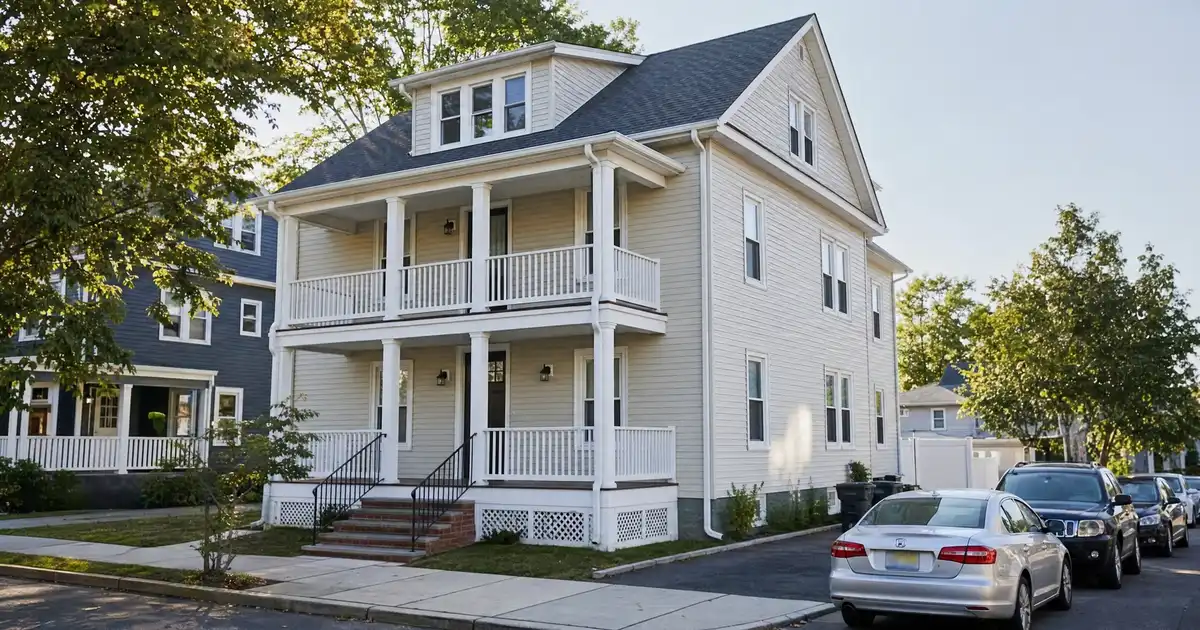
Investment Property Cash-Out Refinance in New Jersey
Read this guide to see how an investment property cash-out refinance in New Jersey comes together: the appraised value and the equity behind it, the ceiling on the new loan, a payment qualified on the property’s rent, and the cash that reaches closing once the payoff and costs are cleared.
Current New Jersey DSCR cash-out guidelines, updated from one source.
Every figure below comes from Lendmire’s centralized DSCR standards source and refreshes when program guidance changes. Final eligibility is decided on the borrower, the property, and the wholesale lender selected.
Maximum purchase LTV
Maximum leverage is subject to credit, DSCR, loan size, property type, reserves, experience, and current wholesale-lender overlays.
Maximum refinance LTV
Rate-and-term refinances use the current value, existing payoff, qualifying rent, credit profile, seasoning, and selected program.
Maximum cash-out LTV
Cash-out proceeds depend on the proposed new loan, payoff, value, DSCR, ownership seasoning, costs, and complete underwriting.
Minimum FICO
The published floor does not guarantee maximum leverage. Lower scores generally receive reduced LTV and less exception flexibility.
Rent is 25% higher than estimated monthly PITIA.
Rent equals estimated monthly PITIA.
May be available with stronger credit and lower LTV.
Current standard-program snapshot · updated October 19, 2026. Purchase and rate-and-term LTV above 80% is by exception and subject to the full scenario.
DSCR financing available in 41 markets, including Washington, D.C. In New Jersey, eligible rentals are reviewed on the appraised value, the accepted rent, the payoff, and the time in title, with the cash-out ceiling shown in the snapshot above.
What a New Jersey rental cash-out refinance is — and how the approval works.
When a New Jersey investor refinances a rental for cash out, a larger new loan replaces the existing one and the difference is paid at closing. The DSCR structure qualifies that new payment on the property’s rent, not on tax returns or a personal debt-to-income ratio.
Equity and the cash-out ceiling
A cash-out loan is sized from the current appraised value at the cash-out leverage shown above, and the payoff on the existing loan is cleared from it first. The equity you can take is the gap between that ceiling and the payoff.
The new payment qualifies on rent
Coverage decides the loan size as much as leverage does: accepted rent divided by the new principal, interest, taxes, insurance, and dues has to reach the program’s tier. A bigger cash-out loan raises that payment, so the rent has to stretch further.
Seasoning decides which value counts
Time in title drives which value counts. Seasoned ownership means the appraisal governs; a recent acquisition may be limited to the purchase price or routed through delayed financing. Payoff, liens, and title are reviewed with it.
Proceeds after payoff, costs, and reserves
What reaches you is the new loan less the existing payoff, closing costs, prepaid items, and any reserves the program requires. Some programs allow the reserves to be met from the proceeds, and the final number is set on the closing statement.
Gross proceeds equal the new loan less the existing payoff, and net proceeds then deduct closing costs, prepaid items, and any reserve requirement. The program cards above show the current ceilings and tiers; the calculator below models your own rental. Final figures come from the appraisal, the payoff statement, and the accepted rent.
One state, many kinds of rental equity.
From established metros to resort and university towns, New Jersey rentals hold equity that was built by appreciation, by rent growth, or by a discounted purchase. A cash-out refinance turns that equity into proceeds by comparing the current value, the qualifying rent, and the existing payoff.
Statewide figures provide market context, not an appraisal. The lender still values the subject property, verifies its rent, and reviews the payoff, title, and program eligibility.
Data source: U.S. Census Bureau QuickFacts — New Jersey, including the 2025 population estimate and population change from the April 1, 2020 estimates base, 2020–2024 median value of owner-occupied housing units, and 2020–2024 median gross rent.
Distinct New Jersey markets, distinct equity positions.
An investment property cash-out refinance in New Jersey can look very different by market: an equity-rich single-family rental in a long-established metro, a small multifamily building where rents have grown, a vacation rental with seasonal income, or a newer property with less time in title. The cards below frame the state’s major investor markets.
Newark
As a principal metro, Newark gives an appraiser plenty of comparable sales and a lender plenty of rent evidence, which keeps the value and the coverage ratio well supported. Cash-out files here are frequently one step in building a portfolio. Population is roughly 310K by Census estimate, median owner-occupied value about $373.7K, median gross rent close to $1,392, and about 76% of Newark households are renters.
Jersey City
Cash-out refinances in Jersey City benefit from metro depth: comparable sales that support the appraised value, rental demand that supports the accepted rent, and lenders comfortable with small multifamily and portfolio structures. Population is roughly 294K by Census estimate, median owner-occupied value about $566.9K, median gross rent close to $2,007, and about 72% of Jersey City households are renters.
Paterson
With a high renter share, Paterson produces cash-out files built on small multifamily rent rolls. The coverage ratio uses the accepted rent across the units, and the appraisal reflects both comparable sales and the income the building earns. By Census estimate, Paterson has roughly 159K residents, a median owner-occupied value of about $360.1K, median gross rent around $1,548, and renter households near 73%.
Lakewood
In Lakewood, small multifamily rentals commonly hold equity built through rent growth and stabilization. A cash-out refinance turns that equity into proceeds, qualified on the units’ accepted rent against the new payment. The Census puts Lakewood at about 139K people; owner-occupied homes carry a median value near $466.7K, gross rent runs around $1,774, and roughly 49% of households rent.
Elizabeth
Elizabeth cash-out files tend to be single-family rentals, underwritten on the current appraised value, the accepted rent, and the existing payoff. The equity between the cash-out ceiling and the payoff is what can be drawn. By Census estimate, Elizabeth has roughly 137K residents, a median owner-occupied value of about $449.3K, median gross rent around $1,523, and renter households near 74%.
Edison
In Edison, a cash-out refinance most often involves a single-family rental: the appraiser sets the value, the lender accepts a rent figure, the payoff comes out of the new loan, and the remainder is the proceeds. The Census puts Edison at about 108K people; owner-occupied homes carry a median value near $496.9K, gross rent runs around $1,974, and roughly 39% of households rent.
The markets above are the largest in New Jersey, not the only ones Lendmire can review. Eligible cash-out and refinance scenarios in other communities remain subject to the property, the program, and the current lending footprint.
Four ways New Jersey investors can refinance a rental.
Eligible New Jersey investment properties can follow more than one refinance path. The structure that fits depends on the equity position, the rent, the seasoning, the existing payoff, and the use of proceeds.
Cash-out refinance
Take a larger DSCR loan against the current value, pay off the existing loan, and receive the difference at closing within the cash-out ceiling. Rent carries the new payment; seasoning, payoff, and reserves decide the net.
Rate-and-term refinance
Swap the existing loan for a new one without cash out, typically to leave short-term financing or reset the term. The rate-and-term ceiling governs, and rent qualifies the new payment.
Delayed financing
After a recent cash purchase, delayed financing lets you refinance and recover part of the cash shortly after closing; the purchase price and the documented funds govern instead of a seasoned appraisal.
Cash-out to fund the next rental
The proceeds become the next property’s down payment, and that purchase qualifies on its rent just as the refinance did. Running both files together lets the cash-out close ahead of the purchase.
Model a New Jersey cash-out before requesting a quote.
Preloaded with editable New Jersey sample assumptions for value, payoff, new loan, and rent, the calculator opens on a cash-out refinance. Tax and insurance assumptions can refresh from Lendmire’s centralized state data, and the interest-rate field uses a weekly Freddie Mac market benchmark that is not a DSCR loan quote. Every field can be changed.
New Jersey cash-out refinance calculator
Enter the current value, the payoff, the proposed new loan, and the lender-accepted monthly rent. The result is the coverage ratio on the new payment and the gross proceeds before closing costs.
Loading the current weekly Freddie Mac market benchmark…
Illustrative New Jersey starting assumptions: $450,000 current value, $248,000 payoff, $338,000 new loan at the current cash-out ceiling, $3,188 monthly rent, 2.23% annual property tax, and 0.35% annual insurance, all editable.
This is an illustrative estimate. The Freddie Mac benchmark is an editable conventional market reference — not a DSCR loan quote, APR, Loan Estimate, approval, or commitment to lend. Value, qualifying rent, rate, taxes, insurance, association treatment, LTV, cash proceeds, seasoning treatment, and eligibility are set by lender guidelines and full underwriting.
What lenders still review after the coverage math.
The ratio and the ceiling frame the file; the rest of a New Jersey cash-out review is the appraisal, the rent evidence, the payoff and title, the entity, reserves, and seasoning.
Same rental, different qualification.
Underwritten on the rental’s income rather than the borrower’s: no tax-return-driven debt-to-income, entity vesting available, cash-out ceiling and coverage tier from the DSCR program.
Conventional cash-out financing looks at the borrower’s verified income and debt-to-income first, counts the property as an obligation, usually requires individual vesting, and limits how many properties can be financed.
It is common for a New Jersey investor to hold both — a DSCR cash-out on a rental and a conventional loan on a primary residence. Vesting, the count of financed properties, and whether rent or tax returns make the stronger case decide which fits a property.
What to prepare for a New Jersey cash-out review.
Exact documentation varies, but these four categories give an investor a practical starting point before requesting a property-specific quote.
A general guide, not a universal checklist — the selected lender may require additional documentation depending on the property, the borrower, the entity, seasoning, and underwriting findings.
Statewide details that can change the proceeds.
Statewide, the value the appraiser supports, the rent the lender accepts, the cost of insurance, and title details can change what a New Jersey cash-out delivers. The items below are the ones to settle before relying on a number.
Use these checks to keep the New Jersey cash-out clean and fundable.
The exact treatment varies by wholesale lender, so the goal here is not to promise a universal outcome. It is to spotlight the main issues an investor should resolve before closing.
Appraised value and comparable support
Everything is measured against the appraisal, and the appraisal rests on recent comparable sales rather than an online estimate. On New Jersey cash-outs, a value below the owner’s expectation is the usual reason the proceeds come in short.
Seasoning and the payoff
Time in title picks the value the lender uses; too little and the purchase price governs. A recent deed into an entity can reset seasoning with some lenders, and the payoff statement and secondary liens are part of the same review.
Rent evidence for the new payment
The new payment qualifies on accepted rent — from the lease in place, the appraisal’s rent schedule, or a market-rent analysis the program accepts. A larger cash-out raises the payment, so the rent evidence has to be strong enough to carry it at the coverage tier.
Coastal insurance, flood, and wind
Flood and wind premiums on coastal New Jersey property raise the payment measured against rent, so coverage tightens and the loan can shrink. Resolve premiums, deductibles, and availability before counting on a cash-out number.
Winter timing and the appraisal
In New Jersey, winter can delay the appraisal through access, exterior condition, and thinner comparable sales, while payoff statements expire on their own schedule. Plan the timeline so the file moves from appraisal to closing without a gap.
From a New Jersey rental to funded proceeds.
Open with the property and the payoff, compare structures, document the value and the rent, and carry the file through underwriting to closing and funding.
Run the scenario
Provide the New Jersey property details, current value estimate, payoff, rent, entity, credit range, and what the proceeds are for.
Compare programs
Lendmire compares wholesale DSCR programs on cash-out leverage, coverage tier, how seasoning is treated, reserves, and entity fit.
Document the property
Complete the lender’s list: appraisal, rent analysis, payoff statement, insurance, title, entity, and asset documentation.
Close and redeploy
Finalize the loan, clear the existing payoff at closing, and direct the proceeds to the next move.
A brokerage built around investor refinances.
From a single long-held rental to a statewide portfolio, New Jersey cash-out files vary in leverage, seasoning, entity, and reserves — which is why they do not all belong with one lender.
Wholesale comparison
Multiple non-QM wholesale lenders are compared, so no New Jersey cash-out is forced into one lender’s leverage and seasoning box.
Refinance specialization
Cash-out leverage, coverage, seasoning, entity vesting, reserves, property type, and the use of proceeds are the focus of the review.
The next purchase, planned with it
The next acquisition can be financed through Lendmire on a DSCR loan, so the cash-out and the purchase are structured together before either closes.
Trusted by buyers & investors alike.


New Jersey cash-out refinance FAQs
New Jersey investors tend to ask the same questions about equity, leverage, coverage, seasoning, entity vesting, and proceeds; the answers below address them. Final program terms remain scenario-specific.
How much can I take out on an investment property cash-out refinance in New Jersey?
Up to the cash-out ceiling in the current snapshot, measured against the appraised value, less the existing payoff, closing costs, and any required reserves. The rent also has to cover the new payment at the program’s coverage tier, so on some New Jersey properties coverage — not leverage — sets the number.
Can I close a New Jersey cash-out refinance in an LLC?
Yes, under many DSCR programs — entity vesting is common on a cash-out. Expect formation documents, ownership details, and personal guarantees, and note that a recent transfer into the entity can affect seasoning with some lenders.
Can I do a cash-out refinance on a New Jersey rental without tax returns?
Yes — on a DSCR cash-out, the New Jersey property’s rent qualifies the new payment. Tax returns and personal debt-to-income are not the basis of the approval, though credit, reserves, and the appraisal are still reviewed.
How long do I need to own a New Jersey property before a cash-out refinance?
It depends on the program’s seasoning rule. Seasoned ownership lets the appraisal govern; a recent purchase may be capped at the purchase price or handled under delayed financing. The lender confirms the treatment for the property in question.
Does coastal insurance affect a New Jersey cash-out refinance?
It can. Wind and flood coverage on a coastal New Jersey property raise the monthly expense that the rent has to cover, which lowers the coverage ratio and can limit the new loan. Lenders expect the insurance picture settled before the file is finalized.
Can the reserves come out of the proceeds?
Some programs allow the cash-out proceeds to satisfy required reserves; others want reserves documented on their own. The snapshot reflects the current treatment, and the lender confirms it for the file.
What documents does a cash-out refinance typically need?
Identification and credit authorization, the lease or rent evidence, the payoff statement, entity documents if an LLC holds title, insurance, title information, and evidence of any required reserves. The appraisal and rent schedule are ordered during the process.
Can I refinance a property I bought for cash recently?
Delayed financing covers that: a refinance soon after the cash purchase, returning part of the funds, with the purchase price and the documented source of funds setting the ceiling.
What is the difference between a rate-and-term and a cash-out refinance?
A rate-and-term refinance replaces the existing loan without paying cash to you — typically to leave short-term financing or reset the term — under the rate-and-term ceiling. A cash-out replaces it with a larger loan and pays you the difference, under the lower cash-out ceiling.
How is the rent verified on a cash-out refinance?
Through the lease in place, the appraisal’s rent schedule or market-rent analysis, or another method the program accepts. Where the lease and the market rent differ, the lender decides which figure qualifies the new payment.
Bring the New Jersey rental. We will map the equity.
Send the property, the payoff, and the rent to begin. Requesting an initial review involves no credit pull and no commitment.
This guide is part of Lendmire’s investment property cash-out refinance program — full qualification details, guidelines, and scenarios live there.
Top markets in New Jersey: Newark · Jersey City · Paterson · Lakewood · Elizabeth · Edison
All New Jersey city guides (53): Asbury Park · Atlantic City · Avalon · Bayonne · Beach Haven · Bloomfield · Brick · Brigantine · Camden · Cape May · Cherry Hill · Clifton · East Orange · Edison · Elizabeth · Franklin Township · Gloucester Township · Hamilton · Hammonton · Hoboken · Howell · Irvington · Jackson · Jersey City · Lakewood · Long Branch · Middletown · New Brunswick · Newark · North Bergen · North Wildwood · Ocean City · Old Bridge · Parsippany-Troy Hills · Passaic · Paterson · Perth Amboy · Piscataway · Plainfield · Point Pleasant Beach · Princeton · Seaside Heights · Stone Harbor · Toms River · Trenton · Union City · Union Township · Ventnor City · Vineland · Wayne · West New York · Wildwood · Woodbridge
Also in this state: DSCR Loans in New Jersey · Super Jumbo DSCR Loans in New Jersey · Short-Term Rental Loans in New Jersey · Hard Money Loans in New Jersey