
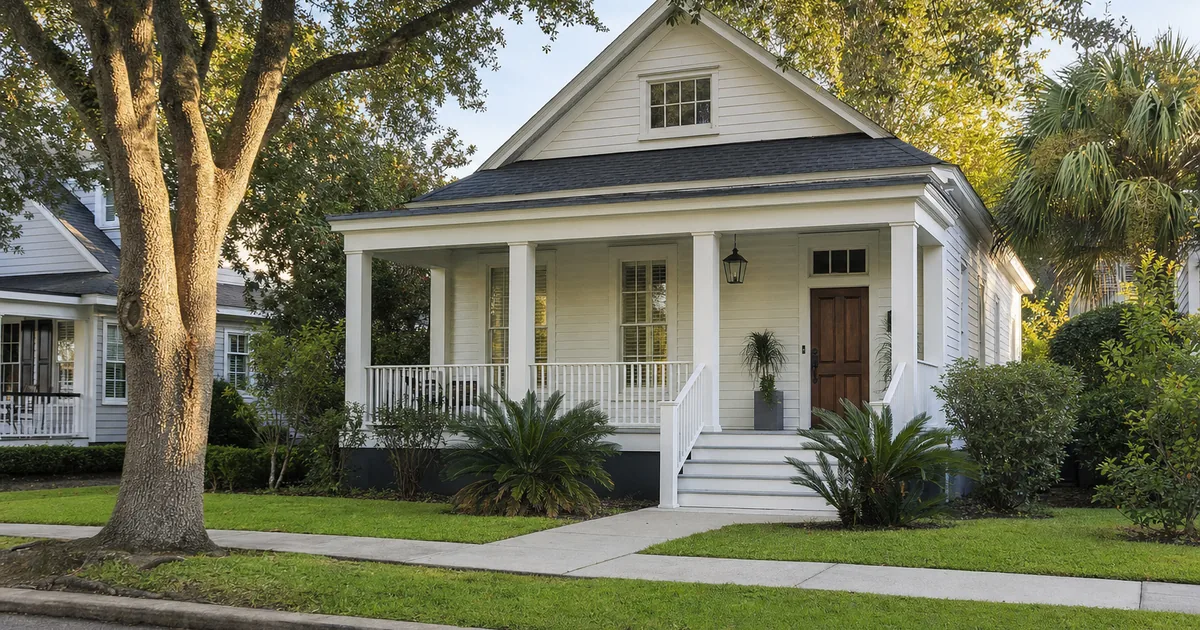
Investment Property Cash-Out Refinance in South Carolina
This guide walks through an investment property cash-out refinance in South Carolina the way a lender reads the file: current value and the equity it supports, the cash-out ceiling on the new loan, rent-based qualification instead of tax returns, and the proceeds that remain after the payoff and costs.
Current South Carolina DSCR cash-out guidelines, updated from one source.
Every figure below comes from Lendmire’s centralized DSCR standards source and refreshes when program guidance changes. Final eligibility is decided on the borrower, the property, and the wholesale lender selected.
Maximum purchase LTV
Maximum leverage is subject to credit, DSCR, loan size, property type, reserves, experience, and current wholesale-lender overlays.
Maximum refinance LTV
Rate-and-term refinances use the current value, existing payoff, qualifying rent, credit profile, seasoning, and selected program.
Maximum cash-out LTV
Cash-out proceeds depend on the proposed new loan, payoff, value, DSCR, ownership seasoning, costs, and complete underwriting.
Minimum FICO
The published floor does not guarantee maximum leverage. Lower scores generally receive reduced LTV and less exception flexibility.
Rent is 25% higher than estimated monthly PITIA.
Rent equals estimated monthly PITIA.
May be available with stronger credit and lower LTV.
Current standard-program snapshot · updated October 19, 2026. Purchase and rate-and-term LTV above 80% is by exception and subject to the full scenario.
DSCR financing available in 41 markets, including Washington, D.C. Eligible South Carolina rentals are reviewed on the appraised value, the accepted rent, the payoff, and the time in title; the cash-out ceiling in the snapshot above is the current position.
What a South Carolina rental cash-out refinance is — and how the approval works.
A cash-out refinance swaps the existing loan on a rental you own for a larger new loan and pays you the difference at closing. With a DSCR loan the new payment qualifies on the property’s rent, which is why a South Carolina investor’s tax returns and personal debt-to-income ratio do not lead the file.
Equity and the cash-out ceiling
Everything starts with today’s appraised value: the new loan is capped at the snapshot’s cash-out leverage against it, the existing payoff is retired from the proceeds first, and the drawable equity is what remains between the ceiling and the payoff.
The new payment qualifies on rent
The qualifying test is the accepted monthly rent against the new monthly payment, including taxes, insurance, and dues. The more cash drawn, the larger the new payment, and the rent has to cover it at the coverage tier the program requires.
Seasoning decides which value counts
Seasoning is the time-in-title question. A property owned long enough is valued at today’s appraisal; one bought recently may be capped at the purchase price or handled under delayed-financing rules. Payoff, liens, and clean title round out the review.
Proceeds after payoff, costs, and reserves
The cash that arrives is the new loan after the payoff, closing costs, prepaids, and any required reserves. Some programs allow those reserves to be satisfied from the proceeds, and the exact figure is settled on the closing statement.
Subtract the payoff from the new loan for gross proceeds, then closing costs, prepaids, and any required reserves for net proceeds. The cards above carry today’s cash-out leverage and coverage tiers, and the calculator below models a property you already own. The appraisal, the payoff statement, and the accepted rent decide the final figures.
One state, many kinds of rental equity.
From established metros to resort and university towns, South Carolina rentals hold equity that was built by appreciation, by rent growth, or by a discounted purchase. A cash-out refinance turns that equity into proceeds by comparing the current value, the qualifying rent, and the existing payoff.
Statewide figures provide market context, not an appraisal. The lender still values the subject property, verifies its rent, and reviews the payoff, title, and program eligibility.
Data source: U.S. Census Bureau QuickFacts — South Carolina, including the 2025 population estimate and population change from the April 1, 2020 estimates base, 2020–2024 median value of owner-occupied housing units, and 2020–2024 median gross rent.
Distinct South Carolina markets, distinct equity positions.
Depending on the market, an investment property cash-out refinance in South Carolina is decided by different things: the equity built in older single-family rentals, the rent growth in small multifamily, the seasonal income of vacation markets, or the seasoning clock on newer stock. The cards below frame the state’s major investor markets.
Charleston
Charleston carries a meaningful share of seasonal and vacation housing, which changes the rent evidence on a cash-out: operating history or an accepted short-term-rental projection rather than a lease. Association rules and insurance come into the file before the ceiling is set. Census estimates put the Charleston population near 154K, with a median owner-occupied value around $509.7K, median gross rent near $1,722, and renters in about 44% of households.
Columbia
In Columbia, small multifamily rentals commonly hold equity built through rent growth and stabilization. A cash-out refinance turns that equity into proceeds, qualified on the units’ accepted rent against the new payment. Population is roughly 140K by Census estimate, median owner-occupied value about $264.3K, median gross rent close to $1,204, and about 54% of Columbia households are renters.
North Charleston
North Charleston is a renter-heavy market, and small multifamily owners here often refinance to pull the equity that rent growth and a value-add turnaround created. The lender reviews each unit’s rent evidence and the building’s expenses in the new payment. Census estimates put the North Charleston population near 120K, with a median owner-occupied value around $302.2K, median gross rent near $1,430, and renters in about 50% of households.
Mount Pleasant
A Mount Pleasant rental often carries more equity than most, but a larger new loan means a larger payment, and the rent has to cover it. Appraisal support and program loan-size limits shape how much of the equity can actually be drawn. The Census puts Mount Pleasant at about 94K people; owner-occupied homes carry a median value near $748.5K, gross rent runs around $2,159, and roughly 26% of households rent.
Rock Hill
Growth in Rock Hill tends to leave long-held rentals with more equity than their owners expected. Investors here pull it through a DSCR cash-out and redeploy it, often into another property in the same metro. Census estimates put the Rock Hill population near 75K, with a median owner-occupied value around $295.1K, median gross rent near $1,341, and renters in about 46% of households.
Greenville
In Greenville, the appraisal usually confirms appreciation and the rent roll confirms demand, so cash-out files center on the payoff, the seasoning, and how much of the equity the program’s ceiling allows to be drawn. By Census estimate, Greenville has roughly 73K residents, a median owner-occupied value of about $487.5K, median gross rent around $1,312, and renter households near 59%.
Lendmire can also review eligible cash-out and refinance scenarios in other South Carolina communities beyond the markets shown here. Availability remains subject to the property, the program, and the current lending footprint.
Four ways South Carolina investors can refinance a rental.
Review the refinance paths available for eligible South Carolina investment properties. The right structure depends on the equity, the rent, the time in title, the payoff, and what the proceeds are for.
Cash-out refinance
The existing loan is replaced by a larger DSCR loan and the difference comes to you at closing, up to the cash-out ceiling shown above. The rent qualifies the payment; seasoning, payoff, and reserves shape what you net.
Rate-and-term refinance
Replace the loan and take nothing out: the path off a bridge or hard money note or into a different term, capped at the rate-and-term ceiling and qualified on the property’s rent.
Delayed financing
Bought for cash recently? Delayed financing can return part of that cash on a refinance soon after closing, with the purchase price and the documented source of funds governing rather than a seasoned appraised value.
Cash-out to fund the next rental
Turn the proceeds into the down payment on the next rental, which qualifies on its own rent; the two files are often run together, cash-out first, purchase second.
Model a South Carolina cash-out before requesting a quote.
Set to a cash-out refinance by default, the calculator carries editable South Carolina sample assumptions for value, payoff, new loan, and rent. Tax and insurance assumptions can refresh from Lendmire’s centralized state data, and the interest-rate field uses a weekly Freddie Mac market benchmark — a reference, not a DSCR loan quote. All fields are editable.
South Carolina cash-out refinance calculator
Type in the current value, the payoff, the proposed new loan, and the lender-accepted rent. You get the coverage ratio on the new payment and the gross proceeds before closing costs.
Loading the current weekly Freddie Mac market benchmark…
Illustrative South Carolina starting assumptions: $255,000 current value, $140,000 payoff, $191,000 new loan at the current cash-out ceiling, $1,472 monthly rent, 0.57% annual property tax, and 0.45% annual insurance, all editable.
Estimate for illustration only. The Freddie Mac figure is an editable conventional market reference and is not a DSCR loan quote, APR, Loan Estimate, approval, or commitment to lend; the value, qualifying rent, rate, taxes, insurance, association treatment, LTV, proceeds, seasoning treatment, and eligibility that apply come from lender guidelines and full underwriting.
What lenders still review after the coverage math.
The ratio and the ceiling frame the file; the rest of a South Carolina cash-out review is the appraisal, the rent evidence, the payoff and title, the entity, reserves, and seasoning.
Same rental, different qualification.
Qualifies the new payment on the property’s rent. Personal income, employment, and debt-to-income are not the starting point, entity vesting is common, and the cash-out ceiling and coverage tier come from the DSCR program.
On the conventional side, tax returns, verified income, and debt-to-income decide it, the rental counts against the borrower, entity vesting is typically out, and financed-property counts are limited.
It is common for a South Carolina investor to hold both — a DSCR cash-out on a rental and a conventional loan on a primary residence. Vesting, the count of financed properties, and whether rent or tax returns make the stronger case decide which fits a property.
What to prepare for a South Carolina cash-out review.
The precise checklist is the lender’s, but these four categories cover what an investor should gather before requesting a property-specific quote.
This guide is general, not exhaustive; the lender chosen may request more based on the property, the borrower, the entity, seasoning, and underwriting findings.
Statewide details that can change the proceeds.
Values, rents, insurance, and title details across South Carolina can materially change the proceeds or a property’s eligibility. Review the practical issues below before relying on a target cash-out figure.
Use these checks to keep the South Carolina cash-out clean and fundable.
No universal outcome is promised, because wholesale lenders differ; the point is to spotlight the main issues an investor should clear before closing.
Appraised value and comparable support
Everything is measured against the appraisal, and the appraisal rests on recent comparable sales rather than an online estimate. On South Carolina cash-outs, a value below the owner’s expectation is the usual reason the proceeds come in short.
Seasoning and the payoff
Seasoning decides which value governs — the appraisal after enough time in title, the purchase price before — and some programs treat a recent transfer into an LLC as restarting the clock. The payoff and any junior liens are reviewed alongside.
Rent evidence for the new payment
The new payment qualifies on accepted rent — from the lease in place, the appraisal’s rent schedule, or a market-rent analysis the program accepts. A larger cash-out raises the payment, so the rent evidence has to be strong enough to carry it at the coverage tier.
Coastal insurance, flood, and wind
On coastal South Carolina property, wind and flood coverage add to the monthly expense that the rent has to cover. Premiums, deductibles, and availability move the coverage ratio and can limit the new loan — settle the insurance picture before relying on a proceeds figure.
Entity vesting and title
Entity vesting is generally available, with formation documents, ownership details, and guarantees required. Title must be clear and junior liens handled, and a recent deed into the entity can bear on seasoning.
From a South Carolina rental to funded proceeds.
Property and payoff first, then the structure, then the documentation of value and rent, then underwriting through closing and funding.
Run the scenario
Send the South Carolina property details — value estimate, payoff, rent, entity, credit range, and the purpose of the proceeds.
Compare programs
Wholesale DSCR options are weighed on leverage, coverage tier, seasoning treatment, reserves, and how they handle the entity.
Document the property
Complete the appraisal, rent analysis, payoff statement, insurance, title, entity, and asset documentation required by the lender.
Close and redeploy
Lock the structure, retire the payoff, close, and deploy the proceeds on the next move.
A brokerage built around investor refinances.
Because South Carolina rentals span first holds, small multifamily, seasonal properties, and portfolios, the right cash-out lender is a matter of fit rather than a single default.
Wholesale comparison
Instead of one institution’s leverage and seasoning box, a South Carolina cash-out is placed after comparing multiple non-QM wholesale lenders.
Refinance specialization
The review centers on cash-out leverage, coverage, seasoning, entity vesting, reserves, property type, and the proceeds’ purpose.
The next purchase, planned with it
Since DSCR purchase financing is arranged here too, the proceeds and the next purchase can be planned as one move before either file closes.
Trusted by buyers & investors alike.


South Carolina cash-out refinance FAQs
These are the equity, leverage, coverage, seasoning, entity, and proceeds questions that come up most often from South Carolina investors. Final program terms remain scenario-specific.
How much can I take out on an investment property cash-out refinance in South Carolina?
The new loan is capped at the cash-out leverage shown above against today’s appraised value, and the payoff, costs, and any reserves are deducted. Because the rent has to cover the new payment at the coverage tier, some South Carolina files are limited by the ratio rather than the ceiling.
Can I close a South Carolina cash-out refinance in an LLC?
Entity vesting is generally available on a DSCR cash-out. Formation documents, ownership information, and personal guarantees are standard, and some programs treat a recent title transfer into the LLC as a seasoning event.
Can I do a cash-out refinance on a South Carolina rental without tax returns?
Yes. The DSCR structure qualifies a South Carolina cash-out on the rental’s accepted rent, not on personal income, so tax returns and debt-to-income do not lead the file; credit, reserves, and the appraisal still do.
How long do I need to own a South Carolina property before a cash-out refinance?
Ownership seasoning varies by program. With enough time in title the appraised value sets the ceiling; refinance sooner and the purchase price or delayed-financing rules may govern instead. The selected lender confirms the seasoning treatment for the specific property.
Does coastal insurance affect a South Carolina cash-out refinance?
Coastal insurance in South Carolina — wind, flood — increases the monthly expense measured against rent, which can reduce the coverage ratio and the loan size. Lenders want it resolved before finalizing the file.
Can I refinance a property I bought for cash recently?
Usually yes, under delayed-financing rules: a refinance shortly after a cash purchase that recovers part of the cash, with the purchase price and the documented funds governing the loan.
What is the difference between a rate-and-term and a cash-out refinance?
Rate-and-term replaces the loan and returns no cash, usually to exit a bridge note or change the term, at the rate-and-term ceiling. Cash-out replaces it with a larger loan and pays the difference to you, at the cash-out ceiling.
Is a DSCR cash-out refinance a consumer loan?
No. It is business-purpose financing on a non-owner-occupied investment property. The property cannot be the borrower’s residence, and consumer-mortgage rules do not apply in the same way.
How is the rent verified on a cash-out refinance?
Rent is supported by the existing lease, the appraisal’s rent schedule, or a market-rent analysis the program accepts; the lender settles which figure qualifies the payment when they differ.
Does a cash-out refinance affect how the next purchase qualifies?
Because DSCR loans qualify property by property on rent, the cash-out is not weighed as personal debt on the next purchase; reserves and financed-property rules can still matter, and the proceeds can become the next down payment.
Bring the South Carolina rental. We will map the equity.
Start with the property, the payoff, and the rent. No credit pull or commitment is required to request an initial review.
This guide is part of Lendmire’s investment property cash-out refinance program — full qualification details, guidelines, and scenarios live there.
Top markets in South Carolina: Charleston · Columbia · North Charleston · Mount Pleasant · Rock Hill · Greenville
All South Carolina city guides (23): Anderson · Beaufort · Bluffton · Charleston · Columbia · Conway · Florence · Folly Beach · Goose Creek · Greenville · Greer · Hilton Head Island · Isle of Palms · Mauldin · Mount Pleasant · Myrtle Beach · North Charleston · North Myrtle Beach · Port Royal · Rock Hill · Spartanburg · Summerville · Sumter
Also in this state: DSCR Loans in South Carolina · Super Jumbo DSCR Loans in South Carolina · Short-Term Rental Loans in South Carolina · Hard Money Loans in South Carolina