
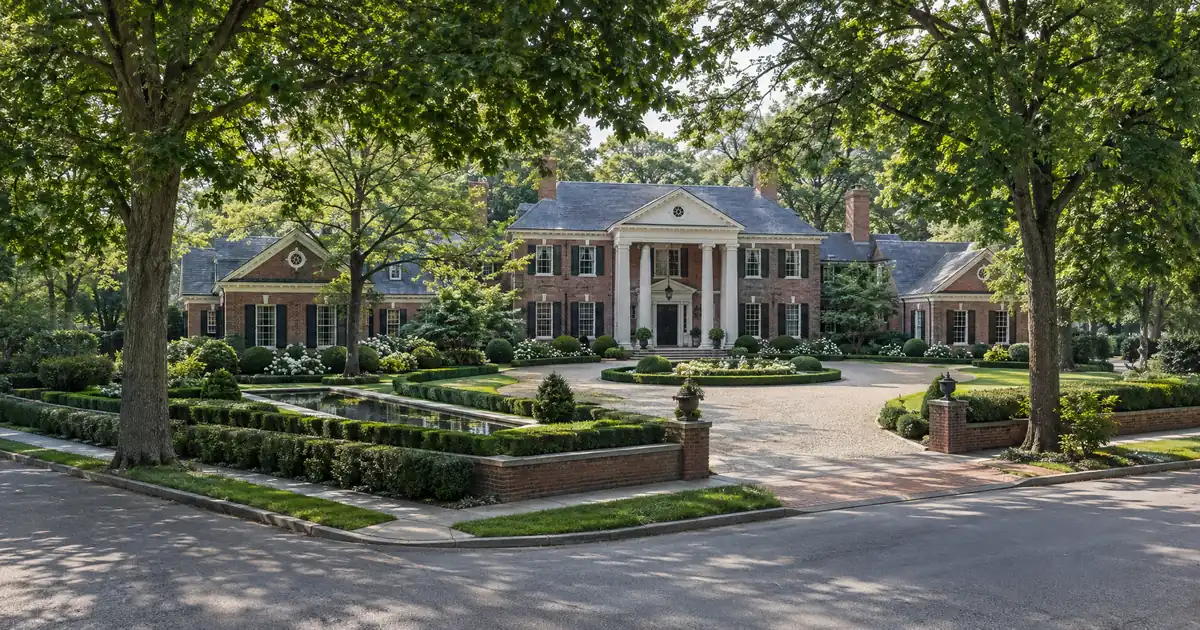
The Quick Read: There is no federal acre cap that a jumbo loan inherits. The limit comes from the lender or investor that holds the loan, and it gets applied through the appraisal. A strong traditional employment income clears the borrower test only. The land has to pass its own test, and income cannot cover for a property that fails it.
That split is the whole article. A salaried buyer with a high income, solid credit and cash for a down payment still gets a file pended or reshaped when the property is the problem. Below is how the land test works, what a W-2 buyer documents, where the general rule breaks, and what to ask before making an offer.
Jumbo payment estimate
The starting figures are an example price in the jumbo range with ten percent down on a thirty-year fixed. Replace them with yours.
Editable benchmark: 7.40% as of October 15, 2026 · Freddie Mac 30-year average via FRED®. A conventional market reference, not a jumbo loan quote.
Illustrative starting assumptions: a $1,000,000 price in the jumbo range, ten percent down on the top-leverage lane, a thirty-year fixed structure at the current Freddie Mac conforming benchmark, and property taxes and insurance estimated at typical national rates. Every field is editable.
Illustrative estimate only — not a Loan Estimate, approval, quote, or commitment to lend. The rate field carries the weekly Freddie Mac thirty-year conforming benchmark, a market reference and not a jumbo loan quote; jumbo rates are set by the lender and the lane at lock and differ from the conforming benchmark. An adjustable-rate scenario is shown at the benchmark for the whole term; the rate after the initial period is unknown. Reserve months and appraisal counts follow the lane sheet for the amount band; the automated finding may require more. Taxes, insurance and dues are editable estimates; closing costs are not included. On most lanes the conforming limit for the county decides whether a loan is jumbo at all; two lanes start at a stated dollar floor instead. Licensed in sixteen states for consumer mortgages.
Key Terms Defined
Jumbo loan: A mortgage above the county’s conforming limit. The limit is set yearly and varies by county, so check your own county’s figure on the Federal Housing Finance Agency’s conforming loan limit page. Orrick’s summary of the FHFA announcement explains the baseline and the high-cost ceiling.
Acreage: The size of the parcel. It is one input into the land test, not the test itself.
Highest and best use: The appraiser’s conclusion about the most reasonable use of the site as improved. For an owner-occupied home, it has to be residential.
Excess land: Acres beyond what a typical home site in the area would carry. The appraisal often credits it with little value.
Contributory value: The share of the sale price that a feature, such as an outbuilding or extra land, adds to the appraised value.
Overlay: A lender’s own rule layered on top of agency guidance, such as a lower acreage trigger or extra valuation review.
Is There an Official Acreage Maximum on a Jumbo Loan?
No. A jumbo loan is simply one above the conforming limit. Because jumbo loans are not agency loans, no agency acreage rule binds them.
The agencies still make a useful benchmark. What matters is use. Freddie Mac’s guide FAQ says it has no site size or acreage limit. If the primary use is residential, agricultural-type outbuildings do not make the property ineligible. A property used primarily for farming or ranching is ineligible.
Fannie Mae frames it the same way. Its site section guidance asks that the site’s size, shape and topography be generally acceptable in the market area, and that the loan reflect the highest and best use of the site as improved.
Across the wholesale programs Lendmire places files with, most jumbo lenders borrow that “residential in character” test and then add their own limits on acreage, rural location or outbuildings. Those limits live in each lender’s guideline sheet. They are not published in one national table, and they differ from lender to lender. A property that one lender declines can fit another’s box.
The Three Gates a W-2 Buyer Has to Clear
Every jumbo purchase runs through three separate checks. Mixing them up is a common mistake on acreage files.
| Gate | What it tests | Where acreage shows up |
|---|---|---|
| Borrower | Income, credit, reserves, ratios | Not at all |
| Property | Residential character, site, use | Directly |
| Loan size | Appraised value and leverage | Through the appraisal |
The borrower gate is where a W-2 buyer is strongest. The property gate is where acreage lives. The loan-size gate connects them: the appraised value sets the maximum loan, so land that adds little value shrinks the loan or raises the cash needed at closing.
Each gate passes or fails on its own. High income does not buy back a failed property test.
What a High-Earning W-2 Buyer Documents
W-2 files are the cleanest on the borrower side. For fixed base income, Fannie Mae’s base income guidance points to a verification of employment, or the most recent paystub and W-2, plus a verbal verification. That is the agency baseline. Jumbo lenders typically ask for more, and the exact documents depend on the lane and the loan amount.
Expect to assemble:
- Recent paystubs and W-2s, with the full history the lender asks for.
- Documentation of any bonus, commission or stock compensation, since variable pay is usually averaged over time rather than counted at its best month.
- Asset statements that show the down payment and reserves.
- Your credit profile, since the headline jumbo lane works with a 660 decision score, subject to lender guidelines.
On the numbers, the headline lane allows leverage up to 90%, though several lanes stop at 80%, and loans reach $5,000,000 on the largest lanes. The fixed lanes run a 50% ratio ceiling, with 45% on the adjustable lanes and 43% on the interest-only lanes. Reserves are counted in months of the full payment and rise as the loan amount rises. Land-related costs feed those ratios too, because a rural property can carry its own insurance, well and septic upkeep and tax profile. Terms depend on the lender’s guidelines, the property type, the leverage, and a full review of the credit profile.
Strong income helps with every one of those lines. It does nothing for the site.
How Appraisers and Lenders Treat Land
The appraisal answers the land question. The appraiser reports zoning and permitted use, site size against the market area, highest and best use, outbuildings and comparable sales. Fannie Mae’s site guidance also calls for noting easements, encroachments and adverse conditions.
Four things drive the result.
Home site versus excess land. The appraisal separates the value of the home and its typical site from the rest of the acreage. A seller’s price per acre is not the appraiser’s number. Extra land often contributes little, so the appraised value can land below the contract price.
Residential use versus farm use. Agricultural zoning is not an automatic no. What matters is that residential use is permitted, the property is residential in character and nothing is primarily farmed or ranched.
Outbuildings. Fannie Mae’s improvements guidance has a topic for properties with outbuildings. A small barn with minimal contributory value reads differently than a large barn, silo or several animal facilities, which can signal an agricultural property.
Thin comparable sales. Large parcels have few comps. The appraiser may reach far for sales and make large adjustments, and a conservative appraisal can cut value even when the acreage sits under a lender’s trigger.
Fannie Mae’s highest and best use guidance also treats a subdividable parcel or multiple parcels as distinct scenarios that can change the outcome. Lenders tend to follow that logic.
Where the Rule Breaks: Named Edge Cases
Acreage under the cap, value still cut. A parcel can pass the lender’s acre limit and still draw a low appraisal because the comps are weak. Different gate, same pain.
Two appraisals. Several jumbo lanes order a second appraisal above a threshold amount, and rural files with few sales often draw extra valuation review. Plan for the added cost and the added scrutiny.
Bundled land. If the price includes extra acres the appraisal does not credit, the gap lands on you. That means a larger down payment, a renegotiated price or a different property.
Occupancy. This article assumes a primary residence. Second homes and investment properties carry lane-specific leverage, so occupancy changes the math.
Other programs. The USDA’s appraisal Q&A also declines to set an acreage limit. The appraiser has to explain adjustments and whether the size is typical for the area. Typicality and use decide it across programs, not a bare number.
A Land-Heavy Purchase, Walked Through
Picture a salaried buyer with a high traditional employment income and a down payment of 20% on a home with a lot of acreage. The contract price includes acres well beyond what neighboring homes carry. The appraiser credits the home and a typical site, gives little to the rest, and the value comes in under the price by a meaningful margin. The exact numbers vary by lender and program and follow a full review of property, leverage, and credit.
Three things follow. The maximum loan is based on the lower value, not the contract price. The buyer needs cash to cover the gap, on top of the down payment and reserves. And if the appraised value drops the file below a leverage tier, the structure changes. Leverage is measured against the lower of price or appraised value, so the same loan amount becomes a larger percentage of the lower value. To stay at the planned leverage, the loan has to shrink and the cash into the deal has to grow. Final terms depend on the lender’s guidelines, the property type, and the borrower’s complete credit picture.
The buyer’s income never entered that calculation. It was fine from the start. The collateral moved the numbers.
Ranked by what they change and what they cost, the fixes look like this.
| Fix | What it changes | Trade-off |
|---|---|---|
| Renegotiate price | Aligns price with value | Seller may refuse |
| Larger down payment | Covers the gap | Ties up cash and reserves |
| Smaller loan | Fits the value | Same cash need |
| Different lender | New acreage policy | Different guidelines to clear |
| Split the parcel | Removes excess land | Needs seller and local approval |
A lender swap is often the best first move when the problem is policy rather than value. A price renegotiation is the best first move when the problem is value.
Pre-Offer Checklist for an Acreage Purchase
Get these answered before paying for an appraisal or removing contingencies.
1. Ask your loan officer for the investor’s acreage and rural policy in writing. The lender or broker confirms it before you spend on an appraisal.
2. Confirm zoning and permitted use with the listing agent and the county. Residential use has to be allowed.
3. List every outbuilding and its use. A workshop reads differently than a livestock barn.
4. Ask how the appraiser will separate home site from excess land. Use an appraiser with local, rural experience.
5. Keep an appraisal contingency and a financing contingency in the contract. They protect you if value or policy comes in short.
6. Build the cash gap into your plan. Hold reserves beyond the down payment.
7. Check your county’s conforming limit on the FHFA site. It decides whether your loan is jumbo at all.
Common Mistakes and Myths
“Fannie and Freddie cap acreage, and jumbo copies them.” Freddie Mac says it has no site-size limit. Caps come from individual lenders and investors.
“More acres means farm.” Use decides it. Large barns and animal facilities raise the question.
“High W-2 income overrides the property.” Income and collateral are separate tests.
“Every acre adds value.” Excess land is often valued at little. Expect the appraisal to sit below a price-per-acre estimate.
“Jumbo has one national rulebook.” It does not. Lender guidelines differ.
“The conforming limit is the same everywhere.” It is set county by county, with a baseline and a higher ceiling in high-cost areas.
Where a Mortgage Broker Fits
A broker with wholesale access can screen the property against several lenders’ policies before you commit to one appraisal. Lendmire arranges jumbo loan programs through wholesale lenders, so the acreage question gets asked of more than one set of guidelines. That matters because a decline on land is usually a fit problem with one lender, not a verdict on the file. Every figure above is subject to lender guidelines and full file review, and none of it is a commitment to lend.
Land costs can also change the cash picture at closing.
Tax treatment can depend on your situation; borrowers should speak with a qualified tax professional before relying on any deduction or credit.
If you are buying a home and want to see whether a jumbo loan fits your file, Lendmire can help you compare the options and what each one asks of the file. Reach the team at 828-256-2183.
Frequently Asked Questions
Is there a maximum number of acres for a jumbo loan?
No national maximum exists. Each lender sets its own acreage and rural policy, and it differs between lenders. Ask for the policy in writing before ordering an appraisal.
Does agricultural zoning rule out a jumbo loan?
Not automatically. The test is whether residential use is permitted, the property is residential in character and it is not used primarily for farming or ranching. A lender may still apply its own limits, so confirm the policy first.
Will high traditional employment income offset a property with too much land?
No. Income clears the borrower test. The property has to pass its own test through the appraisal, and a property that fails it can move the file to another lender or out of the program.
Why would the appraisal come in below the price on a large lot?
The appraiser credits the home and a typical site, and often credits excess land with little value. Thin comparable sales add to the problem. The maximum loan follows the appraised value, so you cover the gap with cash or renegotiate.
Can a second appraisal be required?
Yes. Several jumbo lanes require two appraisals above a lane’s threshold amount, and rural properties with few comps often draw extra valuation review. Expect added cost and scrutiny, which varies by lender.
For your own numbers, request a scenario review with Lendmire.
About Lendmire
Lendmire, NMLS# 2371349, is a mortgage brokerage with consumer lending licenses in 16 states. FHA, VA, conventional and jumbo purchase and refinance loans are arranged through wholesale lending partners, and each application is reviewed individually by the lender. Scotsman Guide named Lendmire a Top Mortgage Workplace in both 2025 and 2026.
Get Started
Ready to find the right loan for you?
In about 30 seconds you can review financing options available for your home or investment property. No commitment required.
Informational only. Not a Loan Estimate, approval, or commitment to lend. Program availability and eligibility are subject to lender guidelines, credit approval, property review, and underwriting.
References
1. Orrick, FHFA announces 2026 increases to conforming loan limits
2. Freddie Mac Seller/Servicer Guide, Rural Properties FAQ
3. Fannie Mae Selling Guide B4-1.3-04, Site Section
4. Fannie Mae Selling Guide B3-3.3-01, Base Income
5. Fannie Mae Selling Guide B4-1.3-05, Improvements Section
6. Fannie Mae Highest & Best Use Playbook (UAD 3.6)
This article is part of Lendmire’s jumbo loan program — full qualification details, guidelines, and scenarios live on the program page.
Related reading: How to Prepare a Jumbo Loan File as a High-Earning W-2 Buyer · Jumbo Loan vs. a Lower-Priced Home for a High-Earning W-2 Buyer · How to Recast a Jumbo Loan Using a Bonus as a High-Earning W-2 Buyer
Brandon Miller
Founder & CEO, Mortgage Loan Originator, Lendmire LLC
- Mortgage Loan Originator · NMLS# 1129696 · Verify on NMLS Consumer Access
- North Carolina Real Estate Broker · License# 343312 · Verify on NCREC
- North Carolina Insurance Producer · License# 19053198 · Property, Casualty, Life, Health · Verify on NAIC SBS
- Lendmire LLC · Firm NMLS# 2371349 · Verify firm licensure
Important disclosures. Lendmire (NMLS# 2371349) is a licensed mortgage brokerage. Lendmire is not a direct lender, depository institution, or financial advisor. All loan inquiries are subject to lender underwriting; this article does not constitute a commitment to lend. Rates, terms, and program guidelines are subject to change without notice and vary by borrower profile, property type, and state. Information in this article is general in nature and is not financial, legal, or tax advice. Equal Housing Opportunity. NMLS Consumer Access: nmlsconsumeraccess.org.