
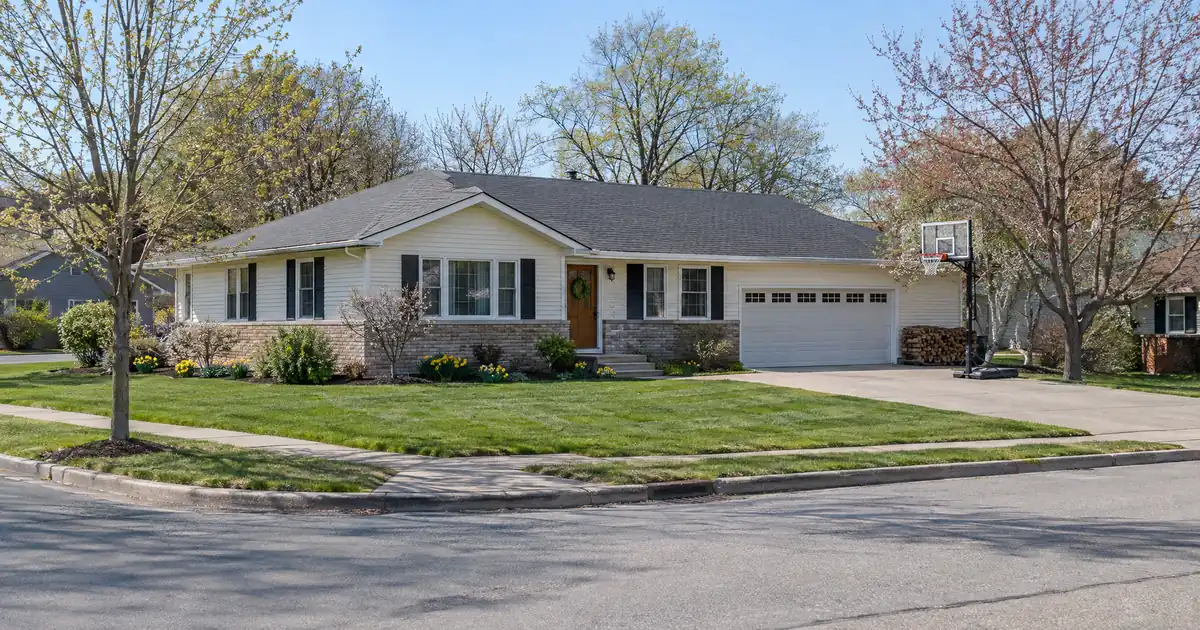
The Quick Read: No. Leased or power-purchase-agreement (PPA) panels do not automatically stop an FHA cash-out refinance. They change three things: the value the lender can count, your debt-to-income math, and the title work. The real blocker is a recorded claim from the solar company that it will not release or step behind the new loan.
That is the short version. The rest of this page covers what a lender does with leased panels, what each fork costs you, and when a different refinance fits better.
FHA cash-out estimate
Seeded with an example value, a balance to match, and a round cash request; change any field.
Editable benchmark: 7.24% as of October 29, 2026 · Freddie Mac 30-year average via FRED®. A conventional market reference, not an FHA cash-out refinance quote.
Illustrative starting assumptions: a $350,000 home value, a $193,000 current balance, the FHA cap on a principal residence with the upfront premium financed, a thirty-year term at the current Freddie Mac benchmark, and property taxes and insurance estimated at typical national rates. Every field is editable.
An illustration, not a Loan Estimate, an approval, a quote, or a commitment to lend. The rate shown is the weekly Freddie Mac thirty-year conventional benchmark, used as a market reference; an FHA cash-out is priced by the lender at lock, and this is not an FHA cash-out refinance quote. HUD’s cap limits the base loan; the upfront premium is financed on top of the capped base loan; the monthly premium for the first year follows the snapshot’s schedule. Cash available means the base loan the cap permits less the balances retired, before closing costs, which this calculator leaves out. The line figure applies the line program’s combined loan-to-value ceiling to the same value and balance. Taxes and insurance are estimates you can edit. Licensed in sixteen states for consumer mortgages.
Why “Not Automatically” Is the Right Answer
Leased solar is a common situation, and a lender can work with it. The system is not part of your house in the lender’s eyes. It is equipment someone else owns, sitting on your roof under a contract.
That ownership drives three effects:
- Value. The appraiser notes the panels but gives them no credit toward your home’s value.
- Debt ratios. The monthly lease or PPA payment is generally treated as an obligation when the lender checks what you can carry.
- Title. Solar companies often record a public filing. The lender has to decide whether that filing touches the house or only the equipment.
None of these is a ban. Each one is a step in the file. Across the wholesale programs Lendmire places FHA files with, the files that stall are the ones where nobody asked about the solar contract until late. The ones that move have the lease paperwork in hand from day one.
Lendmire’s FHA cash-out refinance program page covers the basics of the loan itself. This article is about how leased panels sit on top of it.
Owned, Financed, or Leased? It Decides Everything
Lenders sort solar systems into three buckets. The bucket drives how the file is built.
| Setup | Who owns the panels | Appraisal credit | Debt-ratio effect |
|---|---|---|---|
| Owned outright | You | Possible, if the market supports it | None |
| Financed (solar loan) | You, with a separate loan | Treated case by case | Loan payment counts |
| Leased or PPA | The solar company | None | Lease or PPA payment generally counts |
A PPA, in plain terms, means the solar company owns the system and you pay for the power it produces. A lease means you pay a fixed amount to use the system. Both are rentals of equipment.
Many homeowners do not know which bucket they are in. The sales pitch said “go solar for nothing down,” and the paperwork got filed in a drawer. Pull the contract and read the first page. It will say who owns the system.
The federal consumer agency that studied the solar market describes PPAs and leases as ways to get rooftop solar without the responsibility of ownership. That is exactly why the lender treats them differently from panels you own.
What the 80% Cap Does to Your Cash
An FHA cash-out refinance reaches 80% of your home’s value. It requires a home you have owned and occupied for 12 months before the case number is assigned. Those are the figures Lendmire works with, subject to lender guidelines and full file review. HUD’s mortgagee letter on cash-out limits set the 80% cap on the adjusted value. Older advice that says 85% is out of date.
Now connect that to the panels. Leased panels add nothing to the appraised value. The cap applies to a number that does not include them. Owned panels might add some value if the market supports it. Leased panels cannot.
So leased solar does not make cash-out impossible. It means the equity base is only what the house itself supports.
Picture two otherwise identical homes. One has panels the owner bought. The other has panels under a 20-year PPA. Both appraise at the same number for the house. The owned system might nudge the first appraisal up. The leased one will not. The second owner’s 80% limit starts from the lower figure.
Then comes the payoff math. Cash-out works like this: the new loan pays off your existing mortgage and closing costs first. What is left over is your cash. If you also have to buy out a lease or PPA at closing, that buyout comes out of the same pile. Every dollar going to the solar company is a dollar not landing in your account.
Here is the shape of it in words. Say the 80% cap leaves a modest cushion above your current payoff. Add a large lease buyout, and the cushion can shrink to nothing. Run the leftover before you assume a lump sum is coming.
The Filing Problem (Where Files Actually Stall)
Most solar companies record a notice in public records. It is called a UCC filing, and it announces their interest in the equipment. Sometimes the filing is narrow. Sometimes it is written broadly enough to reach the house itself.
That difference matters. Freddie Mac’s servicing guide, a conventional-loan rulebook and not an FHA one, draws the line this way. In its servicing guide section on solar panels, a filing that claims the panels but not the real estate does not need a subordination agreement. A filing that also claims the real estate creates a lien that must be subordinated or released.
Fannie Mae’s selling guide is another conventional rulebook that follows the same logic. It says the value of leased or PPA panels cannot be included in the appraised value. It also says the panels stay out of the loan-to-value calculation even when a precautionary filing is recorded.
Those are conventional guides. FHA’s own wording lives in HUD Handbook 4000.1, which the lender applies file by file. Treat the handbook as the source of record. It is the right place to confirm anything that sounds too simple.
Two terms matter here:
- Subordination means the solar company agrees its claim ranks behind your new mortgage.
- Release means the solar company removes its filing altogether.
A cash-out refinance pays off your old mortgage and sets up a brand-new first lien. The lender wants that new lien to be first in line. If a filing reaches the house and the solar company will not step back, the lender has a problem it cannot paper over. That is the most common hard stop.
Not every solar contract is the same on this point. Some solar loans let the homeowner request a filing removal for a refinance, but only at the solar lender’s discretion. That describes loans, not necessarily leases. Do not assume your contract works the same way, and ask the solar company directly.
Four Ways Forward
If the solar company’s filing or the lease terms are in the way, you have choices. Each has a trade.
| Path | What it means | Upside | Trade-off |
|---|---|---|---|
| Get consent | Solar company subordinates or signs off | Keep the lease | Depends on their cooperation |
| Buy out the lease | Pay it off at closing | Removes payment and filing | Buyout reduces your cash |
| Remove the system | Take the panels off | Clears title | Cost and contract penalties |
| Pick another loan | Streamline or rate-and-term | May skip the filing fight | No cash back |
Consent is the cleanest if the solar company cooperates. Some respond to a lender’s request with routine paperwork. Others treat it as a low priority. You cannot control that.
Buyout solves two problems at once. The lease payment leaves your debt ratios, and the filing goes away. The price is paid out of the proceeds. If the buyout is large, it can eat most of your cash-out. That can make the whole refinance pointless.
Removal is rare. Most contracts penalize early termination, and removal itself costs money. Few homeowners choose it just to refinance.
Another loan is the quiet escape hatch. If the goal is a lower payment or a better structure rather than cash, a different refinance can fit better. More on that below.
What the Lease Payment Does to Your Ratios
The lease or PPA payment is generally counted as a monthly obligation. That raises your debt-to-income ratio, which is your total monthly debts compared with your gross monthly income.
Across the programs Lendmire places FHA loans with, the base ratio pair is 31/43. The first number is housing cost to income, and the second is total debt to income. Documented compensating factors can stretch that to 40/50 at the top tier, and the automated underwriting finding governs most files. These are program guidelines, not promises.
Here is the practical point. A solar payment that felt small beside your electric bill looks different beside a mortgage. Lenders do not net it against what you used to pay the utility. It goes in as its own line.
How the lender counts that depends on the contract and on how the file is underwritten. Bring your recent billing history so the lender can see the real pattern.
Do that before you apply. It tells you what the lender will see.
Step by Step: Who Does What
A leased-solar cash-out has more moving parts than a plain one. Here is the order of work, roughly.
1. You find the contract. The full lease or PPA, with any amendments.
2. The lender identifies the structure. Owned, financed, leased, or PPA. This is the lender’s job, not the appraiser’s, and the appraiser works from what the lender provides.
3. The appraiser identifies the system. The report notes the panels. It gives no value for leased ones.
4. Title is searched. The title company finds any recorded solar filing and reads what it claims.
5. The lender decides what the filing needs. Nothing, a subordination, or a release.
6. The solar company acts. This step is the one outside your control.
7. The numbers are re-run. Value, cap, payoff, buyout if any, and debt ratios with the solar payment in.
Notice that steps 4 through 6 are where a clean file turns into a messy one. The earlier you start the solar company conversation, the better.
Documents and Questions for Your Solar Company
Expect the lender to ask for the following. Exact conditions vary by lender, so confirm against yours.
- The full lease or PPA, including amendments
- The current monthly payment amount
- Your payment history
- The transfer terms
- A buyout figure
When you call the solar company, ask these:
- Does your recorded filing cover only the equipment, or does it mention the real estate?
- Will you sign a subordination for a refinance? Is there a form and a contact?
- What is the buyout figure, and how long does it stay valid?
- Is there a fee for subordination, release, or a buyout letter?
- What happens to the contract if I refinance? Does it stay with the house?
Get the answers in writing. A phone promise does not help a title company.
Some solar-related obligations are different altogether. Property-assessment solar financing, known as PACE, is generally not allowed to remain on FHA, VA, or conventional loans. If your panels were paid for that way, the conversation changes and the assessment typically has to be dealt with first. Confirm with your lender.
When Cash-Out Is the Wrong Tool
Sometimes the better answer is not cash-out at all. Be honest with yourself about the goal.
- If you already have an FHA loan and want a better structure, the FHA Streamline refinances an existing FHA loan with no appraisal and a limited credit review. It requires a net tangible benefit, and the mortgage insurance premium continues. No cash comes back. Since there is no appraisal, the panels are not valued at all.
- If you want a new loan without taking cash, the FHA rate-and-term refinance with an appraisal reaches 97.75% on a principal residence you have occupied for the previous twelve months. That leverage is far higher than the cash-out cap.
- If you want cash and the solar company will not cooperate, weigh a buyout against the size of your cash-out. If the buyout swallows the proceeds, the refinance may not do what you wanted.
Those are program facts from the networks Lendmire works with, subject to lender guidelines and full file review.
Cash-out is also for principal residences only. A second home or rental has different leverage rules, and occupancy decides which apply.
One more point that gets confused. FHA does have a path to finance new solar through an energy efficient mortgage. That covers solar added through FHA financing. It does not rewrite an existing lease. The handbook section on energy efficient mortgages and solar energy systems is about the former.
Key Terms Defined
PPA (power purchase agreement): A contract where a solar company owns the panels on your roof and you pay for the electricity they produce.
Solar lease: A contract where you pay a set amount to use panels the solar company owns.
UCC filing: A public notice recording a company’s claim on equipment or property, often used by solar companies to protect their interest.
Subordination: A written agreement that a claim ranks behind a new mortgage.
Adjusted value: The value FHA uses to apply the cash-out limit, built from the appraisal.
Debt-to-income ratio: Your monthly debts divided by your gross monthly income.
Frequently Asked Questions
Can I do an FHA cash-out refinance if my panels are under a PPA?
Usually, yes, if the lender can resolve the title and your ratios still work. The PPA payment generally counts against your debt ratios, and the panels add no appraised value. The sticking point tends to be a recorded filing the solar company has not agreed to subordinate.
Do leased panels raise my home’s appraised value?
No. Leased and PPA panels cannot be counted toward value. The appraiser still notes them in the report. Owned panels are a different case and may be considered if the market supports it.
Does the solar payment count as debt?
Generally, yes. Lenders usually treat the lease or PPA payment as a monthly obligation in your debt-to-income ratio. Buying out the lease can remove it, but the buyout comes out of your proceeds.
What if the solar company refuses to subordinate?
Then you have three options: buy out the contract, ask whether the filing can be released, or pick a refinance that does not need the same lien position. A cash-out sets a new first lien, so the refusal can stop it. A streamline on an existing FHA loan may not face the same problem.
Is the FHA cash-out limit 85%?
No. The limit is 80% of the adjusted value, and the home must have been owned and occupied for 12 months before the case number. That is the program Lendmire arranges, subject to lender guidelines. Older sources quoting 85% are out of date.
Your Next Step
If you are weighing a cash-out refinance against keeping the loan you have, Lendmire can help you compare the programs and the equity each one reaches. Start by pulling your solar contract. It will tell you which bucket you are in.
Nothing here is a commitment to lend. Program details are subject to lender guidelines and full file review.
For your own numbers, request a scenario review with Lendmire.
About Lendmire
Lendmire (NMLS# 2371349) is a mortgage broker licensed for consumer lending in 16 states. Lendmire arranges FHA, VA, conventional and jumbo purchase and refinance loans through wholesale lenders; every file is underwritten by the lender under the applicable program guidelines. Scotsman Guide named Lendmire a Top Mortgage Workplace in both 2025 and 2026.
Get Started
Ready to find the right loan for you?
See your offer in seconds. No credit pull, no obligation.
Informational only. Not a Loan Estimate, approval, or commitment to lend. Program availability and eligibility are subject to lender guidelines, credit approval, property review, and underwriting.
References
1. CFPB Issue Spotlight: Solar Financing
2. HUD mortgagee letter on FHA cash-out limits
3. Freddie Mac Guide, solar panels and energy-efficient improvements
4. Fannie Mae Selling Guide, special property eligibility considerations
This article is part of Lendmire’s FHA cash-out refinance program — full qualification details, guidelines, and scenarios live on the program page.
Related reading: Can You Get Approved for an FHA Cash-Out Refinance Instead of Limited Cash-Out? · FHA Cash-Out Refinance Requirements on a Recently Bought Home · Can You Get an FHA Cash-Out on a Home With a Solar Lien?
Brandon Miller
Founder & CEO, Mortgage Loan Originator, Lendmire LLC
- Mortgage Loan Originator · NMLS# 1129696 · Verify on NMLS Consumer Access
- North Carolina Real Estate Broker · License# 343312 · Verify on NCREC
- North Carolina Insurance Producer · License# 19053198 · Property, Casualty, Life, Health · Verify on NAIC SBS
- Lendmire LLC · Firm NMLS# 2371349 · Verify firm licensure
Legal disclosures. Lendmire (NMLS# 2371349) is a state-licensed mortgage brokerage that arranges financing through wholesale lender relationships. Lendmire is not a direct lender, depository institution, or registered financial advisor. The discussion above is general informational content about real estate financing — it is not financial, legal, or tax advice, and readers should consult licensed professionals for guidance on their individual circumstances. Loan inquiries are subject to lender underwriting; this article does not represent a commitment to lend. Loan terms, rates, and qualification standards vary by borrower, property, and state, and are subject to change at any time. Equal Housing Opportunity. NMLS Consumer Access: nmlsconsumeraccess.org.