
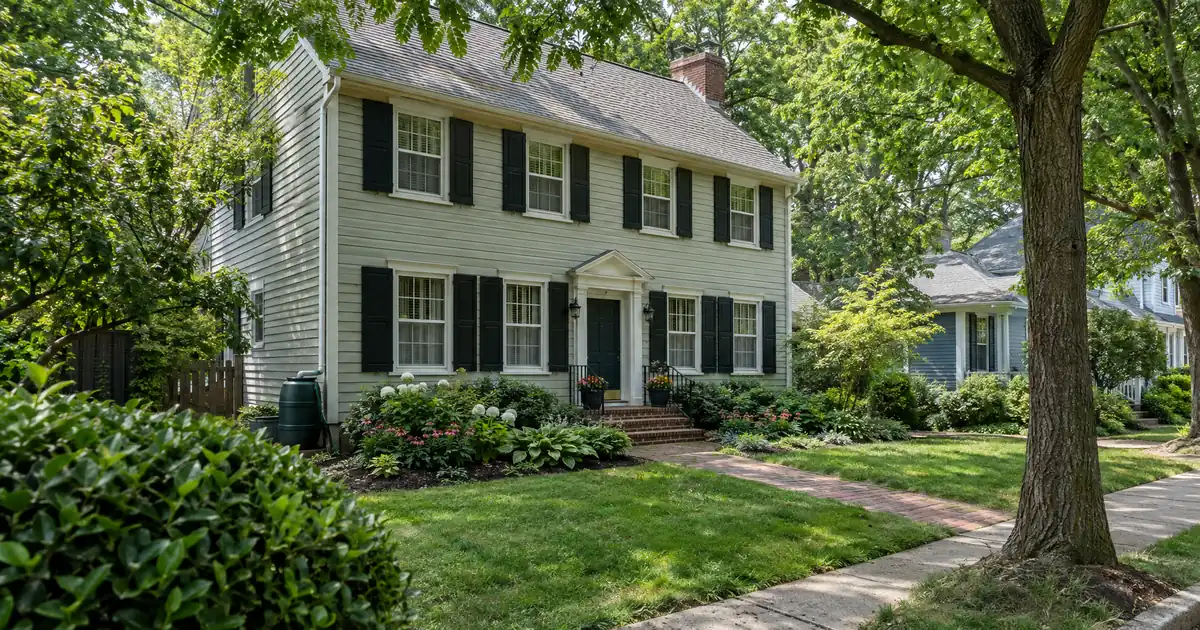
The Quick Read: A lender sizes a new-build pre-approval from two ceilings, and the lower one wins. One ceiling comes from your income, debts and credit, run against the payment on the finished home. The other comes from the home’s value, which on a new build is confirmed late. The letter is a ceiling built on assumptions, not the loan itself.
Key Takeaways
- The letter is a ceiling, not a commitment. Final approval waits on the appraisal, title and full underwriting.
- The lender sizes the loan on the permanent payment, never the construction-phase payment.
- Price, appraised value and your income each set a limit. Whichever is lowest controls.
- Builder credits are capped, and they can reduce the value the loan is sized on.
- Documents age out. A job change, new debt or a value decline can reopen the file.
What Does “Pre-Approval” Actually Mean Here?
A pre-approval is a lender’s written estimate of what it would likely lend, based on documents you supplied. No agency requires one. Fannie Mae and Freddie Mac write rules for the loan, and each lender decides what its letter says.
Conventional payment estimate
The starting figures are an example price at the first-time buyer’s minimum down payment. Replace them with yours.
Editable benchmark: 7.32% as of October 22, 2026 · Freddie Mac 30-year average via FRED®. A conventional market reference, not a conventional loan quote.
Estimate seeded at the low end of Fannie Mae’s published range (0.58%–1.86% a year); the insurer prices the actual premium on the score and the leverage. Applies only above 80% loan-to-value.
Illustrative starting assumptions: a $350,000 price, the first-time buyer’s minimum down payment, a thirty-year term at the current Freddie Mac benchmark, mortgage insurance at the low end of Fannie Mae’s published range, and property taxes and insurance estimated at typical national rates. Every field is editable.
Illustrative estimate only — not a Loan Estimate, approval, quote, or commitment to lend. The rate field carries the weekly Freddie Mac thirty-year conventional benchmark, a market reference and not a conventional loan quote; your rate is set by the lender at lock. The mortgage insurance figure is an editable estimate seeded from Fannie Mae’s published typical range, not a premium quote; the insurer prices the actual premium, and the cancellation month assumes scheduled payments with no extra principal and no change in value. Taxes, insurance and dues are editable estimates; closing costs are not included. Conforming loan limits apply by county. Licensed in sixteen states for consumer mortgages.
That is why labels mislead. One lender’s “pre-qualification” is a quick conversation. Another’s “pre-approval” has income, assets and credit verified and run through automated underwriting. Ask what was actually checked, not what the letter is called. The Consumer Financial Protection Bureau describes a preapproval as based on assumptions and not a guaranteed loan offer.
Across the wholesale programs Lendmire places files with, the strongest letters are the underwritten ones. They still stay provisional on a new build, because the property doesn’t fully exist yet.
Step 1: How Is the Income Ceiling Set?
The income ceiling comes from your debt-to-income ratio, which compares monthly debts to monthly income. The lender counts the projected housing payment (principal, interest, taxes, insurance, any association dues and mortgage insurance) plus your other debts, such as car loans, student loans and card minimums.
In practice, the wholesale conventional programs start at a 620 decision score. The automated finding governs most files, with a total ratio ceiling of 50%. Manually underwritten loans run tighter, at 36% or 45%, depending on the reserve and score factors in the Eligibility Matrix. Every figure is subject to lender guidelines and full file review.
Before you have a contract, the lender can’t know the real numbers. So the letter uses placeholders for taxes, insurance and dues. The builder’s actual figures replace them later. If the real tax estimate for a new subdivision runs higher than the placeholder, the income ceiling drops. That is a normal surprise, not a failure.
Two points matter for sizing a new build:
- Permanent payment, not the build payment. For a two-closing structure, Fannie Mae requires the lender to underwrite you on the terms of the permanent mortgage.
- Mortgage insurance counts. Above 80% LTV it is part of the payment. Published typical annual premiums run 0.58% to 1.86% of the balance. That is a range, never a quote, and it moves with score and leverage. Final terms depend on lender guidelines, property type, leverage, and the borrower’s complete credit picture.
For a related walkthrough on income that doesn’t come from a W-2, see Lendmire’s piece How a Lender Sizes a Self-Employed Mortgage Pre-Approval.
Step 2: How Is the Value Ceiling Set?
The value ceiling comes from leverage limits applied to the lower of the price or the appraised value. On a purchase of a principal residence, the agency envelope is 97% LTV (3% down) for a fixed-rate loan when at least one borrower is a first-time buyer, and 95% LTV (5% down) otherwise. Two- to four-unit principal residences go to 95%. The Fannie Mae Eligibility Matrix sets these ceilings. Pricing and mortgage insurance vary separately. These specifics are subject to lender guidelines and a full review of property, leverage, and credit.
Here is the new-build twist. The home isn’t finished, so the appraiser values it “as completed,” using plans and specifications, or a comparable model home, plus nearby sales. The loan is then sized against the lower of cost or that appraised value. If you bought a lot, the purchase price counts as the lot plus the cost of construction.
So the buyer who is approved for a bigger loan on income can still be capped by value. And the reverse holds. A modest income ceiling is not lifted because the home appraises high.
Why Does the Number Move Between Letter and Closing?
Because each stage replaces an assumption with a fact. This table shows the sequence.
| Stage | What the lender knows | What can change |
|---|---|---|
| Letter | Income, debts, credit; placeholder costs | Real taxes, dues, insurance |
| Contract | Price, options, builder terms | Upgrades raise price and ratios |
| Appraisal | As-completed value | Low value cuts the loan amount |
| Completion | Finished home, final documents | Aged documents, new debt, value decline |
Think of it as the same borrower passing through four checkpoints. Each one can tighten the number. Rarely does one loosen it.
Walking One Buyer Through the Stages
Picture a buyer with a letter that comfortably covers a builder’s base price, using 5% down on a principal residence. Three things can happen at appraisal. These are illustrative percentages, not figures from any real file. Terms depend on the lender’s guidelines, the property type, the leverage, and a full review of the credit profile.
- Appraises at the contract price. The loan stays sized to price at 95% LTV. Nothing shifts.
- Appraises below the price. The lender sizes against the lower value. The gap between price and value becomes cash you bring, or a renegotiated price. Your down payment as a share of value also rises, which may change mortgage insurance.
- Appraises above the price. The loan still sizes off the lower figure, the price. The extra value helps equity, not borrowing power. The exact numbers vary by lender and program and follow a full review of property, leverage, and credit.
Now add design-center upgrades. They raise the price, and they raise the payment. Upgrades often aren’t reflected in comparable sales, so value may not rise with them. That can widen the gap between price and appraised value, and it pushes your debt-to-income ratio up at the same time. Tell your loan officer about every upgrade before the contract is final, not after.
Builder-Sold Home or Build on Your Own Lot?
The structure decides how many closings you face and which rules apply. The table compares the common paths.
| Path | Loan structure | Closings | What the lender reviews |
|---|---|---|---|
| Builder-sold home | Standard purchase | One | Contract, plans, as-completed appraisal |
| Own lot, single closing | Construction converts to permanent | One | Lot title, plans, completion proof |
| Own lot, two closings | Construction loan, then permanent | Two | Permanent terms at second closing |
On the two-closing path, Fannie Mae does not purchase the construction loan, only the permanent financing. That permanent loan may be treated as a limited cash-out or cash-out refinance, so refinance leverage caps can apply. For a one-unit principal residence, cash-out is capped at 80% LTV.
Freddie Mac offers a parallel construction-to-permanent option with a one-time or two-time close, and it covers newly built one- to four-unit site-built homes.
Where Does the General Rule Break?
A few named edge cases change the answer.
- Time limits. On a single-closing loan, no construction period may exceed 12 months, and the total may not exceed 18 months. The current guide says exceptions to those periods will not be granted. A build that runs long can’t stay single-closing.
- Cash-out. A single-closing loan is for purchase or limited cash-out only. Taking cash out through it isn’t an option.
- Attached condo units and co-ops. They are ineligible for construction-to-permanent financing. Detached condo units can qualify, subject to project review.
- Lot title. You must hold title to the lot, either bought earlier or as part of the transaction.
- Manufactured homes. These follow separate rules, and single-wides are ineligible under Freddie Mac’s manufactured-housing guidance.
- Postponed improvements. Agency rules allow some unfinished work under set conditions. The conditions are specific and lender-dependent, so ask for them in writing.
(One more occupancy note: if the new build is a second home or rental, leverage is lower than the primary-residence figures above, because occupancy decides the cap.)
How Do Builder Credits and Rate Locks Affect Sizing?
Builder help is an interested-party contribution, and agency rules cap it. It can’t fund your down payment, reserves or minimum borrower contribution. Fannie Mae’s selling notice confirms caps ranging between 2% and 9% of property value, with the tier depending on leverage and occupancy. Anything above the cap is treated as a sales concession. The price is adjusted down, and LTV is recalculated upward.
Two practical consequences follow. A builder’s incentive isn’t free money, and a builder-funded rate buydown counts toward the cap. Undisclosed contributions make a loan ineligible for sale to Fannie Mae, so every credit belongs on the contract.
Locks are the other timing trap. A lock holds only if you close in time and the application doesn’t change. A change in loan amount, credit or property can change a locked rate. A fixed-rate product is not the same thing as a lock, so check page one of the Loan Estimate for the lock status. Ask what an extension would cost, in writing, because a new build gives the schedule room to slip. Lock terms are lender-specific.
What Can Undo the Letter Before Closing?
Most reversals trace to a short list.
- Aged documents. Income, employment and credit documents can go stale. A Fannie Mae construction-to-permanent matrix describes a four-month limit at conversion unless you were fully re-qualified at the original closing. Verify the current requirement with your lender.
- A job change or new debt. Both alter the income ceiling. Skip the new car and the furniture financing until you close.
- A value decline at completion. A completion report showing lower value can mean a new appraisal and re-qualification at the updated LTV.
- Completion proof. The lender needs a completion report or an approved alternative, and for construction-to-permanent loans a certificate of occupancy or equivalent. Appraisers may inspect virtually, and attestation letters are an option on new construction.
- Credit events. Agency waiting periods apply after a chapter 7 discharge (four years), a foreclosure (seven), or a short sale or deed-in-lieu (four). Documented extenuating circumstances can shorten them.
Closing timing under the Loan Estimate and Closing Disclosure rules is a separate matter. The Closing Disclosure must be provided three business days before closing.
For buyers funding a new build partly from a home they are selling, Lendmire’s piece How to Use Sale Equity to Buy a New Build on a Conventional Loan covers that sequence.
Questions to Ask Your Lender
- What did you verify to issue this letter, and what is still assumed?
- What placeholders did you use for taxes, insurance and dues?
- If the appraisal comes in low, what happens to my loan amount and cash needed?
- Are the builder’s credits within the cap, and are they on the contract?
- What are the lock length and the extension terms?
- At what point do my documents need to be refreshed?
- Is my loan a purchase, or could part of it be treated as a refinance?
Lendmire arranges these loans through wholesale lenders, and its conventional loan programs are a reasonable place to see how a file compares across lenders.
Key Terms Defined
Pre-approval: A lender’s written estimate of what it would likely lend, based on information you provided.
Debt-to-income ratio: Your monthly debts, including the projected housing payment, divided by your monthly income.
As-completed appraisal: A valuation of the home as it will be when finished, based on plans, specifications and comparable sales.
Loan-to-value (LTV): The loan amount divided by the lower of the price or appraised value.
Interested-party contribution: Money from the builder, seller or others with a stake in the sale, which agencies cap.
Completion verification: The report or alternative proving the home was finished as planned.
Frequently Asked Questions
Is a new-build pre-approval a guarantee?
No. It is a ceiling based on assumptions and the documents you gave. Final approval depends on the appraisal, title and underwriting, and anything that changes your income, debts or credit can reduce it.
Is the loan based on the price or the appraisal?
The lower of the two. If the home appraises below the contract price, leverage is applied to the lower value. You would bring the difference in cash or renegotiate the price.
Do I need a construction loan to buy from a builder?
Usually not. A builder-sold home is typically a standard purchase with an as-completed appraisal. A construction loan matters when you build on your own lot, either as one closing or as two.
Can my pre-approval change after I sign the contract?
Yes. Upgrades, real tax and dues figures, a new debt or an aged document can all move it. Share every change with your loan officer early.
What if the builder offers a credit?
It is allowed within agency caps, but it can’t fund your down payment or reserves, and it must be disclosed. Amounts above the cap reduce the price the loan is sized on.
If you are buying a home and want to see whether a conventional loan fits your file, Lendmire can help you compare the options and what each one asks of the file.
For your own numbers, request a scenario review with Lendmire.
About Lendmire
Lendmire (NMLS# 2371349) is a mortgage broker licensed for consumer lending in 16 states. Lendmire arranges FHA, VA, conventional and jumbo purchase and refinance loans through wholesale lenders; every file is underwritten by the lender under the applicable program guidelines. Scotsman Guide named Lendmire a Top Mortgage Workplace in both 2025 and 2026.
Get Started
Ready to find the right loan for you?
In about two minutes you can review financing options available for your home or investment property. No commitment required.
Informational only. Not a Loan Estimate, approval, or commitment to lend. Program availability and eligibility are subject to lender guidelines, credit approval, property review, and underwriting.
References
1. Fannie Mae Selling Guide B5-3.1-02, Single-Closing Transactions
2. Consumer Financial Protection Bureau
3. Fannie Mae Selling Guide B5-3.1-03, Two-Closing Transactions
4. Fannie Mae Eligibility Matrix
5. Freddie Mac Construction to Permanent
6. Fannie Mae Selling Notice on Interested-Party Contributions
7. CFPB TILA-RESPA Loan Estimate guide
This article is part of Lendmire’s conventional loan program — full qualification details, guidelines, and scenarios live on the program page.
Related reading: Can You Double Your Payment on a Conventional Loan Without a Penalty? · Conventional Loan Appraisal Requirements for New Construction · Can You Use Stocks as Collateral for a Conventional Loan?
Brandon Miller
Founder & CEO, Mortgage Loan Originator, Lendmire LLC
- Mortgage Loan Originator · NMLS# 1129696 · Verify on NMLS Consumer Access
- North Carolina Real Estate Broker · License# 343312 · Verify on NCREC
- North Carolina Insurance Producer · License# 19053198 · Property, Casualty, Life, Health · Verify on NAIC SBS
- Lendmire LLC · Firm NMLS# 2371349 · Verify firm licensure
Legal disclosures. Lendmire (NMLS# 2371349) is a state-licensed mortgage brokerage that arranges financing through wholesale lender relationships. Lendmire is not a direct lender, depository institution, or registered financial advisor. The discussion above is general informational content about real estate financing — it is not financial, legal, or tax advice, and readers should consult licensed professionals for guidance on their individual circumstances. Loan inquiries are subject to lender underwriting; this article does not represent a commitment to lend. Loan terms, rates, and qualification standards vary by borrower, property, and state, and are subject to change at any time. Equal Housing Opportunity. NMLS Consumer Access: nmlsconsumeraccess.org.