
The Quick Read: FHA caps a cash-out refinance at 80% of the home’s appraised value. It does not publish a lower number for duplexes, triplexes or fourplexes. Your new loan, plus any other lien on the property, has to fit under that line. County loan limits and the appraisal can pull your cash down further. Subject to lender guidelines and full file review; not a commitment to lend.
What Does the 80% Cap Actually Mean?
The 80% cap means FHA will let you owe up to four-fifths of what the home appraises for after the refinance. The other 20% stays as your equity. That is the whole rule, and it applies to your total debt on the property, not just the first mortgage.
Loan-to-value (LTV) is the new loan divided by the appraised value. Combined LTV adds any second loan or line of credit. On an FHA cash-out, both numbers must land at or under 80%.
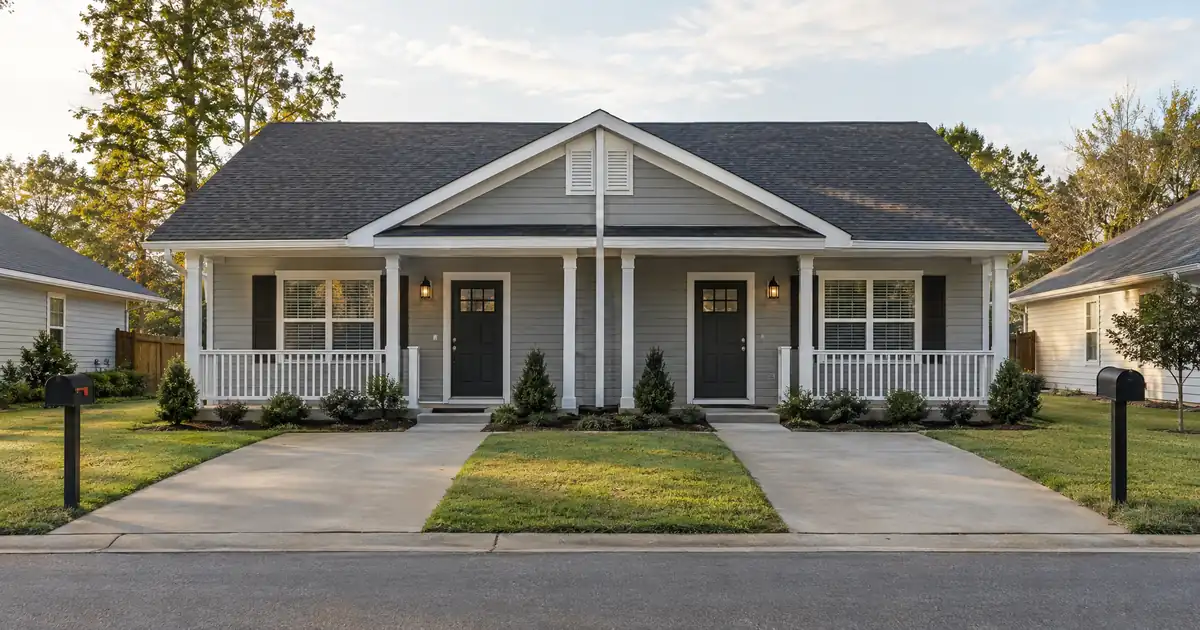
Here is how it plays out on a 2-4 unit home you live in. The appraiser values the whole building, not one unit. The cap applies to that whole-building value. A fourplex and a duplex face the same percentage.
The percentage is the same, but the file is not. Bigger buildings bring more moving parts: leases, rent, reserves and sometimes extra lender tests. We come back to those below.
Why Is a Cash-Out Different From Other FHA Refinances?
A cash-out pays off your current mortgage and also hands you leftover equity as cash. Other FHA refinances do not, so they follow different leverage rules. Mixing them up can lead owners to misjudge how much they can reach.
Across the wholesale programs Lendmire places FHA files with, the options line up like this:
| Refinance type | Cash to you | Leverage reached | Appraisal |
|---|---|---|---|
| Cash-out | Yes | 80% LTV | Yes |
| Rate-and-term | No | 97.75% on a principal residence | Yes |
| Streamline | No | Not LTV-driven | No |
The rate-and-term reaches 97.75% when you have lived in the home for the previous twelve months. The streamline refinances an existing FHA loan with a limited credit review and a net tangible benefit. The FHA premium continues on a streamline.
That gap, 80% versus 97.75%, is the price of taking cash. You get access to equity, but FHA asks you to keep more of it in the home. Lendmire’s FHA cash-out refinance program page walks through how the cash-out version is structured.
Who Qualifies for This Loan on a Multi-Unit Home?
You qualify only if the building is your primary residence. FHA cash-out is not available on second homes or on properties you rent out entirely. In a 2-4 unit building, you must live in one unit. Rent from the others does not turn the loan into an investor loan.
Two timing rules matter most. The home must have been owned and occupied by you for 12 months before the FHA case number is assigned. And your payment history on the current mortgage gets reviewed.
Lenders document occupancy with employment records or utility bills. They also want to see on-time payments on the existing mortgage over a recent look-back window. A few late payments inside that window can stall an otherwise equity-rich file.
Beyond timing, the file looks like any FHA loan. The base debt ratios are 31/43, meaning housing cost over income and total debt over income. Documented compensating factors can stretch that to 40/50 at the top tier, and an automated finding drives most decisions. Credit floors for cash-out are set by the lender and the file, and some lenders set a higher floor than others.
Rental income from your other units can help you qualify. How much counts, and what paperwork proves it, varies by lender. Three- and four-unit buildings may draw extra tests, such as a rent-based self-sufficiency check. Whether that test carries over to a refinance depends on the lender’s overlay, so ask early.
How Do You Figure Your Maximum Loan?
Start with the appraised value and multiply by 80%. That is your ceiling, and everything else comes out of it. Think of it as a bucket with a fixed size.
Step by step, in plain words:
1. The FHA appraisal sets the value of the building.
2. The lender applies the 80% cap to that value to find the largest new loan.
3. Your current mortgage balance gets paid off first.
4. Any second lien gets paid off or counted too, because the cap covers combined LTV.
5. Closing costs and mortgage insurance take their share.
6. Whatever is left is your cash.
Run it in percentages. Treat the appraised value as 100. The ceiling is 80. If your payoff and other liens add up to 60 of that, you have at most 20 left, before closing costs and the premium. Lower the appraisal and every number in that chain shrinks with it.
The lender’s worksheet shows exactly how the upfront premium counts against the ceiling. Ask to see it before you pay for an appraisal.
Meeting the cap does not promise an approval or a particular cash amount. The lender still reviews credit, income, the new payment and the property.
Where Does the 80% Come From?
The cap is an FHA rule. HUD Mortgagee Letter 2019-11 lowered the maximum LTV and combined LTV on cash-out refinances to 80% of the adjusted value. FHA had cut the figure in earlier steps. This was the latest.
The letter amends the Maximum Mortgage Amount section of Handbook 4000.1. HUD’s Handbook Update 7 transmittal lists the matching change to cash-out refinance maximums.
The wording is a single cap for the cash-out program. It does not set a separate, lower cap for 2-4 unit homes. The safest plain statement is this: FHA states its cash-out cap once, not by unit count. That is not the same as saying a fourplex is treated identically in every respect. Appraisal, loan limits and lender overlays still differ.
Some third-party articles still quote a higher cash-out cap. That is old policy.
Which Ceiling Hits First: LTV or the County Loan Limit?
Your loan has two ceilings. One is 80% of value. The other is the FHA loan limit for your county. Whichever is lower wins.
County loan limits are set by county and change every year. We never quote a county figure here because yours may differ from the next one over. They generally rise with the number of units, which is why multi-unit buyers often find the limit less tight than single-family buyers do.
In a high-priced area, the loan limit can bind before the 80% does. In a lower-priced area, 80% of the appraisal is usually the tighter line. Your lender can tell you which one applies to your address.
What Do FHA Premiums Do to Your Cash?
FHA charges two premiums. The upfront premium is 1.75% of the base loan, and it is usually financed into the loan. The annual premium runs between 0.15% and 0.75% of the balance, depending on term, loan amount and LTV.
A cash-out sits at 80% LTV, which is at or below 90%. On a thirty-year loan at that level, the annual premium ends after eleven years. Above 90% LTV, the premium lasts the full term. HUD lowered annual premiums for most borrowers in HUD Mortgagee Letter 2023-05, and the current schedule on HUD’s site is the one to check.
Premiums are a program feature, not a price tag. They raise the loan balance and the monthly cost, and they take a slice of the ceiling. Your Loan Estimate shows how the lender applied them.
Where Does the General Rule Break?
A few situations bend the standard answer:
- Owned less than 12 months. FHA limits value on recently acquired homes. A recent buyer cannot simply use the appraised value, and the 12-month occupancy test also applies.
- Inherited homes. Some lenders apply special handling to inherited property. Rules differ, so confirm with the lender before assuming either way.
- Hawaiian Homelands loans. The 80% policy does not apply to Section 247 loans, per the HUD letter above.
- No existing mortgage. A paid-off home still counts as a cash-out.
- A rental. Occupancy decides leverage. FHA cash-out is for the home you live in, full stop.
- Conventional loans. Conventional programs may set a different cap for 2-4 unit homes. Compare the two, because the conventional answer is its own question.
Why Might Your Number Come In Lower?
The 80% is a ceiling, not an offer. Several things shrink what you actually receive:
- A low appraisal. The cap is a percentage of the appraised value. A lower value means a lower ceiling.
- A larger payoff. More owed now means less left over.
- Second liens. They count toward combined LTV.
- Closing costs. They come out of the ceiling or out of pocket. Either way, they cut your net cash.
- The loan limit. In some counties, it bites before the LTV does.
- Underwriting. Credit, income and payment history can reduce the amount or stop the loan.
Picture a triplex owner with a sizable mortgage balance and an appraisal that lands lower than hoped. The 80% line may leave only a thin slice of cash after costs. Whether the cash justifies a larger balance and added premiums is the real decision. That choice is yours, and a rate-and-term refinance may fit better if cash is not the goal.
Key Terms Defined
Loan-to-value (LTV): The new loan divided by the appraised value of the home.
Combined LTV (CLTV): Your first loan plus any second liens, divided by the appraised value.
Adjusted value: The value FHA uses for its cap, built from the FHA appraisal.
Case number: The FHA ID assigned to your loan. Ownership and occupancy are measured when it is assigned.
Seasoning: The waiting period you must meet before a loan program opens up, such as 12 months of owning and living in the home.
County loan limit: The most FHA will insure in your county. It is a separate ceiling from the 80% cap.
Frequently Asked Questions
Is the FHA cash-out limit lower for a fourplex than for a duplex?
No separate lower cap appears in the HUD text we reviewed. FHA states one 80% figure for the cash-out program. Lender overlays, extra tests on three- and four-unit homes, and county loan limits can still change your result.
Does my second mortgage count toward the 80%?
Yes. The cap covers combined LTV, so a second loan or credit line counts alongside the new first loan. The lender pays it off or includes it when sizing your ceiling.
Can I use rent from my other units to qualify?
Often, in part. Lenders decide how much rent counts and what documents they need, such as leases. Treat rental income as a possible help to the file, not a given.
Can I cash out if I just bought the building?
Usually not right away. You generally need to have owned and lived in the home for 12 months before the case number is assigned. Value on a recently purchased property is also limited.
Is an FHA cash-out the same as a streamline?
No. A streamline refinances an existing FHA loan without an appraisal and without giving cash. A cash-out pays you equity, uses an appraisal, and stops at 80% LTV. These specifics are subject to lender guidelines and a full review of property, leverage, and credit.
If you are weighing a cash-out refinance against keeping the loan you have, Lendmire can help you compare the programs and the equity each one reaches. Reach out before you order an appraisal, because the cap is set by value and value is the one number you cannot change after the fact.
For your own numbers, request a scenario review with Lendmire.
About Lendmire
As a mortgage broker (NMLS# 2371349), Lendmire helps homeowners and home buyers in 16 states with FHA, VA, conventional and jumbo purchase and refinance loans arranged through wholesale lenders. Lendmire is never the lender; program terms are set by the lender and the agency guidelines. Scotsman Guide named Lendmire a Top Mortgage Workplace in both 2025 and 2026.
Get Started
Ready to find the right loan for you?
In about 30 seconds you can review financing options available for your home or investment property. No commitment required.
Informational only. Not a Loan Estimate, approval, or commitment to lend. Program availability and eligibility are subject to lender guidelines, credit approval, property review, and underwriting.
References
1. HUD Mortgagee Letter 2019-11
2. HUD Handbook 4000.1 Update 7 transmittal
3. HUD Mortgagee Letter 2023-05
This article is part of Lendmire’s FHA Loan series — every loan program’s qualification details, guidelines, and scenarios live on the loan options page.
Related reading: Can You Get an FHA Cash-Out When Conventional Is Too Costly? · FHA Cash-Out LTV Limit for a Paid-Off Home · FHA Cash-Out Ownership Requirements for a Recent Home Purchase
Brandon Miller
Founder & CEO, Mortgage Loan Originator, Lendmire LLC
- Mortgage Loan Originator · NMLS# 1129696 · Verify on NMLS Consumer Access
- North Carolina Real Estate Broker · License# 343312 · Verify on NCREC
- North Carolina Insurance Producer · License# 19053198 · Property, Casualty, Life, Health · Verify on NAIC SBS
- Lendmire LLC · Firm NMLS# 2371349 · Verify firm licensure
Required disclosures. Lendmire (NMLS# 2371349) operates as a licensed mortgage broker, not a direct lender or depository. The discussion in this article is general in nature and should not be relied upon as financial, legal, or tax advice — every investment scenario is unique and should be reviewed by a qualified professional. Any loan inquiry is subject to lender underwriting, and this article is not a commitment to lend or a guarantee of approval. Mortgage rates, loan terms, and program guidelines vary by borrower, property, and state, and may change without notice. Equal Housing Opportunity. Verify licensure at NMLS Consumer Access.