
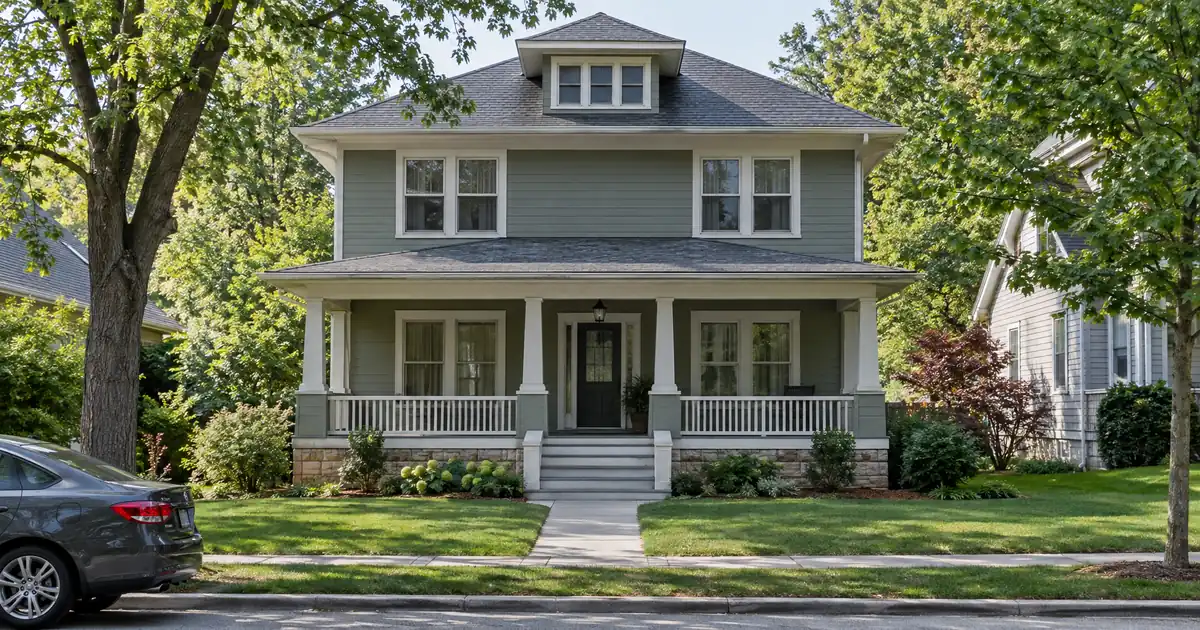
The Quick Read: FHA tends to fit owners with bruised credit, or owners who want the highest leverage a government-backed cash-out allows. Conventional tends to fit owners with strong credit and solid equity who want to avoid FHA’s mortgage insurance. Both require you to live in one of the units. Both let rent from the other units help in different ways. The split comes down to equity, credit, mortgage insurance, and how each program counts your tenants’ rent.
Side-by-Side
Here is how the two stack up for an owner-occupied duplex, triplex, or fourplex. Program figures for FHA come from the wholesale programs Lendmire places files with, and everything is subject to lender guidelines and full file review.
| Factor | FHA cash-out | Conventional cash-out |
|---|---|---|
| Maximum leverage | 80% LTV | Set by unit count; lower on 2-4 units than on one-unit homes |
| Ownership and occupancy | Owned and lived in 12 months before the case number | Title seasoning plus a minimum age on the current first mortgage |
| Credit floor | Starts at a 580 decision score on these programs | Generally higher; credit tiers shape eligibility |
| Mortgage insurance | 1.75% upfront plus annual premium | Usually none at cash-out leverage |
| Rent from other units | Can count; 3-4 units face an added test | Depends on your landlord history; your own unit’s rent is excluded |
| Reserves | Required on 3-4 units | Triggered by higher debt ratios |
LTV means loan-to-value: the new loan as a percentage of the home’s appraised value. A cash-out refinance replaces your current mortgage with a bigger one and hands you the difference. The 80% FHA ceiling comes up again below. The FHA cash-out refinance program page lays out how that product works for owner-occupants.
Key Takeaways
- FHA cash-out tops out at 80% LTV, and you must have owned and lived in the home for 12 months before the case number.
- FHA charges a 1.75% upfront premium, plus an annual premium between 0.15% and 0.75% of the balance.
- Conventional cash-out has a lower leverage ceiling on 2-4 units than on one-unit homes, but it skips FHA’s premiums.
- Rent from the unit you occupy generally cannot help you qualify on a conventional loan.
- Triplexes and fourplexes face an extra rental test under FHA.
What “Cash-Out” Means on a Building You Live In
A cash-out refinance is a new loan that pays off your old one and puts the leftover equity in your hands. The leftover is the cash. Your home secures the whole new balance, not just the cash portion.
Owner-occupied 2-4 units sit in the residential lane. That is why you get these programs rather than commercial terms. The catch is that you live there. Move out, and the same building becomes a different kind of loan with different leverage. Occupancy sets the ceiling.
Two clocks matter in both programs. One is how long you have owned the home. The other is how long you have held your current loan. Each program measures them differently, which is where many owners get tripped up.
When FHA Is the Better Fit
FHA works best when your credit profile is imperfect or your equity needs reach as far as the program allows.
Credit that needs flexibility. The wholesale programs Lendmire places FHA files with start at a 580 decision score. FHA’s base debt-ratio pair is 31/43 (housing over total), and documented compensating factors can stretch that to 40/50 at the top tier. Compensating factors are strengths like savings or a long job history. The automated finding governs most files. Conventional loans usually ask for more from your credit.
You want the higher leverage. FHA reaches 80% LTV on a cash-out. The conventional matrix sets its 2-4 unit ceiling lower than the one-unit ceiling. Check the Fannie Mae Eligibility Matrix for the current number, because it changes. Older articles claim FHA always gives you more or that the two have converged. Neither claim holds up without checking current matrices. Final terms depend on the lender’s guidelines, the property type, and the borrower’s complete credit picture.
Your payment history is clean. HUD’s Mortgagee Letter 2020-30 requires documented on-time mortgage payments for the past year, or since you got the loan if that is shorter. It also confirms that a home owned free and clear can be refinanced as cash-out. A year of clean payments plus 12 months in the home is a straightforward test.
Rent from the other units helps you. FHA lets rent from the other units count as qualifying income on a 2-4 unit, documented under HUD rules. The appraiser estimates fair market rent for each unit.
The costs are real. FHA charges a 1.75% upfront premium (financed into the loan) and an annual premium between 0.15% and 0.75% of the balance, depending on term, loan amount, and LTV. On a thirty-year loan above 90% LTV, the annual premium lasts the full term. At or below 90%, it ends after eleven years. Because cash-out leverage tops out at 80%, many borrowers land in the shorter-lived group. Either way, the premium is calculated on the whole loan, not just the cash you take. Each figure is subject to lender guidelines and a complete review of property type, leverage, and credit.
Triplexes and fourplexes add a test. HUD’s older reference guides describe a self-sufficiency test: the lender takes the appraiser’s rent estimate across all units, subtracts a vacancy cushion, and checks that the property covers its own payment. Three-to-four unit cash-outs also need reserves. A duplex does not face that test.
When Conventional Is the Better Fit
Conventional works best when your credit is strong, your equity is thick, and you want to avoid FHA’s mortgage insurance.
You do not need the last slice of equity. Conventional cash-out on a 2-4 unit sits at a lower leverage level, but that lower level generally keeps you out of private mortgage insurance. If you only want a modest amount of cash, the lower cap may not matter to you.
Your credit earns better treatment. Conventional loans price in credit tiers and add adjustments for cash-out and multi-unit homes. A strong profile softens that. A weaker one makes conventional less attractive than FHA.
You are already out of FHA. If you have an FHA loan today, refinancing into conventional can end the annual premium. An FHA Streamline, by contrast, refinances an existing FHA loan with no appraisal and a limited credit review, but it pays no cash out and the premium continues. If cash is your goal, Streamline is the wrong tool.
You can clear the seasoning tests. The Fannie Mae Selling Guide on cash-out refinances requires you to have been on title for a minimum period. It also requires that the existing first mortgage has reached a minimum age. Exceptions exist for inheritance and legal awards, and a delayed-financing exception covers recent all-cash purchases. Higher debt ratios on automated approvals trigger a reserve requirement. Leverage, reserves, and pricing vary by lender and program; the final terms follow the full file review.
Rent is where conventional gets strict. The Selling Guide’s rental income rules generally exclude income from the unit you occupy. On a 2-4 unit primary residence, how much of the other units’ rent counts depends on whether you have a current housing payment and property-management experience. If you lack both, you may not be able to use rent at all. That can make a conventional approval far harder than an FHA one on the same building.
A Quick Scenario
Picture a fourplex owner who lives in one unit and rents out three. The credit score sits in the low 600s, the building has been owned for years, and mortgage payments are on time.
FHA fits the credit and counts the rent, but the self-sufficiency test applies. Rents have to cover the payment after the vacancy cushion, and reserves must be on hand. If the building passes, 80% LTV reaches the equity. If not, the owner may need a smaller loan or a different structure. Terms vary by lender guidelines, property type, leverage, credit profile, and full file review.
Now flip it. Say the owner has strong credit, a modest loan balance, and no landlord history. Conventional skips mortgage insurance and the self-sufficiency test. But the lender may not let the tenants’ rent help qualify, so the owner’s own income carries the file. Same building, different winners.
Mistakes That Cost Owners
- Assuming all rent counts. It does not, and each program counts it differently.
- Forgetting the occupancy clock. FHA wants 12 months of living in the home before the case number.
- Ignoring that premiums apply to the whole loan. FHA’s premiums are not just on the cash you take.
- Treating cash as free money. The CFPB’s cash-out refinance research notes that paying off unsecured debts with mortgage debt can raise foreclosure risk. Credit scores in that study rose at first, then drifted back down.
- Reading old advice as current. Matrices and mortgage-insurance schedules change, so verify before planning around any figure.
Tax treatment can depend on your situation; borrowers should speak with a qualified tax professional before relying on any deduction or credit.
Key Terms Defined
Cash-out refinance: a new, larger mortgage that pays off your current loan and gives you the leftover equity in cash.
LTV (loan-to-value): the loan amount divided by the home’s appraised value, expressed as a percentage.
Seasoning: the waiting period a program requires, such as how long you have owned the home or held the current loan.
Self-sufficiency test: an FHA check on 3-4 unit homes that asks whether the property’s rent, after a vacancy cushion, covers its own payment.
Annual mortgage insurance premium: FHA’s yearly charge, paid monthly as part of the loan payment and based on the balance.
Compensating factors: documented strengths, like savings or steady employment, that let a lender accept higher debt ratios.
The Balanced Verdict
Neither program wins outright. FHA tends to suit owners who need flexible credit treatment, want rent from other units to count, or want to reach 80% LTV and can live with mortgage insurance. Conventional tends to suit owners with strong credit and a low-to-moderate cash need who want to skip FHA’s premiums. Exact terms depend on the lender’s guidelines, property type, leverage, and a full review of the borrower’s file.
The honest tiebreakers are your credit score, how many units you own, whether you have landlord history, and how much equity you want. Run both. The answer often changes between a duplex and a fourplex.
Frequently Asked Questions
Can I do a cash-out if I just bought my duplex?
It depends on the program. FHA wants you to have owned and lived in the home for 12 months before the case number. Conventional uses a title-seasoning test plus a minimum age on the existing first mortgage. Narrow exceptions exist for inheritance, legal awards, and recent all-cash purchases.
Will the rent from my other units count?
Usually yes on FHA, documented under HUD rules, and sometimes on conventional. Conventional generally excludes the unit you live in, and what counts from the others depends on your housing payment and landlord experience.
Does the triplex or fourplex test apply to a duplex?
No. The FHA self-sufficiency test and the reserve requirement apply to three- and four-unit homes. Conventional has no self-sufficiency test. Every figure here varies by lender and program — guidelines, property type, leverage, and credit profile all apply.
What happens if I move out after the refinance?
The loan was made on the basis that you live there. Occupancy decides leverage, so moving out changes the property’s lending category. Talk to your lender before any move.
Can I refinance an FHA loan to pull cash out and keep the same program?
Yes, if you meet the FHA cash-out tests. An FHA Streamline is a different product: it pays no cash out. County loan limits also apply to FHA.
If you are weighing a cash-out refinance against keeping the loan you have, Lendmire can help you compare the programs and the equity each one reaches.
Rental buildings that you live in give you options most single-family owners do not have, and the best choice usually shows up only after you run both programs against your real credit, rents, and equity.
For your own numbers, request a scenario review with Lendmire.
About Lendmire
Lendmire (NMLS# 2371349) is a mortgage brokerage serving homeowners and home buyers in 16 states. FHA, VA, conventional and jumbo purchase and refinance loans are arranged through wholesale lending channels; Lendmire brokers the financing and the lender underwrites each application. Scotsman Guide named Lendmire a Top Mortgage Workplace in both 2025 and 2026.
For current guidelines, see FHA loan programs.
Get Started
Ready to find the right loan for you?
In about 30 seconds you can review financing options available for your home or investment property. No commitment required.
Informational only. Not a Loan Estimate, approval, or commitment to lend. Program availability and eligibility are subject to lender guidelines, credit approval, property review, and underwriting.
References
1. Fannie Mae Eligibility Matrix
2. HUD Mortgagee Letter 2020-30
3. Fannie Mae Selling Guide B2-1.3-03: Cash-Out Refinance Transactions
4. Fannie Mae Selling Guide: Rental Income
5. CFPB: CFPB Report Finds Cash Out Mortgage Refinance Borrowers Improve Credit Scores
This article is part of Lendmire’s FHA Loan series — every loan program’s qualification details, guidelines, and scenarios live on the loan options page.
Related reading: FHA Cash-Out vs Conventional Requirements With an Existing FHA Loan · How to Get an FHA Cash-Out on an Inherited Home After Probate · How to Move a Declined Conventional Cash-Out to an FHA Cash-Out
Brandon Miller
Founder & CEO, Mortgage Loan Originator, Lendmire LLC
- Mortgage Loan Originator · NMLS# 1129696 · Verify on NMLS Consumer Access
- North Carolina Real Estate Broker · License# 343312 · Verify on NCREC
- North Carolina Insurance Producer · License# 19053198 · Property, Casualty, Life, Health · Verify on NAIC SBS
- Lendmire LLC · Firm NMLS# 2371349 · Verify firm licensure
Compliance and disclosures. Lendmire (NMLS# 2371349) is a licensed mortgage broker and is not a direct lender, depository institution, financial advisor, or tax professional. Content in this article is general market analysis and educational information — not financial, legal, or tax advice for any specific situation. Lendmire does not guarantee loan approval; every transaction is subject to underwriting by the funding lender. Mortgage pricing and loan program guidelines are subject to change at any time without notice and vary by borrower characteristics, property type, and state regulations. Lendmire complies with Equal Housing Opportunity. Licensure verification: NMLS Consumer Access.