
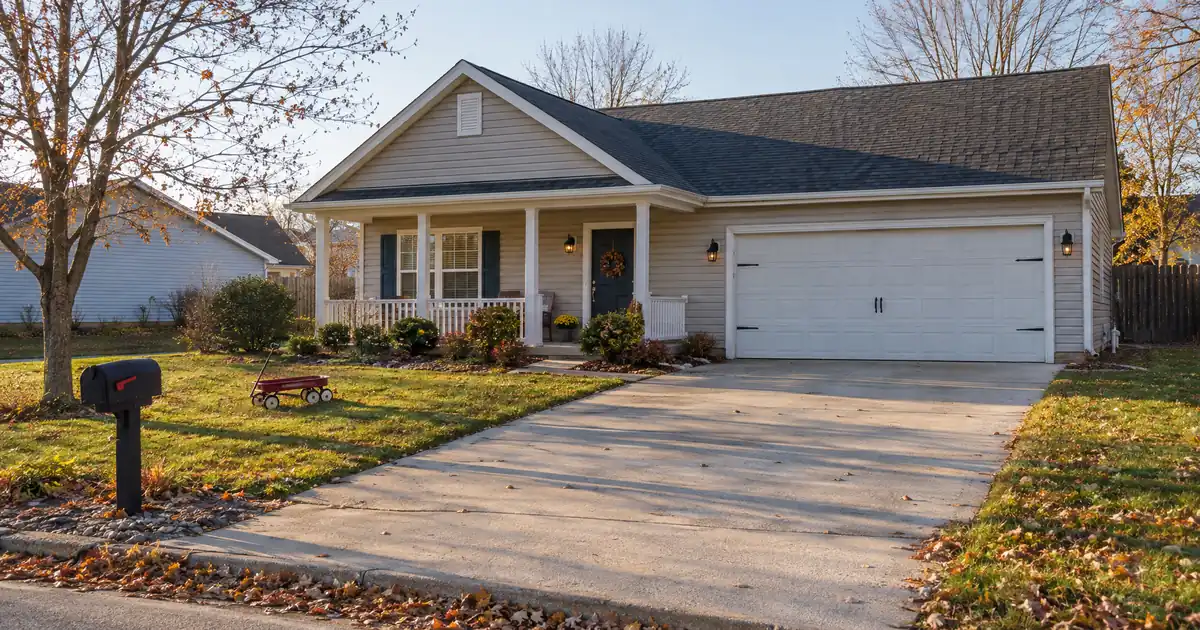
The Quick Read: A first VA offer wins on certainty, not on the loan type. Sellers worry about whether the deal will close, so a full preapproval, clean terms and a plan for a low appraisal do more than a high price. Active-duty buyers add one more lever: dates that fit their orders and a paper trail that proves eligibility.
Key Takeaways
- Sellers react to risk. Make the offer look safe by removing doubt about financing, value and timing.
- The VA escape clause is required in the contract, so the offer has to compete on other terms.
- Get a fully reviewed preapproval and your certificate of eligibility before you write anything.
- Decide your appraisal-gap limit before you offer, not after the appraisal arrives.
- Match your closing and move-in dates to your orders, and say so plainly.
Why Do Sellers Hesitate on VA Offers?
Sellers hesitate because of uncertainty, not because the VA loan is weak. They worry about three things: the appraisal coming in low, the property review finding repairs, and a buyer who has not been fully checked.
VA payment estimate
Starting assumptions reflect an example price with no down payment and a first-use funding fee. Replace them with your own figures.
Editable benchmark: 7.32% as of October 22, 2026 · Freddie Mac 30-year average via FRED®. A conventional market reference, not a VA loan quote.
Illustrative starting assumptions: a $350,000 price, no down payment with full entitlement, a first-use funding fee financed into the loan, a thirty-year term at the current Freddie Mac benchmark, and property taxes and insurance estimated at typical national rates. Every field is editable.
Illustrative estimate only — not a Loan Estimate, approval, quote, or commitment to lend. The rate field carries the weekly Freddie Mac thirty-year conventional benchmark, a market reference and not a VA loan quote; your rate is set by the lender at lock. The funding fee follows VA’s published table for the use and down payment entered; the residual-income figure is VA’s guideline for the region and family size, and the rough residual shown subtracts only the housing payment and the debts entered, while VA also deducts taxes, maintenance and utilities. Taxes, insurance and dues are editable estimates; closing costs are not included. Licensed in sixteen states for consumer mortgages. Lendmire is not affiliated with or acting on behalf of the Department of Veterans Affairs.
Here is the catch. Most of that fear is about the unknown. The VA loan itself is strong. It allows 100% financing with no down payment as long as the price is not above the appraised value. It carries no mortgage insurance of any kind. A buyer on active duty has steady income, which sellers tend to like. Your job is to show the seller the risks are covered.
Think of the seller’s decision as a bet on closing. Every term in your offer either adds to that confidence or takes it away.
What Should You Have Ready Before You Write the Offer?
Have three things in hand: proof of eligibility, a fully reviewed preapproval, and a clear plan for how you will handle signing if orders pull you away. Doing this first is what makes the offer credible.
Eligibility. VA says service members who have served at least 90 continuous days without a break meet the minimum active-duty service requirement. You also need to meet credit, income and occupancy requirements from both VA and the lender. The certificate of eligibility (COE) from VA decides your entitlement. For an active-duty buyer, the paperwork is typically a statement of service signed by your command. Order it early.
A real preapproval. A prequalification is a quick conversation. A preapproval means the lender has reviewed your credit, income and debts. That is the document a listing agent wants to see. Across the wholesale programs Lendmire places VA files with, the decision score starts at 580, and amounts reach $4,000,000 with full entitlement. VA itself sets no minimum score, so some lenders set a higher floor. All of it is subject to lender guidelines and full file review.
The review leans on residual income, which is the money left each month after your major obligations and living costs. The VA Lenders Handbook treats a debt-to-income ratio above 41 percent as a trigger for closer scrutiny, not a hard cap. A ratio above it can work when residual income is well above the table, and only your actual income counts toward that figure.
A VA-experienced team. An agent and loan officer who have handled VA files know how to present them. Lendmire’s VA loan programs are arranged through wholesale lenders, so a broker can compare options for your file.
The Escape Clause: What You Cannot Waive
The VA escape clause is mandatory. The VA Buyer’s Guide says it must be in the sales contract for all VA-guaranteed loans. The lender checks that it is there before closing, and if it is missing, VA may not guaranty the loan.
In practice, the clause lets you walk away and get your earnest money back if the home does not appraise at or above the price. Inspection and appraisal costs you paid out of pocket are not refunded.
This shapes your strategy. A conventional buyer can sometimes waive the appraisal contingency to look bolder. You cannot. So the offer has to stand out through other terms, and no one should promise a seller that the clause will be removed.
The Levers of a Strong First Offer
When the clause is fixed, these are the levers you can actually move.
Price and comps. Look at recent sales with your agent. An offer at or near the likely appraised value is safer for you and the seller. Offering well above value invites a low appraisal.
The appraisal-gap plan. If the appraisal comes in short, VA’s process lets the appraiser’s contact submit more comparable sales before the value is finalized. After the notice of value, your options are a reconsideration of value, a price renegotiation, paying the difference in cash, or using the escape clause. The Buyer’s Guide lists cash as an option when the reconsideration does not raise the value and the seller will not cut the price. Decide how much cash you are willing to commit before you offer. If the answer is zero, say nothing in the offer about covering a gap, and keep the price realistic.
Earnest money. A meaningful deposit signals commitment. Because the escape clause protects your deposit if the appraisal fails, a reasonable deposit costs a VA buyer less risk than it might seem. Ask your agent what is typical locally.
Contingencies. The National Association of Realtors notes that too many contingencies can make an offer less attractive. Keep the ones that protect you, such as inspection, and tighten the rest. Do not drop protections you cannot afford to lose.
Concessions. A concession is anything of value the seller adds that you do not pay for. The Buyer’s Guide points to the VA Lenders Handbook for the limits, and it references a 4% concession limit. A lender may apply its own stricter rules on top, so confirm how your lender counts them. For a first offer, leading with a large ask can weaken how the seller sees you. Often it is better to ask later, if the inspection or appraisal makes it necessary.
The property screen. VA appraisals check value and also minimum property requirements, which are safety and livability standards. They are not a cosmetic review or a full inspection. A home in sound, move-in condition is simpler for everyone. Tell your agent to steer you toward houses likely to pass.
The cover letter. A short, warm note can help. Keep it about your plans for the home, and leave out personal details your agent says to avoid under fair-housing guidance.
How Offer Terms Compare
| Offer feature | Weaker VA offer | Stronger VA offer |
|---|---|---|
| Financing proof | Prequalification only | Full preapproval plus COE |
| Price | Far above likely value | Near comps |
| Contingencies | Many, open-ended | Few, with clear dates |
| Concessions | Large ask up front | Modest or held back |
| Property | Needs repairs | Likely to pass review |
| Closing date | Vague | Matched to seller and orders |
Timing Your Offer to Your Orders
Active-duty buyers have an edge here, because dates are something you can plan. State your orders-driven timeline in the offer, in plain words, so the seller sees a defined window rather than an open question.
If you are buying from a distance, ask your agent and lender how signing will work if you cannot be there, including whether a power of attorney is accepted. Sort that out before the offer, not after acceptance.
Occupancy deserves care. The baseline: you must live in the home you buy with the loan. For a buyer with a move-in date shaped by orders, the exact rules on timing, spouse occupancy and deployment matter, and lenders may add their own stricter overlays. Talk through your situation with your loan officer and confirm it against VA’s official rules before you write the offer. Do not guess.
What If the Seller Counters or Says No?
Treat a counter as a conversation. Check what moved: price, dates, or concessions. If the seller wants more money, test it against the comps and your gap limit. If the seller wants fewer contingencies, decide which one you can shorten safely.
A rejection tells you something too. If the price was fine and the terms were clean, the seller may simply have had a better offer. Adjust and move to the next house. Do not chase a deal by stretching past the limit you set in advance.
Where the Common Rules Get Misread
- “VA sets a minimum credit score.” It does not. Lenders set their own floors.
- “41% debt-to-income is a hard cap.” It is a guideline. Residual income can carry a higher ratio.
- “Sellers must pay all VA closing costs.” They do not. Concession rules govern what a seller may pay.
- “VA buyers can waive the appraisal contingency.” They cannot. The escape clause must be in the contract.
- “A VA appraisal is a home inspection.” It is not. Order a separate inspection.
The Funding Fee in Plain Terms
Most VA borrowers pay a one-time funding fee, which can be financed into the loan. Across the programs Lendmire works with, a first-use purchase carries 2.15% with less than five percent down, 1.5% with five to under ten percent down, and 1.25% with ten percent or more down. Subsequent use is 3.3% with less than five percent down, with the same lower tiers above that. The fee is waived for veterans receiving compensation for a service-connected disability and other exempt groups. A pending claim does not guarantee an exemption at the closing table, so ask your loan officer how your status will be treated.
Key Terms Defined
Certificate of eligibility (COE): The VA document showing you qualify for the benefit and your entitlement.
Residual income: The money left each month after major debts and living costs, which VA treats as the controlling test.
Escape clause: The required contract language that lets a VA buyer exit and recover earnest money if the home does not appraise at the price.
Reconsideration of value: A request that the appraiser review a low value using additional comparable sales.
Minimum property requirements: VA’s safety and livability standards a home must meet before the loan can fund.
Frequently Asked Questions
Is a VA offer really harder to get accepted?
Not by itself. Sellers react to uncertainty, so a full preapproval, a realistic price and clean terms put a VA offer on much the same footing as any other. Weak offers lose, whatever the loan type.
Should I offer over asking with a VA loan?
Only if you have a plan for the appraisal. A price above value can leave a gap, and your options then are renegotiating, paying the difference in cash, or using the escape clause. Set your cash limit before you offer.
Can I ask the seller to pay my closing costs?
You can, within VA’s concession limits and any stricter lender rules. Many buyers hold the request back until the inspection or appraisal makes it necessary, since a big ask in a first offer can weaken it.
Can I buy while deployed or about to PCS?
Often yes, but the occupancy rules and your timeline need review before you offer. Your lender can explain how VA treats orders, spouse occupancy and deployment, and whether the lender adds its own limits.
Does a pending disability claim waive the funding fee?
Not automatically. Exemption depends on VA’s rating status at closing, so ask your loan officer how your claim will be treated.
If you are buying a home and want to see whether a VA loan fits your file, Lendmire can help you compare the options and what each one asks of the file. Program details are subject to lender guidelines and full file review, and nothing here is a commitment to lend.
For your own numbers, request a scenario review with Lendmire.
About Lendmire
Lendmire is a mortgage brokerage (NMLS# 2371349) licensed for consumer mortgage lending in 16 states, arranging FHA, VA, conventional and jumbo purchase and refinance loans through a wholesale lending network. Eligibility is determined by the lender on each file. Scotsman Guide named Lendmire a Top Mortgage Workplace in both 2025 and 2026.
Get Started
Ready to find the right loan for you?
In about 30 seconds you can review financing options available for your home or investment property. No commitment required.
Informational only. Not a Loan Estimate, approval, or commitment to lend. Program availability and eligibility are subject to lender guidelines, credit approval, property review, and underwriting.
References
1. VA.gov: Eligibility for VA home loan programs
2. VA Pamphlet 26-7, Chapter 4: Credit Underwriting
3. VA Home Loan Guaranty Buyer’s Guide
4. National Association of Realtors: Earnest Money
This article is part of Lendmire’s VA loan program — full qualification details, guidelines, and scenarios live on the program page.
Related reading: VA Loan Income Rules for a First-Time User on Active Duty · Can an Active-Duty Member Close a VA Loan Before a PCS Move? · VA Loan Appraisal Requirements for a First-Time Active-Duty Buyer
Brandon Miller
Founder & CEO, Mortgage Loan Originator, Lendmire LLC
- Mortgage Loan Originator · NMLS# 1129696 · Verify on NMLS Consumer Access
- North Carolina Real Estate Broker · License# 343312 · Verify on NCREC
- North Carolina Insurance Producer · License# 19053198 · Property, Casualty, Life, Health · Verify on NAIC SBS
- Lendmire LLC · Firm NMLS# 2371349 · Verify firm licensure
Important disclosures. Lendmire (NMLS# 2371349) is a licensed mortgage brokerage. Lendmire is not a direct lender, depository institution, or financial advisor. All loan inquiries are subject to lender underwriting; this article does not constitute a commitment to lend. Rates, terms, and program guidelines are subject to change without notice and vary by borrower profile, property type, and state. Information in this article is general in nature and is not financial, legal, or tax advice. Equal Housing Opportunity. NMLS Consumer Access: nmlsconsumeraccess.org.