
The Quick Read: You meet VA occupancy by certifying that you will personally live in one unit of the building as your home, then actually moving in within a reasonable time after closing. You may rent the other units. You may not buy the building as a pure rental. Sixty days is the usual benchmark for “reasonable,” and a documented later date can work in specific situations. Intent is the real test, so the paper trail has to match the plan.
What Does Occupancy Mean on a 2-4 Unit?
Occupancy means one unit becomes your home and the remaining units can produce rent. The VA loan is a primary-residence benefit. VA News states that every VA loan must meet occupancy requirements, that the benefit cannot buy a vacation home or investment property, and that misrepresenting your intent to occupy can lead to legal action.
VA payment estimate
Starting assumptions reflect an example price with no down payment and a first-use funding fee. Replace them with your own figures.
Editable benchmark: 7.32% as of October 22, 2026 · Freddie Mac 30-year average via FRED®. A conventional market reference, not a VA loan quote.
Illustrative starting assumptions: a $350,000 price, no down payment with full entitlement, a first-use funding fee financed into the loan, a thirty-year term at the current Freddie Mac benchmark, and property taxes and insurance estimated at typical national rates. Every field is editable.
Illustrative estimate only — not a Loan Estimate, approval, quote, or commitment to lend. The rate field carries the weekly Freddie Mac thirty-year conventional benchmark, a market reference and not a VA loan quote; your rate is set by the lender at lock. The funding fee follows VA’s published table for the use and down payment entered; the residual-income figure is VA’s guideline for the region and family size, and the rough residual shown subtracts only the housing payment and the debts entered, while VA also deducts taxes, maintenance and utilities. Taxes, insurance and dues are editable estimates; closing costs are not included. Licensed in sixteen states for consumer mortgages. Lendmire is not affiliated with or acting on behalf of the Department of Veterans Affairs.
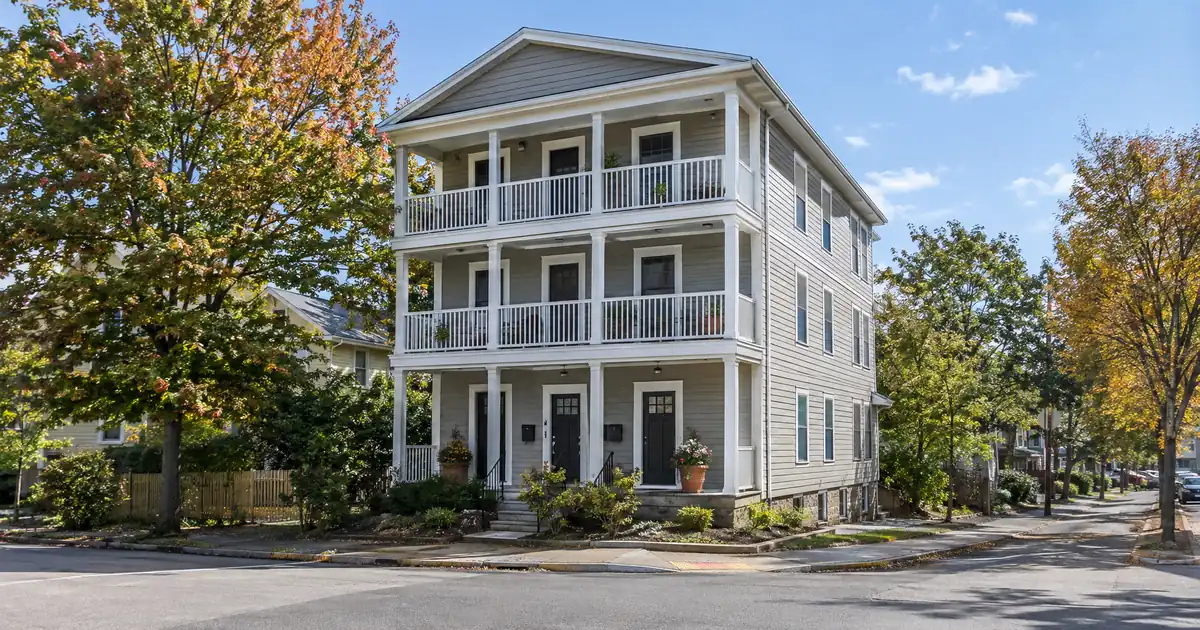
That is what makes house hacking possible. A duplex, triplex or fourplex qualifies when you live in one unit. A building with five or more units is outside the program, so confirm the unit count early.
Through VA loan programs, buyers can reach 100% financing with no mortgage insurance and no VA loan limit on full entitlement, subject to lender guidelines and full file review. Occupancy is the condition that keeps that benefit available. You can read more on Lendmire’s VA loan programs page.
Key Takeaways
- You must live in one unit; the others can be rented.
- Sixty days after closing is the common “reasonable time” benchmark.
- Rent counts toward qualifying only under specific conditions.
- Reserves must be your own funds, in the account before closing.
- A false occupancy certification carries legal risk.
How the Loan Is Underwritten, Step by Step
Underwriting runs in five steps, and occupancy touches nearly all of them.
1. Eligibility. Your Certificate of Eligibility (COE) from VA decides entitlement. Service requirements are VA’s rules, not the lender’s.
2. Credit and income. VA sets no minimum credit score. The wholesale programs we place VA loans with start at a 580 decision score. Residual income, the money left after the mortgage and other obligations, is the controlling test. The 41% debt-to-income figure is a guideline, not a cap. A higher ratio needs residual income well above the table.
3. Occupancy certification. You certify that you intend to live in the property. It is commonly signed at application and again near closing.
4. Appraisal. VA’s appraisal sets the reasonable value. On a multi-unit, the appraiser’s market rent opinion is what lenders typically use to support rental income.
5. Move-in. After closing, you move into your unit within the reasonable-time window.
Most standard VA files can run with no down payment as long as the price is not above the appraised value. The funding fee is reviewable and runs from 1.25% to 3.3% depending on use and down payment. It is waived for veterans receiving service-connected disability compensation and other exempt groups.
Can the Rent Count Toward Qualifying?
Yes, but only part of it, and only with conditions. You can choose to count the rent or leave it out.
Per VA Pamphlet 26-7, Chapter 4, prospective rent can be counted only if you have a reasonable likelihood of success as a landlord and cash reserves of at least six months of mortgage payments (PITI). An older revision of that chapter, posted on VA’s benefits site, counts 75% of the lease or the appraiser’s rent opinion, unless a greater percentage can be documented. Confirm the current percentage with your loan officer, since that PDF is an older revision.
The same older revision spells out what reserves can be:
- Your own funds, not a gift.
- Not home equity.
- Not cash-out refinance proceeds.
- In the account before the VA loan closes.
If you skip the rent, the full payment is treated as debt and the reserve rule does not apply. Either way, your household income has to carry the file. Rent helps. It does not replace your own income.
Where Does the 60-Day Window Come From?
Per VA Pamphlet 26-7, Chapter 3, the veteran must certify intent to personally occupy the property as a home, either already living there or intending to move in within a reasonable time.
Later move-in can still be reasonable in narrow cases. You generally need both a specific date you can certify and a particular future event that makes that date realistic. Occupancy more than 12 months after closing generally cannot be considered reasonable.
One more point: you may see claims online of a mandatory two-year stay. Some lenders may expect more. Ask for their expectation in writing.
Where the General Rule Bends
Several situations change how occupancy works. Here is how each plays out.
| Situation | How occupancy is treated |
|---|---|
| Active-duty, can’t move in | Spouse or dependent child may satisfy it |
| Deployed service member | Temporary duty status can meet the requirement |
| Move-in later than 60 days | Needs a certified date plus a triggering event |
| IRRRL | Prior occupancy by you, spouse or child suffices |
| Cash-out refinance | Current occupancy required |
Active-duty spouse or child. Occupancy by a spouse or dependent child can satisfy the requirement when the service member cannot occupy within a reasonable time. For a dependent child, the attorney-in-fact or legal guardian makes the certification and signs VA Form 26-1820.
Refinances. An IRRRL refinances an existing VA loan and needs only a certification of prior occupancy. The VA cash-out refinance, which can reach 100% of the appraised value including the financed fee, requires current occupancy. For a 2-4 unit, that means living in one unit.
Reusing entitlement. You can keep your current home and use remaining entitlement on another purchase. The next home still has to meet occupancy rules. With remaining entitlement, a down payment may be required, so speak with a loan officer.
Lender overlays. Lenders can be stricter than VA on 3-4 units. Many tight rules on bigger buildings come from the lender, not the agency.
Choosing Your Unit and Proving You Live There
Pick the unit you will really use as home. Don’t choose based only on which unit rents for less. An appraisal, a lease and a lender file that all tell the same story make the occupancy plan credible.
Evidence that supports a genuine move-in:
- Your ID and mailing address at the property.
- Utilities in your name.
- Your own lease or occupancy language for your unit, if the lender asks.
- Mail, vehicle registration and similar records showing the address.
If the building has existing tenants, check lease terms before you write an offer. A tenant lease running well past your planned move-in is fine if you are taking a different, available unit. It is a problem if the only unit you could occupy is leased for months. In that case, negotiate vacant delivery of one unit or reconsider the building.
A Timeline From Offer to Move-In
1. Offer and contract. Confirm the unit count, which unit you will occupy and its availability.
2. Application. You sign the occupancy certification. Reserves, leases and landlord experience are documented if you count rent.
3. Appraisal. The appraiser documents value and market rent.
4. Closing. You certify again near closing. Reserve funds must already be in your account.
5. Move-in. You move into your unit within the reasonable-time window.
6. First lease. Rent the other units after your own move-in plan is on track.
Sequence matters. Listing a unit for rent before closing is fine. Signing a lease on your own unit shortly after closing is a red flag.
What Looks Safe, and What Looks Risky
| Safe behavior | Risky behavior |
|---|---|
| Moving in inside the benchmark window | Leasing your unit right after closing |
| Documenting a specific date and event | Vague “someday” move-in plans |
| Your own funds in reserve | Gift or equity-sourced reserves |
| Asking the lender about its overlays | Assuming VA’s rule is the only rule |
Consider a buyer who closes on a fourplex and receives orders a few months later. Intent was genuine at closing, so the file stands on its own record. The buyer should document the orders and talk to the lender before changing how any unit is used. A buyer who signs a lease on their own unit a few weeks after closing is in a different position. Timing like that invites questions about what the intent really was.
Key Terms Defined
Occupancy certification: Your signed statement that you intend to live in the property as your home.
Entitlement: The amount of VA guaranty available to you, shown on your COE.
Residual income: The money left each month after the mortgage and other obligations, the controlling test in VA underwriting.
PITI: Principal, interest, taxes and insurance, the full monthly housing payment.
IRRRL: The Interest Rate Reduction Refinance Loan, a VA program that refinances an existing VA loan and may carry a funding fee unless the borrower is exempt.
When This Path Isn’t the Right Fit
VA house hacking fails when the plan to live there is shaky. If you cannot name a move-in date and the event behind it, the occupancy certification is a risk. If your reserves would come from a gift or home equity, the rent cannot be counted. And if you want every unit rented from day one, this program is the wrong tool.
If you are buying a home and want to see whether a VA loan fits your file, Lendmire can help you compare the options and what each one asks of the file. Reach the team at 828-256-2183. Program figures are subject to lender guidelines and full file review, and nothing here is a commitment to lend.
Frequently Asked Questions
Can I rent out the other units on day one?
Yes, you can rent the other units, as long as you intend to live in one. What you cannot do is treat the building as a pure investment. Your own move-in plan has to be real and documented. Signing leases on the other units is normal. Signing one on your own unit is the problem.
Is there a minimum time I must live there?
Some lenders and sources expect a period of occupancy, and that expectation can be an overlay rather than a VA rule. Ask your lender to state in writing what applies to your file. Don’t assume a number from a blog or a forum.
What if I get orders right after closing?
Active-duty status can change how occupancy is met. A spouse or dependent child living in the home can satisfy the requirement, and deployed members are in temporary duty status. Document the orders, tell your lender early, and don’t change the unit’s use without talking to them first.
Do I have to count the rent to qualify?
No. You can leave it out, and then the full payment is treated as debt with no six-month reserve requirement. If you do count it, expect a documented landlord history or a property manager, reserves in your own funds, and a reduced share of rent, with the older VA revision showing 75% unless a greater percentage is documented. The exact numbers vary by lender and program and follow a full review of property, leverage, and credit.
Does a cash-out refinance on a 2-4 unit need occupancy too?
Yes. VA can guarantee a cash-out refinance of a residence you already own and occupy as a home, so you must live in one unit. An IRRRL is different, since prior occupancy is enough.
For your own numbers, request a scenario review with Lendmire.
About Lendmire
Lendmire — NMLS# 2371349 — is a mortgage broker that arranges FHA, VA, conventional and jumbo home purchase and refinance financing in 16 states through wholesale lenders. Every option is subject to the lender’s guidelines and full underwriting. Scotsman Guide named Lendmire a Top Mortgage Workplace in both 2025 and 2026.
Get Started
Ready to find the right loan for you?
In about 30 seconds you can review financing options available for your home or investment property. No commitment required.
Informational only. Not a Loan Estimate, approval, or commitment to lend. Program availability and eligibility are subject to lender guidelines, credit approval, property review, and underwriting.
References
1. VA News: Using the VA home loan benefit more than once
2. VA Pamphlet 26-7, Chapter 4: Credit Underwriting
3. VA Pamphlet 26-7, Chapter 4, older revision
4. VA Pamphlet 26-7, Chapter 3: The VA Loan and Guaranty
This article is part of Lendmire’s VA loan program — full qualification details, guidelines, and scenarios live on the program page.
Related reading: Can You Refinance a VA Loan Twice in One Year? · VA Loan Occupancy Requirements for a Veteran House Hacker · Does Residual Income Help a High DTI on a 2-4 Unit VA Loan?
Brandon Miller
Founder & CEO, Mortgage Loan Originator, Lendmire LLC
- Mortgage Loan Originator · NMLS# 1129696 · Verify on NMLS Consumer Access
- North Carolina Real Estate Broker · License# 343312 · Verify on NCREC
- North Carolina Insurance Producer · License# 19053198 · Property, Casualty, Life, Health · Verify on NAIC SBS
- Lendmire LLC · Firm NMLS# 2371349 · Verify firm licensure
Required disclosures. Lendmire (NMLS# 2371349) operates as a licensed mortgage broker, not a direct lender or depository. The discussion in this article is general in nature and should not be relied upon as financial, legal, or tax advice — every investment scenario is unique and should be reviewed by a qualified professional. Any loan inquiry is subject to lender underwriting, and this article is not a commitment to lend or a guarantee of approval. Mortgage rates, loan terms, and program guidelines vary by borrower, property, and state, and may change without notice. Equal Housing Opportunity. Verify licensure at NMLS Consumer Access.