
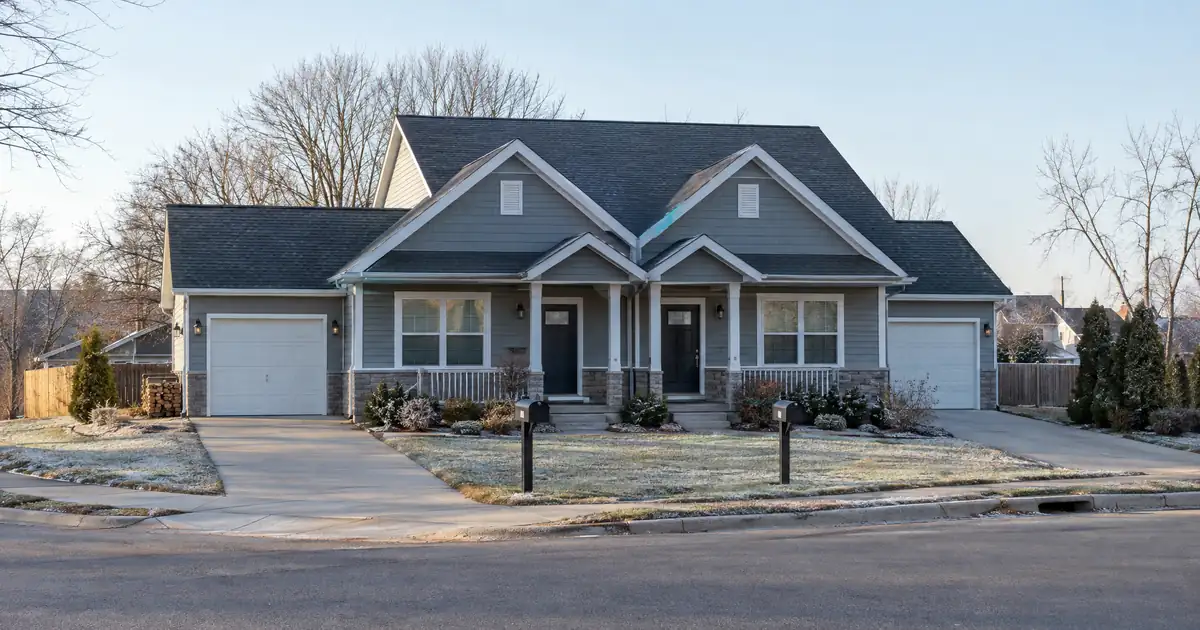
The Quick Read: On a two- to four-unit home, the buyer’s required contribution is the FHA minimum investment of 3.5% of price or value, and that percentage does not change with unit count. An eligible donor’s gift can cover it, but a down payment assistance second lien is a loan, not a gift. The grant option reaches one to four units, while the forgivable and repayable seconds stop at two. All of it applies to owner-occupied primary residences, through wholesale lenders, subject to program guidelines and full underwriting.
Key Takeaways
- The 3.5% minimum investment is the same on a duplex, triplex or fourplex. Dollars rise with price, not with the percentage.
- “Gift plus DPA” is a buyer’s shorthand, not an agency term. Each layer is classified on its own: a gift counts as the buyer’s funds, a grant is released at closing, and a second lien is a loan.
- On three and four units, only the grant option fits. The forgivable and repayable seconds cover one and two units.
- On three and four units, the building’s rents can cap the loan no matter how much the buyer contributes.
- Repeat and move-up buyers can use every option. None of them works on a rental or second home.
What “Minimum Contribution” Means on a Home Loan
The minimum contribution is the share of the purchase the buyer must fund with acceptable money. On an FHA loan, that share is 3.5% of the lesser of the purchase price or appraised value. The first mortgage then sits at 96.5% leverage. FHA charges a 1.75% upfront mortgage insurance premium on the base loan, which can be financed into the loan. That premium is not part of the contribution.
The word “minimum” matters because buyers often assume more units means more skin in the game. It does not. A fourplex and a single-family home both carry the same 3.5%. What changes is the size of the price, the way the loan is qualified, and which assistance options are available.
“Gift Plus” is where buyers get tangled. It describes a family gift stacked with a down payment assistance option. No agency defines it. So each dollar gets sorted by its type, and each type has its own rules. Lendmire’s down payment assistance programs are built around that sorting. The sections below walk through it.
Which Assistance Option Fits a 2-4 Unit?
Unit count decides which options are available. Across the wholesale programs Lendmire arranges, the grant works on one to four units. The forgivable and repayable seconds work on one and two units. The refinance-cost second is a separate product for FHA refinances.
| Option | Units | Credit floor | What it is |
|---|---|---|---|
| Grant | 1-4 | 620 | Nothing to repay |
| Forgivable second | 1-2 | 640 | Loan, forgiven over time |
| Repayable second | 1-2 | 660 | Loan with monthly payment |
| Refinance-cost second | 1-4 | 660 | Loan, FHA refinance only |
Credit floors are the lowest representative score among borrowers on the file. For the second-lien options, a blended score can apply when a co-borrower scores lower, but the primary wage earner must earn at least 60% of household income and hold the higher score.
The practical read: a buyer eyeing a triplex or fourplex has one assistance route. A buyer eyeing a duplex has three. That is a real reason some buyers choose a duplex over a larger building, and it is worth deciding before shopping.
How the Grant Works Against the Minimum
The grant gives 2% or 3.5% of the purchase price toward the FHA minimum investment. There is nothing to repay. It is released at closing, with no lien, no interest and no payment. It pairs only with an FHA first mortgage at 96.5% leverage, and the one- to four-unit range applies to the building. Terms depend on the lender’s guidelines, the property type, the leverage, and a full review of the credit profile.
The grant’s size changes the math on the buyer’s side.
- At 3.5%: the grant covers the entire minimum investment. The buyer’s own money goes to closing costs, prepaids and reserves.
- At 2%: the grant covers a bit more than half. The remaining 1.5% of price must come from the buyer’s savings or an eligible gift.
That second case is where “gift plus” earns its name. The grant and a family gift are different sources, and together they can reach 3.5%. A gift from a relative is not another assistance program. Still, the grant cannot be combined with any other down payment assistance program, so the lender confirms how the file is documented before anything is promised.
Eligibility is one of two tests. Household income at or below 140% of area median income qualifies. So does any one qualifying category: first responder, educator, medical worker, civil servant, military personnel, a buyer with no ownership interest in a home during the prior three years, or a property in an underserved census tract. A repeat buyer in public service qualifies through the category even above the income line. An HUD-approved homebuyer education course is required, and its cost is credited back at closing. The grant is not offered in Washington.
How the Forgivable and Repayable Seconds Work
Both seconds are loans, and each carries its own disclosure at closing. Neither is a gift. They fit duplexes but not larger buildings.
The forgivable second is 3.5% of the lesser of price or appraised value. It carries no interest and no monthly payment. It is forgiven after 36 or 60 on-time first-mortgage payments, with no delinquency of 90 days or more. The lien term is 30 years. Manual underwriting is allowed, and no homebuyer counseling is required.
The repayable second is 3.5% or 5%. At 5%, the extra 1.5% goes toward closing costs and prepaid items. This one is a real loan: it bears interest, requires a monthly payment, amortizes over 30 years and comes due in a balloon in year 10. It follows automated underwriting only, and manual underwriting is not allowed. High-balance first liens are allowed here but not with the forgivable second.
Neither second carries an income limit, apart from USDA‘s own limits when the first lien is USDA.
Why does the “loan, not a gift” distinction matter so much? HUD’s secondary financing guidance states that a second lien is not a gift, even when it carries no payment or has forgiveness terms. Underwriting treats it as secondary financing, which brings combined-leverage and provider rules into play. A repayable second also adds a payment that counts in qualifying. Buyers who plan on a gift to “cover” a second lien should expect the lender to look at both layers separately.
What Counts as the Buyer’s Own Funds
Savings, documented gifts and the grant can all support the minimum investment. A second lien cannot be passed off as a gift. The table sorts the common sources.
| Source | Role in the minimum |
|---|---|
| Savings and checking | Counts, with a paper trail |
| Earnest money | Counts, if the source is documented |
| Eligible family gift | Counts, with a signed letter |
| Grant | Applied toward the 3.5% at closing |
| Second-lien assistance | A loan; the lender sets how it fits |
| Seller or agent credits | Cannot fund the minimum |
FHA defines the minimum required investment as the borrower’s own cash or cash-equivalent contribution of at least 3.5% of the property’s adjusted value, per the HUD Handbook 4000.1 Glossary. Gifts qualify within that definition, but only from permitted donors.
Gift Rules: Who Can Give and What Paperwork Follows
A gift must be a true gift. FHA limits donors to a defined group. Family members are the most common, and employers, charities and public agencies can also qualify. Anyone with a stake in the sale, such as the seller, the builder or a real estate agent, cannot fund the minimum investment.
The paperwork has four parts:
1. A gift letter signed and dated by the donor and the buyer, stating that nothing is to be repaid.
2. Evidence that the donor had the funds.
3. Evidence the funds moved to the buyer or to the closing agent.
4. Deposit records that match the amounts in the letter.
Cash handed over in person is the usual snag. If it never sat in an account, the lender has nothing to trace. A donor who moves funds into a bank account well before the file goes in makes the trail much cleaner.
One more point. A gift that arrives after the assistance is set up should not exceed what the file needs. Extra gift money creates documentation to explain, and it can confuse the closing figures.
Where the Rule Breaks: Named Edge Cases
The general rule is simple: 3.5% regardless of units. Several situations bend it.
Three- and four-unit self-sufficiency. On FHA, a three- or four-unit property must pass a rent test. The monthly housing payment divided by net rental income cannot exceed 100%. Net rental income uses the appraiser’s market rent from every unit, including the one the buyer will live in. The lender then subtracts the larger of the appraiser’s vacancy and maintenance estimate or 25%. A strong gift cannot fix a failed test. It limits the maximum loan, so the buyer sometimes needs a lower price or a different building.
Duplex versus larger. The self-sufficiency test applies to three and four units only, so a duplex avoids it. That is one more reason a duplex is easier to finance. The assistance options are a separate matter: the forgivable and repayable seconds are written for one and two units, while the grant reaches up to four.
USDA on multiple units. USDA’s loan origination FAQ says one unit of a duplex may be eligible, but the buyer cannot purchase both units, because that is treated as income-producing. In practice, a 2-4 unit with assistance on a USDA first lien is not a workable shape. USDA does allow assistance when the guaranteed loan stays in first position, which is why the seconds pair with USDA on single-family homes.
HUD-184. The Section 184 guarantee covers one to four units, but the guarantee itself does not provide assistance. The forgivable and repayable seconds can pair with it on one- and two-unit homes. Lender guidelines set the contribution mechanics for that file.
Combined leverage. HUD’s handbook language on combined loan-to-value for secondary financing has been revised recently. A lender applies the current version, and it varies by who provides the second. Buyers should not budget around a leverage figure from an older article.
Cash back. Assistance and gift money cannot generate cash back to the buyer beyond refunds of earnest money or costs paid outside closing.
Owner occupancy. Every option here is for an owner-occupied primary residence. A buyer who wants to rent out all units, or buy a second home, is outside this lane. The usual FHA expectation is that one borrower moves in after closing and plans to stay at least a year, and the lender confirms the exact window.
Escrow holdbacks. The second-lien options allow minor non-structural repairs of up to $5,000 under an escrow holdback. The lender escrows 150% of the estimate, and the work must be completed within a window that varies by file and lender.
A Funding Order That Holds Up
Here is how a file typically gets built, in plain steps.
1. Pick the building first. Unit count decides the assistance option and whether the rent test applies.
2. Pick the option. A duplex buyer can compare grant, forgivable and repayable. A triplex or fourplex buyer has the grant.
3. Set the contribution. The target is 3.5% of the lesser of price or value. Decide how much the grant, savings and gift each supply.
4. Check the credit floor. A representative score of 620 is needed for the grant, 640 for the forgivable second lien and 660 for the repayable one, with blended scores possible on the second liens.
5. Document each source. Statements for savings, the gift letter and donor records for gifts, and the education certificate for the grant.
6. Run the file through automated underwriting. The assistance options follow the finding. FHA manual underwriting ratios are 31/43, and approvals through the automated system commonly allow more.
If the file falls short, there are a few ways out. A co-borrower can add income or credit. A duplex can replace a fourplex. A grant at 3.5% can replace one at 2%. A different first lien can open different options.
Scenarios in Percentages
These examples use percentages of price, with no dollar figures.
A duplex, grant at 3.5%. The grant covers the full minimum investment. The buyer’s cash goes to closing costs and reserves. The buyer needs a 620 score and must either meet the 140% income test or fall into a qualifying category, plus complete education.
A duplex, grant at 2% plus a family gift. The grant is 2% and a relative gives 1.5%. The sum reaches 3.5%. The gift letter and donor trail carry real weight here, because the lender must see both sources clearly.
A duplex, forgivable second. The second is 3.5% of the lesser of price or value. It is a lien that sits on the property and is forgiven after 36 or 60 on-time first-lien payments. If the buyer sells or refinances before then, the lien must be dealt with.
A fourplex, grant only. The grant is the only assistance option. Before anything else, the appraiser’s market rents must pass the rent test. If rents are thin, the loan amount falls, and that raises the buyer’s cash need.
How Buyers Often Misjudge This
Several beliefs show up often.
“A forgivable loan counts as a gift.” It does not. It is secondary financing, and it carries a lien until forgiven.
“More units mean a higher percentage.” The percentage holds. Larger buildings cost more and bring the rent test.
“These programs are only for people buying their first home.” Repeat and move-up buyers can use every option described here. For the grant, a buyer with no recent ownership is just one name on a list that also includes public-service workers and buyers in underserved census tracts, alongside the income test.
“A grant is always better than a forgivable loan.” A grant leaves no lien. A forgivable second leaves a lien until the forgiveness period ends, which makes it work much like a grant for a buyer who stays put. The National Housing Conference has made that same point about forgivable versus grant structures.
“One program’s rules apply everywhere.” Public programs vary. Urban Institute research shows that grants make up a small share of down payment assistance programs, and most are second mortgages. Some state housing finance agencies add their own tests. The New Jersey HMFA program highlights, for example, attach a liquid asset test to buyers who use assistance. When two layers disagree, the stricter one governs.
Key Terms Defined
Minimum required investment: the buyer’s own cash or acceptable gift, set at 3.5% of price or value for an FHA purchase.
Secondary financing: any loan that sits behind the first mortgage and creates a lien on the property, even one with no payment.
Gift letter: a signed statement from the donor that the money is a gift with no repayment expected.
Self-sufficiency test: the FHA rent test for three- and four-unit homes, which compares the housing payment to net rental income.
Balloon: a lump-sum balance due at a set date, which on the repayable second falls in year 10.
Blended score: a qualifying credit score that averages a lower-scoring co-borrower’s score into the file when income and score conditions are met.
Frequently Asked Questions
Can a gift cover my entire minimum contribution on a duplex?
Yes, when the donor is an allowed source and the gift is documented. The 3.5% minimum investment can come from a family gift, savings, the grant, or a mix. A second lien does not count as a gift, so the lender looks at it as a separate loan. Whether the second covers part of the investment depends on the program guidelines for that file.
Do I have to be buying my first home to use the grant?
No. Household income at or below 140% of area median income qualifies, and so do several public-service categories. A repeat buyer who is a teacher, nurse, firefighter, civil servant or military member can qualify. So can a buyer purchasing in an underserved census tract.
Why can’t I use a forgivable second on a fourplex?
The forgivable and repayable seconds are built for one- and two-unit homes. On three and four units, the grant is the assistance option that fits. The building also has to pass FHA’s rent test, so even a larger gift may not raise the loan amount.
Does earnest money count toward the minimum?
Generally yes, when the lender can trace it to the buyer’s own account or an eligible gift. A clean bank statement trail helps. Funds that cannot be traced create delays and questions during underwriting.
What happens if I move out of the building?
Assistance is for an owner-occupied primary residence. The forgivable second requires on-time first-mortgage payments through the 36- or 60-payment forgiveness period. Selling or refinancing during that window means the lien must be addressed. Buyers should ask the lender what an early move or payoff looks like before signing.
If you are buying a primary home and want to see whether a down payment assistance option fits your file, Lendmire can help you compare the grant, forgivable and repayable structures alongside an FHA, USDA or HUD-184 first mortgage. Consumer lending is licensed in 16 states, and the grant is not offered in Washington. On a triplex or fourplex, the rent test often matters more than the gift, so check the building’s market rents before falling in love with the price.
About Lendmire
Lendmire is a mortgage brokerage (NMLS# 2371349) licensed for consumer mortgage lending in 16 states, arranging government-backed purchase loans and the down payment assistance options that sit on top of them through a wholesale lending network. Eligibility is determined by the lender on each file. Scotsman Guide named Lendmire a Top Mortgage Workplace in both 2025 and 2026.
Investors who want the broader program framework can review how DSCR loans work.
Get Started
Ready to find the right loan for you?
In about 30 seconds you can review financing options available for your home or investment property. No commitment required.
Informational only. Not a Loan Estimate, approval, or commitment to lend. Program availability and eligibility are subject to lender guidelines, credit approval, property review, and underwriting.
References
1. USDA Rural Development Loan Origination FAQ
2. HUD FHA Connection – Secondary Financing Background
3. National Housing Conference DPA guide
4. Urban Institute – Expanding Down Payment Assistance Awareness
This article is part of Lendmire’s First Time Home Buyer series — every loan program’s qualification details, guidelines, and scenarios live on the loan options page.
Related reading: DPA Minimum Contribution Rules for Condos and Multifamily Buyers · Down Payment Assistance Minimum Contribution Rules by Property Type · Can a Non-Occupant Co-Borrower Join a DPA Loan With Gift Funds?
Brandon Miller
Founder & CEO, Mortgage Loan Originator, Lendmire LLC
- Mortgage Loan Originator · NMLS# 1129696 · Verify on NMLS Consumer Access
- North Carolina Real Estate Broker · License# 343312 · Verify on NCREC
- North Carolina Insurance Producer · License# 19053198 · Property, Casualty, Life, Health · Verify on NAIC SBS
- Lendmire LLC · Firm NMLS# 2371349 · Verify firm licensure
Important disclosures. Lendmire (NMLS# 2371349) is a licensed mortgage brokerage. Lendmire is not a direct lender, depository institution, or financial advisor. All loan inquiries are subject to lender underwriting; this article does not constitute a commitment to lend. Rates, terms, and program guidelines are subject to change without notice and vary by borrower profile, property type, and state. Information in this article is general in nature and is not financial, legal, or tax advice. Equal Housing Opportunity. NMLS Consumer Access: nmlsconsumeraccess.org.