
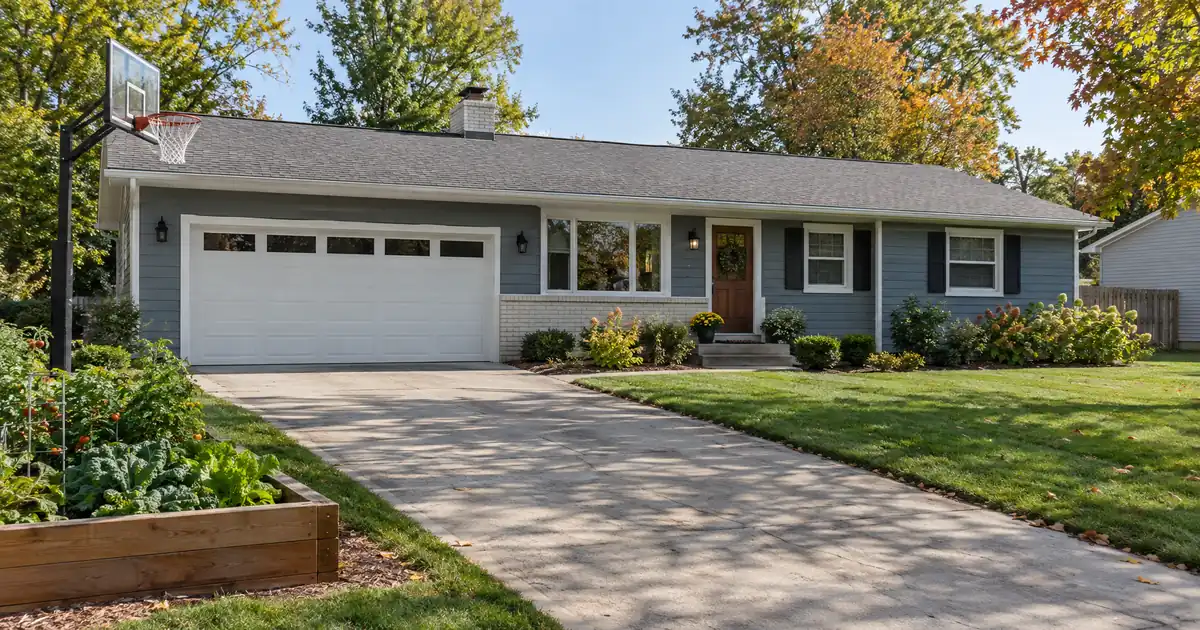
The Quick Read: A move-up buyer saves most when sale proceeds push the new loan to 80% of the price or below and the credit score is strong. At that point conventional mortgage insurance disappears, while FHA still charges its premiums at every level of equity. The size of the saving depends on your score, your down payment and the insurance quote on your Loan Estimate, so the honest answer is a method, not a single number.
Key Takeaways
- FHA charges an upfront premium of 1.75% of the base loan, financed into the balance, plus an annual premium. Conventional has no upfront premium.
- At 80% loan-to-value or below, a conventional loan carries no mortgage insurance at all.
- Conventional insurance can be cancelled as equity builds. FHA annual premiums may last the full term when you start above 90% loan-to-value.
- FHA still wins in some cases, mainly lower credit scores and thin equity.
- The only way to see your own number is to compare two Loan Estimates side by side.
Why Does a Move-Up Buyer Have an Edge?
A move-up buyer usually brings money from selling a home. That money becomes the down payment. A bigger down payment means a lower loan-to-value ratio (LTV), which is the loan balance divided by the home’s value.
FHA payment estimate
Starting assumptions reflect an example price and the FHA minimum investment. Replace them with your own figures.
Editable benchmark: 7.32% as of October 22, 2026 · Freddie Mac 30-year average via FRED®. A conventional market reference, not an FHA loan quote.
Illustrative starting assumptions: a $350,000 price, the FHA minimum investment as the down payment, a thirty-year term at the current Freddie Mac benchmark, and property taxes and insurance estimated at typical national rates. Every field is editable.
Illustrative estimate only — not a Loan Estimate, approval, quote, or commitment to lend. The rate field carries the weekly Freddie Mac thirty-year conventional benchmark, a market reference and not an FHA loan quote; your rate is set by the lender at lock. FHA mortgage insurance follows HUD’s published schedule for the term, leverage and loan size entered; taxes, insurance and dues are editable estimates; closing costs are not included; county loan limits are not checked here. Licensed in sixteen states for consumer mortgages. Lendmire is not affiliated with or acting on behalf of FHA, HUD, or the federal government.
LTV drives the cost on both products, but in different ways. Conventional pricing improves as LTV falls and credit scores rise. FHA’s mortgage insurance applies at every LTV. So the more equity you carry into the purchase, the more a conventional loan has to offer.
Think of two buyers purchasing the same house. One puts down 3.5%, the other puts down 20% from sale proceeds. The first buyer sits near FHA’s maximum financing of 96.5%. The second buyer sits at 80% LTV, where conventional insurance is gone. The gap between the products is widest for the second buyer. Terms vary by lender guidelines, property type, leverage, credit profile, and full file review.
What Is an FHA Loan, and What Does It Charge?
An FHA loan is a mortgage insured by the Federal Housing Administration, part of HUD. The insurance protects the lender, and you pay for it. Across the wholesale programs Lendmire places FHA files with, the structure is consistent: maximum financing of 96.5% with a 3.5% minimum investment, starting at a 580 decision score.
Here is how the insurance works. There are two layers, called mortgage insurance premiums (MIP):
1. Upfront premium. HUD Mortgagee Letter 2023-05 sets this at 1.75% of the base loan amount. Most borrowers finance it, so it raises the balance.
2. Annual premium. It runs between 0.15% and 0.75% of the balance, depending on loan term, loan amount and LTV. It is billed monthly inside the payment.
Duration matters as much as size. On a thirty-year loan above 90% LTV, the annual premium lasts for the term. At or below 90% LTV, it ends after eleven years. That is a program fact, not a price quote. Exact terms depend on the lender’s guidelines, property type, leverage, and a full review of the borrower’s file.
You can learn more about FHA loan programs on Lendmire’s program page. Eligibility details below come from the FDIC’s summary of the FHA 203(b) program, which cites HUD’s handbook. County loan limits apply and change every year.
What Does a Conventional Loan Charge?
A conventional loan is not insured by a government agency. Fannie Mae and Freddie Mac set the common guidelines. Fannie Mae’s Selling Guide requires mortgage insurance on a first mortgage when LTV is above 80%. At 80% or below, none applies.
Above 80%, private mortgage insurance (PMI) comes in. PMI cost moves with your credit score and LTV. Fannie Mae ties its loan-level price adjustments to the representative credit score. A strong score and a big down payment shrink the cost. A weak score and a small down payment grow it.
Two other mechanics shape the quote:
- Coverage level. Fannie Mae offers standard and minimum coverage options for certain transactions, each with its own pricing effect.
- Financed premiums. If a premium is financed, the gross LTV counts when setting the maximum LTV.
FHA, VA and USDA loans are excluded from these conventional price adjustments. They run on separate rules.
Where Do the Savings Come From?
The savings come from four places. Each one is a line you can find on a Loan Estimate.
1. No upfront premium. FHA’s 1.75% is added to the balance. Conventional has no matching charge. You borrow less, and you pay interest on less.
2. Lower monthly insurance, or none. At 80% LTV or below, the monthly insurance line is zero on a conventional loan. At 90% or less LTV, FHA still charges until year eleven. Every figure here varies by lender and program — guidelines, property type, leverage, and credit profile all apply.
3. Insurance that can end. Under the Homeowners Protection Act, CFPB guidance says you can ask your servicer to cancel borrower-paid PMI when the balance is scheduled to reach 80% of the original value. The servicer must grant it if you meet the criteria. Those include a written request, good payment history, no junior liens and proof the value has not declined. PMI also terminates automatically at 78%.
4. Pricing that rewards credit. Strong credit lowers conventional costs. FHA’s annual premium does not vary with your credit score inside a given term, amount and LTV tier. Strong-credit buyers therefore pay for FHA’s one-size structure without getting a discount for their profile.
The first three are structural. The fourth is where your own file matters most.
How Do You Size the Savings for Your Own File?
You cannot honestly quote a savings figure without your numbers. Rates, premiums and credit pricing all move. Here is the method a broker would walk through.
1. Get both Loan Estimates. Ask for one FHA quote and one conventional quote on the same home, with the same down payment.
2. Compare the monthly insurance line. FHA shows its annual premium. Conventional shows PMI or nothing.
3. Compare the loan amount. FHA’s financed upfront premium raises the balance. Conventional’s does not.
4. Compare the interest rate and total monthly cost together. A lower insurance line can come with a different rate. Look at the full payment.
5. Multiply the monthly gap by how long you will stay. If you will own the home for years, the gap grows. If you will sell soon, closing costs matter more.
6. Factor in cancellation. Conventional PMI can drop off. FHA premiums on a high-LTV loan may not. This can widen the gap over time.
Here is a worked scenario in percentages. Say a buyer from a home sale puts 20% down with a strong score. The conventional loan carries no mortgage insurance. The FHA loan, at 80% LTV, still carries the 1.75% upfront premium and an annual premium for eleven years. Conventional comes out ahead on every insurance line. Final terms depend on lender guidelines, property type, leverage, and the borrower’s complete credit picture.
Now flip it. A buyer with a score just above 580 and 3.5% down faces high-LTV conventional pricing that can climb steeply with a weaker score. FHA may cost less each month. Here is the catch: the savings story depends entirely on where your file lands. These specifics are subject to lender guidelines and a full review of property, leverage, and credit.
Where Does FHA Still Win?
FHA wins when credit is thin or equity is small. The FDIC summary notes that a score of 580 or higher qualifies for maximum 96.5% financing. In practice, the wholesale programs Lendmire works with start at a 580 decision score, and some lenders set higher floors.
FHA is also more forgiving on ratios. The base pair is 31/43 (housing to total debt) with no compensating factors. Documented compensating factors can reach 40/50 at the top tier, and the automated finding governs most files. Conventional underwriting can be tighter when debt is high.
HUD’s waiting periods after credit events are HUD rules, not network promises: two years from a Chapter 7 discharge and three years from a foreclosure. A buyer inside those windows may find FHA is the realistic path.
One more case matters. If your move-up purchase has under 10% down and a middling score, conventional insurance may price high enough to erase its advantage. Run both quotes before assuming. Terms depend on the lender’s guidelines, the property type, the leverage, and a full review of the credit profile.
Can You Keep Your FHA Home When You Move Up?
Usually not with another FHA loan. HUD generally allows one FHA-insured principal residence at a time. Exceptions exist, such as relocating for work, a growing family or vacating a jointly owned home. Treat those as narrow and confirm them against HUD’s Single Family Housing Policy Handbook 4000.1.
A move-up buyer using conventional financing on the new home avoids that restriction. That matters if you want to hold the old house as a rental. If the new home is your principal residence, occupancy decides the leverage, and a rental or second home follows different rules than a primary residence.
Buy Conventional Now or Buy FHA and Refinance Later?
Some buyers pick FHA now, planning to refinance to conventional once they build equity. That can work. It also costs you something.
- You pay FHA’s upfront premium at purchase and sit through monthly premiums until you refinance.
- A refinance brings its own closing costs.
- The refinance uses a new appraisal, so your equity depends on the market at that time.
- Home values can fall, leaving you stuck in the FHA loan.
For comparison, FHA offers a Streamline refinance of an existing FHA loan with no appraisal and a limited credit review, but it requires a net tangible benefit and the premium continues. Moving out of FHA entirely means a conventional refinance with a full appraisal.
If you already qualify for conventional with a good score and meaningful equity, buying conventional now skips the detour. Lendmire has a piece Should a Strong-Credit Buyer Pick a Conventional Loan Over FHA? that walks through that decision in more depth.
What About Timing and Two Mortgages?
Sale proceeds feed the down payment, so the date your old home closes matters. If you sell first, you know your net equity before you shop. If you buy first, you may carry two payments for a stretch. Lenders count both when they check your debt ratios.
That second-payment effect can push a buyer toward FHA’s looser ratios. It can also push a buyer to wait until the sale closes so the equity is real and the ratios are clean. Either way, the sale’s net proceeds set your LTV, and LTV sets the price.
Seller contributions also differ by program. Across the FHA programs Lendmire places, seller or interested-party contributions can reach 6% of the price. Conventional contribution limits depend on the down payment and occupancy.
Common Mistakes Move-Up Buyers Make
- Assuming FHA is always cheaper. At strong credit and low LTV, conventional can cost less, and at 80% LTV or below it carries no mortgage insurance.
- Treating PMI and MIP as the same thing. MIP is FHA’s premium under HUD’s schedule. PMI is conventional insurance with federal cancellation rights.
- Assuming insurance drops off at 20% equity on FHA. That is a conventional PMI rule. FHA duration follows its own schedule.
- Assuming conventional needs 20% down. Fannie Mae’s HomeReady program allows a lower down payment for eligible borrowers, with income limits tied to area median income.
- Assuming PMI drops automatically on today’s value. The Homeowners Protection Act tests tie to original value. A request on current value follows the servicer’s process and appraisal rules. The exact numbers vary by lender and program and follow a full review of property, leverage, and credit.
Key Terms Defined
LTV (loan-to-value): The loan balance divided by the home’s value, shown as a percentage.
MIP (mortgage insurance premium): The upfront and annual insurance FHA charges borrowers to protect the lender.
PMI (private mortgage insurance): Insurance on a conventional loan, usually required above 80% LTV and cancellable under federal rules.
Loan-level price adjustment (LLPA): A pricing adjustment on conventional loans based on credit score, LTV and other features.
Loan Estimate: The standard form that shows a loan’s terms and costs, which you use to compare offers.
Net tangible benefit: The test an FHA Streamline must pass, showing that the refinance helps the borrower.
What Does Your Decision Look Like in Practice?
Match your profile to the likely better fit:
| Your profile | Likely better fit | Why |
|---|---|---|
| Strong score, 20%+ from sale | Conventional | No mortgage insurance at 80% LTV or below |
| Strong score, 10-15% down | Usually conventional | Cancellable PMI, no upfront premium |
| Mid score, thin equity | Compare both | FHA premium is score-blind; PMI may be high |
| Score near 580, 3.5% down | Often FHA | Looser ratios and credit tolerance |
| Recent credit event | FHA, after waiting period | HUD sets the clock |
Then do three things. Pull your expected sale proceeds and set a realistic down payment. Gather income and debt details for both mortgages if timing overlaps. Request both Loan Estimates and compare the full monthly picture, not just the insurance line.
If you are also weighing what to do about mortgage insurance down the road, Lendmire’s piece PMI Appraisal vs Refinance for a Move-Up Buyer on a Conventional Loan covers the follow-up decision.
If you are buying a home and want to see whether an FHA loan fits your file, Lendmire can help you compare the options and what each one asks of the file. Reach the team at 828-256-2183. All program figures are subject to lender guidelines and full file review, and nothing here is a commitment to lend.
Frequently Asked Questions
Does a conventional loan always save a move-up buyer money?
No. It saves most with a strong credit score and a low LTV, especially at 80% or below, where conventional insurance disappears. With a weaker score and a small down payment, conventional insurance can price high and FHA may cost less. Compare Loan Estimates to know for sure.
How long does FHA mortgage insurance last?
It depends on the starting LTV and term. The exact schedule sits in a 2023 HUD mortgagee letter.
Can I cancel PMI on a conventional loan?
Yes, under federal rules. You can request cancellation when the balance is scheduled to reach 80% of the original value, and it terminates automatically at 78%. The servicer can require a written request, good payment history and proof the value has not declined.
Can I buy a second FHA home if I keep my current one?
Usually not. HUD generally allows one FHA-insured principal residence at a time, with narrow exceptions such as job relocation or a growing family. Conventional financing avoids this restriction.
Is there a conventional option with a small down payment?
Yes.
For your own numbers, request a scenario review with Lendmire.
About Lendmire
Lendmire, NMLS# 2371349, is a mortgage brokerage with consumer lending licenses in 16 states. FHA, VA, conventional and jumbo purchase and refinance loans are arranged through wholesale lending partners, and each application is reviewed individually by the lender. Scotsman Guide named Lendmire a Top Mortgage Workplace in both 2025 and 2026.
Get Started
Ready to find the right loan for you?
In about 30 seconds you can review financing options available for your home or investment property. No commitment required.
Informational only. Not a Loan Estimate, approval, or commitment to lend. Program availability and eligibility are subject to lender guidelines, credit approval, property review, and underwriting.
References
1. HUD Mortgagee Letter 2023-05
2. FDIC summary of the FHA 203(b) program
3. Fannie Mae Selling Guide: Provision of Mortgage Insurance
4. Fannie Mae Selling Guide B3-5.1-01
5. Fannie Mae Selling Guide B7-1-02
6. Fannie Mae Selling Guide B7-1-04
7. CFPB: When can I remove PMI?
This article is part of Lendmire’s FHA loan program — full qualification details, guidelines, and scenarios live on the program page.
Related reading: Conventional Loan vs FHA for a Move-Up Buyer With Sale Equity · Should a Strong-Credit Buyer Skip FHA for a Conventional Loan? · FHA Loan vs Conventional for a First-Time Buyer on Income-Driven Plan
Brandon Miller
Founder & CEO, Mortgage Loan Originator, Lendmire LLC
- Mortgage Loan Originator · NMLS# 1129696 · Verify on NMLS Consumer Access
- North Carolina Real Estate Broker · License# 343312 · Verify on NCREC
- North Carolina Insurance Producer · License# 19053198 · Property, Casualty, Life, Health · Verify on NAIC SBS
- Lendmire LLC · Firm NMLS# 2371349 · Verify firm licensure
Important disclosures. Lendmire (NMLS# 2371349) is a licensed mortgage brokerage. Lendmire is not a direct lender, depository institution, or financial advisor. All loan inquiries are subject to lender underwriting; this article does not constitute a commitment to lend. Rates, terms, and program guidelines are subject to change without notice and vary by borrower profile, property type, and state. Information in this article is general in nature and is not financial, legal, or tax advice. Equal Housing Opportunity. NMLS Consumer Access: nmlsconsumeraccess.org.