
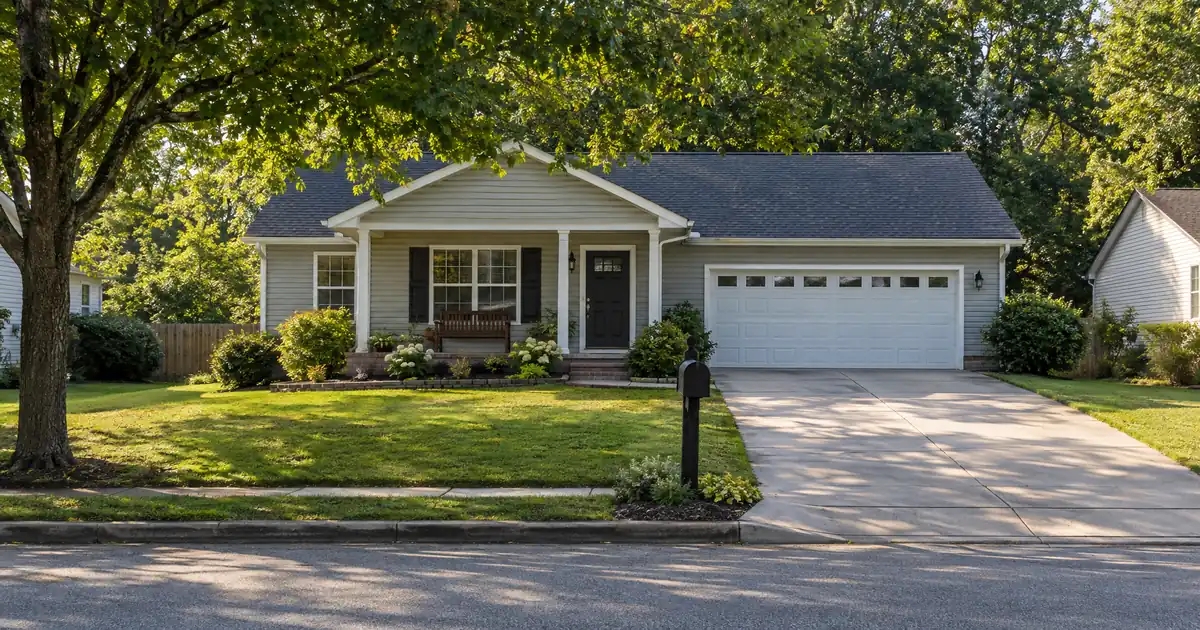
The Quick Read: Sometimes, and only if you clear two separate tests. The first mortgage program has its own rule about owning another home. The assistance option has its own rules too. Nothing in the options Lendmire arranges requires a first-time buyer, so repeat buyers qualify. What trips up current owners is the timing: the new home must be your primary residence, and the old one usually has to be sold or otherwise accounted for.
The Short Answer for Someone Who Owns Today
Owning a home right now does not shut you out automatically. Being a repeat buyer is not the problem. Keeping two homes while asking for help on the second one is where files get hard.
Here is the practical picture. Across the wholesale programs Lendmire places files with, nobody has to be a first-time buyer. A move-up buyer can use down payment assistance programs paired with an FHA, USDA or HUD-184 first mortgage. The assistance is for an owner-occupied primary residence only. It is never for a second home or a rental.
So the real question is not “have I owned before?” It is “what happens to my current home, and can I carry both payments until it does?”
Why There Are Two Gates
Think of two doors in a row. You have to walk through both.
Gate one is the first mortgage. FHA, USDA and HUD-184 each have their own rule about owning other property. None of them bans it outright. They limit how many primary-residence loans you hold and require the new home to be where you live.
Gate two is the assistance option. It has its own eligibility test, its own credit floor, and its own limits on the property.
Clearing one gate does not clear the other. A buyer can fit the FHA rule and still miss an assistance rule, or the reverse. Lenders check both before anyone signs a contract, and you should too.
Gate One: What the First Mortgage Allows
FHA
FHA is built for people who live in the home. HUD requires at least one borrower to occupy the property within 60 days of signing and to intend to stay for at least a year. HUD also says a person can have only one principal residence at a time.
Put those together and the old home becomes the issue. FHA generally allows one FHA-insured primary-residence loan at a time. Limited exceptions exist, such as a job relocation or a growing family. The exact conditions sit in HUD’s handbook, so ask your loan officer for the current text rather than trusting a blog post, this one included.
Owning other property is not the rule by itself. Carrying two FHA primary-residence loans is.
USDA
USDA is the most explicit about current owners. Under USDA’s guaranteed loan rule, a current homeowner can qualify only if all of these hold:
- The current home no longer adequately meets your needs.
- You will occupy the new home as your primary residence.
- You lack the resources or credit to buy without the guarantee.
- You keep no more than one other single-family dwelling.
- You can financially qualify to own more than one home.
Rental income from a kept home counts toward repayment only with a steady rent history of at least 24 months and a lease running at least 12 months past closing. A lease you signed last month carries little weight. USDA’s stated intent is not to help build an investment portfolio.
USDA also has income and occupancy rules. Per USDA’s program page, household income cannot exceed 115% of the area median, you must live in the home, and the property cannot be income-producing.
HUD-184
HUD-184 is the home loan guarantee for Native American borrowers. It is for primary residences only, and a borrower is generally limited to one such loan at a time. If you own another home, the new one still has to be your one principal residence. Whether you can keep the old home as a rental is an underwriting question for the lender, not something to assume.
Gate Two: The Four Assistance Shapes
Here is what the assistance side looks like in the programs Lendmire arranges through wholesale lenders. Everything below is subject to program guidelines and full underwriting.
| Option | Size | Repay? | Credit floor |
|---|---|---|---|
| Grant | 2% or 3.5% of price | Nothing to repay | 620 |
| Forgivable second | 3.5% of price or value | Forgiven over time | 640 |
| Repayable second | 3.5% or 5% of price or value | Yes, a real loan | 660 |
| Refinance-cost second | 1% to 3.5% of balance | Yes, a real loan | 660 |
Percentages for the forgivable and repayable seconds apply to the lesser of the purchase price or the appraised value. Credit floors use the lowest representative score among borrowers, and the second-lien options allow blended scores in some cases.
The grant
The grant is nothing to repay. It is released at closing with no lien, no payment and no interest. It pairs with FHA first mortgages only. A homebuyer education course is required, and the grant is not offered in Washington.
The grant has the one income test in the group. Household income must be at or below 140% of area median income, unless you fall into a qualifying category. Those categories include first responders, educators, medical workers, civil servants, military personnel, first-time buyers, and buyers in an underserved census tract. A move-up buyer who is a nurse or a teacher is reviewed on the category, not the income test.
Remember that the first-time-buyer category is just one door among several. Owning a home now takes you out of that single category. It does not take you out of the grant.
The forgivable second
This is a loan with no interest and no monthly payment. It is fully forgiven after 36 or 60 on-time payments on your first mortgage, with no 90-day-or-worse delinquency. It pairs with FHA, USDA and HUD-184 first liens. There is no income limit beyond USDA’s own on a USDA loan.
The repayable second
This one is a real second loan. It carries interest, a monthly payment, a 30-year amortization and a balloon due in year 10. It also has its own loan disclosure. Be honest with yourself about the payment, because it sits on top of the first mortgage and, for you, on top of any payment on the old home.
The refinance-cost second
This applies to an FHA refinance, not a purchase, so it matters mainly if you stay put instead of moving up. It is a second loan with the same repayment terms as the repayable second.
What no option allows
Nothing stacks. You cannot combine one assistance option with another assistance program, and a mortgage credit certificate is not permitted with the second-lien options. Every option is for a primary residence. That is the line for current owners: the new home must be where you live.
Own Now, Selling, or Owned Before: Which Are You?
Your status at closing decides most outcomes. Here is how the common situations tend to play out.
| Your situation | Usually workable? | What to check |
|---|---|---|
| Old home sells at or before closing | Often yes | Sale timing in the contract |
| Old home closes after the new one | Harder | First-lien rule, two payments |
| Kept as a rental | Rarely | Occupancy rule, USDA history |
| Sold years ago, renting since | Often yes | Program lookback rules |
Contract timing matters more than intent. A buyer who plans to sell but has not closed the sale is still an owner on closing day. Many public programs go further and require that you own no other home at closing.
Three Move-Up Paths
Picture a family that outgrows a starter home. They have three realistic ways to handle it.
Sell first, then buy. This is the cleanest path. Once the sale closes, you own nothing else, and every rule above gets simpler. You rent or stay with family briefly if the dates don’t line up, which is the cost of simplicity. Sale proceeds can also change how much help you need.
Buy with a sale contingency. You write the offer so it depends on selling the old home. Sellers sometimes resist this, and the assistance still has to be underwritten with the old payment in view until the sale closes. It works when the sale and purchase close on the same day or close together.
Buy and keep the old home. This is the hardest path. The new home must be your primary residence, so the old one becomes either a sale candidate or a rental. FHA and HUD-184 are primary-residence programs. USDA limits retained dwellings and wants rent history. Many assistance options require no other owned home at closing. If your plan includes keeping the old house, expect to need a different funding strategy, not assistance on the new one.
How a Lender Counts Two Homes
If you still own the old home at closing, the lender counts its payment. The new first mortgage, any repayable second, and the old home’s full payment all enter your debt ratios. A forgivable second or a grant adds no monthly payment, which helps. A repayable second adds one.
Rental income from the old home counts only when the rules allow it. For USDA, that means the 24-month history described above. A pending sale does not erase the old payment from the math until the sale closes, which is why many move-up files come down to sequencing.
The assistance options follow the automated underwriting finding, and the repayable second does not allow manual underwriting. Tight ratios leave less room there.
Do You Even Need Assistance?
This is a genuine toss-up for many move-up buyers, and honestly, the answer is often no. If you have meaningful equity, sale proceeds may cover the minimum investment on an FHA loan, which is 3.5% of the lesser of price or appraised value. Equity is your own money, with no second lien and no occupancy covenant attached.
Assistance earns its place when the sale hasn’t closed, when proceeds will land after you need cash, or when you want to keep more savings in reserve. A grant or forgivable second can cover the gap. A repayable second can too, but it is debt, so weigh it against the equity you would otherwise use.
The FHA loan underneath carries its own costs. There is an upfront mortgage insurance premium, which can be financed, plus annual mortgage insurance. Loan limits for a one-unit home vary by county. Move-up buyers in higher-priced areas should check their county’s limit early.
What Happens When You Sell Later
Assistance can leave strings, and you will meet them again as a seller. A forgivable second stays on the property until the forgiveness period ends. A repayable second comes due when you sell or refinance, and its balloon arrives in year 10. A grant leaves no lien behind.
So if you expect to move up again, the shape matters. A grant is simplest. A forgivable second is fine if you stay long enough. Public programs often add their own recapture periods, and many state and local programs favor first-time, low- and moderate-income buyers while some are open to prior owners. Check each program’s terms.
If you used assistance on the home you are selling now, that lien gets paid or released at sale. Ask your title company for the payoff so it doesn’t surprise you at the closing table.
Mistakes Move-Up Buyers Make
- Assuming “repeat buyer” means “ineligible.” It doesn’t. No Lendmire-arranged option requires a first-time buyer.
- Signing a contract before checking the old-home rule. Check both gates first.
- Counting on rental income from a brand-new lease. USDA wants a long history.
- Ignoring the second payment. A repayable second adds to the monthly load.
- Treating funding as permanent. Programs open, pause and run out, so confirm availability before you rely on it.
- Stacking help. Combining assistance programs is not allowed.
A Quick Checklist Before You Apply
1. List every property your household owns, with its liens. 2. Decide whether each home will be sold, kept or rented. 3. Ask which first-mortgage program fits: FHA, USDA or HUD-184. 4. Ask whether any relocation or family-size exception applies. 5. Ask which assistance shape fits, and what its credit floor and income test are. 6. Gather the sale contract or listing agreement for the old home. 7. Confirm the occupancy plan: you move in, and the new home is your primary residence.
For the grant, add a homebuyer education course to the list.
Key Terms Defined
Primary residence: the home where you live for most of the year. Assistance options require the financed home to be one.
Second lien: a loan secured by the same home, ranked behind the first mortgage. The forgivable and repayable options are second liens.
Balloon payment: a large lump-sum payoff due at the end of a loan’s short term. The repayable second has one in year 10.
Area median income: the middle household income for a given area. The grant uses it for its 140% income test.
Representative credit score: the middle score used to qualify a borrower. Credit floors apply to the lowest one among all borrowers.
Frequently Asked Questions
Can I get down payment assistance while I still own a home?
Sometimes. No option Lendmire arranges requires a first-time buyer, so owning before is not a bar. But the new home must be your primary residence, and the first mortgage and the assistance option each have their own owner rules. Subject to lender guidelines and full underwriting, selling the old home at or before closing makes things much simpler.
Do I have to sell my current home first?
Not always, but it helps. FHA generally allows one primary-residence loan at a time, with limited exceptions, and many public programs require that you own no other home at closing. USDA allows a retained home only under strict conditions. Ask your loan officer which rule applies to your first mortgage.
Can I keep my old home as a rental?
Rarely with assistance. The assistance is for owner-occupied primary residences. USDA allows limited retained homes with 24 months of rent history. FHA and HUD-184 are primary-residence programs, and a retained rental is an underwriting question. If keeping the rental is the plan, expect to fund the purchase another way.
What counts as a first-time buyer, and does it matter?
Many programs borrow HUD’s definition: no ownership in the three years before purchase. For the grant, first-time status is only one of several qualifying categories, so it doesn’t decide your eligibility. For the forgivable and repayable seconds, there is no first-time requirement at all.
What if I have used assistance before?
Assistance on your current home does not automatically block a new one, but that older lien must be paid or released when you sell. Nothing stacks with another assistance program on the same purchase, so you would use one option on the new home.
Where to Go From Here
If you are buying a primary home and want to see whether a down payment assistance option fits your file, Lendmire can help you compare the grant, forgivable and repayable structures alongside an FHA, USDA or HUD-184 first mortgage. Lendmire’s consumer lending is licensed in 16 states, and the assistance is arranged through wholesale lenders, subject to program guidelines, credit approval and full underwriting. This is not a commitment to lend. A move-up buyer’s best leverage is a clear plan for the old home before the offer goes in.
About Lendmire
Lendmire (NMLS# 2371349) is a mortgage brokerage serving home buyers in 16 states. Down payment assistance programs are arranged with FHA, USDA and HUD-184 first liens through wholesale lending channels; Lendmire brokers the financing and the lender underwrites each application. Scotsman Guide named Lendmire a Top Mortgage Workplace in both 2025 and 2026.
Investors who want the broader program framework can review how DSCR loans work.
Get Started
Ready to find the right loan for you?
In about 30 seconds you can review financing options available for your home or investment property. No commitment required.
Informational only. Not a Loan Estimate, approval, or commitment to lend. Program availability and eligibility are subject to lender guidelines, credit approval, property review, and underwriting.
References
1. HUD FHA Answers: How does FHA define owner occupant?
2. eCFR: 7 CFR 3555.151, USDA guaranteed loan eligibility
This article is part of Lendmire’s down payment assistance program — full qualification details, guidelines, and scenarios live on the program page.
Related reading: Can A Repeat Buyer Get Down Payment Assistance On A Primary Home? · Do You Have to Be a First-Time Buyer to Get Down Payment Assistance? · Down Payment Assistance First-Time Buyer Definition Explained
Brandon Miller
Founder & CEO, Mortgage Loan Originator, Lendmire LLC
- Mortgage Loan Originator · NMLS# 1129696 · Verify on NMLS Consumer Access
- North Carolina Real Estate Broker · License# 343312 · Verify on NCREC
- North Carolina Insurance Producer · License# 19053198 · Property, Casualty, Life, Health · Verify on NAIC SBS
- Lendmire LLC · Firm NMLS# 2371349 · Verify firm licensure
Disclosures. The information presented in this article is general market commentary, not financial, legal, or tax advice. Lendmire is a mortgage brokerage (NMLS# 2371349) — not a direct lender or depository institution — and loan placement is subject to lender underwriting. Nothing in this content represents a commitment to lend. Loan terms, pricing, and program availability vary based on borrower qualifications, property characteristics, and state of subject property, and are subject to change at any time. Lendmire complies with Equal Housing Opportunity requirements. Consumer access: nmlsconsumeraccess.org.