
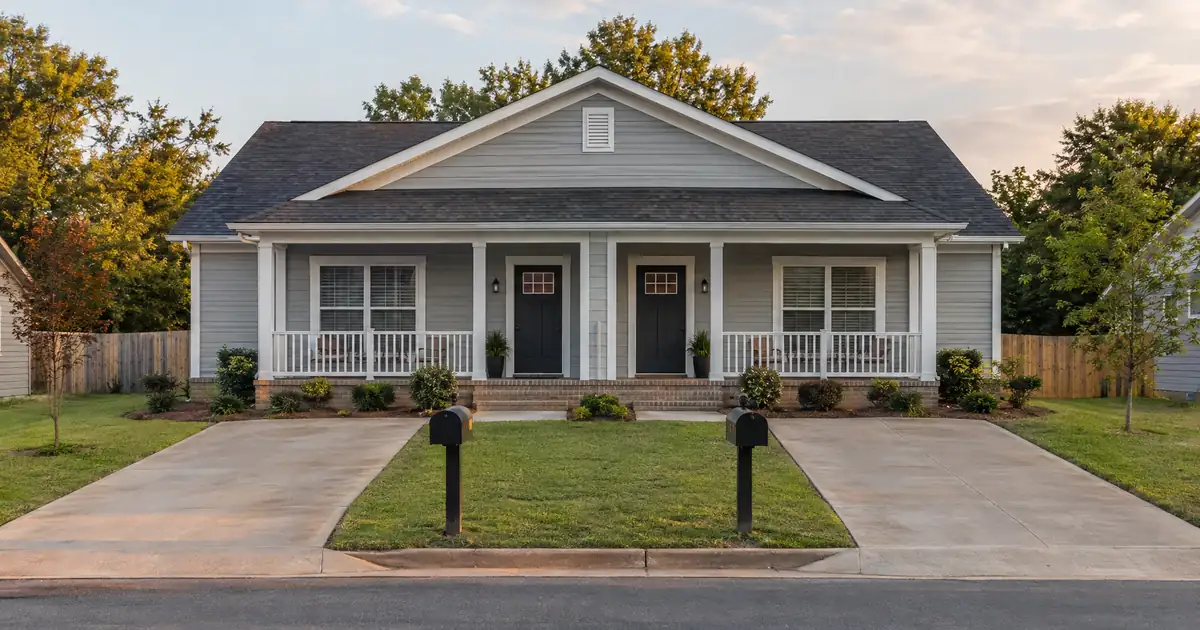
The Quick Read: A VA cash-out refinance on a duplex, triplex or fourplex works only when the borrower lives in one of the units, or truly intends to, and can sign that certification honestly. The other units can be rented. A building that is fully rented to tenants does not fit a cash-out, because the loan is tied to a home the borrower occupies. The rental income from the other units is a separate question, and it is tested harder than most borrowers expect.
Can a 2-4 Unit Be a Primary Home for a VA Cash-Out?
Yes, when the borrower occupies one unit as a home. The multi-unit structure does not change the occupancy test. The borrower lives in one unit, and the rest of the building can be tenant-occupied.
VA’s Home Loans page says guaranteed loans for purchase and cash-out refinance are available for homes the borrower occupies, or that a spouse or dependent occupies for an active-duty service member. VA’s Buyer’s Guide describes cash-out as a refinance of a residence you already own and occupy as a home.
Two points trip people up. First, “primary home” refers to how the borrower uses the building, not how many doors it has. Second, VA financing reaches buildings of up to four units. Confirm the unit limit against current VA guidelines for your file.
Key Terms Defined
Occupancy certification: A signed statement that the borrower lives in the property as a home, or intends to.
Cash-out refinance: A new loan that pays off the old one and can include equity paid out to the borrower.
Reasonable value: The value set by the VA appraisal. It caps the loan amount.
Residual income: The money left each month after the debts, taxes and basic living costs. On VA loans it is the controlling test.
Net tangible benefit: A requirement that the new loan be in the borrower’s financial interest.
Certificate of Eligibility (COE): The VA document that confirms the borrower’s entitlement.
What VA Actually Requires on a Cash-Out
The loan has to clear several tests at once. Occupancy is the one that shapes a 2-4 unit file. The others set how much cash is available and whether the loan makes sense.
Across the wholesale programs Lendmire works with, the VA cash-out reaches 100% of the appraised value, including the financed funding fee, and it can refinance any loan type into VA. The federal rule behind that limit is in 38 CFR 36.4306. It says the loan may not exceed 100 percent of the reasonable value of the dwelling. The funding fee can be financed, but any part that pushes the loan past that cap must be paid in cash at closing.
The funding fee on a cash-out is 2.15% for first use and 3.3% for later use. It is waived for veterans receiving compensation for a service-connected disability and the other exempt groups. There is no mortgage insurance on the loan.
Credit works the same way. VA sets no minimum score in its own materials. The wholesale programs Lendmire places VA loans with start at a 580 decision score, and lenders may set higher floors. Every figure here is subject to lender guidelines and a full file review.
Details on the product itself are on Lendmire’s VA cash-out refinance program page.
How Does the Occupancy Test Work on Two to Four Units?
The borrower certifies that the property is, or will be, their home. In a multi-unit building, that means one unit is the borrower’s residence. A lender will want the paperwork to match that story.
Here is how the common situations sort out.
| Living situation | Cash-out works? | What the file needs |
|---|---|---|
| Lives in one unit, others rented | Yes | Occupancy certification, leases for rented units |
| Lives in one unit, one unit vacant | Usually | Appraiser’s rent opinion, reserves if rent is used |
| Moved out, all units rented | No | Cash-out ties to occupancy |
| Moving in after repairs | Depends | Honest intent, a clear move-in plan |
| Active-duty, spouse or dependent lives there | Yes, per VA | Documentation of who occupies |
| Lives in unit A, refinancing the building | Yes | Occupancy shown on the building as a whole |
The weak row is the third one. A building that has been fully rented since the borrower moved out is not a cash-out candidate. It can sometimes fit a different VA product, covered below.
Lenders interpret the “move in” question, and what counts as a “reasonable time,” in their own way, so a borrower planning a delayed move-in should raise it at the start. Do not sign a certification if the real plan is for someone else to live in the building from day one.
What Proof Do Lenders Ask For?
Lenders look for evidence that the borrower’s life is at the address. Typical items include:
- A driver’s license or other ID showing the property address
- Utility bills in the borrower’s name for the occupied unit
- Leases for the other units, showing the borrower is the landlord and not a tenant
- The signed occupancy certification at closing
- The appraisal, which reports how each unit is used
Gaps here cause conditions late in the file. A borrower living in a unit that has no utilities in their name, or whose ID shows another address, invites questions. Fix the paperwork before the file goes in, not after the lender asks.
Who Can Satisfy Occupancy?
The veteran is the default. For an active-duty service member, VA’s Home Loans page allows occupancy by a spouse or dependent. That matters for a deployed borrower whose family lives in one unit of the building.
A veteran who lives in a different building and wants to cash out on a 2-4 unit they rent out does not fit. The test follows the borrower’s own residence, with the active-duty exception.
Rental Income on the Subject Building
The rent from the other units can help the borrower qualify, but it is tested. Many borrowers assume all of it counts. It does not.
The rule is in 38 CFR 36.4340. Prospective rental income is not counted unless the veteran shows a reasonable likelihood of success as a landlord, and enough cash reserves are verified to carry the full housing payment without that rent. The official CFR edition also says the rent counted is based on 75 percent of the amount on the lease or rental agreement, unless a greater percentage can be documented.
Three things follow from that:
1. The lender counts less than gross rent.
2. A borrower with no landlord experience may not get the income counted at all.
3. Reserves become the hidden gatekeeper. Lenders may also add their own reserve requirements on multi-unit files. The exact numbers vary by lender and program and follow a full review of property, leverage, and credit.
Real life adds vacancy, repairs and owner-paid utilities on top. Rent that helps on paper can disappoint in practice, so the budget should be built on what the building reliably brings in.
Residual income stays the controlling test on the file. The 41% debt-to-income figure is a guideline. A ratio above it needs residual income well above the table.
Cash-Out, Type I and Type II
VA sorts cash-out loans into two types. VA Circular 26-18-30 defines them. A Type I loan, including the funding fee, does not exceed the payoff of the loan being refinanced. A Type II loan exceeds the payoff. Applications on or after February 15, 2019 fall under these rules.
Either way, the loan must pass the net tangible benefit test. VA Circular 26-19-05 confirms that all cash-out refinancing loans must pass it. The wholesale programs Lendmire works with also carry seasoning on a VA-to-VA refinance: the later of 210 days from the first payment and the 6th payment. A non-VA loan being refinanced into VA does not face that VA seasoning.
The regulation also requires the lender to give the borrower a standardized loan comparison, both at the application stage and again at closing. The borrower certifies receipt both times.
Where the General Rule Breaks
Several edge cases change the answer.
The IRRRL exception. A VA interest rate reduction refinance works differently. The borrower certifies prior occupancy, not current or intended occupancy. A 2-4 unit that is now fully rented may still fit an IRRRL when the existing loan is VA-backed. It generally cannot get a cash-out. The IRRRL has no VA appraisal, a 0.5% funding fee unless exempt, a net tangible benefit and the seasoning noted above.
The non-VA loan. A borrower with a conventional or FHA loan on the building can refinance it into VA through a cash-out, as long as occupancy holds.
Rent from other properties. If rent from a different rental property is used to qualify, the regulation calls for documentation like a self-employed borrower provides, plus reserves of three months of housing payment on that rental. A veteran with no landlord experience is unlikely to get that income used.
Moving out before closing. This can end eligibility. If the plan is to relocate, talk to a loan officer before the application, not after.
Worked Examples
Owner in a duplex. A veteran lives in one side of a duplex and rents the other. The VA appraisal sets reasonable value, and the loan can reach 100% of it including the financed funding fee. The occupancy certification matches the borrower’s life. The rent counts at 75% only if the landlord test and reserves are met. This is the clean case.
Fourplex with a vacant unit. The borrower lives in one unit, two are leased and one is empty at appraisal. The occupancy test is still met. The vacant unit affects how much rent the lender will count, and the appraiser’s market rent opinion matters. Expect questions about reserves.
Repairs and a delayed move-in. A borrower owns a triplex under repair and plans to move into one unit when work finishes. Whether this fits depends on genuine intent and a believable timeline. Lenders read this closely. A plan that exists only on paper is the kind of file that gets pushed back.
After Closing: The Fraud Line
The certification is a statement of fact and of intent. Living in a unit at closing and moving out later for a job is a normal change of life. Signing when the real plan is for tenants to occupy every unit is not.
The consumer protection side matters too. The Consumer Financial Protection Bureau took action against a lender whose disclosures compared a new payment of principal and interest against an old payment that included taxes and insurance. Compare the full payments on the same basis, old loan against new. A lower number on a disclosure is not always a cheaper loan. The same release notes concern about loan churning.
Mistakes That Cost Cash-Out Files
- Assuming all the rent counts toward qualifying
- Ignoring reserves on a multi-unit
- Certifying occupancy on a building that is fully tenant-occupied
- Treating a lender’s move-in expectation as a VA rule, or the reverse
- Skipping the net tangible benefit question
- Comparing payments built on different bases
What the Decision Looks Like
Run three checks. Do you live in one unit, or will you truthfully? Does the appraisal support the equity you need, given the 100% cap? Does the new loan make sense once you compare full payments, the financed funding fee and the equity you give up? If any answer is no, a different loan, or no refinance, may be the better path.
Tax treatment can depend on your situation; borrowers should speak with a qualified tax professional before relying on any deduction or credit.
If you are weighing a cash-out refinance against keeping the loan you have, Lendmire can help you compare the programs and the equity each one reaches.
Frequently Asked Questions
Do I have to live in the building for a set time after a VA cash-out?
There is no verified VA minimum stay. Some lenders expect a longer stay as a benchmark, which is a lender expectation and not a VA number. The certification is about genuine intent at closing, so a real change in life later is different from a false statement at signing.
Can I rent the other units right away?
Yes. Occupying one unit and renting the others is how a 2-4 unit primary home normally works. The rent counts toward qualifying only after the landlord-capability and reserve tests are met, and then at 75% of the lease amount unless a higher share is documented.
Can I cash out if I moved out and rented every unit?
No. A cash-out is tied to occupancy. An IRRRL, which tests prior occupancy, may still be available when the existing loan is VA-backed. That product does not pay out cash.
Can a spouse’s occupancy satisfy the rule?
For an active-duty service member, yes. VA allows occupancy by a spouse or dependent. Document who lives in which unit.
Does the loan have to be a VA loan already?
No. A VA cash-out can refinance any loan type into VA. The VA-to-VA seasoning, the later of 210 days from the first payment and the 6th payment, applies only when the loan being refinanced is a VA loan. Eligibility and terms are subject to lender guidelines and full file review.
For your own numbers, request a scenario review with Lendmire.
About Lendmire
As a mortgage broker (NMLS# 2371349), Lendmire helps homeowners and home buyers in 16 states with FHA, VA, conventional and jumbo purchase and refinance loans arranged through wholesale lenders. Lendmire is never the lender; program terms are set by the lender and the agency guidelines. Scotsman Guide named Lendmire a Top Mortgage Workplace in both 2025 and 2026.
Get Started
Ready to find the right loan for you?
In about 30 seconds you can review financing options available for your home or investment property. No commitment required.
Informational only. Not a Loan Estimate, approval, or commitment to lend. Program availability and eligibility are subject to lender guidelines, credit approval, property review, and underwriting.
References
8. CFPB NewDay USA order release
This article is part of Lendmire’s VA Loans series — every loan program’s qualification details, guidelines, and scenarios live on the loan options page.
Related reading: VA Cash-Out Occupancy Certification for a PCS Move · VA Cash-Out Occupancy Rules With Partial or Restored Entitlement · VA Cash-Out vs Conventional Cash-Out When the Home Is Worth Far More
Brandon Miller
Founder & CEO, Mortgage Loan Originator, Lendmire LLC
- Mortgage Loan Originator · NMLS# 1129696 · Verify on NMLS Consumer Access
- North Carolina Real Estate Broker · License# 343312 · Verify on NCREC
- North Carolina Insurance Producer · License# 19053198 · Property, Casualty, Life, Health · Verify on NAIC SBS
- Lendmire LLC · Firm NMLS# 2371349 · Verify firm licensure
Required disclosures. Lendmire (NMLS# 2371349) operates as a licensed mortgage broker, not a direct lender or depository. The discussion in this article is general in nature and should not be relied upon as financial, legal, or tax advice — every investment scenario is unique and should be reviewed by a qualified professional. Any loan inquiry is subject to lender underwriting, and this article is not a commitment to lend or a guarantee of approval. Mortgage rates, loan terms, and program guidelines vary by borrower, property, and state, and may change without notice. Equal Housing Opportunity. Verify licensure at NMLS Consumer Access.