
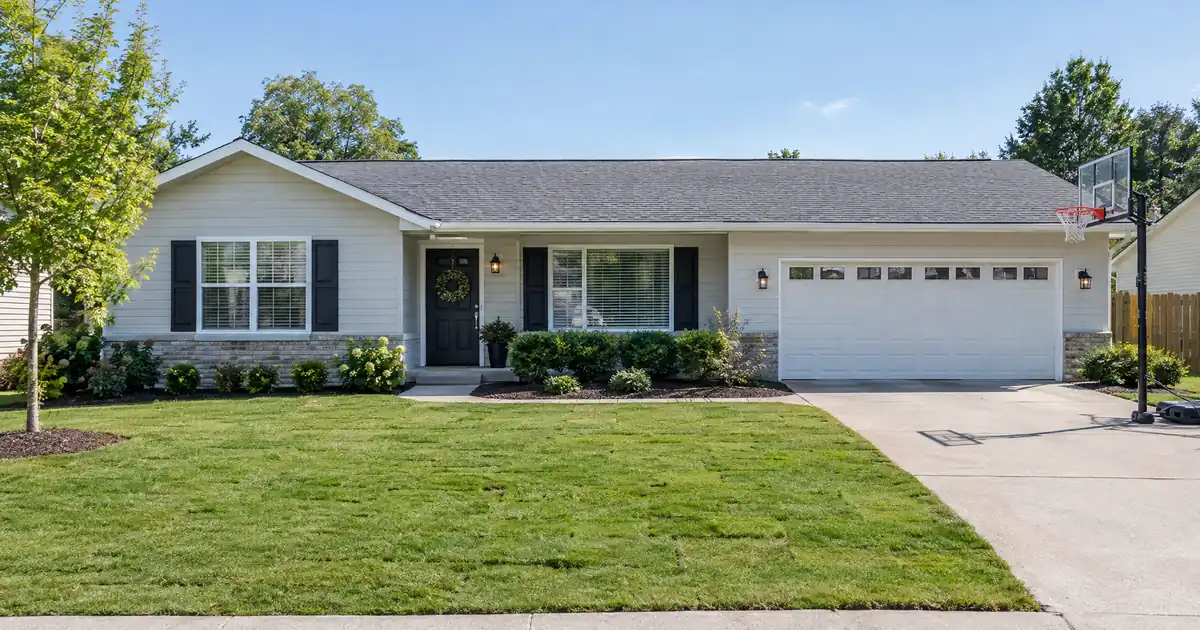
The Quick Read: A conventional cash-out refinance can help you carry two housing goals at the same time, but the loan only works if the numbers hold up for both. It replaces your current first mortgage with a bigger one and hands you the difference in cash. The catch is that every dollar of cash you take adds to your payment, and the next loan has to count that payment. The occupancy rule sets the boundary: a cash-out on the home you live in cannot fund a move into a new home while you abandon the old one.
What Does “Two at Once” Actually Mean?
The phrase covers three different situations, and each has different rules. Pick yours before reading further.
1. One refinance that pays off two loans. Your first mortgage and a home equity line or second mortgage collapse into one new first mortgage.
2. One refinance that funds a second purchase. You keep your home, pull cash from it, and use that cash toward another property.
3. Two refinances closing near each other. You do cash-outs on two properties, and the second loan has to count the first.
No single agency rule caps “two simultaneous cash-outs” as such. The limits come from four places: leverage on each property, how many financed properties you carry, your reserves, and how long you have held title.
Lendmire’s cash-out refinance programs cover the loan itself.
How Does a Conventional Cash-Out Refinance Work?
A cash-out refinance pays off your existing mortgage with a new first mortgage on the same property. The new loan is larger than the old one. After the old loan, closing costs and any required payoffs are covered, the leftover money goes to you. Fannie Mae’s Selling Guide defines it that way, and it also lets you finance closing costs and prepaid items into the new balance.
Here is how it differs from the tools people confuse it with:
- A rate-and-term refinance allows only incidental cash back. It is a different loan with higher allowed leverage.
- A HELOC or home equity loan is a separate lien on top of your first mortgage. A cash-out replaces the first mortgage and leaves one loan.
- You never get to convert all of your equity to cash. Leverage caps leave a cushion on purpose.
One trade-off applies to every cash-out. You are replacing your old loan, so its terms go away and the new terms take over. If your current loan is one you love, that matters, and we come back to it below.
What Are the Leverage Limits?
Occupancy decides how much you can borrow against the property. Across the wholesale programs I place conventional files with, a cash-out on a one-unit principal residence tops out at 80% of the home’s appraised value. Two- to four-unit principal residences, second homes and investment properties top out at 75%. That one line is all this article says about properties you do not live in: the less you occupy it, the lower the ceiling.
Here is a worked example using only percentages. Say your home appraises at 100% of its value and your current loan sits at 55% of that. An 80% cash-out ceiling leaves up to 25 points of value to work with. Closing costs, any second lien being paid off and the other required payoffs come out of that room first. What remains is your cash. These specifics are subject to lender guidelines and a full review of property, leverage, and credit.
There is also a wholesale lane that reaches 89.99% on a primary residence with no mortgage insurance. It requires a 680 score, a 50% total ratio, a thirty-year fixed loan and a conforming balance. It carries its own six-month seasoning, and it is not written in Texas on homestead property. Treat it as a niche option rather than the default. Exact terms depend on lender and investor guidelines, credit profile, reserves, and property review.
Mortgage insurance is required above 80% leverage on conventional loans. At or below 80%, which is where standard cash-outs sit, it does not enter the picture. Terms depend on the lender’s guidelines, the property type, the leverage, and a full review of the credit profile.
Who Qualifies? The Clocks and the Ratios
Two waiting periods apply, and people often confuse them.
- Six months on title. At least one borrower must have been on title for six months before the new loan funds. Freddie Mac’s Seller/Servicer Guide uses the same six-month test and adds that all borrowers must occupy the property when it is a primary residence.
- Twelve months on the loan being paid off. The first mortgage you are replacing must be at least 12 months old, measured note date to note date. Fannie Mae’s announcement SEL-2023-01 introduced that requirement.
Both clocks run at once. Good credit does not override either one.
Exceptions exist. Delayed financing covers a home you bought with cash. Inheritance and legal awards have their own treatment. Paying off a HELOC that sits in first position is handled differently from paying off a first mortgage. A buyout of a co-owner is a special-purpose cash-out. If your file touches one of these, a loan officer needs to read the current guide for your case.
On credit and ratios, the wholesale conventional programs start at a 620 decision score. The automated underwriting finding governs most files, and the total debt-to-income ceiling is 50%. Higher-ratio files need more reserves, meaning the savings you can show after closing. Some lenders set a higher floor than the agencies do, so the exact bar can vary from lender to lender.
Qualifying Twice: Where Plans Break
This is where most “two at once” plans fail. The cash-out refinance gets approved, and then the next loan does not.
A refinance does not pre-qualify you for anything else. Each loan is underwritten on its own, and each one counts the other. Here is what that means at each stage.
| Stage | What gets counted |
|---|---|
| Cash-out refinance | New, larger payment on the refinanced home |
| Next purchase | Refinanced payment plus the new home’s payment |
| Ongoing carry | Both payments, taxes, insurance and any HOA dues |
| Reserves | Savings after closing, across both properties |
Cash you pull out does not automatically count toward your reserves for the same transaction. Reserves on a refinance are reduced by the cash you take back, so the proceeds cannot do double duty. The wording is technical, so ask your loan officer how your file treats it.
Think about the ratio in plain terms. Your lender adds your monthly debts and housing costs and divides by your gross monthly income. A larger payment on the first home pushes that ratio up before the second loan is even counted. When the ratio runs high, more reserves are required. Lendmire’s piece Conventional Cash-Out Refinance DTI Rules for Debts Paid at Closing shows how paying off a card or a second lien can help.
The Narrow Exception for the Old Payment
If you plan to sell your current home and buy another, the old payment is sometimes left out of the next qualification. The conditions are narrow. In general, a signed sale contract with the buyer’s contingencies cleared is the kind of evidence a lender wants. A listing alone does not meet that test. A hopeful listing and a signed, unconditional contract are very different documents to an underwriter.
Future Rent Is Not Free Income
Expected rent from a second home generally cannot be used as qualifying income. Rent from an existing, leased unit in a multi-unit home you occupy has its own documentation rules, including leases. Do not build a plan that depends on rent you have not yet earned.
How Many Properties You Carry Matters
Lenders count the one- to four-unit properties on which you are personally obligated on the mortgage. A multi-unit building counts once. For a principal-residence loan there is generally no numeric cap, though one low-down-payment program caps it at two. For second homes and investment properties, Fannie Mae’s rules on multiple financed properties set a ceiling, and reserves climb with each additional property. A property held in an entity where you are not personally obligated generally does not count toward the Fannie Mae limit.
The Order of Operations
Sequence matters more than speed. A clean plan runs like this:
1. Pick the property each loan covers. Occupancy drives everything that follows.
2. Check both clocks on each property. Title time and the age of the loan being paid off.
3. Count your financed properties. Include the home you live in.
4. Run the numbers for both loans together. Ratio, reserves and leverage, before you sign anything.
5. Order the appraisal. The appraised value sets your ceiling. On a multi-unit property, the appraisal includes a rent schedule.
6. Gather documents. Income and asset statements, reserve accounts, mortgage statements on every other financed property, and leases for rented units.
7. Close the refinance, then go shopping. The cash-out should fund before you make an offer, not after.
Most of these steps are about proof. Lenders do not like surprises that show up halfway through underwriting.
Which Scenario Are You?
| Your situation | Is cash-out a fit? | Main constraint |
|---|---|---|
| Keep your home, buy a second home | Often, if ratios hold | Qualifying with both payments |
| Buy before you sell | Sometimes | Old payment counts until a sale contract is firm |
| Pay off a HELOC and a first mortgage | Often | Equity left after payoffs |
| Help family into a home | Sometimes | Your ratio and reserves, not theirs |
| Move out of the refinanced home | Not as a primary residence | Occupancy rules |
The occupancy boundary deserves its own sentence. If you refinance as a primary residence, you are promising to live there. Using that cash to buy a new primary home and leaving the old one empty or rented out runs against that promise. Talk through your plans with a loan officer before the application, not after.
Cash-Out vs. HELOC vs. Bridge vs. Contingent Offer
Cash-out is only one way to carry two homes.
| Option | How it works | Trade-off |
|---|---|---|
| Cash-out refinance | Replaces your first mortgage | Resets the terms on your whole balance |
| HELOC | A second lien on top of your loan | Keeps your first mortgage intact, but variable cost is common |
| Bridge loan | Short-term loan against the old home | Short horizon; you need an exit plan |
| Contingent offer | Your purchase depends on selling first | Sellers may favor offers without contingencies |
A HELOC’s appeal is that it leaves your existing first mortgage alone. If you hold a first mortgage on terms you value, that is a real advantage. A cash-out replaces the whole thing, so you give up the old terms on the full balance, not just on the cash you pull. The CFPB’s guide on using home equity makes the same point: replacing a loan with a larger one can lengthen your payoff time and may raise your payment.
When Is This the Wrong Move?
Cash-out is often the wrong tool in a few cases.
- Your existing loan has terms you want to keep. Replacing it gives that up on the entire balance.
- Your ratio is already tight. The new, larger payment may leave nothing for the second loan.
- Your reserves are thin. Multiple financed properties push reserve requirements up.
- You plan to hold the new loan briefly. Closing costs may not earn themselves back.
- You are using cash to pay everyday bills. The CFPB’s research on cash-out borrowers notes that paying non-mortgage debt with mortgage debt can raise foreclosure risk. Card balances also tended to creep back toward their old levels. The exact numbers vary by lender and program and follow a full review of property, leverage, and credit.
Be honest about which of these applies to you. A good loan officer will tell you when the answer is no.
Mistakes That Sink the Plan
- Listing instead of contracting. A listing does not remove your old payment from the ratio. A firm contract might.
- Counting rent you have not earned. Underwriters want leases and history.
- Refinancing too close to the purchase. The new payment shows up in the next file, and the title and loan-age clocks may not have run yet.
- Ignoring the appraisal. If the value comes in below your estimate, the ceiling drops with it.
- Forgetting the cancellation window. A refinance of your principal home carries a short federal right to cancel. Per the CFPB’s explanation of the right of rescission, the clock starts only after you sign the note, receive the Truth in Lending disclosure and receive the rescission notices. The cancellation request must be in writing. A phone call is not enough. Funding on the home you live in waits until that window closes, so plan your purchase timing around it.
Tax treatment can depend on your situation; borrowers should speak with a qualified tax professional before relying on any deduction or credit.
Key Terms Defined
Cash-out refinance: a new, larger first mortgage that pays off your old loan and gives you the difference in cash.
Seasoning: the waiting period a lender requires, such as time on title or the age of the loan you are replacing.
Reserves: savings you can show after closing, usually counted in months of housing payments.
Debt-to-income ratio (DTI): your monthly debts plus housing costs, divided by your gross monthly income.
Financed property: a one- to four-unit residential property on which you are personally obligated on the mortgage.
Delayed financing: a cash-out on a home you bought with cash within the last six months, where the new loan is limited to your documented investment.
Frequently Asked Questions
Can I do two cash-out refinances on two properties?
It depends on your file, not on a rule that bans it. No single guideline caps simultaneous cash-outs, but each property needs its own equity, each loan counts the other in your ratio, and reserves rise with the number of financed properties. Leverage also drops from 80% to 75% on second homes, investment properties and two- to four-unit homes. Subject to lender guidelines and full file review.
Does the cash-out loan approve me for my next purchase?
No. Each loan is underwritten separately. The refinance only sets your new payment, and the next lender counts that payment along with the payment on the purchase. Plan for the second approval as its own hurdle.
Can I pay off a HELOC and take cash at the same time?
Yes, in many cases. A HELOC or second mortgage can be paid off in the new first mortgage, which leaves you with one loan. The payoff comes out of your available equity before any cash reaches you. Different payoff types are treated differently for seasoning, so tell your loan officer what is on the property.
Does listing my home for sale remove its payment from my qualifying ratio?
Not on its own. A lender generally wants a signed sale contract with the buyer’s contingencies cleared. A property listed for sale also has to come off the market by the time a cash-out funds, so a cash-out and a pending sale pull in opposite directions.
What if I bought my home with cash a few months ago?
Delayed financing may help. It allows a cash-out before the usual waiting period, but the sale must have been arm’s-length, your source of funds must be documented, and the new loan is generally limited to what you invested plus certain costs. Gift funds used to buy cannot be reimbursed.
If you are weighing a cash-out refinance against keeping the loan you have, Lendmire can help you compare the programs and the equity each one reaches.
For your own numbers, request a scenario review with Lendmire.
About Lendmire
Lendmire (NMLS# 2371349) is a mortgage brokerage serving homeowners and home buyers in 16 states. FHA, VA, conventional and jumbo purchase and refinance loans are arranged through wholesale lending channels; Lendmire brokers the financing and the lender underwrites each application. Scotsman Guide named Lendmire a Top Mortgage Workplace in both 2025 and 2026.
Get Started
Ready to find the right loan for you?
In about 30 seconds you can review financing options available for your home or investment property. No commitment required.
Informational only. Not a Loan Estimate, approval, or commitment to lend. Program availability and eligibility are subject to lender guidelines, credit approval, property review, and underwriting.
References
1. Fannie Mae Selling Guide B2-1.3-03, Cash-Out Refinance Transactions
2. Freddie Mac Seller/Servicer Guide 4301.5
3. Fannie Mae Selling Guide Announcement SEL-2023-01
4. Fannie Mae Selling Guide B2-2-03, Multiple Financed Properties for the Same Borrower
5. CFPB’s guide on using home equity
This article is part of Lendmire’s Conventional Loans series — every loan program’s qualification details, guidelines, and scenarios live on the loan options page.
Related reading: Can You Cash Out Refinance a Vacation Home Under Conventional Rules? · Bank vs Wholesale Lender for a Conventional Cash-Out Refinance · How to Apply for a Conventional Cash-Out Refinance Step by Step
Brandon Miller
Founder & CEO, Mortgage Loan Originator, Lendmire LLC
- Mortgage Loan Originator · NMLS# 1129696 · Verify on NMLS Consumer Access
- North Carolina Real Estate Broker · License# 343312 · Verify on NCREC
- North Carolina Insurance Producer · License# 19053198 · Property, Casualty, Life, Health · Verify on NAIC SBS
- Lendmire LLC · Firm NMLS# 2371349 · Verify firm licensure
Compliance and disclosures. Lendmire (NMLS# 2371349) is a licensed mortgage broker and is not a direct lender, depository institution, financial advisor, or tax professional. Content in this article is general market analysis and educational information — not financial, legal, or tax advice for any specific situation. Lendmire does not guarantee loan approval; every transaction is subject to underwriting by the funding lender. Mortgage pricing and loan program guidelines are subject to change at any time without notice and vary by borrower characteristics, property type, and state regulations. Lendmire complies with Equal Housing Opportunity. Licensure verification: NMLS Consumer Access.