
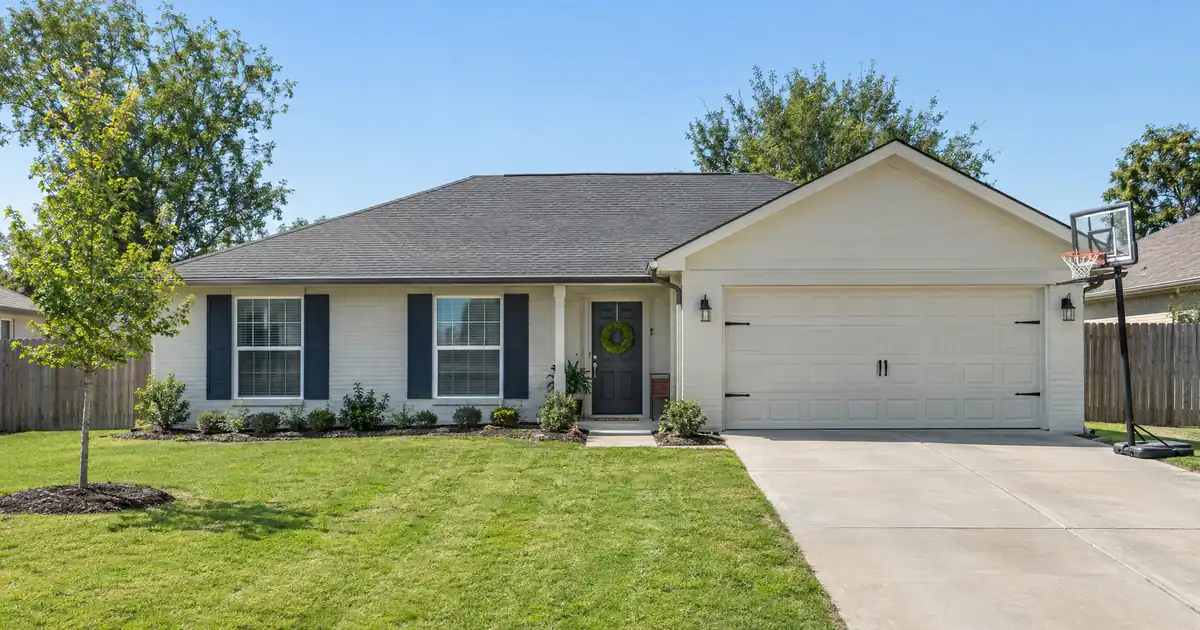
The Quick Read: A paid-off home can be refinanced for cash, but only as a full cash-out loan. The streamline and limited cash-out paths need an existing mortgage to pay off, and you have none. The new loan becomes a first mortgage on a home that currently has no mortgage lien. It is underwritten on documented retirement income, credit, and the appraised value, subject to lender guidelines and full file review.
Can You Cash-Out Refinance a Home You Own Outright?
Yes, with one correction to the usual assumption. Many retirees think owning free and clear qualifies them for the easy refinance. It does not. Fannie Mae’s cash-out section covers new first mortgages on a property with no mortgage lien, so a free-and-clear home is a cash-out transaction.
Limited cash-out, FHA Streamline, and the VA IRRRL all refinance a loan that already exists. Fannie Mae also caps cash back on a limited cash-out at a small amount, which is why a paid-off home doesn’t fit that label. With no balance to pay off, any meaningful cash is a full cash-out.
Across the wholesale programs Lendmire places files with, this is the first thing that gets sorted on a paid-off file. The borrower asks for a “refinance” because that sounds simpler. The file is really a cash-out, and the leverage limits follow from that.
Lendmire’s cash-out refinance programs are built around this structure for primary residences. Lendmire is a mortgage broker, not a lender. It arranges these loans through wholesale lenders, and nothing here is a commitment to lend.
Key Terms Defined
- Free and clear: You own the home with no mortgage or other lien against it.
- Cash-out refinance: A new first mortgage, larger than what you owe, that pays you the difference in cash.
- LTV (loan-to-value): The loan amount divided by the appraised value of the home.
- Seasoning: The time you must have owned the home, or held the loan being paid off, before a refinance is allowed.
- Delayed financing: An exception that lets someone who bought with cash take cash out sooner than the usual wait.
- DTI (debt-to-income ratio): Your monthly debts divided by your monthly qualifying income.
What Are the Steps From Application to Closing?
The deal works in a set order. Each step is a place where a retiree’s file can stall, so the order matters.
1. Pick the product. A paid-off home means a full cash-out. That can be conventional, FHA, or VA for an eligible veteran. Streamlines are off the table.
2. Confirm ownership and occupancy. For a free-and-clear cash-out, Freddie Mac requires at least one borrower on title for six months before the note date. On the wholesale conventional programs, the same six-month title period applies. All borrowers must occupy the home when it is a primary residence.
3. Order the appraisal. The appraised value sets the ceiling on the loan. A cash-out always needs one, since no streamline exemption applies.
4. Document income and debts. This is a full-documentation loan. There is no paycheck, so the retirement income file carries the weight.
5. Clear title. With no mortgage to pay off, title work centers on who is on title and whether any liens or ownership gaps exist.
6. Review the Loan Estimate and Closing Disclosure. This is a consumer mortgage on your home, so both disclosures apply. Read the costs on each line.
How Do Lenders Qualify Retirees With No Paycheck?
They count retirement income that is documented as currently received. Fannie Mae accepts retirement, pension, and government annuity income when it is documented, and states no minimum age for using it. The test for certain accounts is unrestricted, penalty-free access to the funds.
| Income type | Typical proof | What the lender checks |
|---|---|---|
| Social Security | Award letter, bank statements | Currently received, ongoing |
| Pension or annuity | Benefit statement, 1099 | Currently received, ongoing |
| 401(k) or IRA distributions | Account statements, 1099 | Expected to continue for three years |
| Mixed sources | Tax return, bank statements | Total adds up against debts |
The three-year continuance test applies to distributions from 401(k), IRA, and Keogh accounts. Pension and Social Security income from your own work record is treated differently, since it is not drawn from an account that can run out.
Here’s the catch for savers with big balances and small monthly income. Fannie Mae has a method that turns retirement assets into qualifying income. In the sources reviewed, it appears tied to purchase and limited cash-out loans, not a full cash-out. Treat it as unavailable until a loan officer confirms otherwise for your file. Freddie Mac has its own asset-based provision, and whether it applies to a cash-out also needs confirming.
On the wholesale conventional programs, the automated finding governs most files, with a total ratio ceiling of 50%. Manually underwritten loans run tighter, at 36% or 45%, with reserve and score factors from the agency’s Eligibility Matrix. The wholesale conventional programs start at a 620 decision score, subject to lender guidelines.
How Much Can You Borrow Against a Paid-Off Home?
Conventional cash-out on a one-unit primary residence goes to 80% LTV. On two- to four-unit primary residences and second homes, the cap is 75%. Occupancy decides the leverage, and a primary residence gets the best treatment. Terms vary by lender guidelines, property type, leverage, credit profile, and full file review.
Consider a retiree whose home appraises at a round figure. At 80% LTV on a primary residence, the loan can reach 80% of that value, and the other 20% stays as equity. That is a cap, not a target. The CFPB’s Older Americans housing guide notes that no option turns 100% of equity into cash. Exact terms depend on the lender’s guidelines, property type, leverage, and a full review of the borrower’s file.
One wholesale lane reaches 89.99% LTV. It needs a 680 score, a 50% ratio, a thirty-year fixed rate, a primary residence, a conforming balance, and its own six months of seasoning. Not every borrower fits it. Plenty of retirees’ files will land on the standard 80% lane instead. Every figure here varies by lender and program — guidelines, property type, leverage, and credit profile all apply.
In Texas, a cash-out on the homestead is capped by the state constitution at the agency figure. The wholesale lane above is not written there.
Some lenders set higher score floors or lower leverage than the agencies. That is why the same file can get different answers from different lenders, and why brokers compare lanes before choosing.
What Does the Monthly Budget Look Like?
A paid-off home has no housing payment. A cash-out creates one. This is the main decision point for a retiree, and the CFPB’s Older Americans guide warns that a cash-out can raise the monthly payment and lengthen the payoff period.
Run the test before applying, not after. A practical method:
1. List every dependable monthly income source: Social Security, pension, annuity, planned account withdrawals.
2. List current monthly obligations: taxes, insurance, utilities, medical costs, other debts.
3. Estimate what the new payment could add, using a Loan Estimate once a lender provides one.
4. Subtract the obligations and the estimated new payment from the income. If the margin is thin in a normal month, it vanishes in a bad one.
5. Ask what happens if income drops. A surviving spouse often loses one Social Security check.
The lender’s ratio is a floor for approval, not a measure of whether the payment is comfortable. A file can clear at a 50% ratio and still be a tight household budget.
Who Is a Good Fit, and Who Should Think Twice?
| Good fit | Think twice |
|---|---|
| Stable documented income well above the new payment | Income that barely covers the new payment |
| A defined, one-time need such as a repair or medical bill | Open-ended spending or lifestyle use |
| Strong credit and steady records | Plans to use cash for risky investments |
| Intent to stay in the home long term | Plans to sell or downsize soon |
| Cash reserves outside the home | Home equity is the only safety net |
The CFPB’s research on cash-out borrowers notes that converting unsecured debt into mortgage debt can put the home at risk if payments become unsustainable. The same report found cash-outs were more likely among borrowers aged 62 and older. The home is collateral. Miss payments and foreclosure becomes possible.
Thinking out loud here: the strongest case for a cash-out on a paid-off home is a one-time, high-value need. The weakest is covering monthly living costs, because it turns equity into a payment that never ends.
Where Does the General Rule Break?
These are the edge cases that change a file.
FHA cash-out. HUD cut the maximum LTV on FHA cash-out refinances from 85% to 80% of adjusted value. Older articles still quote 85%. FHA cash-out is for owner-occupied principal residences only, and it carries an owned-and-occupied history. Confirm the exact requirement against HUD Handbook 4000.1 with your loan officer.
VA cash-out. VA describes cash-out as refinancing an existing mortgage “or other indebtedness secured by a lien of record.” It does not say clearly whether a home with no lien qualifies, so this is lender-dependent. Borrowers go through private lenders and need a Certificate of Eligibility. The VA IRRRL is VA-to-VA only and is not available on a paid-off home.
Recent cash purchase. If you bought with cash recently, Fannie Mae’s delayed-financing exception removes the usual six-month ownership wait. The loan is still treated as a cash-out.
Inherited or awarded property. Exceptions to the title-time requirement exist for inheritance and for homes awarded in a legal proceeding. These need documentation: death certificate, court order, or deed.
Home held in an LLC or trust. Where a borrower-controlled LLC holds title, agency rules require the home to be moved into the borrower’s name. Freddie Mac requires that transfer by the note date. Trusts need their own documentation review. Sort this early. It is one of the most common title gaps on retiree files.
Second home or multi-unit. One sentence covers it: occupancy decides the leverage, so a second home or a two- to four-unit property reaches 75%, not 80%.
Manufactured housing. Lender matrices generally give it lower cash-out leverage. Ask before assuming.
What Does It Cost, and Who Pays Mortgage Insurance?
Cash-out loans carry price adjustments from the agencies, built into the pricing of the loan. Fannie Mae’s cash-out section has a loan-level price adjustment topic, and Freddie Mac’s section 4301.5 has a credit fees topic. Closing costs are real and can add up to thousands of dollars, as VA notes on its cash-out page. Your Loan Estimate itemizes them.
Watch for the phrase “no-closing-cost” refinance. The costs are not gone. They get folded into the interest rate or the loan balance.
Mortgage insurance is required above 80% LTV. The borrower may request cancellation at 80% of original value, with good payment history, no second liens, and no drop in value. The servicer must end it automatically at 78%. Published typical annual premiums run 0.58% to 1.86% of the balance, a range and not a quote. At a standard 80% cash-out, the question mostly doesn’t arise. Final terms depend on lender guidelines, property type, leverage, and the borrower’s complete credit picture.
What Are the Alternatives to a Cash-Out Refinance?
On a paid-off home, a cash-out creates a first lien. A home equity loan or HELOC creates a second lien instead. As the CFPB notes in its research blog on cash-out refinances, a cash-out replaces the original mortgage, while home equity loans and HELOCs leave it in place. With no first mortgage, the difference is less about replacing and more about which structure fits.
| Option | How funds arrive | Main trade-off |
|---|---|---|
| Cash-out refinance | Lump sum at closing | New first-lien payment begins |
| Home equity loan | Lump sum | Second lien, separate payment |
| HELOC | Draw as needed | Flexible, but payment varies |
| Reverse mortgage | Lump sum, line, or payments | Loan balance grows over time |
| Downsizing | Sale proceeds | Moving, and giving up the home |
For a closer look at one comparison, Lendmire’s piece HELOC vs Cash-Out Refinance on a Paid-Off Home: What Decides walks through what decides it.
What Mistakes Do Retirees Make Most Often?
- Assuming the streamline applies. It needs a mortgage to refinance. Start from cash-out.
- Skipping the payment stress test. Qualifying is not the same as affording.
- Counting on asset-based income. Confirm it works for a cash-out before planning around it.
- Leaving title issues for last. A trust, LLC, or inherited deed can hold a file.
- Using the proceeds for open-ended spending. Cash with a purpose holds up better than cash without one.
- Forgetting the surviving spouse. If one income drops, the payment stays.
Tax treatment can depend on your situation; borrowers should speak with a qualified tax professional before relying on any deduction or credit.
Frequently Asked Questions
Can I qualify on Social Security alone?
It can count. Fannie Mae accepts Social Security as qualifying income when documented, usually with an award letter and bank statements. The question is whether that income covers the new payment plus your other debts within the lender’s ratio. Subject to lender guidelines and full file review.
Does my age affect whether I can get a cash-out refinance?
Fannie Mae states no minimum age for using retirement income. What matters is that the income is documented and ongoing, and that account funds are accessible without penalty. Lenders cannot deny a loan because of age.
Can I use a streamline refinance because I have no mortgage?
No. FHA Streamline and the VA IRRRL both require an existing loan of the same type. Limited cash-out also needs a mortgage to pay off. A free-and-clear home is a full cash-out.
What if I just bought the home with cash?
Delayed financing can remove the usual six-month ownership wait under Fannie Mae’s rules. The loan is still a cash-out and carries cash-out leverage limits.
Is a HELOC a better choice than a cash-out?
It depends on the need. A HELOC suits uncertain, spread-out spending. A cash-out suits a single, known amount with a fixed payment. Lendmire’s article HELOC vs. Cash-Out Refinance on a Paid-Off Home With a Note Due covers a related case.
If you are weighing a cash-out refinance on a home you own outright, Lendmire can help you compare the programs and the equity each one reaches.
For your own numbers, request a scenario review with Lendmire.
About Lendmire
Lendmire is a mortgage brokerage (NMLS# 2371349) licensed for consumer mortgage lending in 16 states, arranging FHA, VA, conventional and jumbo purchase and refinance loans through a wholesale lending network. Eligibility is determined by the lender on each file. Scotsman Guide named Lendmire a Top Mortgage Workplace in both 2025 and 2026.
Get Started
Ready to find the right loan for you?
In about 30 seconds you can review financing options available for your home or investment property. No commitment required.
Informational only. Not a Loan Estimate, approval, or commitment to lend. Program availability and eligibility are subject to lender guidelines, credit approval, property review, and underwriting.
References
1. Fannie Mae Selling Guide B2-1.3-03, Cash-Out Refinance Transactions
2. Fannie Mae SEL-2025-08 Announcement
3. Freddie Mac Guide Section 4301.5
4. Fannie Mae FAQs: Retirement and Employment-related Assets
5. Fannie Mae SEL-2020-07 Announcement
6. CFPB Older Americans Housing Guide
7. CFPB: CFPB Cash Out Refinances and Paydown Behavior of Non Mortgage Debt Balances
8. HUD Mortgagee Letter 2019-11
9. CFPB Office of Research Blog on Cash-Out Refinances
This article is part of Lendmire’s Refinance series — every loan program’s qualification details, guidelines, and scenarios live on the loan options page.
Related reading: Should You Pay Off Credit Cards With a Cash-Out Refinance? · Cash-Out Refinance Appraisal Requirements for a Primary or Second Home · How to Pay Off Card Debt Through Escrow in a Cash-Out Refinance
Brandon Miller
Founder & CEO, Mortgage Loan Originator, Lendmire LLC
- Mortgage Loan Originator · NMLS# 1129696 · Verify on NMLS Consumer Access
- North Carolina Real Estate Broker · License# 343312 · Verify on NCREC
- North Carolina Insurance Producer · License# 19053198 · Property, Casualty, Life, Health · Verify on NAIC SBS
- Lendmire LLC · Firm NMLS# 2371349 · Verify firm licensure
Disclosure information. Lendmire is a state-licensed mortgage brokerage under NMLS# 2371349. Lendmire is not a depository institution, direct lender, or financial advisor — all loans referenced are placed through wholesale lender partners and are subject to each lender's underwriting standards. This article is provided for general informational purposes and is not a commitment to lend, nor does it constitute financial, legal, or tax advice. Loan programs, terms, rates, and qualification standards change without notice and depend on borrower profile, property type, and the state in which the subject property is located. Equal Housing Opportunity provider. NMLS Consumer Access: nmlsconsumeraccess.org.