
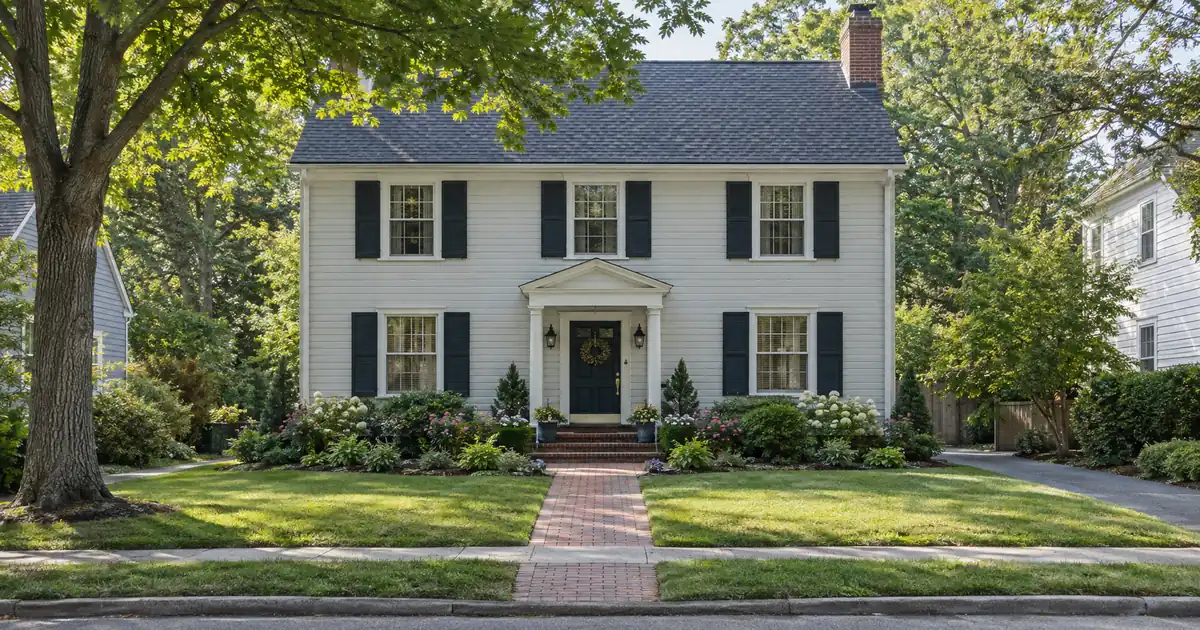
The Quick Read: A paid-off inherited home paired with an FHA cash-out is usually possible when you live in the house and never treated it as a rental. Because there is no mortgage to pay off, FHA treats the loan as cash-out. The waiting period for owner-occupancy is waived for heirs, and the file then turns on clean title, proof the home was never an investment, your own credit and income, and the appraisal. Everything here is subject to lender guidelines and full file review, and nothing is a commitment to lend.
Key Takeaways
- A home with no lien still counts as cash-out, so the cash-out leverage cap applies: 80% LTV on a home you occupy.
- Heirs generally skip the 12-month occupancy wait, but only if the home was never treated as an investment property.
- Renting the home after you inherit it can cost you the exception.
- You qualify on your own credit and income. The estate’s money and a deceased relative’s income do not count.
- Title needs to be in your name before the loan can move forward.
Why a Paid-Off Home Is Still a Cash-Out
A refinance with no old loan to retire is cash-out by definition. HUD’s archived reference guide says properties owned free and clear may be refinanced as cash-out transactions. Nothing is being paid off, so all the proceeds, after costs, land in your hands.
That shapes the numbers. Across the wholesale programs Lendmire places FHA files with, the FHA cash-out is capped at a lower loan-to-value ratio than a purchase loan on a home you own and occupy. HUD reduced that cap when it lowered the maximum for cash-out loans, so any page still quoting the older, higher figure is stale. County loan limits also apply, and the lower of the two controls. Final terms depend on the lender’s guidelines, the property type, and the borrower’s complete credit picture.
For the program basics, see Lendmire’s FHA cash-out refinance program page.
Key Terms Defined
Heir: the person who receives property from someone who has died, by will, trust, or state law.
Title: the legal record of who owns the home, usually shown by a recorded deed.
Probate: the court process, where required, that confirms a will and transfers a deceased person’s assets.
Adjusted value: the appraised value the LTV cap is measured against.
Principal residence: the home where you actually live most of the year.
Case number: the FHA number assigned to your loan file, which starts the clock for occupancy rules.
Does the Inheritance Exception Apply to You?
Usually, yes, if you moved in and never rented it. The general rule says you must own and occupy the home as a principal residence for 12 months before the case number is assigned. For an inheritance, HUD’s handbook language waives that minimum period, with one condition: the property has not been treated as an investment at any point since you inherited it.
HUD describes Handbook 4000.1 as its consolidated source of FHA single-family policy, and the current PDF sits on HUD’s handbooks page. The exact wording can change, so have your loan officer confirm it against the current text before you rely on it.
| Your situation | Exception likely applies? | What proves it |
|---|---|---|
| Moved in, never rented | Yes | Utility bills, ID with the home’s address |
| Left it vacant, live elsewhere | No, cash-out needs a principal residence | You must move in first |
| Rented it, even briefly | Generally lost; 12 months of occupancy needed | A new occupancy period |
| Estate still in probate | Not yet; title must be in your name | Completed probate or equivalent |
Here’s the catch on vacant homes. Cash-out is for principal residences only. It is not available on a second home or an investment property. If you live elsewhere, the exception does not help you.
The Documentation Map
A standard FHA cash-out file asks for income, assets, credit, insurance, and an appraisal. An heir’s file swaps some items out. Here is what each piece does.
| Document | What it proves | Common snag |
|---|---|---|
| Recorded deed or executor’s deed | You own the home | Deed not yet recorded |
| Death certificate, will or court order | The inheritance happened | Missing certified copies |
| Trust documents (if held in trust) | You are the successor owner | Incomplete trust paperwork |
| Utility bills, ID, employment records | You live there | Bills still in the decedent’s name |
| Pay stubs, traditional personal-income documentation, bank statements | Your own income and assets | Counting estate money as income |
| Homeowner’s insurance | The home is insured in your name | Policy still lists the deceased |
| Full appraisal | Adjusted value for the LTV cap | Deferred condition issues |
Items that usually drop out: a mortgage payment history on the subject property, since there is no mortgage. If a loan or other lien existed when title passed, ask the underwriter how that history is treated.
Which proof set is right depends on how title passed and on your state’s law. A lender can only guide you on what it needs, not on the legal route. An estate attorney handles that.
Step 1: Get Clean Title in Your Name
This is the step that stalls the most files. FHA needs a borrower with legal title. Typical proof is a recorded deed or executor’s deed, letters from the probate court, or trust documentation, depending on how the property was held.
If title is tangled or the estate is unprobated, you may need a probate filing or an affidavit of heirship before any lender can treat you as the owner. The National Consumer Law Center describes that problem for heirs. Whether probate is required at all is state law. Skip guessing and ask an estate attorney.
If the home still carries a mortgage, a different set of protections applies. Federal servicing rules let a family member who inherits ask the servicer to confirm them as a “confirmed successor in interest.” That matters for keeping an existing loan in good standing, not for the paid-off case here.
Step 2: Prove the Home Was Never an Investment
Lenders look for the absence of rental activity and the presence of ordinary living.
What helps:
- No lease, and no rental income on your traditional personal-income documentation for the home.
- Utility bills, bank mail, and ID showing the home as your address.
- Homeowner’s insurance written for an owner-occupied home, not a landlord policy.
- A plain written explanation if a relative stayed there or the home sat empty for a stretch.
A relative staying rent-free is a gray area. Tell the loan officer upfront instead of hoping it never comes up.
Step 3: Qualify on Your Own Credit and Income
The home may be free and clear, but you still have to qualify. FHA wholesale programs Lendmire works with start at a 580 decision score, and ratios run from a base 31/43 up to 40/50 with documented compensating factors. The automated finding governs most files.
Two rules trip up heirs and families:
- Income from a non-occupant co-borrower cannot be used on a cash-out.
- Rental income from an accessory unit on a one-unit home cannot count as effective income for cash-out.
Inheritance money is not the same as income. Cash you inherited may count as assets or reserves, but your paychecks, or your self-employment income, carry the file. The estate’s finances and a deceased relative’s income do not.
Step 4: The Appraisal and the Cap
Cash-out requires a full appraisal. Inherited homes often have deferred maintenance, so condition matters.
With no existing mortgage, the maximum loan is the 80% cap times the adjusted value, limited by the county loan limit. The lower figure wins. Closing costs can be financed into the loan, which reduces your net cash.
Step 5: Mortgage Insurance and Closing
FHA charges an upfront premium of 1.75% of the base loan, usually financed, plus an annual premium that runs between 0.15% and 0.75% of the balance depending on term, loan amount, and LTV. On a thirty-year loan above 90% LTV, the annual premium lasts the full term. At or below 90%, it ends after eleven years. HUD set the current annual schedule in Mortgagee Letter 2023-05. Because a cash-out at 80% sits at or below 90% LTV, the shorter premium period generally applies.
At closing, the new FHA first lien is the only lien on the home. Net cash is what remains after costs. You receive a Loan Estimate and, before closing, a Closing Disclosure.
What Changes If…
Consider a scenario where you inherited a home, moved in, and never rented. The exception applies. Title is the main item to settle. Then occupancy proof, your own income, and the appraisal.
Say you rented the home for several months after inheriting. Plan on 12 months of principal-residence occupancy before cash-out. Renting even briefly can restart the clock.
Picture an estate still in probate. Nothing can move until title passes to you. That is a legal timeline, not a lending one.
Run the situation with several heirs. Everyone who holds title is part of the picture, and buying out a sibling’s share is a related but separate question. Confirm it with the underwriter and do not assume it falls under the same rules.
This one is a genuine judgment call: if the cash is for a single project, a different structure may fit better. Lendmire’s piece Should a Paid-Off Home Get an FHA Cash-Out Instead of a Second Lien? walks through the tradeoff.
Common Mistakes That Sink the File
- Renting the home briefly “just to cover costs,” then assuming the exception still applies.
- Leaving utilities in the decedent’s name.
- Applying before title is recorded.
- Counting estate funds or a non-occupant relative’s income as qualifying income.
- Assuming a higher leverage cap from an outdated source.
- Treating an FHA Streamline as an option. It needs an existing FHA loan and does not pull cash out of a paid-off home.
The Monthly Budget Reality
A paid-off home has no payment today. A cash-out creates a new mortgage payment plus annual mortgage insurance, so your monthly obligations go from zero to something real. The proceeds are not restricted to a specific use, but the home becomes collateral for new debt. Size the loan to the need, not the cap.
Tax treatment can depend on your situation; borrowers should speak with a qualified tax professional before relying on any deduction or credit. Questions about estates belong with an attorney.
If you are weighing a cash-out refinance on a home you own outright, Lendmire can help you compare the programs and the equity each one reaches.
Frequently Asked Questions
Do I have to live in an inherited home for 12 months before an FHA cash-out?
Generally no. HUD’s handbook language waives the minimum occupancy period for an heir, provided the home has never been treated as an investment property. You still need to occupy it as your principal residence when you apply. Confirm the current wording with your loan officer.
What if I rented the inherited home for a while?
The exception is generally lost. You would typically need to occupy the home as a principal residence for 12 months before cash-out. Even brief rental use can matter, so disclose it early.
Can I use inherited money or a relative’s income to qualify?
Inherited cash may count as assets or reserves, but it is not income. A non-occupant co-borrower’s income cannot be used on a cash-out. Your own credit and income decide the file.
Does the servicer need a probate order if the home still has a mortgage?
Not always. Where probate is not required under local law to recognize the transfer, federal servicing rules say demanding proof of probate is generally not reasonable. An affidavit of heirship and a death certificate can be reasonable. That is separate from the paid-off case.
Is a paid-off inherited home a “no cash-out” refinance?
No. With no debt to pay off, every dollar of proceeds is cash to you, so FHA treats it as cash-out and applies the 80% LTV cap. Each figure is subject to lender guidelines and a complete review of property type, leverage, and credit.
For your own numbers, request a scenario review with Lendmire.
About Lendmire
Lendmire (NMLS# 2371349) is a mortgage brokerage serving homeowners and home buyers in 16 states. FHA, VA, conventional and jumbo purchase and refinance loans are arranged through wholesale lending channels; Lendmire brokers the financing and the lender underwrites each application. Scotsman Guide named Lendmire a Top Mortgage Workplace in both 2025 and 2026.
For the program’s current guidelines, see FHA loan programs.
Get Started
Ready to find the right loan for you?
In about 30 seconds you can review financing options available for your home or investment property. No commitment required.
Informational only. Not a Loan Estimate, approval, or commitment to lend. Program availability and eligibility are subject to lender guidelines, credit approval, property review, and underwriting.
References
1. HUD Archives: Reference Guide on refinances
2. HUD Archives press release 19-114
3. HUD Handbook 4000.1 information page
5. The National Consumer Law Center
6. CFPB Regulation X, section 1024.31
7. HUD Mortgagee Letter 2023-05
This article is part of Lendmire’s FHA Loan series — every loan program’s qualification details, guidelines, and scenarios live on the loan options page.
Related reading: How to Prepare a 2-4 Unit Primary Home for an FHA Cash-Out Appraisal · Should a Paid-Off Home Get an FHA Cash-Out Instead of a Second Lien? · How to Do an FHA Cash-Out on a Texas Second Home
Brandon Miller
Founder & CEO, Mortgage Loan Originator, Lendmire LLC
- Mortgage Loan Originator · NMLS# 1129696 · Verify on NMLS Consumer Access
- North Carolina Real Estate Broker · License# 343312 · Verify on NCREC
- North Carolina Insurance Producer · License# 19053198 · Property, Casualty, Life, Health · Verify on NAIC SBS
- Lendmire LLC · Firm NMLS# 2371349 · Verify firm licensure
Compliance and disclosures. Lendmire (NMLS# 2371349) is a licensed mortgage broker and is not a direct lender, depository institution, financial advisor, or tax professional. Content in this article is general market analysis and educational information — not financial, legal, or tax advice for any specific situation. Lendmire does not guarantee loan approval; every transaction is subject to underwriting by the funding lender. Mortgage pricing and loan program guidelines are subject to change at any time without notice and vary by borrower characteristics, property type, and state regulations. Lendmire complies with Equal Housing Opportunity. Licensure verification: NMLS Consumer Access.