
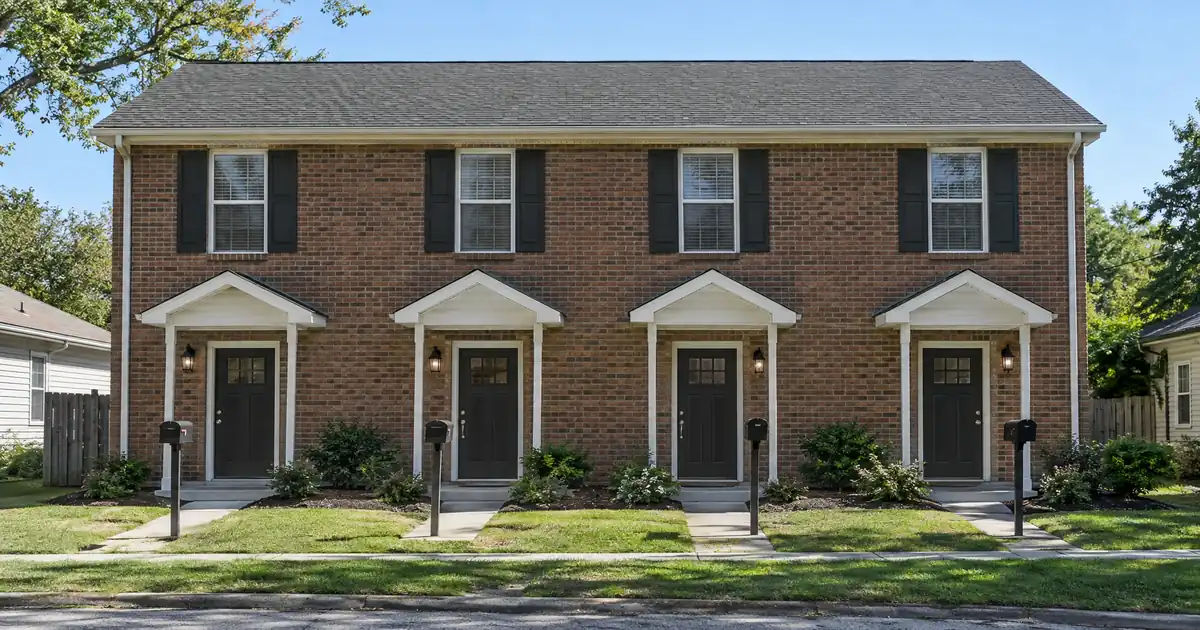
The Quick Read: Yes, it can, but it is not automatic. A duplex, triplex or fourplex can work when you live in one of the units, hold a valid Certificate of Eligibility, and pass full underwriting. A debt-to-income ratio above 41% does not end the file. Residual income, the money left over each month after your obligations, carries the most weight. Everything here is subject to lender guidelines and full file review.
Key Terms Defined
Debt-to-income ratio (DTI): Your total monthly debts divided by your gross monthly income, shown as a percentage.
Residual income: The money left each month after your mortgage, debts, taxes, and living costs are paid, measured against a VA table for your household size and region.
Certificate of Eligibility (COE): The VA document that confirms your service qualifies you for the benefit.
Occupancy certification: Your signed statement that you live in, or intend to live in, the home.
Seasoning: The waiting period a lender wants between your existing loan’s start and a new refinance.
Net tangible benefit: A real, measurable improvement the new loan must deliver over the old one.
Compensating factors: Strengths in your file, such as savings or steady income, that offset a weak spot.
Does a 2-4 Unit Count as a “Primary Home”?
It counts when you live in one unit. The building can hold other units, but at least one has to be your home. Across the wholesale programs Lendmire places files with, a duplex, triplex or fourplex with the borrower in residence is treated as an owner-occupied file. A building with five or more units is a different product, and it is outside this discussion.
VA’s cash-out refinance page lays out three conditions. You need a valid COE. You must meet VA’s and the lender’s credit and income standards. And you must live in the home you are refinancing.
That third condition is where most multi-unit questions land. If the property is a rental you do not live in, or a second home, it fails. Occupancy decides the leverage, and it decides eligibility first.
Here is the practical picture. Say you bought a fourplex, moved into unit one, and rent out units two through four. You qualify on occupancy. Say you moved out two years ago and rent all four. You do not, at least for a cash-out.
How Is Occupancy Proven on a Refinance?
You prove it by certifying it, and the lender backs that up with documents. For a cash-out, you certify that you occupy the home or intend to occupy it. That certification carries legal weight, so treat it seriously.
Underwriters commonly look for ordinary evidence that you live there: the address on your driver’s license, bills, pay records, and credit report. A file where every document points to a different address raises questions fast. (And those questions are rarely friendly.)
A few edge cases come up often:
- You moved out recently. The cash-out is built for a home you live in. Talk to a loan officer before applying, not after.
- You are deployed. VA has provisions for a spouse to certify occupancy in some situations. The lender confirms how that applies to your file.
- One unit is vacant or being renovated. Your own unit is what matters for occupancy. A vacant unit mainly affects the rental income the lender can count.
The IRRRL works differently. That is VA’s streamline refinance for an existing VA loan, and it asks you to certify that you previously lived in the home. The cash-out asks about now.
How Does High DTI Work on a VA Cash-Out?
High DTI is a flag, not a wall. The 41% figure is a guideline. Under 38 CFR 36.4340, DTI and residual income are the two primary underwriting standards. Missing one does not automatically disqualify you.
When DTI runs above 41%, the loan can still be approved with the underwriter’s supervisor justifying the decision. The same rule carves out a case where DTI exceeds 41% only because of tax-free income.
Now the part many lender blogs get backward. When DTI is above 41% and residual income beats the guideline by at least 20%, the extra supervisor sign-off is not required. That cushion is a relief valve. It is not an added hurdle.
So what controls the outcome? Residual income is often the deciding test on a VA file, though lender overlays and occupancy can also shape the result. A high-DTI borrower with strong residual income often has a real path. A high-DTI borrower with thin residual income usually does not, no matter how much equity the home holds.
Rolling cash out raises your loan balance, and the payment follows. On a file already above 41%, a bigger payment shrinks the cushion you need. VA News also notes that adding cash out increases the loan amount and the interest paid over the life of the loan. Sometimes the smartest move is taking less cash.
What Happens to the Rent From the Other Units?
Rent from the other units can help, but lenders usually count only part of it, and conditions apply. Do not assume full rent lands on the income side of your file.
Lenders generally want to see leases or other proof of the rent, and they discount it to account for vacancy and upkeep. Some also look for reserves or landlord experience on larger buildings. Those conditions vary by lender, so treat any single number you read online with caution.
| Unit | Who lives there | Evidence lenders look for | Typical treatment |
|---|---|---|---|
| Unit 1 | You | Occupancy documents | Your home |
| Unit 2 | Tenant | Signed lease | Part of rent may count |
| Unit 3 | Tenant | Signed lease | Part of rent may count |
| Unit 4 | Vacant | None | Usually no rent counted |
A vacant unit can still be financed, but it carries the cost without the income. On a high-DTI file, that gap matters.
Which Factors Help a High-DTI File?
Residual income leads, and the rest support it. Here is how the levers generally rank across the files we see.
| Factor | Weight | Why it matters |
|---|---|---|
| Residual income well above the table | Strong | The controlling test on VA |
| Steady, documented income | Strong | Shows the cushion will last |
| Savings in your own account | Moderate | Reserves must be your own funds |
| Lower balance after paying off debts | Moderate | Pulls DTI down at closing |
| Documented, leased rental units | Modest | Counted only in part |
Credit matters too. VA itself sets no minimum score, but the wholesale programs Lendmire works with start at a 580 decision score. Some lenders set a higher floor. Strong compensating factors rarely rescue a file with weak credit.
Reserves deserve a note. Cash-out proceeds generally cannot count as your required reserves, and the funds need to be in your account before closing.
What Are the Mechanics, Step by Step?
A VA cash-out is a full refinance. It is not a streamline. The usual sequence runs like this:
1. Confirm eligibility. The lender checks your COE and entitlement.
2. Identify the loan type. VA Circular 26-19-05 defines a Type I cash-out, where the new loan including the funding fee does not exceed the payoff, and a Type II, where it does.
3. Order an appraisal. VA will not guarantee a refinance above 100% of the appraiser’s reasonable value, and a financed funding fee counts toward that cap.
4. Pass a net tangible benefit test. The new loan has to improve something concrete, such as shortening the term, removing mortgage insurance, or landing at or below 90% of value.
5. Complete income analysis. The lender calculates DTI and residual income on VA’s form.
6. Review the disclosures. You receive a loan comparison and a home equity disclosure.
On a VA-to-VA cash-out, seasoning applies as well. A VA cash-out carries the same seasoning as the IRRRL: the later of 210 days from the first payment and the sixth payment. It also carries a net tangible benefit requirement.
Here are the program figures that frame the rest. The VA cash-out reaches up to 100% of the appraised value, including the financed funding fee, and it can refinance any loan type into VA. There is no mortgage insurance. The funding fee on a cash-out is 2.15% for first use and 3.3% after, and it is waived for veterans receiving service-connected disability compensation and other exempt groups. Every figure here is subject to lender guidelines and full file review.
To see how the program fits your goals, start with Lendmire’s VA cash-out refinance program page.
Where VA’s Rules End and Lender Rules Begin
VA sets the floor, and lenders often add their own limits on top. This is the friction point on multi-unit files. Some lenders cap cash-out below 100% of value. Others add DTI limits, higher credit floors or extra reserve requirements for three- and four-unit buildings.
State law can matter too, since some states limit how much cash you can take out. A broker who works with several wholesale lenders can compare these overlays side by side, which is the main reason to shop a multi-unit file instead of accepting the first no. And a “no” from one lender is not VA’s answer.
Property condition and the appraisal are the other common sticking points. Lenders look at the whole building, not just your unit.
What if the File Does Not Fit?
You have options before walking away:
- Take less cash. A smaller loan means a smaller payment and a better residual income cushion.
- Pay off debts at closing. Clearing monthly obligations can lower DTI, though the larger mortgage payment pushes the other way.
- Consider the IRRRL. If you hold a VA loan and do not need cash, the streamline avoids the full underwriting.
- Look at non-VA programs. FHA or conventional loans have different rules and costs.
Be careful with mailers promising big cash back, skipped payments, or no out-of-pocket cost. The CFPB and VA have warned that these offers can look official without being a government program. VA also cautions that refinance closing costs can add up to thousands of dollars.
Tax treatment can depend on your situation; borrowers should speak with a qualified tax professional before relying on any deduction or credit.
Frequently Asked Questions
Can I do a VA cash-out on a duplex?
Yes, if you live in one of the two units and meet VA’s and the lender’s credit and income standards. The lender confirms your COE, orders an appraisal, and tests the loan against residual income. Approval depends on the full file.
Is there a hard DTI cap on a VA cash-out?
No. The 41% figure is a guideline. A ratio above it needs residual income well above the table, and the underwriter documents why the file works. Lender overlays may be stricter than VA.
Does rental income from the other units count?
Usually in part. Lenders typically discount the rent and want proof such as leases. The exact treatment varies by lender, so ask early rather than assuming full credit.
What if I move out of the building?
A cash-out requires that you occupy the home or intend to. If you have moved out and the property is now a rental, it does not meet the occupancy condition. Speak with a loan officer before you apply.
Can the cash-out proceeds count as my reserves?
Generally no. Reserves have to be your own funds, in your account before closing. Proceeds from the refinance itself do not satisfy that requirement.
If you are weighing a cash-out refinance against keeping the loan you have, Lendmire can help you compare the programs and the equity each one reaches.
For your own numbers, request a scenario review with Lendmire.
About Lendmire
Lendmire is a mortgage brokerage (NMLS# 2371349) licensed for consumer mortgage lending in 16 states, arranging FHA, VA, conventional and jumbo purchase and refinance loans through a wholesale lending network. Eligibility is determined by the lender on each file. Scotsman Guide named Lendmire a Top Mortgage Workplace in both 2025 and 2026.
For the program’s current guidelines, see VA loan programs.
Get Started
Ready to find the right loan for you?
In about 30 seconds you can review financing options available for your home or investment property. No commitment required.
Informational only. Not a Loan Estimate, approval, or commitment to lend. Program availability and eligibility are subject to lender guidelines, credit approval, property review, and underwriting.
References
1. VA.gov cash-out refinance loan page
2. 38 CFR 36.4340 (2021 CFR via GovInfo)
3. VA News: losing thousands on your home loan
4. VA Circular 26-19-05 (cash-out refinances)
5. CFPB and VA warning on VA refinancing offers
This article is part of Lendmire’s VA Loans series — every loan program’s qualification details, guidelines, and scenarios live on the loan options page.
Related reading: Should a High-DTI Veteran Use a VA Cash-Out to Pay Off Debt? · How to Get a VA Cash-Out as a Surviving Spouse With High DTI · VA vs Conventional Cash-Out Requirements for a High-Equity Home
Brandon Miller
Founder & CEO, Mortgage Loan Originator, Lendmire LLC
- Mortgage Loan Originator · NMLS# 1129696 · Verify on NMLS Consumer Access
- North Carolina Real Estate Broker · License# 343312 · Verify on NCREC
- North Carolina Insurance Producer · License# 19053198 · Property, Casualty, Life, Health · Verify on NAIC SBS
- Lendmire LLC · Firm NMLS# 2371349 · Verify firm licensure
Compliance and disclosures. Lendmire (NMLS# 2371349) is a licensed mortgage broker and is not a direct lender, depository institution, financial advisor, or tax professional. Content in this article is general market analysis and educational information — not financial, legal, or tax advice for any specific situation. Lendmire does not guarantee loan approval; every transaction is subject to underwriting by the funding lender. Mortgage pricing and loan program guidelines are subject to change at any time without notice and vary by borrower characteristics, property type, and state regulations. Lendmire complies with Equal Housing Opportunity. Licensure verification: NMLS Consumer Access.