
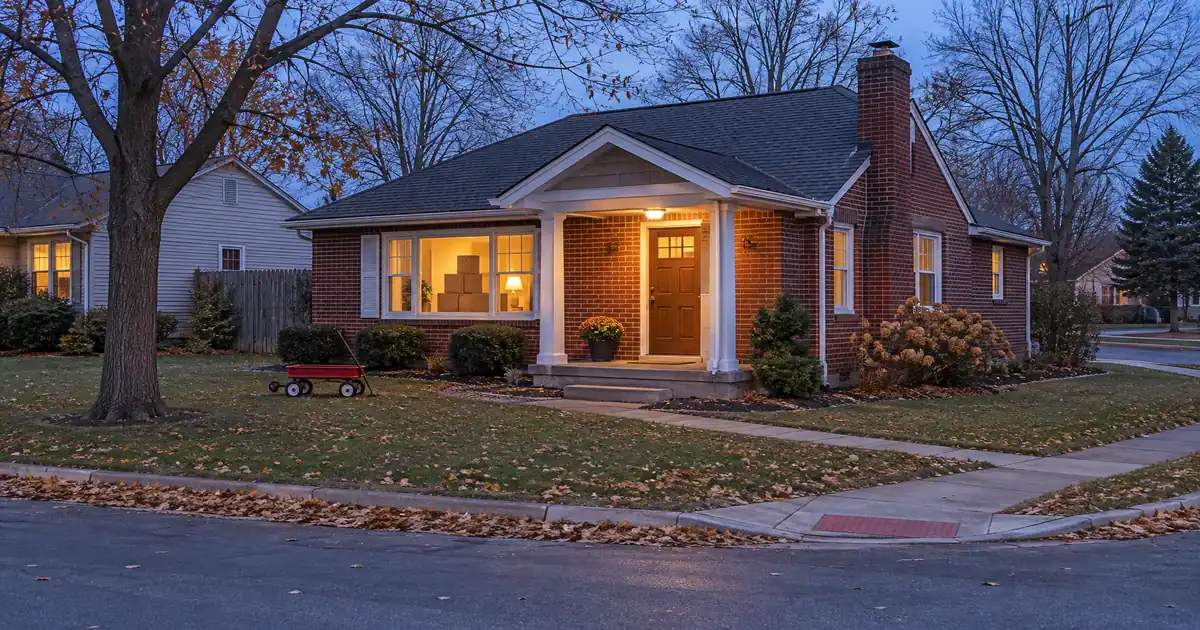
The Quick Read: An FHA cash-out refinance treats a home you owned before marriage like any other owner-occupied home. The loan looks at your ownership, your occupancy, your credit and your debts. It does not look at whether the home is “separate property.” The new loan can reach 80% of the home’s adjusted appraised value, and you generally need to have owned and lived in the home for 12 months first. Your spouse’s name on the deed is a separate question from your spouse’s role in the loan, so keep the two apart.
Key Takeaways
- FHA has no “premarital home” category. The home is a principal residence, and the loan follows that.
- The cap is 80% of value for the whole new loan, not just the cash you take.
- Twelve months of ownership and occupancy come before you can apply.
- A spouse who is not on the loan can still affect your debt ratios or need to sign lien paperwork, depending on your state.
- Whether the home stays “separate” after you refinance is a family-law question. Ask an attorney before you close.
What an FHA Cash-Out Actually Is
An FHA cash-out refinance replaces your current mortgage with a new, larger FHA-insured loan and hands you the difference in cash. The money can go to anything. Debt payoff, repairs, tuition, a reserve fund. The loan doesn’t ask you to prove a purpose.
FHA cash-out estimate
Seeded with an example value, a balance to match, and a round cash request; change any field.
Editable benchmark: 7.18% as of November 5, 2026 · Freddie Mac 30-year average via FRED®. A conventional market reference, not an FHA cash-out refinance quote.
Illustrative starting assumptions: a $350,000 home value, a $193,000 current balance, the FHA cap on a principal residence with the upfront premium financed, a thirty-year term at the current Freddie Mac benchmark, and property taxes and insurance estimated at typical national rates. Every field is editable.
An illustration, not a Loan Estimate, an approval, a quote, or a commitment to lend. The rate shown is the weekly Freddie Mac thirty-year conventional benchmark, used as a market reference; an FHA cash-out is priced by the lender at lock, and this is not an FHA cash-out refinance quote. HUD’s cap limits the base loan; the upfront premium is financed on top of the capped base loan; the monthly premium for the first year follows the snapshot’s schedule. Cash available means the base loan the cap permits less the balances retired, before closing costs, which this calculator leaves out. The line figure applies the line program’s combined loan-to-value ceiling to the same value and balance. Taxes and insurance are estimates you can edit. Licensed in sixteen states for consumer mortgages.
Compare that with a HELOC or home equity loan. The CFPB describes a cash-out refinance as replacing the original mortgage, while home equity loans and HELOCs leave the original first lien in place. That one difference drives most of the decision, and the comparison table later in this piece lays it out.
The short version of how it works across the wholesale programs FHA files get placed with: leverage tops out at 80% of value, the home must be your principal residence, and you must have owned and occupied it for 12 months before the case number is assigned. A case number is the FHA’s tracking number for your loan file. It gets assigned early, so the 12 months count back from that point.
Two points about that “principal residence” rule. First, it means a home you actually live in. Second, it’s a rule about use, not about how you got the home. That matters for the next section.
Does “Premarital” Change Anything With FHA?
No. FHA doesn’t care when you bought the home relative to your wedding. It cares who owned and lived in it. If you bought the home alone, lived in it, then married, the 12-month clock was running before the marriage and the wedding doesn’t reset it. (Lenders review this file by file, so expect them to ask for proof of occupancy such as utility bills or employment records.)
What “premarital” does change is your family-law position. A home bought before marriage and never retitled is generally treated as your separate property. Rules differ by state, and a few things can blur that line:
| Situation | Likely effect | Protective step |
|---|---|---|
| Home titled only to you, no changes | Generally stays separate | Keep the purchase and equity records |
| Spouse added to title at refinance | May become joint marital property | Ask an attorney first |
| Marital income pays the mortgage | Spouse may claim a share of growth | Keep clear payment records |
| Cash proceeds go into a joint account | Funds can be commingled | Use an account in your name only |
| Prenup or postnup in place | Its terms usually control | Show the document to your attorney |
Think of commingling as mixing separate money with marital money until you can’t tell them apart. Courts in many states treat mixed funds as marital. That’s a legal point, not a lending one, and the lender won’t advise you on it.
Does the refinance itself change separate status? A new loan on a home in your name alone doesn’t by itself add a spouse to the title. But the choices around it can. Adding a spouse at closing, depositing proceeds into a joint account, or paying the new loan from joint income can all muddy the record. Talk to a family-law attorney in your state before you sign anything. This article gives you the lending side only.
How Is the Loan Underwritten, Step by Step?
Underwriting is the lender’s file review. Here is the sequence in plain order.
1. Confirm the ownership and occupancy facts. At least one borrower needs 12 months of ownership and occupancy before the case number. The test asks who owned and lived there, not who is on the deed.
2. Order the appraisal. A full appraisal sets the adjusted value, which is the appraised value after FHA’s adjustments.
3. Apply the 80% cap. HUD Mortgagee Letter 2019-11 cut the maximum loan-to-value and combined loan-to-value on cash-out refinances to 80% of adjusted value. Loan-to-value, or LTV, is the loan balance divided by the home’s value. Older web pages still show 85%, which was the limit before that change. HUD’s press release said the move aligned FHA with the maximum cash-out leverage the big government-sponsored lenders allow.
4. Price in mortgage insurance. FHA charges an upfront premium of 1.75% of the base loan, which most borrowers finance. It also charges an annual premium between 0.15% and 0.75% of the balance, depending on term, loan amount and LTV. At 80% LTV on a thirty-year loan, the annual premium ends after eleven years, per the program schedule in HUD Mortgagee Letter 2023-05. Treat these as program mechanics, not a price quote.
5. Review credit and income. Lenders check credit history, income, and debt-to-income ratios (DTI), which compare your monthly debts to your monthly income. The base pair is 31/43, housing over total. Documented compensating factors can stretch that to 40/50 at the top tier, and the automated underwriting finding governs most files.
6. Check the county loan limit. The new loan must fit under the FHA limit for your county. County loan limits apply and change over time, so the lender confirms yours.
7. Close. The old loan is paid off, the new FHA loan is recorded, and the cash is disbursed to you.
Lenders can add their own overlays on top of FHA’s rules, such as a higher credit floor. “Overlay” means a stricter requirement than the agency’s. Two lenders can look at the same file and reach different answers, and that’s one reason brokers shop across several.
The Math: A Worked Example
Say you own a home with a current mortgage balance equal to 50% of its adjusted value. The 80% cap covers the entire new loan: the payoff of the old mortgage, the financed upfront premium, and any other financed costs. So your cash comes from what’s left under the cap.
In that picture, roughly 30% of the home’s value sits between your old balance and the cap. Financed costs eat into that slice before you see a dollar. The upfront premium alone is 1.75% of the base loan.
The takeaway: cash in hand is always less than “80% minus what I owe.” Run it that way before you plan around a number.
And at least 20% equity stays in the home after closing. That cushion is the point of the cap, and the stated reason HUD gave was to strengthen equity positions and reduce losses on default.
Community-property states: a non-borrowing spouse’s debts count
This is the biggest surprise for “it’s my premarital house” borrowers. Under FHA’s rules for lenders, a borrower who lives in a community property state, or buys a property there, brings the non-borrowing spouse’s debts into the qualifying ratios. The exception is obligations that state law excludes. The lender also pulls a credit report on that spouse, and judgments against the spouse must be resolved. The spouse’s credit history, though, isn’t a reason to deny the application.
So a spouse with a big student loan balance can shrink what you qualify for, even if they never sign the note. Confirm your state’s treatment with the lender before you count on a number.
The spouse’s signature
Being off the loan isn’t always the same as being off the paperwork. Depending on state law, the lender may need your spouse to sign the security instrument, or sign a document giving up rights to the property, so the lien is valid. Signing that paper doesn’t make the spouse a borrower on the note. They aren’t liable for repayment just because they signed the lien document. Requirements on this point can change, so confirm the current one with your lender.
Adding a spouse to title
Retitling before or at closing has legal and property-division consequences. Title and loan are two separate things. A new deed changes who owns the home. It doesn’t change who owes the debt. Whether to add your spouse is a family-law decision, not an FHA one.
Buying out a spouse or ex-spouse
A divorce buyout is a different path from a standard cash-out. FHA has special treatment for a spouse who keeps the home, and some of that treatment may not follow the usual cash-out cap. Details vary by lender, so ask your loan professional and your divorce attorney together. Also remember a quitclaim deed removes someone from title, not from the loan.
Occupancy and inheritance
Cash-out is for principal residences only. A home you moved out of and rented, or one you inherited and rented, fails the occupancy test. An inheritor who rents the property generally isn’t eligible for cash-out until they have occupied it for 12 months. One sentence on investments: occupancy decides the leverage, so a rental needs a different loan than this one.
Hawaiian Home Lands
Loans on Hawaiian Home Lands follow a separate FHA program with its own terms, so the standard cash-out cap and premium description above may not apply. It’s a narrow case, but it’s real.
The other FHA refinances
Not every FHA refinance pulls cash. The FHA Streamline refinances an existing FHA loan with no appraisal, a limited credit review and a net tangible benefit, and the premium continues. The FHA rate-and-term refinance, with an appraisal, reaches 97.75% on a principal residence you’ve occupied for the previous twelve months. If you only want to change your loan terms and don’t need cash, one of those may fit better than a cash-out.
Protecting the Separate Side of the Ledger
Here’s the honest framing: the loan is the easy part. The record-keeping is where premarital owners get tripped up.
Document the starting point. Keep the purchase contract, the closing statement and the original loan paperwork. A dated appraisal from near the wedding helps show premarital equity.
Handle proceeds with care. Depositing the refinance cash into an account in your name only keeps the trail clean. Cash into a joint account can turn separate money into mixed money. If you spend it on the household, that’s your choice, but know what you’re choosing.
Consider a postnuptial agreement. A prenup or postnup can spell out how the home, the new debt and the equity are treated. It’s a document for your attorney to draft, not your lender.
Know who pays the loan. If marital income pays the new, larger mortgage, your spouse may argue it contributed to the equity. Courts differ on this. It’s another reason to talk to counsel first.
Two questions are worth raising at the start: the debt-ratio question in community-property states, and who must sign the security instrument. Settling both early helps avoid a stalled file.
FHA Cash-Out vs. HELOC vs. Home Equity Loan
Which of the three fits a premarital home? It’s close to a genuine toss-up, and it depends on the loan you already have. If your current mortgage has good terms, keeping it and adding a second lien may beat replacing it. If you want to restructure the whole debt, cash-out does that.
| Factor | FHA cash-out | HELOC | Home equity loan |
|---|---|---|---|
| First mortgage | Replaced | Left in place | Left in place |
| Leverage limit | 80% of value | Set by lender | Set by lender |
| Occupancy | Principal residence only | Varies by lender | Varies by lender |
| Mortgage insurance | Upfront and annual | No FHA premium | No FHA premium |
A cash-out raises your balance and can raise your monthly cost. It may also replace an older loan with better terms. The home is collateral, so the CFPB warns that paying non-mortgage debts with mortgage debt can raise the risk of foreclosure. Weigh that before you roll credit cards into your mortgage.
Key Terms Defined
Adjusted value: The appraised value after FHA’s adjustments. The 80% cap is measured against it.
Case number: The FHA’s tracking number for your loan. The 12-month ownership clock counts back from its assignment.
Combined loan-to-value (CLTV): Your total debt on the home, including any second liens, divided by its value.
Commingling: Mixing separate money with marital money so the two can’t be told apart.
Non-borrowing spouse: A spouse who isn’t on the loan. They may still affect your debt ratios or sign lien documents.
Security instrument: The mortgage or deed of trust that pledges the home as collateral for the loan.
Seasoning: The waiting period a lender or program wants before you can refinance. Here, 12 months of ownership and occupancy.
When to Call an Attorney First
Skip the lender call and start with a family-law attorney if any of these apply:
- You plan to add your spouse to the title.
- You’re in the middle of a separation or divorce.
- You have a prenup or postnup you haven’t reread.
- You aren’t sure whether your state treats the home’s growth as marital.
None of this is legal advice. State law varies, and a short consult costs far less than untangling a retitled deed.
Where to Go From Here
If you are weighing a cash-out refinance against keeping the loan you have, Lendmire can help you compare the programs and the equity each one reaches. A mortgage broker arranges the loan through wholesale lenders, so the comparison is across programs rather than one lender’s menu. Every figure here is subject to lender guidelines and a full file review. Nothing here is a commitment to lend.
Frequently Asked Questions
Does my spouse have to be on the loan to pull equity from a home I owned before we married?
No. You can apply on your own and qualify on your own income and credit. Depending on state law, your spouse may still need to sign lien documents, and in community-property states their debts may enter your ratios. Signing the lien paperwork doesn’t make them a borrower on the note.
Does getting married reset the 12-month rule?
Generally not. The test asks who owned and occupied the home before the case number, and the owner who lived there keeps that history. Lenders review this file by file, so expect a request for proof of occupancy.
Can I take out all of my equity?
No. The cap is 80% of adjusted value on the entire new loan, including the old mortgage payoff and financed costs. At least 20% equity stays in the home, and your cash is what remains under the cap.
Will a cash-out change whether the home is separate property?
The refinance alone doesn’t retitle the home. But adding a spouse to the deed, mixing proceeds into joint accounts, or paying the loan from joint income can affect how a court views it. That’s a family-law question for an attorney in your state.
Can I use FHA cash-out on a rental or second home?
No. It’s for a principal residence only. Occupancy decides the leverage, and a home you don’t live in needs a different kind of financing.
For your own numbers, request a scenario review with Lendmire.
About Lendmire
Lendmire (NMLS# 2371349) is a mortgage broker licensed for consumer lending in 16 states. Lendmire arranges FHA, VA, conventional and jumbo purchase and refinance loans through wholesale lenders; every file is underwritten by the lender under the applicable program guidelines. Scotsman Guide named Lendmire a Top Mortgage Workplace in both 2025 and 2026.
Get Started
Ready to find the right loan for you?
See your offer in seconds. No credit pull, no obligation.
Informational only. Not a Loan Estimate, approval, or commitment to lend. Program availability and eligibility are subject to lender guidelines, credit approval, property review, and underwriting.
References
1. CFPB Office of Research blog on cash-out refinances
2. HUD Mortgagee Letter 2019-11
3. HUD press release, cash-out risk
4. HUD Mortgagee Letter 2023-05
5. CFPB: CFPB Report Finds Cash Out Mortgage Refinance Borrowers Improve Credit Scores
This article is part of Lendmire’s FHA cash-out refinance program — full qualification details, guidelines, and scenarios live on the program page.
Related reading: FHA Cash-Out vs Selling an Inherited Home as a Retiree · How FHA Cash-Out Seasoning Counts a Home Bought Within a Year · FHA Cash-Out Refinance Requirements on a Recently Bought Home
Brandon Miller
Founder & CEO, Mortgage Loan Originator, Lendmire LLC
- Mortgage Loan Originator · NMLS# 1129696 · Verify on NMLS Consumer Access
- North Carolina Real Estate Broker · License# 343312 · Verify on NCREC
- North Carolina Insurance Producer · License# 19053198 · Property, Casualty, Life, Health · Verify on NAIC SBS
- Lendmire LLC · Firm NMLS# 2371349 · Verify firm licensure
Disclosures. The information presented in this article is general market commentary, not financial, legal, or tax advice. Lendmire is a mortgage brokerage (NMLS# 2371349) — not a direct lender or depository institution — and loan placement is subject to lender underwriting. Nothing in this content represents a commitment to lend. Loan terms, pricing, and program availability vary based on borrower qualifications, property characteristics, and state of subject property, and are subject to change at any time. Lendmire complies with Equal Housing Opportunity requirements. Consumer access: nmlsconsumeraccess.org.