
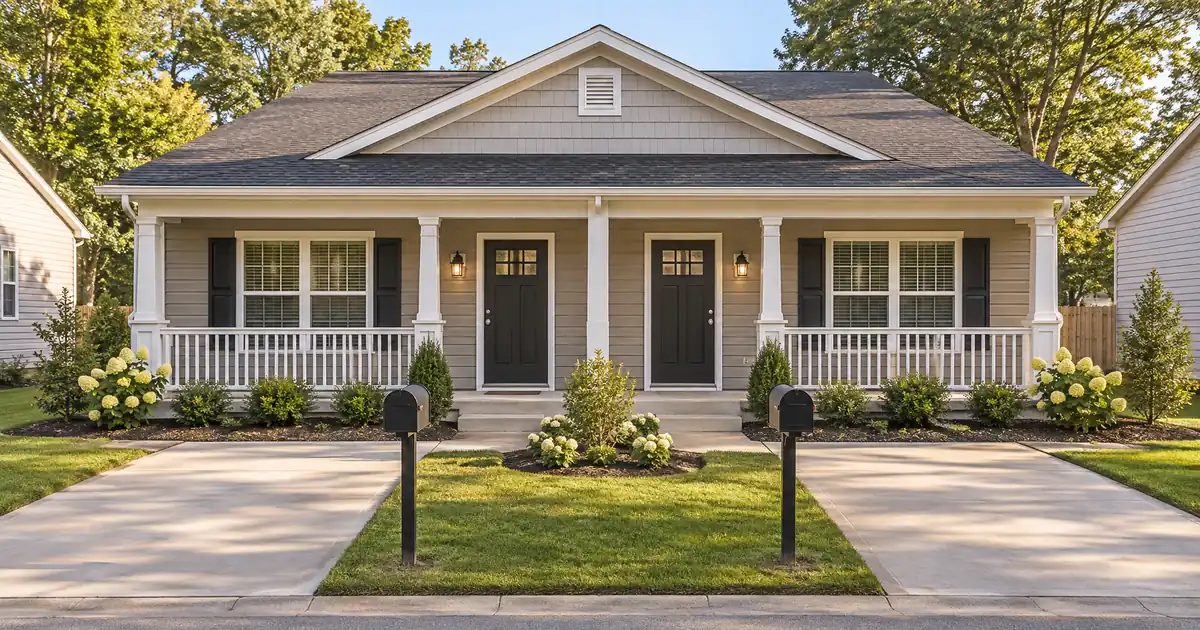
The Quick Read: Qualifying a duplex or condo for a jumbo cash-out refinance means passing two tests at once: your own credit, income and reserves, and the property’s own rules. A duplex adds rent-counting and appraisal questions. A condo adds a review of the whole building. Every figure below is subject to lender guidelines and full file review, and nothing here is a commitment to lend.
What Makes a Cash-Out Refinance “Jumbo”?
A refinance is jumbo when the new loan is larger than the conforming limit for that county and unit count. The limit is set each year by the Federal Housing Finance Agency. FHFA’s 2026 announcement shows how the one-unit baseline rises and how a higher ceiling applies in high-cost areas. Duplex limits run higher than one-unit limits, so the line between conforming and jumbo sits at a different spot for a two-unit home.
Jumbo cash-out estimate
Enter the value, the balance, and the cash wanted; choose the occupancy and the structure; the lanes, the payment, and the reserves follow.
Editable benchmark: 7.18% as of November 5, 2026 · Freddie Mac 30-year average via FRED®. A conventional market reference, not a jumbo cash-out refinance quote.
Illustrative starting assumptions: a $2,000,000 home value in the jumbo range, a $1,000,000 current balance, a principal residence on a thirty-year fixed structure at the current Freddie Mac conforming benchmark, and property taxes and insurance estimated at typical national rates. Every field is editable.
Illustrative estimate only — not a Loan Estimate, approval, quote, or commitment to lend. The rate field carries the weekly Freddie Mac thirty-year conforming benchmark, a market reference and not a jumbo cash-out refinance quote; a jumbo loan is priced by the lender at lock. The lanes shown are the wholesale cash-out lanes behind this page as of the snapshot date; the calculator reads each lane’s leverage, loan maximum by occupancy, cash-in-hand cap, and reserves as the lane table states them, and a Lendmire loan officer confirms the lane on the file. The cash available is the loan the lane allows less the balances paid off, before closing costs, which are not included; on most lanes a jumbo cash-out begins one dollar above the conforming limit for the county, and two lanes start at a stated dollar floor instead. The HELOC line is the line program’s combined loan-to-value ceiling applied to the same value and balance. Taxes and insurance are editable estimates. Licensed in sixteen states for consumer mortgages.
Cash-out means the new loan is bigger than the balance you owe, and you take the difference as cash. Because the new balance is larger, the whole new payment is tested against your income, not just the old one.
Lendmire is a mortgage broker. It arranges these loans through wholesale lenders, and the wholesale lenders review and approve them. Lendmire’s jumbo cash-out refinance program page lays out the structures in more detail.
Here is the envelope the wholesale jumbo lanes work in, stated as program guidelines and not promises:
- A 660 decision score on the headline lane.
- Leverage up to 90% LTV on the headline lane. Several lanes reach 89.99% CLTV, and the rest stop at 80%.
- Loan amounts up to $5,000,000 on the largest lanes.
- A 50% ratio ceiling on the fixed lanes, 45% on the adjustable lanes and 43% on the interest-only lanes.
All of this is subject to lender guidelines and a full review of property, leverage and credit. Cash-out generally sits at lower leverage than a purchase, and two lanes carry a cash cap on the largest loans. Your property type and occupancy shape which number applies to you.
Duplex vs. Condo: Are They the Same Thing?
A duplex is a building with two units. You usually own the structure and the land, and you carry the roof, the insurance and the maintenance. A condo is a unit inside a larger project. You own the interior space, and an association owns and maintains the shared parts. Some duplexes sit inside a condo association, which creates a hybrid covered further down.
| Factor | Duplex | Condo unit |
|---|---|---|
| What you own | Building and land | Unit interior plus a share of common areas |
| Maintenance | You | Association, funded by dues |
| Appraisal form | Two-to-four-unit report (Form 1025) | Condo unit report (Form 1073) |
| Extra review | Rent and unit details | Building and association review |
| Main risk to the file | Value and rent treatment | The project itself |
The appraisal forms come from Fannie Mae’s appraisal report forms guidance, which assigns Form 1025 to two-to-four-unit properties and Form 1073 to condo units. Jumbo lenders write their own terms, but they borrow these standard forms.
How Is the Loan Underwritten, Step by Step?
The deal works through the same stages whatever the property type. The tightest test governs, not the loosest.
1. Credit and score. The lender pulls credit and checks the score against the lane’s floor. The headline lane sits at a 660 decision score, subject to lender guidelines.
2. Income and repayment-capacity. Federal law requires lenders to make a good-faith determination that you can repay. The federal consumer-finance regulator’s repayment-capacity explainer says lenders must consider and document income, assets, employment, credit history and monthly expenses. The rule does not set one national debt ratio. The lender’s own ceiling does, and on the fixed lanes that ceiling is 50%.
3. Leverage. The lender divides the new loan by the appraised value. Cash-out lanes cap leverage below the purchase caps. On a refinance the appraised value sets the maximum loan, so a low value shrinks the cash you can take.
4. Reserves. Reserves are measured in months of the full payment, and the required months rise with the loan amount. Ask early whether the cash-out itself can count toward reserves. Lenders differ on that point, and it is a question to put to your loan officer before you apply.
5. Appraisal. Above a lane’s threshold amount, two appraisals are required. The appraiser uses the form that fits the property type.
6. Property review. For a duplex, this is where unit details and rent get documented. For a condo, this is where the building gets reviewed.
7. Underwriting decision. The lender weighs everything together against the full new payment.
Qualifying a Duplex You Live In
A duplex you live in is an owner-occupied loan, and occupancy decides your leverage. Primary, second-home and investment occupancy each carry lane-specific leverage. If you live in one unit, you are in the primary lane.
Three things set duplexes apart.
Leverage runs lower on cash-out. Agency rules treat two-to-four-unit homes as higher risk than one-unit homes, and a two-unit home carries a lower cash-out maximum than a one-unit home. Jumbo lenders set their own numbers, but expect cash-out leverage on a duplex to sit at or below what a single-family home gets.
The other unit’s rent may not help. Many borrowers assume the tenant’s rent counts as income. Under Fannie Mae’s rules, rental income from a principal residence, including the unit you don’t occupy, generally cannot be used to qualify, with exceptions for things like boarder income and accessory units. The same page says lenders report gross rent for each unit, whether or not you use it to qualify. Whether a jumbo lane counts the other unit’s rent at all is lender-specific. Plan your file as if it won’t, and treat any credit as a bonus.
The appraiser looks at both units. Form 1025 captures each unit, and the rent schedule goes into the report. Have your lease for the other unit ready.
Qualifying a Condo: The Building Gets Underwritten Too
The lender reviews the project in addition to your unit. Fannie Mae’s Full Review process uses its Condo Project Manager tool, and jumbo lenders often ask the same kinds of questions. They want to know about:
- Pending or active litigation against the association.
- Special assessments, current or planned.
- The share of units that are owner-occupied versus rented.
- Whether the association’s budget funds reserves.
- Insurance coverage on the building.
- Whether one owner holds too many units.
Fannie Mae can flag a project as unavailable when it learns the project fails its requirements or carries other risk. A cash-out loan that isn’t a Fannie-to-Fannie limited refinance faces the full project review, and a jumbo cash-out doesn’t get the waiver.
The HOA questionnaire needs to be complete. An incomplete questionnaire stalls the file as surely as a weak credit score does. Ask your association manager for it before you apply, not after.
Where the General Rule Breaks
These are the edge cases that move a file from workable to stuck.
Non-warrantable condos. A project that misses agency standards is called non-warrantable. Two of the wholesale jumbo lanes accept non-warrantable condominiums, and the others do not. Where they are accepted, expect tighter terms. If your building has litigation, a heavy investor concentration or an insurance gap, ask a broker which lanes will review it before you pay for an appraisal.
Two- to four-unit condo projects. Fannie Mae waives project review for units in a two-to-four-unit condo project, but that waiver belongs to Fannie Mae’s own loans. A jumbo lender may still apply its own project rules. A building with only a few units may be simpler to get through, though nothing about it is automatic.
A duplex inside a condo association. This hybrid gets both reviews. The lender treats the property as a two-unit home for appraisal and rent purposes, and treats the association as a project to be reviewed. Expect both sets of paperwork.
Second homes and investment occupancy. A condo or duplex you don’t live in moves to a different occupancy lane with its own leverage. Occupancy decides the number, so state it accurately on the application.
Seasoning. Lenders generally want the loan being paid off to have aged for a minimum period, and they want you to have held title for a minimum period. Exact periods are lender-specific. A recent purchase or a recent refinance is where files get kicked back.
A Scenario in Plain Words
Take a homeowner who lives in one unit of a duplex and rents the other. The home is worth well above the county’s conforming limit for two units, and the owner wants to pull out equity.
The loan officer starts with the appraised value, since a low appraisal cuts the cash available. Then the lender applies the cash-out leverage for a two-unit primary residence, which sits at or below the one-unit number and below a purchase. The existing mortgage is paid off from the new loan, and the remainder is the cash.
On income, the owner’s own earnings carry the file. The tenant’s rent is documented and reported, but the file is built so it still works if that rent is not counted. If the loan lands in a higher amount tier, two appraisals and more months of reserves come into play. Cash caps on the largest lanes can also trim the cash the owner expected.
Now picture a condo in place of the duplex. The cash-out steps are the same, but leverage and occupancy rules can differ for a condo, and a new question appears: whether the building passes review.
What the Lender Wants in the File
Gather these before you apply. Clean documentation doesn’t guarantee approval, but it leaves fewer preventable gaps.
For any property:
- Recent pay documents, tax returns and bank statements as the lane requires.
- The current mortgage statement and homeowners insurance declaration.
- Proof of reserves, with the source of the funds shown.
- A signed lease for any rented unit.
For a duplex:
- Rent details for each unit.
- A clear picture of which unit you occupy.
For a condo:
- The completed HOA questionnaire.
- The association’s budget, insurance certificate and any assessment notices.
- Details on any litigation involving the association.
Common Reasons Files Stall
- The building fails project review even though the borrower is strong.
- The appraisal comes in low, cutting the cash available.
- The borrower counted on rent that the lane doesn’t count.
- Reserves are short, or the funds can’t be sourced.
- The occupancy on the application doesn’t match the facts.
- The loan being paid off is too new.
Key Terms Defined
Jumbo loan: A mortgage larger than the conforming limit for the county and unit count, which sets it outside agency purchase rules.
Cash-out refinance: A new, larger mortgage that pays off the old one and leaves you the difference in cash.
Non-warrantable condo: A condo project that misses standard agency eligibility rules and needs a lender that accepts it.
Seasoning: The minimum time you must have held the home or the existing loan before a cash-out is allowed.
Project review: The lender’s check of the condo building and association, separate from your unit and your credit.
Reserves: Liquid funds, measured in months of the full payment, that you must still hold after the loan is done.
The Decision in Practice
A cash-out refinance replaces your old mortgage with a bigger one. The Federal Reserve notes that many financial advisers caution against using cash-out refinancing to pay off unsecured debt such as credit cards, and the CFPB’s home equity guide notes the loan is secured by your home and can extend how long it takes to pay off. If you can’t make the payments, you risk losing the home.
Tax treatment can depend on your situation; borrowers should speak with a qualified tax professional before relying on any deduction or credit.
If you are weighing a cash-out refinance against keeping the loan you have, Lendmire can help you compare the programs and the equity each one reaches. Call 828-256-2183 or request a quote.
Frequently Asked Questions
Can the rent from the other half of my duplex help me qualify?
Usually not by default. Agency rules generally don’t let rent from the home you live in count toward qualifying, with limited exceptions. Some jumbo lanes treat it differently, so ask your loan officer how the lane handles it. Build the file so it works without that rent.
Does a condo need project approval for a jumbo cash-out?
Yes, in most cases. The lender reviews the building as well as your unit, and a cash-out refinance doesn’t get the waiver that some limited refinances do. Litigation, special assessments and insurance gaps are common reasons a building fails.
Are non-warrantable condos eligible?
Sometimes. Expect tighter terms where they are accepted, and expect the lender to review the project closely.
How much can I borrow against a duplex compared with a single-family home?
Less, as a rule. Two-unit homes carry a lower cash-out maximum than one-unit homes under agency rules, and jumbo lanes set cash-out leverage below purchase leverage. The headline lane reaches 90% LTV, but cash-out on a duplex generally sits lower.
What credit score and ratio do I need?
The headline lane uses a 660 decision score, and the fixed lanes carry a 50% ratio ceiling. The adjustable lanes run 45% and the interest-only lanes 43%. These are guidelines and vary by lane, borrower and property.
For current guidelines, see jumbo loan programs.
About Lendmire
Lendmire — NMLS# 2371349 — is a mortgage broker that arranges FHA, VA, conventional and jumbo home purchase and refinance financing in 16 states through wholesale lenders. Every option is subject to the lender’s guidelines and full underwriting. Scotsman Guide named Lendmire a Top Mortgage Workplace in both 2025 and 2026.
Get Started
Ready to find the right loan for you?
See your offer in seconds. No credit pull, no obligation.
Informational only. Not a Loan Estimate, approval, or commitment to lend. Program availability and eligibility are subject to lender guidelines, credit approval, property review, and underwriting.
References
1. FHFA — 2026 conforming loan limit values
2. Fannie Mae Selling Guide — Appraisal forms
3. CFPB: What Is the Ability to Repay Rule
4. Fannie Mae Selling Guide — Rental income
5. Fannie Mae Selling Guide — Full Review process
6. Fannie Mae Selling Guide — Waiver of project review
7. Federal Reserve — Refinancings
8. CFPB — Using home equity guide
This article is part of Lendmire’s jumbo cash-out refinance program — full qualification details, guidelines, and scenarios live on the program page.
Related reading: Jumbo Cash-Out Refinance Requirements With Little Equity · Can You Get Approved for a Jumbo Cash-Out Refinance Replacing Your Mortgage?
Brandon Miller
Founder & CEO, Mortgage Loan Originator, Lendmire LLC
- Mortgage Loan Originator · NMLS# 1129696 · Verify on NMLS Consumer Access
- North Carolina Real Estate Broker · License# 343312 · Verify on NCREC
- North Carolina Insurance Producer · License# 19053198 · Property, Casualty, Life, Health · Verify on NAIC SBS
- Lendmire LLC · Firm NMLS# 2371349 · Verify firm licensure
Compliance and disclosures. Lendmire (NMLS# 2371349) is a licensed mortgage broker and is not a direct lender, depository institution, financial advisor, or tax professional. Content in this article is general market analysis and educational information — not financial, legal, or tax advice for any specific situation. Lendmire does not guarantee loan approval; every transaction is subject to underwriting by the funding lender. Mortgage pricing and loan program guidelines are subject to change at any time without notice and vary by borrower characteristics, property type, and state regulations. Lendmire complies with Equal Housing Opportunity. Licensure verification: NMLS Consumer Access.