
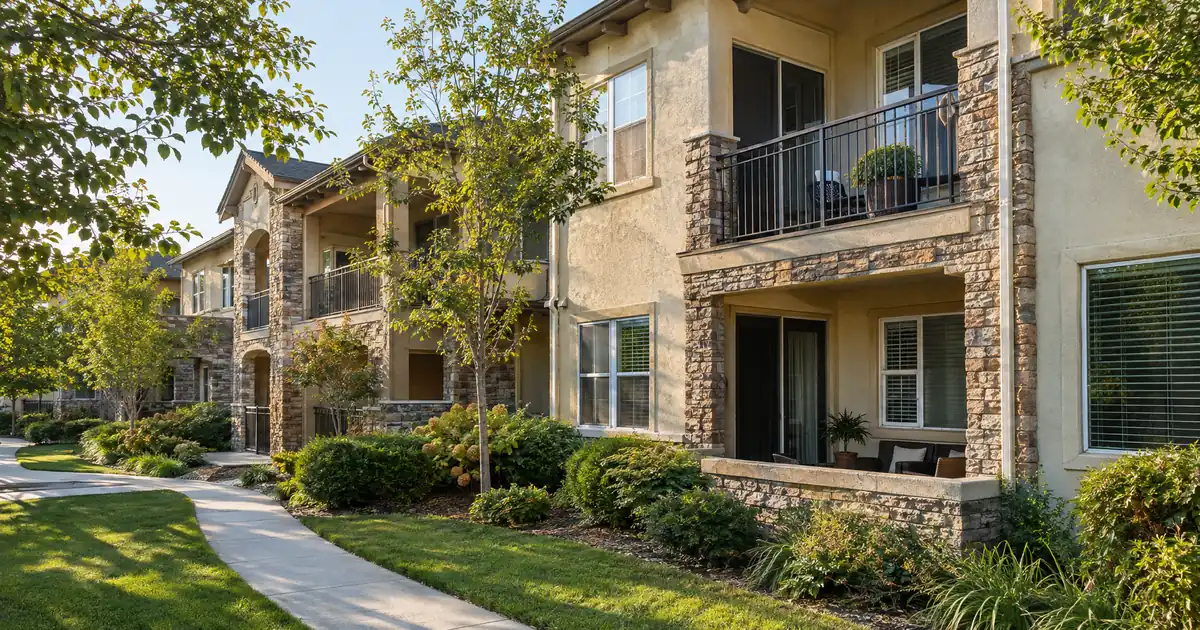
The Quick Read: The questionnaire is a form about your building, not about you. Your lender sends it to your HOA or its management company, and the answers help decide whether the whole project is safe to lend against. It matters most on a cash-out loan, because you are borrowing more against the unit. A strong credit score cannot rescue a building that fails the review.
Key Takeaways
- The questionnaire covers the association’s finances, lawsuits, ownership mix, insurance, and building condition. Your income and credit are not on it.
- The lender orders it. You do not fill it out, and the HOA or its manager completes and signs it.
- Some condos skip project review entirely, such as detached units and very small projects. A true cash-out on a unit in a larger building usually does not.
- Slow or incomplete HOA answers are the most common thing a borrower cannot control. Ask early.
- If the building fails, there are still paths, but they are narrower and vary by lender.
Why Does a Condo Cash-Out Refinance Need a Building Review?
Because you do not own a lot, you own a unit inside a shared structure, and the lender is lending against that shared structure too. If the association runs out of money, loses a lawsuit, or can’t fund repairs, your unit’s value and resale appeal suffer. Lenders want to know that before the loan exists.
Picture two underwriting tracks running side by side. The borrower track covers your income, assets, credit, and the appraisal of your unit. The project track covers the building: its budget, reserves, owner mix, insurance, and legal troubles. Both have to clear. Strength on one does not offset a failure on the other.
Cash-out raises the pressure on the project track. The conventional cash-out programs on the wholesale side generally cap leverage at 80% of value on a one-unit primary residence. Two- to four-unit primary homes sit at 75%. A refinance can reach 95% on a one-unit primary residence, but the loan itself is the same size as your payoff. With cash-out, the lender is increasing the amount at risk in a building it cannot see into. The questionnaire is how it looks inside.
If you are still deciding whether to pull equity at all, Lendmire’s cash-out refinance programs page lays out the product before you get into building paperwork.
What Does the Questionnaire Actually Ask?
It asks about the project in eight or so topic blocks. The standard form is Fannie Mae Form 1076 and Freddie Mac Form 476, which are the same document under two names. Lenders may also use their own version.
| Topic | What the lender checks | Why it matters |
|---|---|---|
| Project basics | Name, unit count, age, phases | Sets the review path |
| Completion and control | Is the developer still in charge? | Developer control skews budgets |
| Delinquent dues | Owners two or more months behind | Unpaid dues starve the budget |
| Litigation | Pending or threatened lawsuits | Legal costs can trigger assessments |
| Ownership mix | Owner-occupied, investor, HOA-owned units | Too many rentals raises risk |
| Finances | Budget, reserves, special assessments | Shows if repairs are funded |
| Use restrictions | Hotel or rental-pool activity, commercial income | Hotel-like use can make a project ineligible |
| Building condition | Deferred maintenance, safety inspections | Flags costly repairs ahead |
The form has also been updated with an addendum on deferred maintenance and special assessments. That reflects a broader push to catch aging buildings before they become a lending problem.
Fannie Mae’s own guidance says the form is optional. Lenders may collect project information on their own form. So if your lender hands you something that does not look like Form 1076, that is not a red flag. The questions are what matter.
Who Fills It Out, Who Signs, and Who Pays?
The HOA or its management company completes it, and a board officer or authorized manager signs. You, the borrower, do not. This is on purpose: lenders want answers straight from the association, not relayed by the person who is borrowing.
| Task | Who handles it |
|---|---|
| Orders the questionnaire | Your lender or processor |
| Provides contact for the HOA | You |
| Completes and signs the form | HOA or management company |
| Pays any HOA completion fee | Often the borrower, via the lender |
| Reviews the answers | Lender’s project underwriter |
| Decides on the building | Lender, within agency or program rules |
Associations and management companies often charge to complete the form. The amount varies, so ask the lender what to expect rather than guessing. Fees paid to third parties appear on your Loan Estimate and Closing Disclosure.
One practical move: give your lender the manager’s name and email when you apply. Ten minutes of your time can save the file from sitting in an inbox.
Which Review Path Does Your Loan Land On?
Not every condo refinance needs a full questionnaire. Which path you get depends on the type of project and the type of refinance. Here is how the pieces fit.
Waiver or exemption. Fannie Mae’s waiver of project review covers a narrow refinance case: a Fannie Mae-owned loan refinanced as a limited cash-out. Limited cash-out means the new loan pays off the old one and returns only a small, capped amount of cash. That is not a true cash-out. The waiver also covers detached condo units. Even with the waiver, basic rules still apply: the project can’t be flagged unavailable, it can’t be a condo hotel or timeshare, and insurance has to be in place.
Small projects. Fannie Mae’s Lender Letter LL-2026-03 expanded the waiver to projects of ten or fewer units. Freddie Mac made a parallel change, covered in its Bulletin 2026-C. Both carry a catch for five- to ten-unit buildings: if the building is part of a master association or a larger development, the waiver may not apply.
Full review. This is the path where the questionnaire is required. Fannie Mae’s older “Limited Review” shortcut has been retired, so established projects that once used it now go through full review. Freddie Mac retired its “Streamlined Review” similarly. If you read an older article that says condo refinances only need a quick limited review, it is out of date.
Here is the practical read. The guides name only a limited cash-out refinance for the project-review waiver. So a true cash-out on an attached unit in a larger project will normally go through full review, with HOA documentation. Treat that as the likely path, and have your loan officer confirm it for your building and your lender.
Why Cash-Out Raises the Stakes
Three things stack up on a true cash-out, and each one touches the building.
First, leverage. Cash-out is capped lower than rate-and-term, but the lender is still lending more than your current payoff. If the project is shaky, there is less room for error.
Second, seasoning. On conventional cash-out, the first mortgage being paid off must be at least 12 months old, counted note date to note date. At least one borrower must also have been on title for six months. There are exceptions for delayed financing, inheritance, and legal awards. These are borrower-side tests. They do nothing to help the building pass.
Third, the reason for the cash. Say you want to pay off a special assessment. The lender will want to know why the association levied one, and the questionnaire asks. Say you want to fold a HELOC into the new loan. Lendmire’s piece How to Fold a HELOC Into a Condo Cash-Out Refinance covers how that works. Either way, the building file stands apart from your reason.
Some wholesale lanes reach higher leverage with no mortgage insurance on a primary residence with a strong score and a thirty-year fixed. One tops out just under 90%. Those files still need the project to clear. Higher leverage is not a way around the building.
In practice, a pattern repeats on wholesale condo files. The borrower is strong, the appraisal is fine, and the file sits waiting on one unanswered line of the questionnaire. Delinquency counts, lawsuit descriptions, and reserve figures cause the most back-and-forth. Cash-out files get the closest read, because there is more at stake.
If the appraisal is the surprise rather than the building, Lendmire’s piece How to Handle a Low Appraisal on a Condo Cash-Out Refinance is the next stop.
Step by Step: From Application to Underwriting
The sequence is the same on most files, even when the details differ.
1. You apply for the cash-out refinance and name the building and the management contact.
2. The lender identifies the review path. It checks whether the unit is detached or attached, how many units the project has, and whether a master association is involved.
3. The lender checks project status first. Fannie Mae lists unavailable projects in its Condo Project Manager tool, and Freddie Mac has a Not Eligible status. A bad status can stop the file before any form goes out.
4. The questionnaire goes to the HOA. If the loan needs full review, the lender sends the form to the association or manager.
5. Supporting documents arrive. Expect the budget, a reserve study if the project requires one, proof of master insurance, and details on any lawsuit. Inspection reports on structure and major systems are reviewed too.
6. The lender certifies the project. For Fannie Mae full review, the lender completes its own certification in Condo Project Manager and keeps it in the file.
7. Borrower underwriting finishes separately. Income, assets, credit, and the unit appraisal run on their own track.
The HOA’s response time sits outside your control. A waiver avoids that dependency. Full review adds it. No one can promise a turnaround, so ask for the form to be ordered as early as the lender allows. And skip the temptation to answer for the HOA yourself. Lenders want the answers directly from the association.
Red Flags That Can Fail a Project
A single flagged answer does not always sink a building. Several together usually do. Here is how the common ones read to an underwriter.
| Flagged answer | Why it worries a lender | What may help |
|---|---|---|
| Many owners behind on dues | Budget may be underfunded | Board collection plan |
| Pending lawsuit against the HOA | Costs may become assessments | Resolution or insurer coverage |
| Thin or missing reserves | Repairs may mean big assessments | Funded reserve plan |
| High investor concentration | Fewer owners with a stake | Little; depends on lender |
| Unaddressed critical repairs | Safety and value risk | Completed repairs on record |
| Hotel-style or rental-pool use | Project may be ineligible | Usually none |
Fannie Mae’s reserve minimum is a good example of a moving target. The test divides the annual reserve allocation by annual assessment income, and published summaries point to the required share rising. Rising reserve rules can push dues up over time, which belongs in your budget. Check with your loan officer on the current requirement rather than trusting a figure from a blog.
Three Short Scenarios
The clean building. An owner in a mid-sized association has a funded budget, no lawsuits, and a manager who answers email. The questionnaire comes back complete. Project review is routine, and the file turns to the owner’s own numbers. Boring is good.
The pending lawsuit. An owner wants to consolidate a HELOC through cash-out. The questionnaire discloses a lawsuit with legal exposure the association’s insurance may not cover. The lender needs a closer read of the claim and the insurance response. If it can’t get comfortable, the project may be flagged. The owner can’t fix this alone. The board or its attorney has to supply the details.
The special assessment. An owner needs cash to cover a one-time assessment for roof work. The questionnaire shows the assessment and the deferred-maintenance answers around it. A fully funded assessment with the work underway reads very differently from an unfunded plan with no timeline. The same assessment can help or hurt, depending on the paper behind it.
If the Building Doesn’t Pass
You have options, though each is narrower than the conventional path. A strong borrower cannot override a failing building. Here is the realistic menu.
- Ask the lender whether a waiver request is possible. For an established project that misses one requirement, Freddie Mac allows the lender to ask for a waiver through its Condo Project Advisor tool. It is not a promise.
- Wait and let the board fix the issue. Collecting delinquent dues, funding reserves, or finishing a repair can change the answers on the next form.
- Look at a non-agency lender. Some wholesale lenders review condos that don’t meet agency standards, often with different leverage and terms. A broker can compare those options with the conventional path.
- Keep the loan you have. If the cash-out only makes sense on conventional terms, holding the current loan is a legitimate choice.
Do not assume the first “no” is final across the board. Do not assume it is easy to overcome, either.
Special Cases
Master associations. A small building inside a larger development can lose the small-project waiver. Ask early whether yours sits inside one.
Condo hotels, timeshares, and houseboat projects. These are ineligible for the agency programs even when review is waived.
Manufactured-home condo projects. They follow a different review path.
Florida. Freddie Mac’s bulletin changes review rules for attached units in that state, so Florida owners should expect extra questions.
Government loans. An FHA-to-FHA streamline does not require the single-unit approval form, according to a HUD help page. That page is older, so confirm against current FHA guidelines. An FHA or VA cash-out does require project eligibility. VA keeps a list of approved condos, and projects not on it must be submitted for review. Your loan officer should confirm status for any VA loan.
Second homes and rentals. Occupancy changes the leverage. Cash-out on a second home or investment property is capped at 75%, versus 80% for a one-unit primary residence. This article is about the home you live in.
HOA dues. They do not usually ride inside your mortgage payment. The CFPB says they are normally paid directly to the association, so count them in your budget separately.
Key Terms Defined
Project review: The lender’s check of the building and association, separate from your own loan approval.
Warrantable condo: A building that meets the agency standards for financing. “Non-warrantable” means it does not.
Full review: The deeper project check that requires association documents and, usually, the questionnaire.
Waiver or exemption: A rule that lets certain condos skip project review, such as detached units and very small projects.
Limited cash-out refinance: A refinance that pays off the old loan and returns only a small, capped amount of cash. Many lenders call it rate-and-term.
Reserves (HOA): Money the association sets aside for future repairs, separate from your own cash reserves.
Special assessment: A one-time charge to owners when the association needs money beyond its budget.
Seasoning: The waiting period a lender requires on your loan or ownership before a cash-out.
Frequently Asked Questions
Do I have to fill out the HOA questionnaire myself?
No. Your lender orders it, and the HOA or its management company completes and signs it. Your job is to supply the manager’s contact information and to follow up if things stall. The questionnaire asks nothing about your income or credit.
Can a condo cash-out refinance skip the questionnaire?
Sometimes. Detached condo units and very small projects can qualify for a waiver or exemption. The refinance waiver is narrow, though, and a true cash-out on an attached unit in a larger project will normally go through full review. Your loan officer can confirm which path your building lands on.
What if my HOA is slow or refuses to complete the form?
A slow association delays the file, and a refusal can stop a full-review loan. Ask the manager early, and ask the lender whether the form can be sent again. If the HOA will not cooperate at all, a different lender or program may review the building differently, subject to lender guidelines.
Will the HOA charge me for the questionnaire?
Associations and management companies may charge a completion fee, and the amount varies. Any third-party fee appears on your Loan Estimate and Closing Disclosure.
If my building fails, is a cash-out refinance off the table?
Not necessarily, but conventional options narrow. The board may fix the issue, the lender may request a waiver, or a non-agency lender may review the project differently. Terms vary and nothing here is a commitment to lend.
Your Next Step
If you are weighing a cash-out refinance against keeping the loan you have, Lendmire can help you compare the programs and the equity each one reaches. A good first question is whether your building will face full review, since that answer shapes everything after it.
Condo owners rarely get to choose their building’s finances, but they can learn what the questionnaire will say about them before the lender does.
For your own numbers, request a scenario review with Lendmire.
About Lendmire
Lendmire — NMLS# 2371349 — is a mortgage broker that arranges FHA, VA, conventional and jumbo home purchase and refinance financing in 16 states through wholesale lenders. Every option is subject to the lender’s guidelines and full underwriting. Scotsman Guide named Lendmire a Top Mortgage Workplace in both 2025 and 2026.
Get Started
Ready to find the right loan for you?
In about 30 seconds you can review financing options available for your home or investment property. No commitment required.
Informational only. Not a Loan Estimate, approval, or commitment to lend. Program availability and eligibility are subject to lender guidelines, credit approval, property review, and underwriting.
References
1. Fannie Mae Form 1076 / Freddie Mac Form 476
2. Fannie Mae Selling Guide B4-2.1-02, Waiver of Project Review
3. Fannie Mae Lender Letter LL-2026-03
4. Freddie Mac Bulletin 2026-C
5. HUD FHA Connection help page
6. CFPB: Are condo/co-op fees or HOA dues included in my monthly mortgage payment?
This article is part of Lendmire’s Refinance series — every loan program’s qualification details, guidelines, and scenarios live on the loan options page.
Related reading: How Much a Cash-Out Refinance Releases on a Condo for Renovation · Texas Homestead Owelty Cash-Out Refinance Requirements After Divorce · Cash-Out Refinance Appraisal Requirements for a Condo Unit
Brandon Miller
Founder & CEO, Mortgage Loan Originator, Lendmire LLC
- Mortgage Loan Originator · NMLS# 1129696 · Verify on NMLS Consumer Access
- North Carolina Real Estate Broker · License# 343312 · Verify on NCREC
- North Carolina Insurance Producer · License# 19053198 · Property, Casualty, Life, Health · Verify on NAIC SBS
- Lendmire LLC · Firm NMLS# 2371349 · Verify firm licensure
Compliance and disclosures. Lendmire (NMLS# 2371349) is a licensed mortgage broker and is not a direct lender, depository institution, financial advisor, or tax professional. Content in this article is general market analysis and educational information — not financial, legal, or tax advice for any specific situation. Lendmire does not guarantee loan approval; every transaction is subject to underwriting by the funding lender. Mortgage pricing and loan program guidelines are subject to change at any time without notice and vary by borrower characteristics, property type, and state regulations. Lendmire complies with Equal Housing Opportunity. Licensure verification: NMLS Consumer Access.