
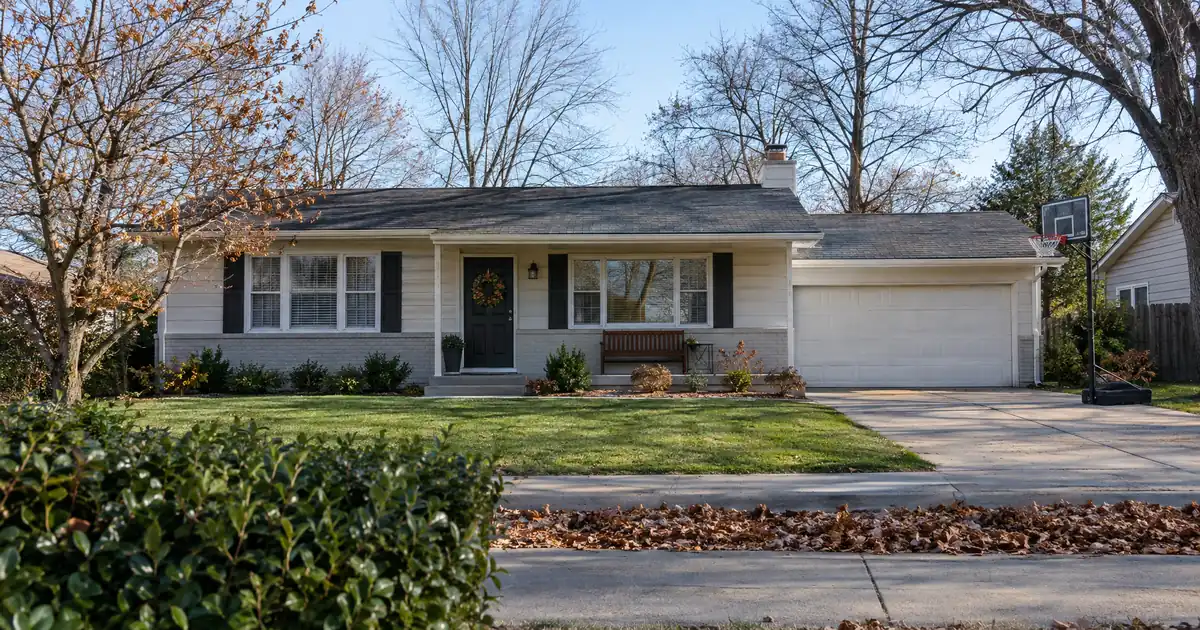
The Quick Read: A quitclaim deed that puts the veteran on title does not start a waiting period by itself. The delay risk comes from other places: the seasoning test on any existing VA loan, a lender’s own title-seasoning policy, and title clean-up. Subject to lender guidelines and full file review.
What a Quitclaim Deed Changes and What It Leaves Alone
A quitclaim moves ownership. It does not touch the loan. If a spouse, parent, or partner deeds a home to a veteran, the veteran becomes an owner of record. The old mortgage note stays exactly where it was until it is paid off, refinanced, or released.
VA cash-out estimate
Seeded with an example value, a typical balance, and a round cash request at the first-use fee; change any field.
Editable benchmark: 7.24% as of October 29, 2026 · Freddie Mac 30-year average via FRED®. A conventional market reference, not a VA cash-out refinance quote.
Illustrative starting assumptions: a $350,000 home value, a $193,000 current balance, the full-value VA cap with the first-use funding fee financed, a thirty-year term at the current Freddie Mac benchmark, and property taxes and insurance estimated at typical national rates. Every field is editable.
Illustrative estimate only — not a Loan Estimate, approval, quote, or commitment to lend. The rate field carries the weekly Freddie Mac thirty-year conventional benchmark, a market reference and not a VA cash-out refinance quote; a VA loan is priced by the lender at lock. The total loan, funding fee included, is capped at the program leverage on the reasonable value; the fee follows the tier chosen. The cash available is what the cap allows less the balances paid off and the fee, before closing costs, which are not included. The HELOC line is the line program’s combined loan-to-value ceiling applied to the same value and balance. Taxes and insurance are editable estimates. The debt-to-income figure is a guideline; residual income decides a VA file. Licensed in sixteen states for consumer mortgages.
That split matters for a cash-out. The deed fixes the title problem. The cash-out is the product that pays off the old loan and replaces it with a new one in the veteran’s name.
VA guidance does not mention quitclaim deeds or set a minimum time on title for a VA cash-out. That is a real gap in the guidance, and it is why most deed-related waits are lender policy, not VA policy.
Why the Veteran Has to Be on Title
The veteran has to be an owner. The VA Lenders Handbook, Chapter 3 says that when the veteran is the titled owner, the VA cash-out refinance guidelines apply. When the veteran is not the titled owner, maximum-loan-amount considerations apply instead. A deed that adds the veteran moves the file onto the standard cash-out track.
The same chapter caps the loan, including the financed funding fee, at 100% of VA’s reasonable value. That matches the way the wholesale programs Lendmire places VA files with work: the cash-out reaches 100% of the appraised value including the financed fee, and it refinances any loan type into VA.
Occupancy is the other threshold. VA’s cash-out page says eligibility means a Certificate of Eligibility plus living in the home you are refinancing. An investment property or second home does not fit. Occupancy decides the leverage, and VA cash-out requires that the home be your residence.
Which Clock Are We Talking About?
There are two clocks people mix up. Only one is VA’s.
| Clock | What it measures | Who sets it |
|---|---|---|
| Loan seasoning | Age of the VA loan being paid off | VA |
| Time on title | How long the deed has been recorded | The lender or title company |
VA’s seasoning attaches to the loan. VA Circular 26-20-16, Exhibit A says a VA-guaranteed loan being refinanced must be seasoned 210 days after the due date of its first monthly payment. The wholesale programs Lendmire works with apply the later of 210 days from the first payment and the sixth payment.
Adding the veteran by quitclaim does not restart that clock, because it runs from the first payment due date of the loan being paid off. A lender can still add its own review period on recent title changes. Ask for it in writing before you plan around a date.
Does Seasoning Apply to Your Payoff?
It depends on what is being paid off. VA Circular 26-19-5 says seasoning applies to cash-out refinances of a VA-guaranteed loan, meaning VA-to-VA.
- Paying off a VA loan: the seasoning test applies. If the loan has not seasoned by closing, the cash-out is ineligible for the guaranty.
- Paying off a conventional, FHA, or USDA loan: the VA seasoning test is aimed at VA payoffs. Lenders generally treat a non-VA payoff as outside it, though a lender overlay can still apply.
A common error is assuming the 210 days run from closing or from the deed. They run from the first payment due date of the loan being refinanced.
Three Ways to Sequence the Deed and the Loan
The order you pick changes your delay risk. Here is how the three paths compare.
| Path | Steps | Delay risk | Best for |
|---|---|---|---|
| Deed first | Record the deed, then apply | Lender may review recent title change | Straightforward family transfers |
| Loan first | Apply, vest at closing | Needs title and lender agreement | Files already in process |
| Deed at closing | Escrow records the deed with the loan | More coordination, fewer gaps | Clean title, cooperative grantor |
An unrecorded deed does not change title in a way a title company will rely on. Verify that with a title professional in your state. Recording differences and transfer-tax rules vary by state, so check them before the grantor signs.
Worked Scenario: Adding a Veteran Before a Cash-Out
Picture a veteran whose parent owns the home they live in. The parent has a conventional loan. The veteran wants to take equity out and move the mortgage into their own name.
1. The parent signs a quitclaim deed to the veteran, and it is recorded.
2. The veteran confirms a Certificate of Eligibility and occupancy.
3. The lender reviews title, the appraisal, and the credit file.
4. The new VA loan pays off the conventional loan.
No VA seasoning applies here because the payoff is not a VA loan. The open question is whether the lender wants the deed recorded for a set period first. Some lenders do and others do not, and that answer comes from the lender, not VA.
Now flip it. If the old loan were a VA loan that was only a few payments old, seasoning would be the binding issue. The deed would be irrelevant to that clock.
Who Is Adding the Veteran
Who signs the deed changes the file.
- A non-veteran spouse deeding to the veteran: usually the simplest. Household members count in the residual-income review regardless of title, per 38 CFR 36.4337.
- A parent or relative deeding to the veteran: the deed solves ownership. The old note still needs a payoff, so the cash-out does the work.
- An unmarried partner: same mechanics. The deed moves title only. Whose credit and debts are reviewed depends on who is on the new loan.
- A surviving spouse not on the original loan: the VA Buyer’s Guide says that spouse can only complete a cash-out, after qualifying as a surviving spouse.
Delays That Have Nothing to Do With Seasoning
Most real delays are paper problems. Watch for these.
- Unrecorded or defective deeds. The title search will not match what the file says.
- Title-company requirements. Some ask for an affidavit or extra documents on a recent transfer. That is title-company practice, not a VA rule.
- Due-on-sale language on the existing loan. A transfer can raise questions with the current servicer, so talk to them before the deed is signed.
- Appraisal value. The 100% cap works off VA’s reasonable value. A low value shrinks the cash available, whatever the deed says.
- Net tangible benefit. The new loan must show one of VA’s listed benefits. A rate-reduction or fee-recoupment test is not part of the VA cash-out. Those belong to the IRRRL.
What the Lender Looks At
Across the wholesale programs Lendmire places files with, the review lands on the same items:
- Certificate of Eligibility and occupancy.
- Recorded title showing the veteran as an owner.
- What is being paid off, and whether seasoning applies.
- Net tangible benefit.
- Appraised value against the 100% cap.
- Credit and residual income. Residual income is the controlling test. The 41% debt-to-income figure is a guideline, not a cap.
VA sets no minimum credit score. The wholesale programs start at a 580 decision score, and individual lenders can set higher floors. The funding fee on a cash-out is 2.15% for first use and 3.3% after, financeable, and waived for exempt veterans such as those receiving service-connected disability compensation.
You can read how the program works on Lendmire’s VA cash-out refinance program page.
Pre-Application Checklist
1. Confirm the Certificate of Eligibility.
2. Identify the loan type being paid off and its first payment due date.
3. Decide who is deeding and get the deed drafted for your state.
4. Ask the lender in writing whether it requires any period of recorded ownership.
5. Ask the title company what it needs on a recent transfer.
6. Talk to the existing servicer about due-on-sale language.
7. Gather household income and debt documents for the residual-income review.
When Not to Deed First
Skip the early deed if the current lender or servicer has not been consulted. Skip it if the home is in a state with a transfer tax that has no family exemption you can document. Skip it if your lender will vest title at closing anyway, since a clean escrow-recorded deed can avoid the recent-transfer questions. And skip it if you do not plan to live in the home: occupancy rules still decide eligibility.
Also watch out for misleading refinance offers. VA warns borrowers about them on its cash-out page.
Tax treatment can depend on your situation; borrowers should speak with a qualified tax professional before relying on any deduction or credit.
Key Terms Defined
Quitclaim deed: a document that transfers whatever ownership interest the signer has, with no promise about the title.
Seasoning: the minimum age a VA loan must reach before it can be refinanced into a VA cash-out.
Vesting: the way title is held, meaning who is listed as owner.
Recording: filing the deed with the county so the transfer becomes part of the public title record.
Net tangible benefit: a required, documented gain from the new loan, drawn from VA’s list of benefits.
Certificate of Eligibility (COE): VA’s document confirming a borrower’s service-based eligibility.
Frequently Asked Questions
Can I do a VA cash-out right after a quitclaim deed?
VA’s rules do not set a waiting period for a deed. A lender may still want the deed recorded and the title reviewed first, and some add their own period. Ask for the policy in writing. Everything is subject to lender guidelines and full file review.
Does a quitclaim deed restart the 210-day seasoning clock?
No, based on how the circulars read. The clock runs from the first payment due date of the VA loan being refinanced, not from the deed. This applies only when a VA loan is being paid off.
Does it matter if the old loan is not a VA loan?
Yes. VA’s seasoning test is aimed at VA-to-VA cash-outs. A conventional, FHA, or USDA payoff generally avoids it, though a lender overlay can apply.
Does adding the veteran to title make the veteran liable for the old loan?
A deed moves ownership only. Liability sits on the note. The cash-out pays off the old note and creates a new one in the veteran’s name, so the new loan is what carries the obligation.
Can the deed wait until closing?
Sometimes. A lender and title company can agree to vest title at closing through escrow. An unrecorded deed does not work as title on its own, so confirm the plan with both before anyone signs.
Next Step
If you are weighing a cash-out refinance against keeping the loan you have, Lendmire can help you compare the programs and the equity each one reaches. Lendmire is a mortgage broker and arranges these loans through wholesale lenders. Call 828-256-2183 or request a quote.
About Lendmire
Lendmire (NMLS# 2371349) is a mortgage brokerage serving homeowners and home buyers in 16 states. FHA, VA, conventional and jumbo purchase and refinance loans are arranged through wholesale lending channels; Lendmire brokers the financing and the lender underwrites each application. Scotsman Guide named Lendmire a Top Mortgage Workplace in both 2025 and 2026.
Get Started
Ready to find the right loan for you?
See your offer in seconds. No credit pull, no obligation.
Informational only. Not a Loan Estimate, approval, or commitment to lend. Program availability and eligibility are subject to lender guidelines, credit approval, property review, and underwriting.
References
1. VA Lenders Handbook (VAP 26-7) Chapter 3
2. VA.gov – Cash-out refinance loan
3. VA Circular 26-20-16, Exhibit A
6. VA Home Loan Guaranty Buyer’s Guide
This article is part of Lendmire’s VA cash-out refinance program — full qualification details, guidelines, and scenarios live on the program page.
Related reading: VA Cash-Out vs Conventional Cash-Out for a Veteran: What Decides · Best VA Cash-Out Refinance Program as a Self-Employed Veteran · Best VA Cash-Out Refinance Program With the VA Funding Fee Added to the New Loan
Brandon Miller
Founder & CEO, Mortgage Loan Originator, Lendmire LLC
- Mortgage Loan Originator · NMLS# 1129696 · Verify on NMLS Consumer Access
- North Carolina Real Estate Broker · License# 343312 · Verify on NCREC
- North Carolina Insurance Producer · License# 19053198 · Property, Casualty, Life, Health · Verify on NAIC SBS
- Lendmire LLC · Firm NMLS# 2371349 · Verify firm licensure
Important disclosures. Lendmire (NMLS# 2371349) is a licensed mortgage brokerage. Lendmire is not a direct lender, depository institution, or financial advisor. All loan inquiries are subject to lender underwriting; this article does not constitute a commitment to lend. Rates, terms, and program guidelines are subject to change without notice and vary by borrower profile, property type, and state. Information in this article is general in nature and is not financial, legal, or tax advice. Equal Housing Opportunity. NMLS Consumer Access: nmlsconsumeraccess.org.