
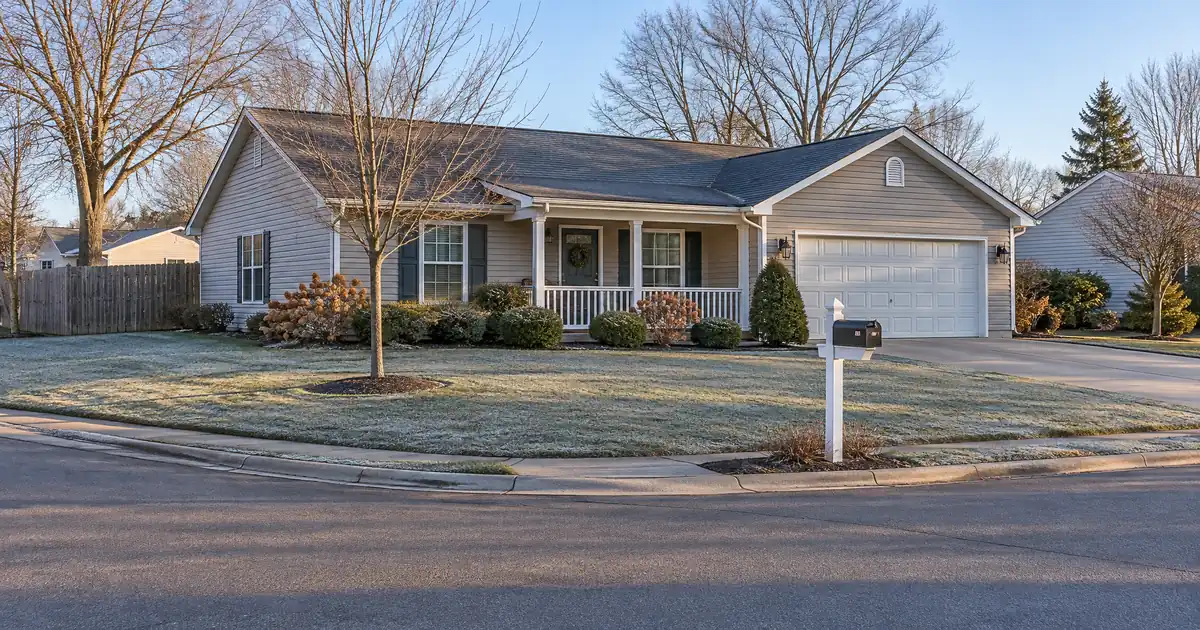
The Quick Read: On a VA cash-out, Montgomery County, Maryland, generally taxes the new money you borrow, not the whole loan. Your new deed of trust has to be recorded in the land records, and the county charges a recordation tax for that. If you file the refinance exemption correctly, the old loan balance is mostly shielded. The tax lands on the slice above your payoff, and VA lets you pay it or finance it, subject to lender guidelines and full file review.
What You Need to Know First
- The tax is a government charge. It is not a lender fee, so no lender can waive it and no lender charges more or less for it.
- On a refinance, the taxable base is generally the new debt above the balance you are paying off. The exemption is claimed by paperwork, not automatically.
- A bigger cash-out means a bigger taxable slice. Borrowing less cash shrinks the tax.
- VA allows you to pay recording taxes, and on a refinance those costs can be financed. Financed amounts compete for room under the 100% ceiling.
- Rates and tiers are set locally and change. Get the current figure from the county or your title agent, not from an old web page.
Which Montgomery County Is This?
Several states have a Montgomery County. The recordation-tax rules that drive this topic come from Montgomery County, Maryland, so that is the worked example here. The mechanism is national: every state that taxes mortgage recording does it its own way, and some do not tax mortgages at all.
VA cash-out estimate
Seeded with an example value, a typical balance, and a round cash request at the first-use fee; change any field.
Editable benchmark: 7.18% as of November 5, 2026 · Freddie Mac 30-year average via FRED®. A conventional market reference, not a VA cash-out refinance quote.
Illustrative starting assumptions: a $350,000 home value, a $193,000 current balance, the full-value VA cap with the first-use funding fee financed, a thirty-year term at the current Freddie Mac benchmark, and property taxes and insurance estimated at typical national rates. Every field is editable.
Illustrative estimate only — not a Loan Estimate, approval, quote, or commitment to lend. The rate field carries the weekly Freddie Mac thirty-year conventional benchmark, a market reference and not a VA cash-out refinance quote; a VA loan is priced by the lender at lock. The total loan, funding fee included, is capped at the program leverage on the reasonable value; the fee follows the tier chosen. The cash available is what the cap allows less the balances paid off and the fee, before closing costs, which are not included. The HELOC line is the line program’s combined loan-to-value ceiling applied to the same value and balance. Taxes and insurance are editable estimates. The debt-to-income figure is a guideline; residual income decides a VA file. Licensed in sixteen states for consumer mortgages.
One honest note. Lendmire is a mortgage broker licensed for consumer lending in 16 states, and Maryland is not one of them. If you live in Maryland, treat this as an explainer, not a pitch. The mechanics below also help in any state that taxes recording, and your title agent will confirm the local rules.
What a VA Cash-Out Actually Does
A VA cash-out refinance replaces your current mortgage with a new VA loan and puts the leftover equity in your pocket. Across the wholesale programs we place files with, it can reach 100% of the home’s appraised value, and the financed funding fee counts inside that number. It can refinance any loan type into VA, so a conventional or FHA loan can convert.
Three other points matter for this topic:
- Seasoning. There is a waiting period before you can refinance a recent loan. It is the later of 210 days from the first payment and the sixth payment.
- Net tangible benefit. The refinance has to help you in a way VA recognizes. VA lists eight acceptable benefits.
- Residual income. This is what VA treats as the controlling test. It is the money left each month after your obligations and living costs. The 41% debt-to-income figure is a guideline, not a hard cap.
The program page for Lendmire’s VA cash-out refinance program covers the full structure. Here the focus is one line item: the county’s recording charge.
Recording Fee vs. Recordation Tax
These two get mixed up constantly.
A recording fee is a flat charge the land records office collects to file and index your documents. It does not depend on how much you borrow.
A recordation tax is a percentage-style tax based on the amount of debt in the document. In Montgomery County, Maryland, it applies to the new deed of trust.
Both show up in the same part of your closing paperwork, which is why people blur them. On the CFPB’s sample Closing Disclosure, section E, “Taxes and Other Government Fees,” has separate recording-fee lines for the deed and the mortgage. Taxes tied to the loan amount appear alongside them. Read the line labels, because the fee and the tax behave differently when you change the loan size.
How the Tax Is Worked Out, Step by Step
Here is the sequence on a typical Maryland VA cash-out.
1. You apply and get your Loan Estimate. Government charges are listed in the taxes-and-government-fees section. Because they depend on location, the figure is an estimate until the title agent confirms the final numbers.
2. The appraisal sets your ceiling. VA’s value opinion caps the loan. A lower appraisal shrinks the maximum loan, which squeezes room for financed costs and cash out.
3. A new deed of trust is prepared. In Maryland, the loan is secured by a deed of trust. That document must be recorded, and the tax is due unless an exemption applies.
4. The taxable base is set. For a refinance, the deed of trust is generally not taxed up to the unpaid principal of the loan it replaces. Per Shulman Rogers, you claim that with a refinance affidavit. The taxable portion is the new money.
5. The county reviews and records. Montgomery County’s Finance Department reviews deeds of trust before they are recorded, and the filing is made electronically.
6. The tax shows on your Closing Disclosure. If the amount is off, the closing agent issues a corrected disclosure.
The exemption has applied to all property types since mid-2013, including second homes, rentals and commercial property. A VA cash-out, though, is for the home you live in.
What Counts as “New Money” on a VA Cash-Out?
This is where borrowers get surprised. Think of the new loan as three buckets: the payoff of your old loan, cash to you, and financed charges.
| Piece of the new loan | Generally taxed? | Why |
|---|---|---|
| Payoff of the old mortgage | Usually not | Exempt up to the unpaid principal |
| Cash to you | Yes | It is new debt above the payoff |
| Financed funding fee | Yes, in practice | It adds to the new loan balance |
| Other financed costs | Yes, in practice | They also add to the balance |
The logic is simple: anything that pushes the loan above your payoff balance becomes part of the taxable slice. Your title agent can confirm how the county treats the financed items on your file.
A Worked Example With Percentages
The numbers below are illustrative, not a quote. Say your payoff equals 60% of the appraised value. You want cash-out and the program allows borrowing up to 100% of value, including the financed funding fee.
If you borrow up to 80% of value, the roughly 20-point gap above your payoff is the new money. That slice carries the tax. If you borrow only 70%, the taxable slice is about half as large. Now say you also finance the funding fee. The fee is 2.15% for first use and 3.3% for later use, and it is waived for exempt veterans, such as those receiving compensation for a service-connected disability. Every point of fee you finance enlarges the new-money slice.
So the tax depends on three things: your payoff balance, how much cash you take, and how much you finance.
The County’s Rate Structure (and Why Old Pages Mislead)
Maryland authorizes recordation taxes, but each county sets its own rate. Montgomery County uses tiers, so a higher bracket applies to the part of the debt above each threshold. The county raised the recordation tax premium on higher-value transactions and refinancings, and the new rates apply in Montgomery County only.
Two cautions follow. First, some county web pages still show the older rates and only footnote the change. Do not quote them. Second, this article leaves out the tier figures on purpose. Ask the county Finance Department or your title agent for the current rate table, then apply it to your new-money slice.
Can You Finance the Tax?
Usually yes, on a refinance. Under VA’s charge rules in 38 CFR 36.4313, a proper charge may be paid from loan proceeds. The exception is a purchase or construction loan, where closing costs may not be financed. A VA refinance is not a purchase, so financing is available, subject to lender guidelines.
Here is the tradeoff. Financed costs sit under the same 100% ceiling as your cash-out and your funding fee. If the total runs past the ceiling, you pay the difference in cash at closing. Financing also raises your loan balance, which raises your monthly payment slightly, and it lowers your net cash out. It does not change your county property tax bill.
That leaves three ways to handle it:
- Pay it at closing out of pocket and keep your balance smaller.
- Finance it and accept slightly less cash out.
- Borrow less cash and shrink the taxable slice.
None is wrong. The best choice depends on why you want the cash.
What VA Allows, and What It Does Not
A common myth is that VA bans closing costs. It does not. VA restricts which charges a veteran may pay. The rule at 38 CFR 36.4313 lists “recording fees and recording taxes or other charges incident to recordation” among the allowable items, in reasonable and customary amounts. VA Circular 26-17-11 groups recording charges with appraisal fees, taxes and assessments, and flood-zone determinations as common allowable items.
What VA bars is lender overhead charged to you outside a limited flat charge. The flat charge covers lender origination costs only. It is not a cap on all closing costs, and it does not swallow the county’s tax. Fees such as application, processing and document-preparation charges fall under the flat charge rather than being billed separately.
Where the General Rule Breaks
Mechanics are clean until a file has an odd fact. Watch for these.
Purchase vs. refinance. A purchase-money deed of trust is treated differently, which is why the tax surprises people on a cash-out and not on a purchase.
The owner-occupant break. Montgomery County has an exemption for the first slice of value on a sale of an owner-occupied principal residence. It is written for conveyances, meaning sales. Do not assume it lowers a refinance tax. Ask the county.
Non-VA loan converting to VA. A VA cash-out can pay off a conventional or FHA loan. The exemption follows the loan being paid off, and the refinancing-instrument rule is state law, not VA law. The VA loan type does not change the logic.
Who is on the original loan. Some practitioners say the exemption is limited to the original borrower, and that adding a spouse does not defeat it. Treat that as a question for your title agent, not a settled rule.
Prior tax paid. A credit for tax paid on earlier instruments may exist in some situations. The title agent applies current rules.
Maryland’s state transfer tax. It does not apply to security instruments such as deeds of trust, according to GFR Law. A cash-out refinance is not a sale, so you are generally dealing with recordation, not transfer, tax.
Other states. Some states tax mortgage recording. Others use an intangible tax instead, and VA treats those charges as recording charges too. Do not carry Maryland’s exemption into another state without checking.
What Recordation Does Not Touch
It does not change your VA eligibility. Your certificate of eligibility decides that, and VA sets the service rules. It also does not change the funding fee, which is its own line with its own percentages.
The fee-recoupment and half-percent rate-reduction tests belong to the IRRRL, the streamlined VA refinance for existing VA loans. They do not apply to a VA cash-out. So the tax does not need to “pay back” through savings. What matters is your net tangible benefit and your residual income.
An IRRRL generally creates little or no new money, so its taxable base is small. A cash-out creates new money, so it triggers tax. That comparison is my inference from how the exemption works.
How Much Tax Do You Owe? A Quick Estimate Method
You can ballpark it without a calculator.
1. Get your current payoff balance from your servicer.
2. Decide your target cash out and whether you will finance the funding fee and other costs.
3. Subtract the payoff from your total new loan. That is your taxable slice.
4. Ask the title agent to apply the county’s current tier table to that slice.
That is the whole method. If the final number is higher than you expected, the likeliest causes are a larger cash-out than you planned, more financed costs, or a missing exemption affidavit.
Questions to Ask Your Title Agent
- Will you prepare the refinance exemption affidavit, and what payoff figure will it use?
- Which tier table are you applying, and to what dollar slice?
- How are my financed funding fee and financed costs treated in the taxable base?
- Does any prior-payment credit apply to my file?
- If my appraisal comes in low, how does the tax change?
- Which lines on my Closing Disclosure are recording fees and which are tax?
Key Terms Defined
Recordation tax: A county or state tax charged when a deed of trust or mortgage is filed in the land records, based on the debt amount.
Recording fee: A flat charge to file and index your documents, which does not depend on the loan size.
Deed of trust: The document that secures the loan with your home. In Maryland it is used in place of a traditional mortgage.
Refinance exemption: Relief from the tax up to the unpaid principal of the loan you are replacing, claimed by affidavit.
Funding fee: VA’s one-time charge on most loans, which can be financed and is waived for exempt veterans.
Reasonable value ceiling: The limit set by the appraisal, which caps how much a VA cash-out can total, financed costs included.
Frequently Asked Questions
Does the recordation tax apply to my entire new VA cash-out loan?
Generally no. On a Maryland refinance, the tax applies to the debt above the unpaid principal you are paying off, provided the exemption is claimed. The affidavit is what unlocks that treatment. Without it, you can be taxed on more than you should be.
Can I roll the recordation tax into the loan?
Usually, yes. VA allows closing costs to be financed on refinances, and recording taxes are an allowable charge. The amount still has to fit under the 100% ceiling. If the loan runs past it, you cover the difference in cash.
Will a different lender charge me less recordation tax?
No. It is a government charge, and it is the same whichever lender you use. Shop on lender-controlled charges and program fit, not on the county’s tax.
Does the first-slice owner-occupant exemption lower my cash-out tax?
Don’t count on it. That break is written for sales of owner-occupied homes. Confirm with the county before assuming it applies to a refinance.
Is a Montgomery County, Virginia or Ohio cash-out taxed the same way?
Not necessarily. Maryland’s refinance-exemption mechanics are state law, and other states set their own. Ask the title agent in your county how new deeds of trust are taxed there.
Tax treatment can depend on your situation; borrowers should speak with a qualified tax professional before relying on any deduction or credit.
If you are weighing a cash-out refinance against keeping the loan you have, Lendmire can help you compare the programs and the equity each one reaches. Program terms are subject to lender guidelines and full file review, and nothing here is a commitment to lend.
For your own numbers, request a scenario review with Lendmire.
About Lendmire
Lendmire (NMLS# 2371349) is a mortgage brokerage serving homeowners and home buyers in 16 states. FHA, VA, conventional and jumbo purchase and refinance loans are arranged through wholesale lending channels; Lendmire brokers the financing and the lender underwrites each application. Scotsman Guide named Lendmire a Top Mortgage Workplace in both 2025 and 2026.
Get Started
Ready to find the right loan for you?
See your offer in seconds. No credit pull, no obligation.
Informational only. Not a Loan Estimate, approval, or commitment to lend. Program availability and eligibility are subject to lender guidelines, credit approval, property review, and underwriting.
References
1. VA
2. CFPB sample Closing Disclosure
3. Shulman Rogers, Maryland Real Estate Update
4. eCFR, 38 CFR 36.4313 Charges and fees
6. GFR Law
This article is part of Lendmire’s VA cash-out refinance program — full qualification details, guidelines, and scenarios live on the program page.
Related reading: How to Get a VA Cash-Out Without Tax Returns as a Lock-in Veteran · Can a VA Cash-Out Cover Montgomery County Recordation Costs? · Can a Veteran Use a VA Cash-Out to Buy Out a Partner?
Brandon Miller
Founder & CEO, Mortgage Loan Originator, Lendmire LLC
- Mortgage Loan Originator · NMLS# 1129696 · Verify on NMLS Consumer Access
- North Carolina Real Estate Broker · License# 343312 · Verify on NCREC
- North Carolina Insurance Producer · License# 19053198 · Property, Casualty, Life, Health · Verify on NAIC SBS
- Lendmire LLC · Firm NMLS# 2371349 · Verify firm licensure
Required disclosures. Lendmire (NMLS# 2371349) operates as a licensed mortgage broker, not a direct lender or depository. The discussion in this article is general in nature and should not be relied upon as financial, legal, or tax advice — every investment scenario is unique and should be reviewed by a qualified professional. Any loan inquiry is subject to lender underwriting, and this article is not a commitment to lend or a guarantee of approval. Mortgage rates, loan terms, and program guidelines vary by borrower, property, and state, and may change without notice. Equal Housing Opportunity. Verify licensure at NMLS Consumer Access.