
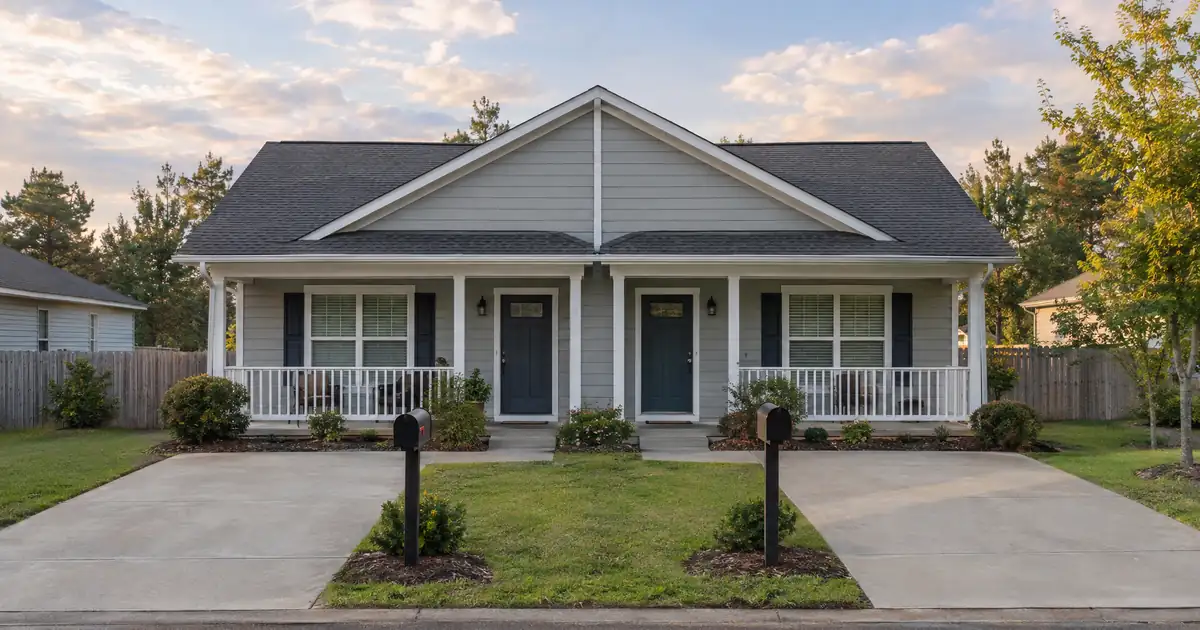
The Quick Read: A cash-out refinance on a duplex, triplex or fourplex you live in releases less than the same loan on a single-family home. Conventional programs cap the new loan at 75% of appraised value on a 2-4 unit primary residence, versus 80% on one unit. The cash you receive is that cap, minus the payoff of your current loan, minus closing costs. Details are subject to lender guidelines and full file review.
What Does “Released” Actually Mean?
Released cash is the new loan amount left over after everything that must be paid off. It is not the same thing as your equity, which is simply the property’s value minus what you owe. The loan ceiling is a percentage of appraised value, and payoffs and costs come off the top.
Here is the formula in plain steps:
1. A new appraisal sets the value.
2. Multiply the value by the program cap. That is the largest new loan allowed.
3. Subtract the payoff of your current first mortgage and any liens that must be cleared.
4. Subtract closing costs and prepaids if you finance them.
5. What remains is your cash.
Across the wholesale programs Lendmire works with, that sequence holds for every conventional cash-out file. Only the cap changes with the property and how you use it.
Key Terms Defined
LTV (loan-to-value): the loan balance divided by the appraised value of the home.
CLTV (combined loan-to-value): all loans against the home, including a second mortgage or HELOC, divided by value.
Cash-out refinance: a new, larger mortgage that pays off the old one and hands you the difference in cash.
Limited cash-out (rate-and-term) refinance: a refinance that pays off the old loan and costs, with only incidental cash back.
Seasoning: how long you have owned the home or held the loan being paid off.
Why Does a 2-4 Unit Release Less Cash?
The ceiling is lower because lenders see more valuation and income risk in a multi-unit building. The Fannie Mae Eligibility Matrix lists a 75% maximum for a cash-out on a 2-4 unit principal residence, against 80% on a one-unit home.
Here is a table of how the caps compare on conventional programs:
| Property and purpose | Maximum LTV |
|---|---|
| 1-unit primary, cash-out | 80% |
| 2-4 unit primary, cash-out | 75% |
| 2-4 unit primary, purchase | 95% |
| 1-unit primary, rate-and-term | 95% |
Notice the 95% figure. Many owners see it on purchase listings and assume it applies to cash-out. It does not. The 95% belongs to purchases and to the limited cash-out lane. Once you take meaningful cash, the 75% ceiling applies.
Also, the cap covers total liens. If a HELOC or second mortgage stays in place, it uses up part of the 75% before any cash reaches you.
A Worked Comparison in Percentages
Take the same home, the same appraised value and the same existing balance, and run it two ways. No dollars are needed to see the gap.
Say your existing mortgage equals 55% of the appraised value.
- As a one-unit home at an 80% cap, the new loan can reach 80%. After the payoff, roughly 25% of value is left before costs.
- As a 2-4 unit at a 75% cap, the new loan can reach 75%. After the payoff, roughly 20% of value is left before costs.
Now say your balance equals 70% of value. The one-unit home still has about 10% of value left, while the 2-4 unit has about 5%. The lower your starting equity, the more painful the five-point gap becomes, because costs come out of a thinner slice.
A third case: you keep a second lien equal to 10% of value. The 75% cap now covers both loans, so the new first mortgage has to fit under 65% of value unless the second is paid off in the refinance. Clearing it shrinks your cash by the same amount.
Low appraisals hit dollar-for-dollar. If the value comes in below your estimate, the cap drops with it, and the release falls by 75 cents on each dollar of shortfall.
Which Gates Come Before the Math?
Seasoning and occupancy decide whether you can do the loan at all. Conventional cash-out has two clocks. Under Fannie Mae Selling Guide B2-1.3-03, the first mortgage being paid off must be at least 12 months old, counted note date to note date. At least one borrower must also have been on title for six months. Both clocks can postpone a cash-out after a recent purchase or recent refinance.
Exceptions exist. Delayed financing lets a recent cash buyer refinance sooner if the purchase was arm’s-length and the source of funds is documented. It is still treated as cash-out. Inheritance and legal-award situations also have their own treatment, and the 12-month test does not apply to a second lien being paid off.
Other conditions:
- Occupancy. You must live in one of the units.
- Credit. The wholesale conventional programs start at a 620 decision score, with the automated finding governing most files.
- Ratios. The total ratio ceiling is 50% on automated approvals. Manually underwritten loans run tighter, at 36% or 45%, depending on reserves and score.
- Reserves. Higher ratios can trigger more required reserves. Lenders review that file by file.
Can you really do this while living in the building? Yes. Owner-occupancy is what qualifies you for the primary-residence caps in the first place.
How Does Rent From the Other Units Fit?
Rent from the other units can help you qualify, but it does not raise the cap. Lenders can add documented rental income from the non-owner units to your income. Rent from the unit you occupy generally cannot be counted.
Expect a haircut. Lenders usually count only a portion of gross rent to allow for vacancy and upkeep, and they ask for leases or traditional personal-income documentation to support it. Your full new payment still goes into the ratio. So the rental income lowers your debt-to-income load without changing the 75% ceiling.
An appraiser also uses a different report for a 2-4 unit, one that includes a rent schedule. That extra valuation work is part of why the program treats these buildings more cautiously.
Where Does the General Rule Break?
Several situations change the answer. Here is how the main ones play out.
The wholesale no-mortgage-insurance lane. One wholesale lane reaches 89.99% LTV with no mortgage insurance, but only at a 680 score and a 50% ratio on a thirty-year fixed, primary residence with a conforming balance. It carries its own six months of seasoning. This lane is built for the one-unit primary, so do not assume it extends to a 2-4 unit. Ask a loan officer whether your file fits. Final terms depend on lender guidelines, property type, leverage, and the borrower’s complete credit picture.
Taking little or no cash. A limited cash-out refinance on a 2-4 unit primary can reach a much higher ceiling, but cash back is only incidental. If you want real money, the 75% cap applies.
FHA Streamline and VA IRRRL. These pay no meaningful cash. The FHA Streamline, per HUD, requires an existing FHA loan that is current and a net tangible benefit. The VA IRRRL works the same way for existing VA loans. They lower a rate; they are not equity tools.
VA cash-out. VA requires a Certificate of Eligibility and that you live in the home. VA loans cover up to four units when the Veteran occupies one. The loan, including the funding fee, cannot exceed the VA’s reasonable value. A one-time funding fee applies and can usually be financed.
FHA cash-out. The cap is lower than it once was, and an ownership-and-occupancy test applies. Confirm the current figure with a loan officer, since older web pages show outdated limits.
Jumbo and high-balance loans. Above the conforming limit, jumbo lanes take over with their own leverage and score rules. The higher agency limits do not carry the same ceilings.
Texas homesteads. A cash-out on a Texas homestead is capped by the state constitution at the agency figure, and the wholesale no-mortgage-insurance lane is not written there.
Moving out. If you stop living in the building, it becomes an investment property. The ceiling stays at 75% on a 2-4 unit, but the occupancy treatment changes, and you should talk to a loan officer before the move, not after.
For homeowners who do own rentals separately, Lendmire has a piece How Much Cash a 2–4 Unit Investment Cash-Out Refinance Releases, though that is a different loan lane with different rules.
What Does the Decision Look Like in Practice?
Taking the maximum is rarely the smartest move. A bigger loan means a new loan term and a new rate on the whole balance, not just the cash portion. The CFPB‘s home equity guide notes that a cash-out replaces your current mortgage, may lengthen your payoff time and may raise your payment. No option converts all your equity to cash, and lenders typically want you to keep a cushion.
Compare the new payment against your old one, not just the cash. If your current loan carries terms you like, replacing it just to pull cash may cost more than a separate second loan would. Ask for both options side by side.
Consider the use of the money, too. Paying off high-cost debt is a common reason borrowers take cash out, but converting unsecured debt into mortgage debt can raise foreclosure risk if your income dips. Funding a renovation that adds rentable space is a different case from covering monthly spending.
Closing costs are real and reduce your check. Your Loan Estimate and Closing Disclosure show them line by line. Compare them before you commit.
Tax treatment can depend on your situation; borrowers should speak with a qualified tax professional before relying on any deduction or credit.
The checklist for a first conversation:
- Your current balance and any second lien.
- The date you bought and the date of your current loan.
- Leases for the other units.
- Your best estimate of value, knowing the appraisal decides.
- What you plan to do with the cash.
If you are weighing a cash-out refinance against keeping the loan you have, Lendmire can help you compare the programs and the equity each one reaches. Its cash-out refinance programs cover conventional, FHA, VA and jumbo options through wholesale lenders in 16 states, subject to lender guidelines.
Frequently Asked Questions
Can I do a cash-out refinance if I live in one unit of a duplex, triplex or fourplex?
Yes. Owner-occupied 2-4 unit homes are eligible for cash-out under the conventional programs. The tradeoff is a lower ceiling, 75% of appraised value rather than 80% on a one-unit home. Approval depends on lender guidelines, credit, income and a full file review.
Why can I buy with 5% down but only borrow up to 75% on a cash-out?
Purchases and limited cash-out refinances on 2-4 units can go to 95%. A true cash-out is treated as a higher-risk transaction because you are pulling equity out rather than buying or simply replacing a loan. That is why the ceiling drops to 75%. These specifics are subject to lender guidelines and a full review of property, leverage, and credit.
Does rent from my other units increase how much cash I get?
No. Rent can help you qualify by supporting your income, usually at a reduced share of gross rent, with leases or traditional personal-income documentation. It does not raise the loan ceiling, and rent from the unit you live in generally does not count.
How long do I have to own the home before taking cash out?
At least one borrower must be on title for six months, and the mortgage being paid off must be at least 12 months old. Delayed financing, inheritance and legal-award situations have their own treatment.
Will an FHA Streamline or VA IRRRL put cash in my pocket?
No. Both are rate-reduction products for existing government-backed loans and release essentially no cash. If you want cash, a cash-out refinance is the right category, and your eligibility depends on the program.
For your own numbers, request a scenario review with Lendmire.
For current guidelines and terms, see Lendmire’s refinance programs page.
About Lendmire
Lendmire, NMLS# 2371349, is a mortgage brokerage with consumer lending licenses in 16 states. FHA, VA, conventional and jumbo purchase and refinance loans are arranged through wholesale lending partners, and each application is reviewed individually by the lender. Scotsman Guide named Lendmire a Top Mortgage Workplace in both 2025 and 2026.
Get Started
Ready to find the right loan for you?
In about 30 seconds you can review financing options available for your home or investment property. No commitment required.
Informational only. Not a Loan Estimate, approval, or commitment to lend. Program availability and eligibility are subject to lender guidelines, credit approval, property review, and underwriting.
References
1. Fannie Mae Eligibility Matrix
2. Fannie Mae Selling Guide B2-1.3-03: Cash-Out Refinance Transactions
3. HUD Single Family Streamline Refinance
5. CFPB
This article is part of Lendmire’s Refinance series — every loan program’s qualification details, guidelines, and scenarios live on the loan options page.
Related reading: How Much Renovation Cash a One-Unit Cash-Out Refinance Releases · How Much a Cash-Out Refinance Releases for an ADU or Addition · Delayed Financing Cash-Out Refinance Rules for a Primary Home
Brandon Miller
Founder & CEO, Mortgage Loan Originator, Lendmire LLC
- Mortgage Loan Originator · NMLS# 1129696 · Verify on NMLS Consumer Access
- North Carolina Real Estate Broker · License# 343312 · Verify on NCREC
- North Carolina Insurance Producer · License# 19053198 · Property, Casualty, Life, Health · Verify on NAIC SBS
- Lendmire LLC · Firm NMLS# 2371349 · Verify firm licensure
Important disclosures. Lendmire (NMLS# 2371349) is a licensed mortgage brokerage. Lendmire is not a direct lender, depository institution, or financial advisor. All loan inquiries are subject to lender underwriting; this article does not constitute a commitment to lend. Rates, terms, and program guidelines are subject to change without notice and vary by borrower profile, property type, and state. Information in this article is general in nature and is not financial, legal, or tax advice. Equal Housing Opportunity. NMLS Consumer Access: nmlsconsumeraccess.org.