
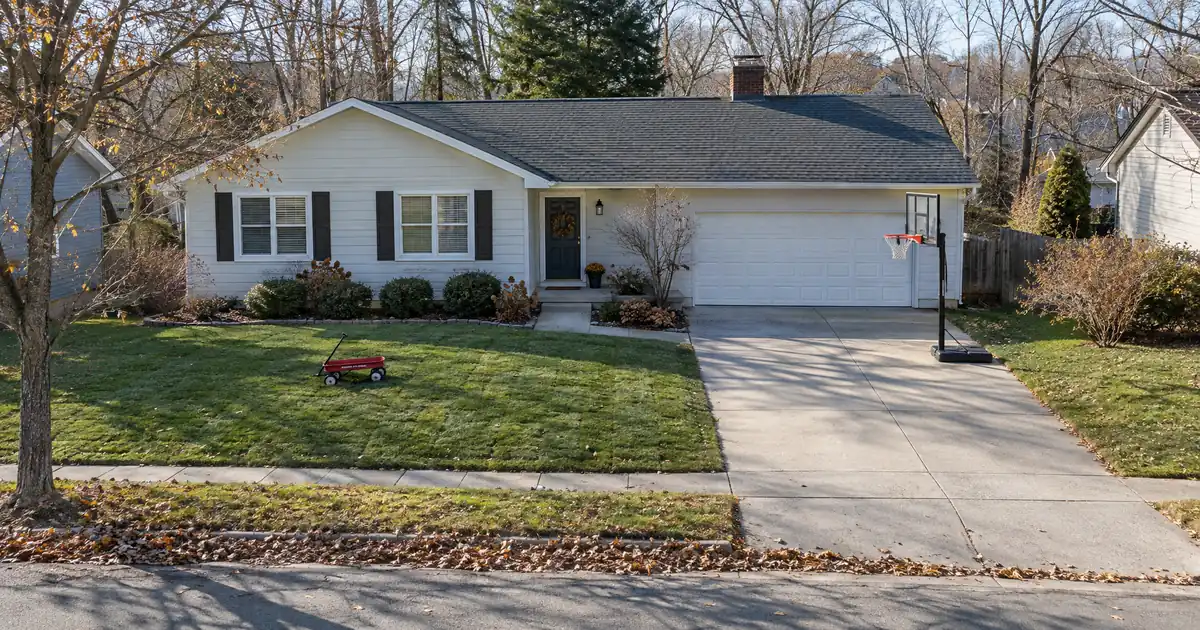
The Quick Read: Sometimes, but only on narrow terms. A conventional second-home loan allows occasional short-term renting, as long as you keep control of the property and use it mostly for yourself. It does not allow a property that is run as a rental, and rent from the home cannot be used to qualify. If renting is the plan from day one, the loan belongs in a different occupancy category.
What Does “Second Home” Mean to a Conventional Lender?
A second home is a one-unit property you occupy for part of the year, that is suitable for year-round living, and that you control. Occupancy type sets leverage and the rules that follow. Across the conventional loan programs Lendmire arranges, a principal residence reaches 95% LTV (97% for a first-time buyer on a fixed rate), a second home tops out at 90%, and an investment property at 85% on one unit and 75% on two to four units. All of that is subject to lender guidelines and full file review.
Conventional payment estimate
The starting figures are an example price at the first-time buyer’s minimum down payment. Replace them with yours.
Editable benchmark: 7.32% as of October 22, 2026 · Freddie Mac 30-year average via FRED®. A conventional market reference, not a conventional loan quote.
Estimate seeded at the low end of Fannie Mae’s published range (0.58%–1.86% a year); the insurer prices the actual premium on the score and the leverage. Applies only above 80% loan-to-value.
Illustrative starting assumptions: a $350,000 price, the first-time buyer’s minimum down payment, a thirty-year term at the current Freddie Mac benchmark, mortgage insurance at the low end of Fannie Mae’s published range, and property taxes and insurance estimated at typical national rates. Every field is editable.
Illustrative estimate only — not a Loan Estimate, approval, quote, or commitment to lend. The rate field carries the weekly Freddie Mac thirty-year conventional benchmark, a market reference and not a conventional loan quote; your rate is set by the lender at lock. The mortgage insurance figure is an editable estimate seeded from Fannie Mae’s published typical range, not a premium quote; the insurer prices the actual premium, and the cancellation month assumes scheduled payments with no extra principal and no change in value. Taxes, insurance and dues are editable estimates; closing costs are not included. Conforming loan limits apply by county. Licensed in sixteen states for consumer mortgages.
That leverage gap is the first signal that lenders treat these as different risks. The occupancy box on the application is not a formality. It decides which rulebook your loan sits in.
Freddie Mac’s guide sets out the second-home test in Seller/Servicer Guide §4201.12. The home must be a one-unit property. You must occupy it for part of the year. It must be available primarily for personal use, which the guide defines as more than half the calendar year. And it must be located where it can reasonably function as a second home.
The same section says a two-unit property used as a second home is treated as an investment property. Freddie Mac also says its determination of whether a property is a second home is conclusive. Your label does not control the outcome. The use of the property does.
So Can You Rent It Out at All?
Yes, in short stretches. The Freddie Mac guide expressly lets you rent a second home on a short-term basis, provided it is not in a rental pool and no agreement does any of the following:
- requires you to rent it,
- gives a management company or other entity control over occupancy, or
- shares revenue with a developer or another party.
The Fannie Mae rule reads the same way in practice. A second home must be a one-unit dwelling you occupy for some part of the year, suitable for year-round use, under your exclusive control. It must not be a rental property or a timeshare, and it cannot be subject to agreements that hand occupancy control to a management firm.
If the lender spots rental income from the property, the loan can still be a second home. The condition is that the income is not used to qualify and every other second-home requirement is met.
Short answer for the file: occasional renting, yes. Running it as a rental, no.
What the Closing Documents Say
The binding document is not a blog post or a guideline summary. It is the security instrument, and for a second home that includes a Second Home Rider. The Fannie Mae Second Home Rider has you agree to occupy and use the property as a second home and to keep exclusive control over occupancy, “including short-term rentals.” You also agree not to put it into a timeshare or rental pool, and not to give a management firm control over who stays.
Two more covenants matter. You agree to keep the property available primarily as a personal residence for at least one year after the rider date. The lender can agree otherwise in writing, and that consent cannot be unreasonably withheld. Extenuating circumstances beyond your control are also an exception. The Freddie Mac Multistate Second Home Rider (Form 3890) carries the same covenants.
The rider’s loan-application clause treats materially false or misleading statements as a default. Occupancy is named as a material representation. That is the clause that gives a misclassified loan real consequences.
Key Terms Defined
Second home: A one-unit property you occupy part of the year, keep available mainly for personal use, and control yourself.
Investment property: A property bought mainly to produce rent. It carries lower maximum leverage than a second home, and rent can count toward qualifying.
Rental pool: An arrangement where owners’ units are rented together and managed or revenue-shared by another party. It is not allowed on a second-home loan.
Second Home Rider: The addendum signed at closing that holds your occupancy and control promises.
Occupancy fraud: Stating an intent to live in or personally use a home to get better terms than the true use would earn.
Allowed and Not Allowed at a Glance
| Situation | Second-home loan | Why it matters |
|---|---|---|
| Occasional short-term rental you control | Generally allowed | Control stays with you |
| Property available mostly for personal use | Required | More than half the year |
| Rental pool or timeshare | Not allowed | Outside control of occupancy |
| Management firm controls bookings | Not allowed | Occupancy control is handed away |
| Rent used to qualify | Not allowed | Payment must carry on your other income |
| Two-unit property | Treated as investment | Freddie Mac classification |
| Obligation to rent the home | Not allowed | Property must be yours to use |
How the Mechanics Run Inside the File
Most surprises on these files trace back to the same few steps.
1. Occupancy is declared at application. You state principal residence, second home or investment property. The agencies look at use, not the label.
2. The file goes through automated underwriting. Fannie Mae requires an Approve/Eligible finding from its system for a second home, with limited exceptions. Freddie Mac requires an Accept. Second homes generally cannot be manually underwritten, so the automated finding does most of the work.
3. The second-home payment counts in your ratios. Rent from the property cannot offset it. Both housing payments have to fit on your other income. A total ratio ceiling of 50% is the outer edge on the automated programs, subject to the full file.
4. The rider is signed at closing. This is where the one-year personal-use covenant and the no-pool, no-management-control promises take effect.
5. Reserves and financed-property count are checked. Fannie Mae’s multiple financed properties rule caps a borrower at 10 financed one- to four-unit properties when the subject is a second home or investment property. More financed properties generally means larger reserve requirements.
6. Funds are personal funds. Freddie Mac requires that money used to qualify, including reserves, be your own.
One practical point: because rent is not used to qualify on a second home, a rent schedule from the appraiser does not help the file. Those forms matter on investment-property loans, where the income counts.
Worked Examples: Where Real Use Lands
Run through three owners, described in days and control rather than dollars.
The weekend cabin. Say you own a one-unit cabin and use it most weekends, plus a few weeks in summer and fall. You list it yourself for a handful of short stays when you’re away. You decide who books and when. Personal use is substantial, and rental use is only occasional. No pool, no manager with control. This fits the second-home picture.
The mostly-rented beach condo. Consider an owner who rents the unit nearly every week of the high season and stays a few days off-season. Personal use is a small slice of the year. The property is functioning as a rental business, and the second-home classification is under strain. This is the file that creates the misclassification problem.
The manager-run unit. Picture a buyer who signs with a company that takes bookings, sets the calendar and splits revenue. Even if the stays are short, the company controls occupancy. That conflicts with both agencies’ rules and with the rider. The short-term label does not rescue it.
Condo-Hotels and Resort Projects
Condos add a layer you do not control. Fannie Mae’s ineligible projects rules exclude projects with mandatory rental pooling and projects run by a hotel or resort company that arranges short-term rentals. They also reach projects where a high share of units is investor-owned or second-home owned. A unit can fail on the project even when your own use is clean. Condo certification and HOA questionnaire completeness are where those files get stuck, so pull the project documents early.
What About a Long-Term Tenant in Year One?
This is the gray area. The rider’s first-year covenant is the point of conflict, and a long-term lease runs straight into it. Some commentators read the language as tolerating short-term renting early and treating longer rentals as a later question. That is an interpretation, not a rule the agencies state.
The sourced position is simple. If circumstances change, ask the lender or servicer before you act, and get consent in writing. The rider contemplates written consent, and extenuating circumstances beyond your control are an exception. Freddie Mac also has a formal servicing channel for occupancy waiver requests. Asking first is the safe path. Acting first is not.
Is year two a free-for-all? No. The rider covers one year, but the “primarily personal use” test and the occupancy you declared at application still shape how the loan is classified.
How Lenders Find Out, and What It Costs You
There is no agency source saying a lender will automatically cancel a loan when it sees a short-term listing. What the documents do give a lender or servicer is the right to enforce the rider. Occupancy statements can also surface through listings, insurance records, tax filings and HOA records.
The consequences run in order of severity:
- a default under the rider,
- a forced move to investment-property treatment,
- fraud exposure for a knowingly false occupancy statement.
On the last point, the FHFA describes occupancy fraud as falsely stating an intent to live in a home to get better terms than a second-home or investment loan would carry. Axios reports that the agency says consequences can include prison, restitution, fines or probation. Honest changes of circumstances after closing differ from misstatements at application. This article is not legal advice.
If Rent Is the Plan From Day One
Be straight with the lender at application. A buyer who expects to rent the home most of the year is describing an investment property, and that is a different loan with different leverage, a lower maximum LTV and its own file requirements. The conventional programs Lendmire arranges handle that classification as a separate occupancy type, and the file should say so up front.
Buying under the wrong label to get better terms is the exact pattern the rider’s application clause targets. The cleaner approach is to match the loan to the use.
One side note on how occupancy changes treatment: on a one-unit principal residence, Fannie Mae now allows rental income from one accessory dwelling unit toward qualifying, capped at 30% of qualifying income, on a purchase or limited cash-out refinance. That is not a second-home rule. It just shows how much the occupancy type drives the treatment of rent.
Consumer Credit or Business Credit?
A second home with real personal use generally stays consumer credit. Under Regulation Z, credit for a non-owner-occupied rental is business-purpose, but the CFPB’s commentary says the special rule does not apply if the owner expects to occupy the property more than 14 days in the coming year. The CFPB’s own example is a beach house the owner uses for a month and rents out the rest of the year, which counts as owner-occupied. So a second home with genuine personal use keeps its consumer-loan disclosures and protections.
Pricing and Leverage, in Words
Second homes carry a separate pricing line in the agencies’ price-adjustment matrix, so expect the cost to differ from a principal-residence loan. Leverage is also lower: 90% LTV at most on a one-unit second home, against 95% to 97% on a principal residence. Credit floors start at a 620 decision score across the wholesale programs, with the automated finding governing most files. All of it is subject to lender guidelines and full file review.
Owner Checklist Before You List the Property
- Read your Second Home Rider and note the control and one-year covenants.
- Confirm no rental pool, revenue share or management agreement controls occupancy.
- Check HOA and condo documents for rental limits.
- Confirm your insurance covers the way you use the home.
- Keep a simple log of personal-use days against rental days.
- Ask the lender in writing before any change that looks like long-term renting.
Frequently Asked Questions
Can I use an Airbnb-type platform on a second home?
Short stays you book yourself are generally consistent with the agencies’ rules, as long as you keep control of occupancy and personal use stays above half the year. Using a platform is not the issue. Handing a company control of your calendar is.
Can I hire a property manager?
Not one who controls occupancy. Both agencies and the rider prohibit giving a management firm that control. A service-only arrangement, such as cleaning or key handoff while you decide who stays, is a different thing from a firm running the bookings.
Does rental income help me qualify for a second-home loan?
No. Rent from the subject property cannot be used to qualify, even if the lender identifies it. The second-home payment counts in your ratios and has to be carried on your other income.
What if I want to rent the home long-term later?
Talk to the lender or servicer first and get written consent, especially within the first year. If the plan changes to renting as a business, the property is moving toward investment treatment, and the loan terms may need to follow.
How many properties can I finance with conventional loans?
Fannie Mae caps a borrower at 10 financed one- to four-unit properties when the subject is a second home or investment property. Reserve requirements generally rise as the count grows.
If you are buying a home and want to see whether a conventional loan fits your file, Lendmire can help you compare the options and what each one asks of the file. Program details are subject to lender guidelines and full file review, and nothing here is a commitment to lend.
For your own numbers, request a scenario review with Lendmire.
About Lendmire
Lendmire (NMLS# 2371349) is a mortgage broker licensed for consumer lending in 16 states. Lendmire arranges FHA, VA, conventional and jumbo purchase and refinance loans through wholesale lenders; every file is underwritten by the lender under the applicable program guidelines. Scotsman Guide named Lendmire a Top Mortgage Workplace in both 2025 and 2026.
Get Started
Ready to find the right loan for you?
In about 30 seconds you can review financing options available for your home or investment property. No commitment required.
Informational only. Not a Loan Estimate, approval, or commitment to lend. Program availability and eligibility are subject to lender guidelines, credit approval, property review, and underwriting.
References
1. Freddie Mac Seller/Servicer Guide §4201.12
2. Fannie Mae Second Home Rider
3. Freddie Mac Multistate Second Home Rider (Form 3890)
4. Fannie Mae Selling Guide B2-2-03, Multiple Financed Properties
5. Fannie Mae Selling Guide B4-2.1-03 Ineligible Projects
6. Axios on FHFA and occupancy fraud
This article is part of Lendmire’s conventional loan program — full qualification details, guidelines, and scenarios live on the program page.
Related reading: Conventional Cash-Out Refinance Fees for a Second Home · Conventional Cash-Out Refinance Closing Cost Items on a Second Home · Can a Conventional Cash-Out Refinance Close at Your Home?
Brandon Miller
Founder & CEO, Mortgage Loan Originator, Lendmire LLC
- Mortgage Loan Originator · NMLS# 1129696 · Verify on NMLS Consumer Access
- North Carolina Real Estate Broker · License# 343312 · Verify on NCREC
- North Carolina Insurance Producer · License# 19053198 · Property, Casualty, Life, Health · Verify on NAIC SBS
- Lendmire LLC · Firm NMLS# 2371349 · Verify firm licensure
Important disclosures. Lendmire (NMLS# 2371349) is a licensed mortgage brokerage. Lendmire is not a direct lender, depository institution, or financial advisor. All loan inquiries are subject to lender underwriting; this article does not constitute a commitment to lend. Rates, terms, and program guidelines are subject to change without notice and vary by borrower profile, property type, and state. Information in this article is general in nature and is not financial, legal, or tax advice. Equal Housing Opportunity. NMLS Consumer Access: nmlsconsumeraccess.org.