
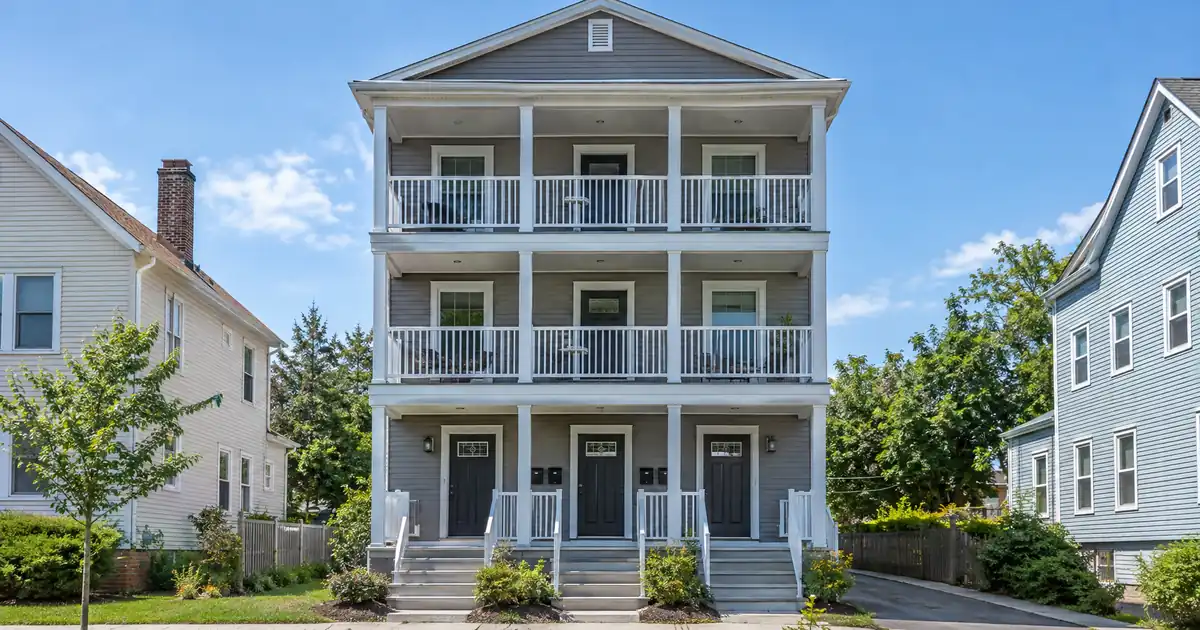
The Quick Read: Reserve rules for a duplex or triplex split at the third unit. An FHA cash-out refinance on either one is capped at 80% of the home’s appraised value, and the cap is the same whether you own two units or three. A triplex adds a fixed cash cushion after closing and a rent test, and a duplex usually skips both. Everything here is subject to lender guidelines and a full file review.
Key Takeaways
- The cash-out cap is 80% of value. It is a ceiling on the loan, not a promise of cash.
- You must have owned and lived in the home for 12 months before the case number is assigned.
- A triplex needs 3 months of reserves after closing. A duplex usually has no fixed minimum, though an underwriter can still ask for cash in the bank.
- A triplex also has to pass a rent test. A duplex does not.
- Cash out comes after the payoff, closing costs and the financed insurance premium. The check you receive is smaller than the cap suggests.
Key Terms Defined
Cash-out refinance: a new, larger loan that pays off your current mortgage and hands you the difference in cash.
Reserves: money you still hold after closing, measured in months of your full housing payment.
PITI: principal, interest, taxes and insurance, the four parts of a standard monthly mortgage payment.
Adjusted value: the appraised value, or the lower purchase price if you bought recently. The cap is measured against it.
Combined loan-to-value (CLTV): your new loan plus any second liens, divided by the home’s value.
Self-sufficiency test: a rent check on three- and four-unit homes. The rent has to cover the full payment on its own.
Upfront mortgage insurance premium (UFMIP): the one-time FHA insurance charge, usually rolled into the loan.
What Is the FHA Cash-Out Cap on a Two- or Three-Unit Home?
The cap is 80% of the adjusted value. That includes your new first loan and any other liens on the property. Duplex or triplex, the number does not change.
Think of it as a ceiling with three things underneath it. The new loan must pay off your old mortgage. It must cover closing costs and prepaid items. And it usually carries the upfront insurance premium, which is financed. Whatever is left after those three is your cash.
Here is a plain-words picture. Say your home is a triplex and your current mortgage is a little over half its value. The cap leaves roughly a quarter of the value as room. Costs and the premium then shave that room down. Your cash is smaller than “80% of value minus my balance” suggests. Anyone planning a project around that raw number gets a surprise at the closing table.
Across the wholesale programs Lendmire places FHA loans with, the cash-out tier starts from a 580 decision score. The automated finding governs most files. The base debt ratios are 31/43 (housing payment to income, and total debts to income). With documented compensating factors, ratios can stretch toward 40/50 at the top tier. Those are program facts, not promises, and each lender and file is reviewed on its own.
Lendmire’s FHA cash-out refinance program page covers the broader product. This article stays on the two- and three-unit questions.
Who Can Even Use It? (The 12-Month Gate)
You must have owned the home and lived in it as your principal residence for 12 months before the case number date. That is the first gate, and it comes before any math.
The case number is the file number the lender requests from FHA to start your loan. The 12-month clock is measured at that moment. Moving out and renting your unit does not pause the clock. It breaks it. FHA insures primary residences, so a unit you no longer live in does not qualify for cash-out.
Two more checks sit inside this gate:
- Payment history. Lenders look at whether you paid on time. Late payments in the recent past can stop a cash-out cold.
- Recent purchase. If you bought within the last 12 months, the lender uses the lower of the appraised value or your purchase price. The 12-month rule would block most of those files anyway. A limited set of exceptions exists, such as inherited property where the heir lives in the home. Ask a loan officer how your facts fit.
A home owned free and clear can be refinanced as a cash-out. There is no old loan to pay off, so more of the 80% stays available.
One more income rule matters here. On a cash-out, income from a co-borrower who does not live in the home generally cannot help you qualify. That differs from an FHA purchase, where a non-occupant co-borrower is allowed.
How Does the Cap Work Step by Step?
Think of the file as four gates. Each one can change your outcome.
1. Appraised value sets the ceiling. The appraiser fixes the adjusted value. A lower appraisal shrinks everything downstream.
2. Owner-occupancy and payment history. You pass the 12-month test, or you do not.
3. Rent math (triplex only). The appraiser’s market rent has to support the payment.
4. Reserves after closing (triplex for sure, duplex at the underwriter’s discretion).
Then comes the cash arithmetic. The base loan stays at or under 80% of value. Proceeds pay off the old mortgage, then closing costs and prepaids. Whatever remains goes to you.
County loan limits also apply, and they change every year. A high-value home in an expensive county can hit that limit before it hits the 80% cap. Your lender can tell you which one binds for your address.
The Insurance Premium Comes Out of the Same Pot
FHA charges an upfront premium of 1.75% of the base loan. Most borrowers roll it into the loan. That uses some of your room under the cap. The annual premium is separate. It is paid monthly and ranges between 0.15% and 0.75% of the balance, depending on term, loan amount and LTV. HUD’s mortgage insurance premium structure page confirms the upfront charge comes at closing and the annual charge is billed monthly.
On a 30-year loan above 90% LTV, the annual premium lasts for the term. At or below 90%, it ends after eleven years. A cash-out at the 80% cap sits below that line, which matters for the long-term cost. Mortgage insurance here is a program feature, not a price quote. Final terms depend on lender guidelines, property type, leverage, and the borrower’s complete credit picture.
Where the Cap Comes From
The 80% figure is not new, though many consumer pages still show something higher. HUD’s Mortgagee Letter 2019-11 lowered the maximum LTV and CLTV on FHA cash-out refinances. HUD said it wanted to limit risk to the FHA insurance fund from growing insured balances on cash-out loans. The change was then written into HUD Handbook 4000.1, the rulebook FHA lenders follow.
If an article or an old lender flyer tells you FHA cash-out goes higher than 80%, it is out of date. One narrow carve-out in the 2019 letter covers Section 247 loans on Hawaiian Home Lands. It does not touch an ordinary duplex or triplex. HUD revises the Handbook from time to time, so ask your loan officer to confirm the current text before you rely on any figure here.
Duplex vs. Triplex at a Glance
| Factor | Duplex | Triplex |
|---|---|---|
| Cash-out cap | 80% of value | 80% of value |
| Reserve minimum | Usually none fixed | 3 months of PITI |
| Rent self-sufficiency test | Not applied | Applied |
| 12-month occupancy | Required | Required |
| Gift funds for reserves | Ask the lender | Restricted on purchases |
The pattern is simple. The cap does not move with unit count. The extra work lands on the triplex.
Duplex Rules: Lighter, but Not Blank
A duplex has no flat reserve minimum in the HUD material reviewed for this article. In the wholesale programs Lendmire works with, an automated approval on a one- or two-unit home typically carries no fixed reserve requirement. A manually underwritten file can come with a small cushion, and lender overlays differ.
An underwriter can still ask for reserves when the file looks thin. Common triggers include a high debt ratio, a lower decision score, or weak payment history. Reserves are a standard compensating factor that lets a ratio stretch toward the 40/50 end. So even on a duplex, cash in the bank can make the difference between a yes and a counteroffer.
The rent test does not apply to a duplex. You still qualify on your own income, credit and cash to close. Rent from the second unit can help the file, but HUD’s rental income rules limit how much counts. Under HUD’s Mortgagee Letter 2023-17, rent from a unit you do not occupy is generally counted at a reduced share, not at face value. It cannot be used to simply subtract from your mortgage payment.
The ADU Surprise
A duplex with an accessory dwelling unit (a backyard cottage or converted garage apartment) can be treated as a three-unit property under HUD’s definitions. That flips the rules. The reserve minimum and the rent test now apply. If you own a duplex with a legal ADU, tell your loan officer early.
Triplex Rules: Reserves and the Rent Test
A triplex needs 3 months of PITI left in the bank after closing. HUD’s refinance reference guide states this for three- and four-unit refinances.
Reserves are measured after you pay everything else. Closing costs, payoffs and any cash you must bring all come first. What is left in verified accounts is your reserve. Lenders ask for statements showing the funds, and large unexplained deposits draw questions.
Can your cash-out proceeds count toward the reserve? That is a real question, and the HUD sources reviewed here do not answer it directly. Plan as if reserves must be your own funds, held apart from the check you expect to receive. Then ask underwriting how it treats your file. If you plan to bring gift funds, note that HUD’s reference page says gifts cannot be used for reserves on three- and four-unit purchases. Whether the same limit reaches a refinance is a question for the lender.
How the Self-Sufficiency Test Works
The lender must show the property’s rent can carry its own payment. HUD defines net self-sufficiency rental income as rental income above the full housing payment. The lender gets form HUD-92561 from you, and the appraiser provides the market rent for all three units. That includes the unit you live in.
Then a vacancy and maintenance reduction comes off that rent. In lender practice, the haircut runs roughly a quarter of market rent, or the appraiser’s own figure if it is higher. Treat that as typical practice, not as a HUD number. What remains is compared to the full payment. The payment should not exceed the net rent.
Two things follow:
- An under-rented triplex can fail even when your salary is strong. The test looks at the building, not you.
- Taking more cash out raises the payment. A bigger loan and added insurance leave less margin against the rent. The only fix on some files is a smaller cash-out.
Do not confuse passing this test with qualifying. You still need income, credit and cash to close.
Putting It Together: Two Worked Pictures
These are scenarios in percentages and plain words, not quotes.
The duplex owner. You have lived in your duplex for several years. Your mortgage balance sits well under half of the appraised value. The 80% cap leaves a large band of room. The lender’s costs and the financed upfront premium use some of it. No rent test, and likely no fixed reserve minimum. The remaining questions are your ratios, your credit decision score and payment history. This is the simpler file.
The triplex owner. Same equity, one more unit. The cap is identical. The file now adds the rent test, driven by the appraiser’s rents. It adds 3 months of housing payments in verified reserves. Suppose you planned to pull out as much as possible to fund a renovation. Taking the maximum raises the payment, which tightens the rent test. The reserve requirement also means you cannot spend every dollar you hold. The cash-out you plan may need to shrink to fit. These specifics are subject to lender guidelines and a full review of property, leverage, and credit.
Mortgage insurance and a new amortization schedule restart your payoff clock too. A cash-out can also replace an older, cheaper loan with a different one. The Loan Estimate and Closing Disclosure show the trade-off line by line. Compare them before you commit.
What If You Are Short?
Falling short is common, and there are options:
- Take less cash out. A smaller loan lowers the payment, which helps ratios and the rent test.
- Build reserves first. Waiting a few months to let savings accumulate can fix a triplex file.
- Fix the rent picture. If units are under-rented against the market, the appraiser’s figure may not support the test. Raising rents is a business decision to weigh carefully.
- Consider a different loan. An FHA rate-and-term refinance with an appraisal reaches 97.75% on a principal residence occupied for the previous twelve months. It gives no cash out, but it can lower your payment or change your term. An FHA Streamline refinances an existing FHA loan with no appraisal and a net tangible benefit.
- Check other programs. Veterans have a separate cap structure.
Each option has trade-offs. The right one depends on why you want the cash.
Common Mistakes
- Using the old cap. Older pages still show a higher number. Use 80%.
- Counting all the rent. The appraiser’s market rent is used, with a vacancy reduction. Your leases and your claims are not the measure.
- Assuming rent offsets your payment. HUD says rental income cannot directly reduce the mortgage payment.
- Treating the cap as cash. Payoffs, costs and premium come first.
- Renting out your unit and refinancing later. The 12-month principal-residence test is measured at case number assignment.
- Skipping the reserve paperwork. Gather statements early on a triplex.
Tax treatment can depend on your situation; borrowers should speak with a qualified tax professional before relying on any deduction or credit.
Frequently Asked Questions
Is the FHA cash-out cap different for a triplex than a duplex?
No. Both are capped at 80% of the adjusted value, counting any other liens. What differs is the paperwork around the cap. A triplex adds a rent test and a reserve minimum.
How many months of reserves does an FHA triplex cash-out need?
Three months of PITI after closing, per HUD’s guidance for three- and four-unit properties. Lenders may add their own requirements on top. Ask for the lender’s reserve rule in writing early in the process.
Do I need reserves on a duplex?
Usually no fixed minimum applies on an automated approval. An underwriter can still request reserves if the file shows risk, such as stretched ratios. A duplex with an accessory dwelling unit may be treated as a three-unit property, which brings the 3-month rule.
Can my cash-out proceeds count as reserves?
The HUD material reviewed here does not say. Plan on holding reserves in separate, verified accounts and confirm the treatment with underwriting. Gift funds have limits for reserves on three- and four-unit purchases.
Can a co-borrower who does not live there help me qualify?
Not on an FHA cash-out. Income from a non-occupant co-borrower generally cannot be used to qualify. You need to meet the income and credit standards with the borrowers who occupy the home.
Your Next Step
If you are weighing a cash-out refinance against keeping the loan you have, Lendmire can help you compare the programs and the equity each one reaches. Bring your unit count, your rents and your reserve statements. That is what decides which path fits.
For your own numbers, request a scenario review with Lendmire.
About Lendmire
Lendmire (NMLS# 2371349) is a mortgage broker licensed for consumer lending in 16 states. Lendmire arranges FHA, VA, conventional and jumbo purchase and refinance loans through wholesale lenders; every file is underwritten by the lender under the applicable program guidelines. Scotsman Guide named Lendmire a Top Mortgage Workplace in both 2025 and 2026.
Get Started
Ready to find the right loan for you?
In about 30 seconds you can review financing options available for your home or investment property. No commitment required.
Informational only. Not a Loan Estimate, approval, or commitment to lend. Program availability and eligibility are subject to lender guidelines, credit approval, property review, and underwriting.
References
1. HUD FHA Answers: Mortgage Insurance Premium structure
2. HUD Mortgagee Letter 2019-11
3. HUD Handbook 4000.1 transmittal (10/24/2019 revision)
4. HUD Mortgagee Letter 2023-17
5. HUD Reference Guide: Refinances
This article is part of Lendmire’s FHA Loan series — every loan program’s qualification details, guidelines, and scenarios live on the loan options page.
Related reading: Is an FHA Cash-Out Easier Than Conventional If You Want Out of FHA? · FHA Cash-Out Upfront MIP Rules for an Existing FHA Loan · Can an FHA Loan Owner Add a Second Lien Above the FHA Cash-Out Cap?
Brandon Miller
Founder & CEO, Mortgage Loan Originator, Lendmire LLC
- Mortgage Loan Originator · NMLS# 1129696 · Verify on NMLS Consumer Access
- North Carolina Real Estate Broker · License# 343312 · Verify on NCREC
- North Carolina Insurance Producer · License# 19053198 · Property, Casualty, Life, Health · Verify on NAIC SBS
- Lendmire LLC · Firm NMLS# 2371349 · Verify firm licensure
Legal disclosures. Lendmire (NMLS# 2371349) is a state-licensed mortgage brokerage that arranges financing through wholesale lender relationships. Lendmire is not a direct lender, depository institution, or registered financial advisor. The discussion above is general informational content about real estate financing — it is not financial, legal, or tax advice, and readers should consult licensed professionals for guidance on their individual circumstances. Loan inquiries are subject to lender underwriting; this article does not represent a commitment to lend. Loan terms, rates, and qualification standards vary by borrower, property, and state, and are subject to change at any time. Equal Housing Opportunity. NMLS Consumer Access: nmlsconsumeraccess.org.