
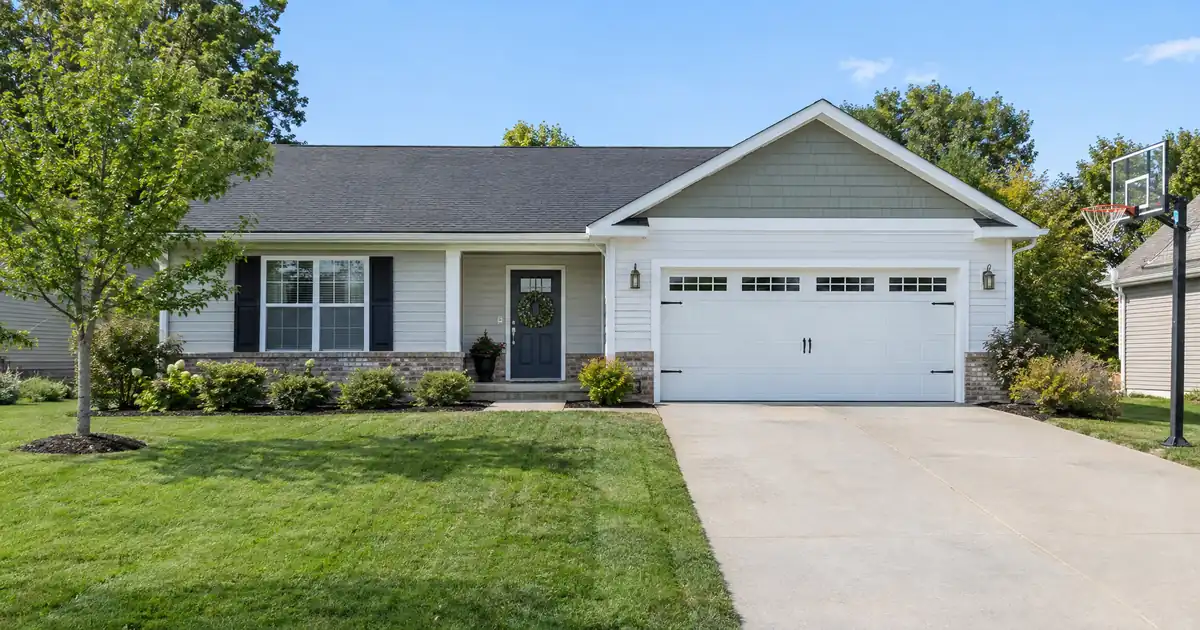
The Quick Read: Yes, often, if your pension is documented, likely to continue, and large enough to carry the new loan on your own. Divorce does not block the loan. It changes the paperwork, the debts counted, and the timing of title. This is a loan against your home’s equity. It does not cash out or touch the pension itself.
Does a Cash-Out Refinance Touch My Pension?
No. A cash-out refinance replaces your current mortgage with a larger one and pays you the difference. The pension keeps paying you as before. The lender just counts it as income.
Cashing out a pension itself, as a lump sum or an early withdrawal, is a different question. Here, the pension is the paycheck that proves you can repay.
One more point to settle early. A divorce decree does not take your ex-spouse off the mortgage. The lender signed a contract with both of you, and a judge’s order does not change that contract. Only a refinance, a payoff, or an approved assumption releases the other person. Until then, both names stay liable, and a missed payment hits both credit reports.
That is why so many divorcing homeowners end up in a cash-out. The new loan pays off the old joint mortgage and puts money in your spouse’s hands for their share of the equity.
How Does a Cash-Out Refinance Pay Your Spouse Out?
The new loan equals three things added together: the old mortgage balance, your spouse’s agreed share of the equity, and any closing costs you roll in. One closing pays off the old loan and funds the buyout. Title then moves into your name alone.
The ceiling on that loan comes from the appraised value of the home. Across the conventional programs we place files with, a cash-out on a one-unit primary residence reaches 80% of the appraised value. Two- to four-unit primary residences reach 75%. The appraisal sets the cap, not the figure in your settlement. If the settlement assumes a higher value than the appraiser finds, the buyout may not fit.
You can see the full range on Lendmire’s cash-out refinance programs page. Every figure here is subject to lender guidelines and full file review.
Two points decide whether a buyout works:
- You qualify alone. Your income, credit, and debts must support the whole new loan. Your ex-spouse’s income no longer helps.
- Your qualifying income caps the buyout. A bigger buyout means a bigger loan and a bigger payment. If your pension cannot carry it, the buyout has to shrink or the structure has to change.
How Do Lenders Treat Pension Income?
Lenders treat a pension as real, qualifying income. Fannie Mae’s Selling Guide, section B3-3.4-03, names pension and retirement income and lists the documents that prove it. You need no paycheck and no employer.
| Document | What it shows | Lender’s core question |
|---|---|---|
| Payer statement or award letter | Benefit amount and terms | Is the amount fixed and documented? |
| Bank statements | Deposits arriving now | Is it being paid today? |
| Tax return, W-2, or 1099 | Prior-year receipt | Does it match the stated amount? |
A fixed pension payment has no minimum history of receipt under that section. Variable retirement draws are different. Withdrawals from an IRA or 401(k) need a 12-month history, and they must be documented to continue for at least three years.
Pensions get a softer test on continuance. The pension paperwork may never mention a three-year period. The lender then looks at other evidence, such as the plan agreement, the government program behind it, or the law that governs it.
A pension with an end date, or one that stops when you die, needs closer review. Ask your loan officer early about cost-of-living adjustments and survivor terms. Those details change how the lender reads the income.
Retirement itself is no reason for a denial. Lenders may weigh the amount and the likelihood of continuance, but the agency rules do not exclude pension income.
How Does the Divorce Change the Income Lenders Count?
Often it shrinks it. This is the gap most competing guides skip. Your qualifying income after the divorce may be smaller than your income before it.
If the pension is being divided. A court order may give your spouse a share of the pension. In practice, lenders count the share you keep. Confirm that with your loan officer, because the order’s wording matters.
If you receive alimony or child support. Support counts as income only if you disclose it and ask the lender to consider it. Fannie Mae’s guide on support income requires a decree or written agreement. It also requires six months of receipt and three years of continuance from the note date. Proposed or voluntary payments with no written agreement do not count.
If you receive a lump-sum equalization payment. That payment is not treated as steady income. It does not raise your monthly coverage figure. It may help in other ways, such as reducing how much you need to borrow, but the guide pages do not say it counts as an asset.
If you pay alimony or child support. The guide’s debt rules count support payments that run beyond about ten months as a monthly obligation. For alimony, the lender may instead reduce your income by that amount. Either way, the payment lowers what you can borrow.
Here is the squeeze in plain terms. A pension usually stays flat. A cash-out loan usually brings a higher payment than the old mortgage. Add support you pay, and the ratio of debts to income climbs. Most files get an automated finding with a total ratio ceiling of 50%. Manually underwritten loans sit at 36% or 45%, depending on credit and reserves. Higher ratios can also trigger extra months of cash reserves.
When Can You Be on Title, and Does a Pending Divorce Matter?
Timing trips up more of these files than income does. Three rules matter, and they are the ones we see on most files.
1. Six months on title. At least one borrower must have been on title for six months before the loan. If you have owned the home that long, this one is met.
2. Twelve months on the old loan. The mortgage being paid off must be at least 12 months old, counted note date to note date. Fannie Mae’s cash-out topic says this minimum does not apply when you buy out a co-owner under a legal agreement.
3. The legal-award exception. The title wait can be waived when the lender documents that the property was legally awarded to you through divorce, separation, or dissolution of a domestic partnership.
A pending divorce changes the picture. The award exception needs an actual award, so it does not help until a decree or order exists. That is our reading of the rule. If you have been on title six months or more, you do not need the exception at all.
If only your ex-spouse has been on title, you need either six months on title or a documented award. Fix that first.
Also remember occupancy. A conventional cash-out on a primary residence assumes you live there. If the property is a second home, leverage is lower. Occupancy decides the cap.
Some states add their own rules for cash-out loans on a homestead. Texas is one example. Your loan officer will know which apply where you live.
What Does a Buyout Look Like With Pension Income?
The figures below are illustrative percentages of the home’s appraised value. They are not program figures and not a quote.
Case one: a small mortgage. The old balance is 30% of the appraised value. That leaves equity of 70%. Your spouse is owed half, or 35%. The new loan is about 65% of value (30% plus 35%), well under the 80% cap. The leverage fits. The real test is whether your pension carries the payment on a loan that size, plus any support you pay.
Case two: a paid-off home. The balance is zero. Equity is 100%, and a 50% buyout means a new loan at 50% of value. You are borrowing only to pay your spouse. It is still a cash-out refinance, because the new loan produces cash. Leverage is low, so the question is pure income.
Case three: a tight fit. The balance is 60% of value. Equity is 40%, and your spouse’s half is 20%. The new loan hits 80%, the ceiling for a one-unit primary residence. Closing costs rolled into the loan would push it past the cap. Here the leverage runs out before the income does.
When the numbers fail, the cause is usually one of two things:
- The loan is too big for the pension. The ratio of debts to income runs above what the file supports.
- The loan is too big for the home. The cap on value is reached before the buyout is covered.
The first problem is about income. The second is about equity. They have different fixes, and mixing them up wastes time.
What If Conventional Doesn’t Fit?
Then change the structure, not just the lender. Here is how the main options compare.
| Option | How it helps | The catch |
|---|---|---|
| Smaller buyout | Lowers the new loan | Spouse must agree |
| Offset against other assets | Trades home equity for something else | Needs settlement language |
| Co-borrower | Adds income to the file | Adds another person on the loan |
| Assumption | Keeps the old loan terms | Conventional loans are often not assumable |
| Sell the home | Splits proceeds cleanly | You lose the house |
| Other assets | Reduces borrowing | Raises tax questions |
A few notes on that table.
The settlement is negotiable until it is signed. A pension share, a retirement account, or other assets can offset the home buyout. A divorce attorney should build that structure. A loan officer can tell the attorney what the numbers allow before the paper is final.
FHA, VA, and USDA loans can sometimes be assumed. Many conventional loans cannot. Servicers can also stall or refuse, and borrowers get pushed toward a refinance.
When leverage is the problem, a wholesale lane we use can reach 89.99% LTV with no mortgage insurance. It needs a 680 score, a 50% ratio, a thirty-year fixed rate on a primary residence, a conforming balance, and six months of seasoning. It is not written in Texas, and it is subject to lender guidelines.
Pulling money out of a retirement account to fund the buyout raises tax questions. Tax treatment can depend on your situation; borrowers should speak with a qualified tax professional before relying on any deduction or credit.
What Should You Line Up Before Applying?
Sequence matters. Work in this order.
1. Get the decree or settlement draft in hand. A missing decree commonly stalls the file.
2. Order the pension paperwork. Award letter, benefit statement, and recent bank statements.
3. Pull the old loan payoff figure. You need an exact balance.
4. Settle on a buyout figure. Tie it to an appraisal, not a guess.
5. List your debts. Include support you pay and any new obligations from the divorce.
6. Check your credit. The wholesale conventional programs start at a 620 decision score.
7. Talk to a loan officer before the settlement is final. Fixing the numbers is easier on paper than after the judge signs.
For comparison, Lendmire’s article Can a Retiree on Pension Get a HELOC During a Divorce? covers the home-equity line route, which works differently from a refinance.
Key Terms Defined
Cash-out refinance: A new mortgage larger than the old one, with the difference paid to you in cash.
Loan-to-value (LTV): The loan amount divided by the home’s appraised value, shown as a percentage.
Continuance: The lender’s test of whether your income is likely to keep arriving for several years.
Equalization payment: A payment from one spouse to the other to even out the division of property.
Debt-to-income ratio: Your monthly debts divided by your monthly income, including the new mortgage payment.
Seasoning: The waiting period a lender requires on title or on the existing loan.
Frequently Asked Questions
Can I use my pension without a paycheck?
Yes. A documented pension counts as income under the agency rules without any wages. You will need an award letter or benefit statement, plus proof that it is being paid now. Fixed payments need no minimum history of receipt.
Do I have to cash out my pension to buy out my spouse?
No. A cash-out refinance borrows against the home. Your pension stays intact and serves as income. Some people choose to use retirement funds as a separate source of cash, but that is a different decision with tax consequences.
Can my ex-spouse stay on the loan?
They can stay on the old loan, but the decree alone does not release them. Until a refinance, payoff, or approved assumption happens, both of you remain liable. A missed payment affects both credit reports.
What if my pension is being split in the divorce?
Lenders count the share you keep, not the original total. That makes the qualifying income smaller than before the divorce. Bring the court order to your loan officer early, because its wording affects how the income is read.
What if the home is paid off?
You can still do a cash-out refinance to fund the buyout. With no existing mortgage, the new loan equals your spouse’s equity share plus costs. The leverage is low, so income is the main test.
Your Next Step
If you are weighing a cash-out refinance against keeping the loan you have, Lendmire can help you compare the programs and the equity each one reaches. Bring your settlement draft and your pension documents, and the conversation gets concrete. Nothing here is a commitment to lend, and every program figure is subject to lender guidelines.
The honest bottom line: pension income rarely sinks these files. Timing, the size of the buyout, and the payment against a flat income are what decide them.
For your own numbers, request a scenario review with Lendmire.
About Lendmire
Lendmire is a mortgage brokerage (NMLS# 2371349) licensed for consumer mortgage lending in 16 states, arranging FHA, VA, conventional and jumbo purchase and refinance loans through a wholesale lending network. Eligibility is determined by the lender on each file. Scotsman Guide named Lendmire a Top Mortgage Workplace in both 2025 and 2026.
Get Started
Ready to find the right loan for you?
In about 30 seconds you can review financing options available for your home or investment property. No commitment required.
Informational only. Not a Loan Estimate, approval, or commitment to lend. Program availability and eligibility are subject to lender guidelines, credit approval, property review, and underwriting.
References
1. Fannie Mae Selling Guide B3-3.4-03: Annuity, Pension, or Retirement Income
3. Fannie Mae Selling Guide B3-6-05: Monthly Debt Obligations
4. Fannie Mae Selling Guide B2-1.3-03: Cash-Out Refinance Transactions
This article is part of Lendmire’s Conventional Loans series — every loan program’s qualification details, guidelines, and scenarios live on the loan options page.
Related reading: Can a Retiree Get a Conventional Cash-Out on a Home in a Trust? · How to Buy Out a Spouse With a Conventional Cash-Out on Pension Income · Conventional Cash-Out Requirements for Pension and Social Security Income
Brandon Miller
Founder & CEO, Mortgage Loan Originator, Lendmire LLC
- Mortgage Loan Originator · NMLS# 1129696 · Verify on NMLS Consumer Access
- North Carolina Real Estate Broker · License# 343312 · Verify on NCREC
- North Carolina Insurance Producer · License# 19053198 · Property, Casualty, Life, Health · Verify on NAIC SBS
- Lendmire LLC · Firm NMLS# 2371349 · Verify firm licensure
Required disclosures. Lendmire (NMLS# 2371349) operates as a licensed mortgage broker, not a direct lender or depository. The discussion in this article is general in nature and should not be relied upon as financial, legal, or tax advice — every investment scenario is unique and should be reviewed by a qualified professional. Any loan inquiry is subject to lender underwriting, and this article is not a commitment to lend or a guarantee of approval. Mortgage rates, loan terms, and program guidelines vary by borrower, property, and state, and may change without notice. Equal Housing Opportunity. Verify licensure at NMLS Consumer Access.