
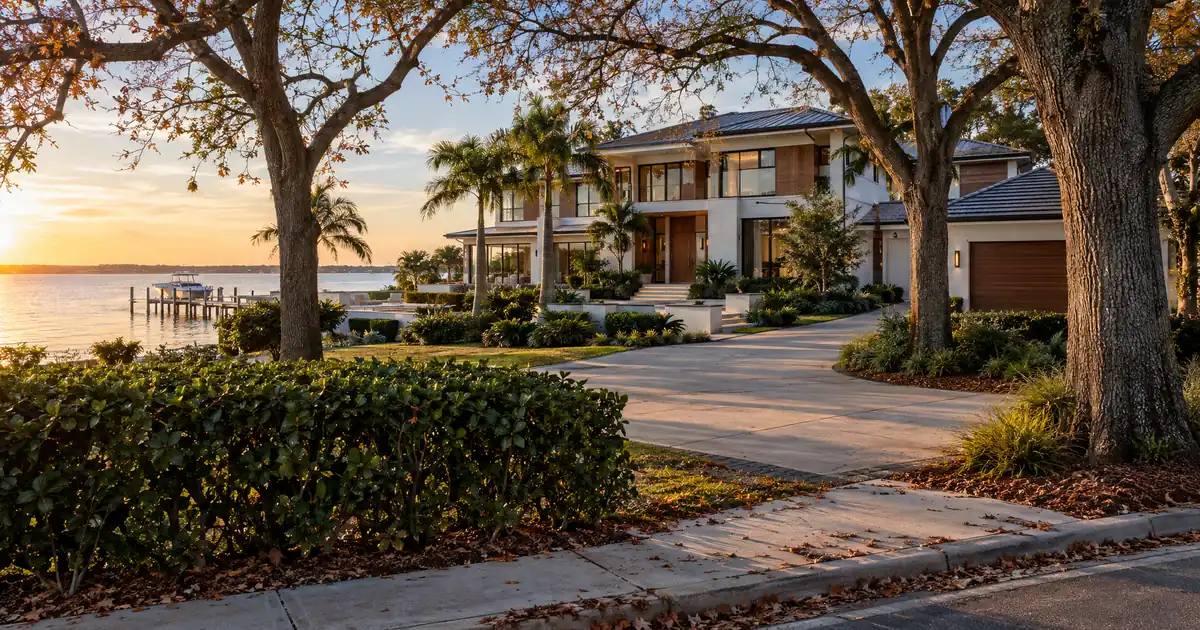
The Quick Read: Jumbo loans on a new-construction second home are set lender by lender, not by one national rulebook. The loan is underwritten on the home’s “as completed” value, your occupancy claim decides the leverage, and the full payment on the new home counts against your ratios. Expect stricter terms than a primary residence, and expect extra file work because the house does not exist yet.
Key Takeaways
- A loan is jumbo when it exceeds the county conforming limit. The limit varies by county.
- No single source gives a universal jumbo second-home rule. Each wholesale lender sets its own overlays.
- The appraisal is a projection from plans and specifications, with a completion check at the end.
- Occupancy (second home versus investment) drives leverage and eligibility.
- Single-closing and two-closing structures behave differently on cost and market exposure.
What Makes a Loan “Jumbo” for a Build?
A loan is jumbo when the amount sits above the conforming loan limit for the county where the home is located. The FHFA announced a one-unit baseline of $832,750 for 2026, with a higher ceiling of $1,249,125 in high-cost areas. Counties land between those numbers depending on local median home values. Check your county at FHFA’s conforming loan limit page, because the figure resets every year.
Jumbo payment estimate
The starting figures are an example price in the jumbo range with ten percent down on a thirty-year fixed. Replace them with yours.
Editable benchmark: 7.40% as of October 15, 2026 · Freddie Mac 30-year average via FRED®. A conventional market reference, not a jumbo loan quote.
Illustrative starting assumptions: a $1,000,000 price in the jumbo range, ten percent down on the top-leverage lane, a thirty-year fixed structure at the current Freddie Mac conforming benchmark, and property taxes and insurance estimated at typical national rates. Every field is editable.
Illustrative estimate only — not a Loan Estimate, approval, quote, or commitment to lend. The rate field carries the weekly Freddie Mac thirty-year conforming benchmark, a market reference and not a jumbo loan quote; jumbo rates are set by the lender and the lane at lock and differ from the conforming benchmark. An adjustable-rate scenario is shown at the benchmark for the whole term; the rate after the initial period is unknown. Reserve months and appraisal counts follow the lane sheet for the amount band; the automated finding may require more. Taxes, insurance and dues are editable estimates; closing costs are not included. On most lanes the conforming limit for the county decides whether a loan is jumbo at all; two lanes start at a stated dollar floor instead. Licensed in sixteen states for consumer mortgages.
The federal consumer-finance regulator’s plain-language definition is simple: mortgages are allowed to exceed the limits, and larger ones are called jumbo. It adds that a jumbo may cost more than a conforming loan. Its dollar figures are out of date, so use FHFA for the number.
On a new build, the test is against the total loan amount, not the lot price or the construction budget alone. A buyer who owns the lot free and clear and borrows only for the build can land under the limit. A buyer financing land and construction together often lands over it.
A jumbo loan sits outside agency rules, and that is the catch most buyers miss. When this article cites agency rules below, it uses them as a reference frame. They are not the jumbo rulebook.
How Does Lender-by-Lender Underwriting Work?
Each jumbo lender sets its own credit, reserve, ratio and appraisal rules. That is the central fact. Across the wholesale programs Lendmire places files with, the headline jumbo lane starts at a 660 decision score and reaches 90% leverage. Loans run up to $5,000,000 on the largest lanes. Several lanes reach 89.99% combined LTV, and the rest stop at 80%. Ratio ceilings are 50% on the fixed lanes, 45% on the adjustable lanes and 43% on the interest-only lanes. Every figure is subject to lender guidelines and full file review, and none of it is a commitment to lend.
Second-home occupancy generally comes with lane-specific leverage, usually lower than a primary residence on the same lane. Reserves are measured in months of the full payment, and they rise with the loan amount. Above a lane’s threshold amount, expect two appraisals.
Pricing, fees and terms are not covered here. Those come on your Loan Estimate.
What Counts as a Second Home?
A second home is a property you occupy for part of the year, not a rental business. Fannie Mae’s occupancy definition is a useful reference. It requires that you occupy the home for some portion of the year, that it is a one-unit dwelling, that it is suitable for year-round occupancy and that you keep exclusive control. A jumbo lender may not copy those rules exactly, but most start from the same idea.
Fannie Mae’s maximum leverage and credit requirements differ by occupancy type. The same pattern shows up in jumbo lanes: primary, second-home and investment occupancy each carry their own leverage. So the occupancy you declare is not a formality. It sets the terms.
| Factor | Primary residence | Second home | Investment property |
|---|---|---|---|
| Occupancy | Main home | Part of the year | Rented to others |
| Leverage on a lane | Highest | Lane-specific, usually lower | Lane-specific, lowest |
| Rental income to qualify | Not applicable | Generally not used | Different loan category |
| Underwriting posture | Baseline | More conservative | Most conservative |
If you plan to rent the home out, that is a different conversation. In one sentence: occupancy decides the leverage, and a home run mainly as a rental is treated as an investment property, not a second home.
Skip the mileage myth. You will see “must be 100 miles from your primary home” repeated online. Fannie Mae’s own occupancy page asks only that the location make sense for the way you say you will use it. Don’t assume a mileage rule in either direction. Ask the lender.
What Changes When the House Doesn’t Exist Yet?
New construction adds a build phase, and the build phase is where files get complicated. The appraisal, the draws, the completion check and the conversion to permanent financing are all extra steps compared with buying a finished home.
The appraisal is “as completed.” The appraiser works from plans and specifications and projects the value of the lot and the finished improvements. Under Fannie Mae’s single-closing rules, the loan-to-value divides the loan amount by that as-completed value. The initial number is a projection, not a measurement of the finished house. Above a lane’s threshold amount, jumbo files typically add a second appraisal or review. Weak plans, thin builder documentation or an optimistic spec sheet can pull the projected value down.
Draws are lender-controlled. In the Fannie Mae reference model, the lender manages disbursement of proceeds to the builder or contractor, per its construction-to-permanent matrix. That document is dated, so treat it as a concept, not a current rule. Jumbo lenders may run portfolio or private-investor construction programs with their own draw schedules and time limits. Those terms vary. Ask for them in writing before you sign a construction contract.
Completion is verified. Lenders generally require some form of completion confirmation before the loan converts to permanent financing. That usually means an appraisal update or an acceptable completion alternative. Requirements differ by lender.
Builder documentation matters. Expect the lender to ask about the builder, the contract, the plans and the budget. A builder who is affiliated with you can create a conflict that a lender will want to review. Raise it early.
Fresh documents may be needed. If construction runs long, credit and income documents can age out before conversion. In that case the file may need to be re-documented. A delay in the build becomes a delay in the paperwork.
Single-Closing or Two-Closing?
The structure you pick decides how many times you close and how much market risk you carry in the middle. Fannie Mae recognizes two construction-to-permanent structures, and jumbo lenders offer their own versions.
| Feature | Single-closing | Two-closing |
|---|---|---|
| Number of closings | One | Two |
| Permanent terms | Set at the start | Set at the second closing |
| Closing costs | One set | Two sets |
| Market exposure | Lower | Exposed between closings |
| Conversion | Automatic when the build finishes | New loan after construction |
In a single-closing loan, the loan documents set the permanent terms, and the loan converts to a permanent mortgage when construction ends. In the Fannie Mae model, only limited items can be modified at conversion. Both the original and the final loan amounts must meet the limits in effect. That is a conforming-world rule. For a jumbo, the lender’s own conversion rules decide.
A two-closing structure gives you more freedom to shop at the second step. It also means you qualify twice. If your income, credit or the market moves during the build, the second approval is not a given.
Two edge cases worth knowing. First, in the Fannie Mae reference model, cash-out refinances are not eligible for single-closing construction-to-permanent loans. Second, eligibility in the agency world is narrow, so a jumbo lender may be more or less flexible on property type and on whether you must already own the lot. Confirm both with the lender before you commit to a plan.
How Is the Borrower Qualified?
The lender qualifies the borrower on credit, leverage, ratios, reserves and the documented source of funds. The twist on a second home is that you are carrying two homes.
Fannie Mae’s rule on other real estate owned counts the full payment on an existing second home in your recurring obligations. The same logic applies to your current home and the new one. The new home’s full payment counts against your ratio, and the existing home’s payment stays in it. In practice, that is why a 50% ceiling on a fixed lane can feel tighter than it sounds. Two housing payments fill it fast.
Rental income from a second home generally cannot be used to qualify. Plan on qualifying from your own income.
Reserves are the other pressure point. On the wholesale jumbo lanes, reserves are counted in months of the full payment and rise as the loan amount rises. With a second home, lenders may look at reserves with both properties in mind. Document the accounts early. Asset statements that don’t match the stated source of funds are a common reason files stall.
Credit also matters. The headline lane starts at a 660 decision score, but a higher score generally improves your options, particularly at higher leverage and on larger loans. Programs with higher leverage tend to ask more of the file.
A quick note on pricing tests. A first-lien jumbo is generally “higher-priced” under federal rules when its APR is 2.5 percentage points or more above the average prime offer rate, according to the CFPB. That label affects escrow and appraisal-related requirements. You do not need to calculate it yourself. The lender does.
What Does the Decision Look Like in Practice?
Picture a buyer who owns a primary home and wants to build a mountain retreat. The land is already owned. The build budget, added to the lot, pushes the total over the county limit. The buyer plans to use the home for a few months a year and has no plans to rent it.
The buyer’s decision runs in this order:
1. Confirm occupancy. Second home, with no rental business plan. This sets the leverage tier.
2. Check the loan size against the county limit. If it is over, the file is jumbo.
3. Choose the structure. Single-closing if the buyer wants one set of costs and set terms. Two-closing if flexibility matters more than certainty.
4. Gather builder and plan documents. Contract, plans, budget and builder details go in before the file is reviewed.
5. Document reserves for both homes. Statements that tie to the source of funds, not a lump of cash that appeared last month.
6. Plan for the as-completed appraisal. If the amount crosses the lane’s threshold, expect two.
7. Budget for overlap. Interest on drawn funds during construction, plus the current home’s payment. Both can run at once.
A buyer who plans to sell the first home mid-build has a different file. The sale proceeds may count as assets, but a contract that hasn’t closed generally won’t carry the file on its own. Ask the lender how it treats a pending sale before you make plans around it.
Where the General Rule Breaks
A few edge cases show up repeatedly on build files.
- Rental plans. A second home can still be a second home if the lender notices some rental income, as long as the income isn’t used to qualify and every other second-home requirement is met. Heavy rental intent, or a management-controlled rental arrangement, pushes the loan toward investment treatment. Be accurate about your plans.
- Seasonal properties. A cabin or beach home with seasonal limits can raise appraisal questions. The appraiser needs comparable sales with similar limitations.
- Property count. Agency rules cap the number of financed one-to-four-unit properties per borrower. That is not necessarily a jumbo rule, but jumbo lenders have their own limits on how many financed homes a borrower can carry.
- Government loans. FHA, VA and USDA are generally not available for second homes.
- Condominiums. Two of the wholesale lanes accept non-warrantable condos. Attached condos and co-ops are often outside the agency construction programs.
- Cash-out. On the wholesale lanes, cash-out carries lower leverage than purchase, with a cash cap on the largest lanes.
Disclosures During the Build
Construction loans are not exempt from the standard mortgage disclosures. The CFPB’s TRID FAQs state that most closed-end consumer construction loans secured by real property are covered, including both construction-only and construction-permanent loans. A lender may issue separate construction-phase and permanent-phase Loan Estimates and Closing Disclosures, or one combined set. Read whichever set you get line by line.
Tax treatment can depend on your situation; borrowers should speak with a qualified tax professional before relying on any deduction or credit. The IRS addresses homes under construction in Publication 936.
This article is about financing. It does not cover zoning, permits, setbacks or accessory dwelling units. Those are local questions for the county or city where you are building.
Why Do These Files Stall?
Most stalls come from a short list of gaps.
- Occupancy mismatch. The application says second home, but the file shows a rental plan.
- Thin builder paperwork. Missing contract, plans or budget.
- Appraisal shortfall. The projected value comes in under the budget, and the leverage no longer works.
- Reserves that don’t tie. Statements that don’t match the stated source of funds.
- Aged documents. A build that runs long forces new credit and income paperwork.
- Both payments in the ratio. A buyer sized the loan on the new payment alone.
Most of these can be fixed before the file is submitted. Few can be fixed after.
Key Terms Defined
Leverage, reserves, and pricing vary by lender and program; the final terms follow the full file review.
Jumbo loan: A mortgage above the county conforming limit.
As-completed value: The appraiser’s projection of the lot and finished home, based on plans and specifications.
Single-closing loan: A construction-to-permanent loan that closes once and converts when the build is done.
Two-closing loan: A construction loan followed by a separate permanent mortgage at a second closing.
Draw: A lender-controlled release of loan funds to the builder as construction progresses.
Occupancy type: Your declared use of the home: primary, second home or investment.
Frequently Asked Questions
Can I use a jumbo loan for a new-construction second home?
Often, yes, but terms are set by each wholesale lender. The loan is underwritten on the as-completed value, and second-home occupancy generally carries lane-specific leverage. Subject to lender guidelines and full file review.
Is the down payment different on a second home?
Usually, yes. Second-home occupancy carries its own leverage on each lane, and it is typically lower than the primary-residence leverage. The headline jumbo lane reaches 90%, while many lanes stop at 80%. Where your file lands depends on the lane, the amount and your credit.
Can I rent the home out?
Occasional rental use can be allowed, but the income generally cannot be used to qualify. Heavy rental intent or a management-controlled rental arrangement can reclassify the loan as an investment property. Be accurate about your plans.
What happens when construction ends?
The lender verifies completion, and the loan converts to permanent financing in a single-closing structure. In a two-closing structure, you close on a new permanent mortgage. Either way, expect completion documentation, and possibly updated credit documents if the build ran long.
Do I need reserves for both homes?
Lenders count reserves in months of the full payment, and the requirement rises with the loan amount. Because you carry two homes, expect scrutiny of your total liquid assets. Document the accounts and the source of funds early.
For the program’s current guidelines, see jumbo loan programs.
For your own numbers, request a scenario review with Lendmire.
About Lendmire
Lendmire, NMLS# 2371349, is a mortgage brokerage with consumer lending licenses in 16 states. FHA, VA, conventional and jumbo purchase and refinance loans are arranged through wholesale lending partners, and each application is reviewed individually by the lender. Scotsman Guide named Lendmire a Top Mortgage Workplace in both 2025 and 2026.
Get Started
Ready to find the right loan for you?
In about 30 seconds you can review financing options available for your home or investment property. No commitment required.
Informational only. Not a Loan Estimate, approval, or commitment to lend. Program availability and eligibility are subject to lender guidelines, credit approval, property review, and underwriting.
References
1. FHFA – 2026 Conforming Loan Limit Values
2. FHFA – Conforming Loan Limits
3. CFPB – What is a jumbo loan?
4. Fannie Mae Selling Guide – Occupancy Types
5. Fannie Mae Selling Guide – Single-Closing Conversion
6. Fannie Mae Construction-to-Permanent matrix
7. Fannie Mae Selling Guide B3-6-06 Other REO
8. CFPB – Higher-priced mortgage loan
9. CFPB – TILA-RESPA Integrated Disclosure FAQs
This article is part of Lendmire’s jumbo loan program — full qualification details, guidelines, and scenarios live on the program page.
Related reading: Jumbo Cash-Out Seasoning Rules for a Paid-Off High-Value Home · Jumbo Cash-Out Seasoning Rules for a Second Home · How to Pick a Jumbo Cash-Out Lane for a Second Home
Brandon Miller
Founder & CEO, Mortgage Loan Originator, Lendmire LLC
- Mortgage Loan Originator · NMLS# 1129696 · Verify on NMLS Consumer Access
- North Carolina Real Estate Broker · License# 343312 · Verify on NCREC
- North Carolina Insurance Producer · License# 19053198 · Property, Casualty, Life, Health · Verify on NAIC SBS
- Lendmire LLC · Firm NMLS# 2371349 · Verify firm licensure
Required disclosures. Lendmire (NMLS# 2371349) operates as a licensed mortgage broker, not a direct lender or depository. The discussion in this article is general in nature and should not be relied upon as financial, legal, or tax advice — every investment scenario is unique and should be reviewed by a qualified professional. Any loan inquiry is subject to lender underwriting, and this article is not a commitment to lend or a guarantee of approval. Mortgage rates, loan terms, and program guidelines vary by borrower, property, and state, and may change without notice. Equal Housing Opportunity. Verify licensure at NMLS Consumer Access.